Best Techniques for Lingcod Around Structure
Fishing for lingcod around the rugged coastlines of British Columbia can be one of the most exhilarating and, let's be honest, sometimes frustrating experiences an angler can have. These toothy bottom-dwellers are masters of camouflage and ambush, often hiding in the most unforgiving underwater terrain. If you've ever spent a day losing expensive gear to the rocks or reeling in nothing but seaweed, you know the struggle. This comprehensive guide is here to demystify the art of targeting lingcod specifically around structure, helping you connect with these aggressive predators and bring home some fantastic table fare without emptying your tackle box.
Understanding Lingcod Behavior and Habitat
Lingcod are fascinating creatures, perfectly adapted to their rocky, craggy homes along the Pacific Northwest coast. To consistently catch them, you first need to think like a lingcod – or at least understand where they live and what makes them tick.
Lingcod's Affinity for Rocky Bottoms
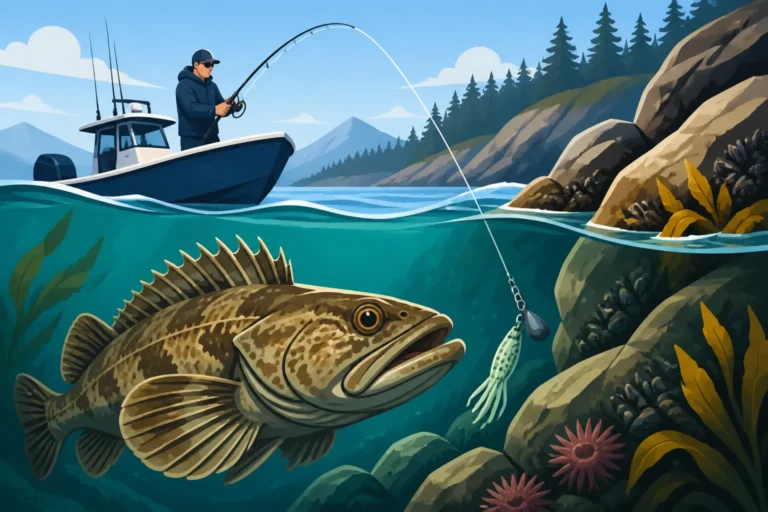
It’s no secret that lingcod absolutely love structure. We're talking about anything from rocky reefs, kelp beds, submerged pinnacles, steep drop-offs, and even artificial reefs like wrecks. These aren't fish that hang out over vast stretches of sand or mud; they crave the complexity that provides shelter and prime ambush points. In British Columbia, this means countless miles of prime habitat, particularly along the coast of Vancouver Island, Haida Gwaii, and the multitude of inlets and islands that dot our marine landscape. They use these structures to hide from larger predators, but more importantly, to stage their own attacks on unsuspecting baitfish. If you're out on the water, and your sonar pings a hard, rocky bottom with lots of undulations, pinnacles, or shelves, you're looking at potential lingcod territory. The more jagged and complex the structure, the better.
Ambush Predators of the Depths
Lingcod are quintessential ambush predators. They typically lie in wait, often nestled tightly into a rock crevice or along a ledge, ready to dart out and engulf anything that swims by. Their mottled coloration provides excellent camouflage, blending seamlessly with their surroundings. This predatory behavior tells us a lot about how we should fish for them. You need to present your lure or bait in a way that mimics an injured or unsuspecting prey item, right in their strike zone. This means getting your offering down into the structure, not just over it. However, it’s a fine line between presenting effectively and getting irrevocably snagged, which is where careful technique and a good understanding of your gear come into play. They're not going to chase a lure for miles; you need to bring it to them. For more details on what these fish look like and where they commonly reside, check out our guide on what lingcod look like and where they live.
Seasonal Movements Around Structure
While lingcod generally stick to structure year-round, their exact locations and concentrations can shift with the seasons, often tied to spawning or feeding patterns. During the cooler months, typically late fall through early spring, mature lingcod move into shallower waters, often less than 100 feet deep, for spawning. The males aggressively guard their nests, making them particularly territorial and prone to striking anything perceived as a threat. This can be a fantastic time to target them, but remember to be mindful of closures and conservation efforts around spawning periods. In summer, they might disperse a bit more, sometimes moving to deeper, cooler waters, or concentrating around prolific baitfish schools that hug the contours of deeper reefs. Understanding these seasonal shifts can help you pinpoint the best structures to focus on at any given time, maximizing your chances of a successful outing.
Essential Gear for Structure Fishing
Tackling lingcod in their rocky domains requires robust gear that can withstand both the fish's powerful fight and the unforgiving environment. Skimping on tackle here often leads to lost fish and frustrated anglers.
Rods, Reels, and Line Selection
For lingcod fishing around structure, you need heavy-duty equipment. Think about a medium-heavy to heavy conventional rod, often 6.5 to 8 feet in length, with a fast action to handle heavy jigs and baits while still having enough backbone to winch a big lingcod out of the rocks. A good quality conventional reel, like a Penn or a Daiwa, with a strong drag system and high line capacity (think 200-300 yards of 50-80 lb braided line), is ideal. Star drag reels are popular for their power and reliability. Many anglers find great deals on these setups, including reputable brands, on Amazon.
When it comes to line, braided line is almost universally preferred for its minimal stretch and incredible sensitivity, allowing you to feel every bump and bite even in deep water. Pair your braided main line with a robust monofilament or fluorocarbon leader, typically 50-80 lb test, about 4-6 feet long. Fluorocarbon is less visible underwater and more abrasion-resistant than mono, which is a huge advantage when fishing near sharp rocks. The heavier leader helps absorb the shock of a strike and provides a crucial buffer against nicks and scrapes from the structure or the lingcod's teeth.
Terminal Tackle: Leaders, Swivels, and Snaps
Your terminal tackle needs to be as tough as the rest of your setup. Heavy-duty swivels, rated for at least 100-150 lbs, are essential to prevent line twist, especially when using rotating lures or when a lingcod spins during the fight. Quality barrel swivels or ball-bearing swivels are both good choices. Snaps should also be heavy-duty, rated for similar breaking strengths, to easily change lures without re-tying. However, many experienced anglers prefer to tie directly to their jigs or use a solid ring with a split ring for maximum strength and fewer points of failure.
For leaders, aside from the main fluorocarbon/mono leader, some anglers use a heavier, shorter section of line (100-150 lb test) as a bite leader, directly above the lure, especially when targeting larger lingcod known for their razor-sharp teeth. This small piece of sacrificial leader can prevent cut-offs. Additionally, if you're concerned about losing expensive jigs, you can use a lighter dropper line for your weight when bait fishing, so if the weight snags, you only lose the weight and not your entire rig.
Electronics for Locating Structure and Fish
In structure fishing for lingcod, your marine electronics are your best friend. A reliable fishfinder with a high-resolution display is crucial for identifying promising bottom structures like pinnacles, ledges, and drop-offs. Chirp sonar technology, in particular, offers superior target separation, allowing you to distinguish between fish, bait balls, and the actual bottom structure more clearly. Look for a unit that offers both 2D sonar and possibly down-imaging or side-imaging capabilities.
Down-imaging provides a photographic-like view directly below your boat, making it easier to visualize contours and individual rocks. Side-imaging allows you to scan wide areas to either side of your vessel, revealing structure and fish that might not be directly under you. GPS mapping is also indispensable for marking productive spots, navigating safely around hazards, and returning to your favorite lingcod haunts. Many modern chartplotter/fishfinder combos from brands like Garmin, Lowrance, or Humminbird offer these features and can be easily integrated into your boat's setup. Learning to interpret these displays effectively will dramatically increase your success rate.
Effective Lures and Baits for Lingcod
Lingcod are opportunistic feeders, so a variety of lures and baits can be effective. The key is to match your presentation to the conditions and the fish's mood.
Jigs: Vertical, Swim, and Paddle Tail
Jigs are arguably the most popular and effective lures for lingcod around structure. Their versatility allows for various presentations that mimic a struggling baitfish or a squid.
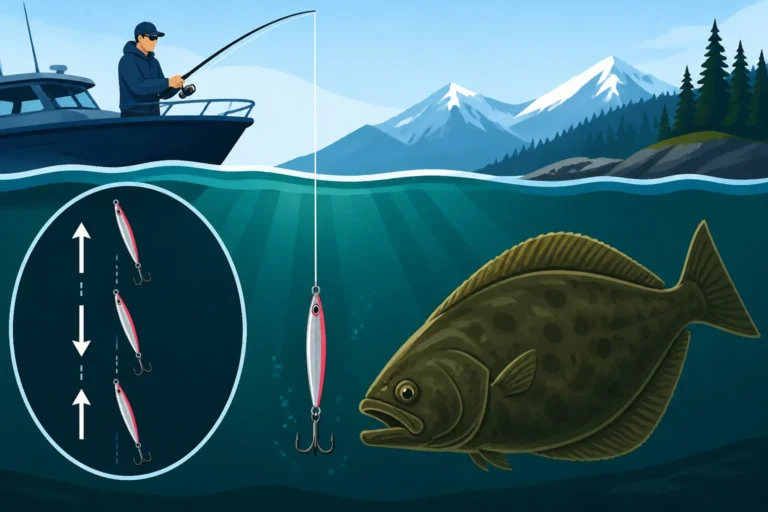
- Vertical Jigs (Butterfly Jigs, Knife Jigs): These heavy metal jigs are designed to be dropped straight down and worked aggressively with a "rip and fall" action. They're excellent for deep water or when the current is strong, as their slim profile allows them to get to the bottom quickly. The erratic flutter on the fall often triggers a reaction strike from an aggressive lingcod. Brands like Shimano, Daiwa, and specialized jig manufacturers offer a wide array of vertical jigs.
- Swim Jigs (Metal Jigs with a Built-in Flutter): These jigs have a more pronounced swimming action on the retrieve or fall. They are often a bit wider or have a specific shape designed to impart a natural movement. They can be very effective when retrieved slowly just above the structure, mimicking a fish swimming by.
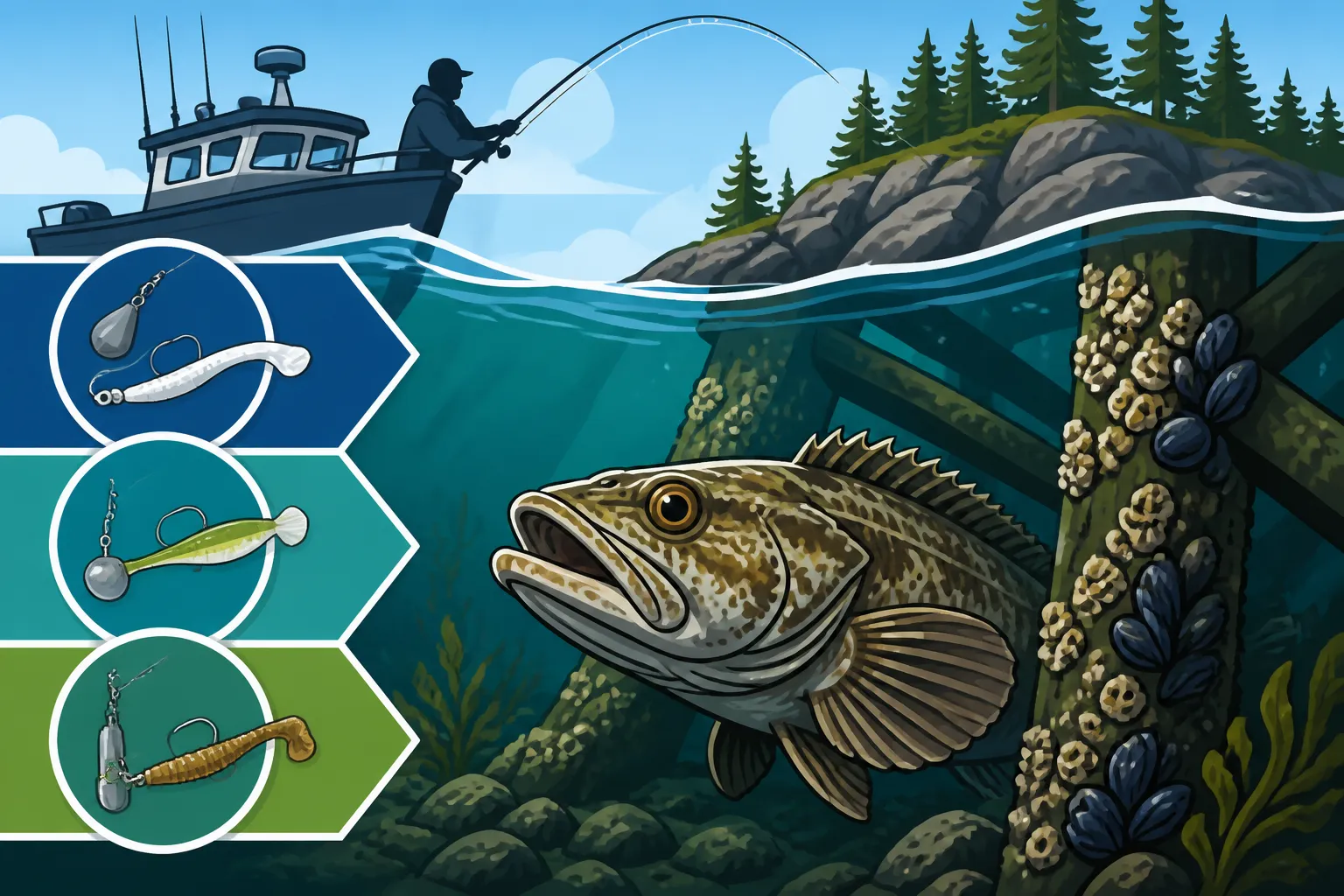
- Paddle Tail Jigs (Lead Heads with Soft Plastic Tails): These combine a weighted jig head with a soft plastic swimbait body, often with a paddle tail that creates significant vibration and movement in the water. They are incredibly versatile and can be fished with a steady retrieve, a lift-and-drop motion, or even bounced directly on the bottom. Colors like chartreuse, white, natural greens, and blues are perennial favorites. You can find a huge selection of these soft plastics and jig heads, often in multi-packs, on Amazon, making it easy to stock up.
The weight of your jig is crucial and depends heavily on the depth and current. In general, you want to use the lightest jig you can to maintain bottom contact without drifting too far off course. This could range from 4-8 ounces in shallower, calmer waters to 10-24 ounces (or even more) in deep water or strong currents.
Live and Cut Baits: The Classic Choice
Sometimes, nothing beats the real thing. Live bait is incredibly effective for lingcod because it offers natural scent, action, and appearance. Common live baits include herring, mackerel, greenling, or even smaller rockfish (if legal and abundant). These are typically fished on a single, large circle hook (6/0 to 10/0) with enough weight to get it to the bottom and hold it near the structure. A common rig is a simple dropper loop or a three-way swivel rig, keeping the bait just off the bottom.
Cut bait, such as pieces of herring, squid, or mackerel, also works wonderfully, especially when soaked for an extended period. The scent trail it leaves in the water can draw lingcod out of their hiding spots. Cut bait can be fished on a lead head jig or a weighted mooching rig, often enhanced with a scent attractant. When using cut bait, patience is key. Allow the scent to disperse and wait for a lingcod to locate it.
Soft Plastics and Scented Artificials
Beyond paddle tails, other soft plastic lures can be highly effective. Large grub tails, creature baits, and even curly tail worms rigged on a heavy jig head can entice strikes. The key here is size; lingcod have huge mouths, so don't be afraid to go big, often 6-12 inches. Colors that mimic local baitfish or vibrant "attention-grabbing" colors like chartreuse, pink, or glow-in-the-dark are often productive.
Scented artificial baits, like those from Berkeley Gulp! or similar brands, combine the realistic feel and action of soft plastics with a powerful scent attractant. These can be particularly good on slower days or in murky water where the fish rely more on scent than sight. Rigging these on a heavy lead head or even on a classic "scampi" jig head (a lead head designed for soft plastics) is a common and effective method. Remember to check out our guide on what lingcod eat in the ocean for more insight into their natural diet.
Key Techniques for Different Structures
The type of structure you're fishing will often dictate the most effective technique. Adapting your approach is crucial for success.
Vertical Jigging Over Reefs and Pinnacles
Vertical jigging is perhaps the most direct and exciting way to target lingcod on reefs and pinnacles. This technique involves positioning your boat directly over the structure, often using GPS and your fishfinder to stay on target. Once over the productive area, you drop a heavy vertical jig straight down to the bottom.
The retrieve is the critical part:
- Bottom Contact: Let the jig hit the bottom, then immediately reel up 1-2 feet to avoid snagging initially.
- Lift and Drop: Lift your rod tip sharply, then let the jig flutter back down on a semi-slack line. This mimics an injured baitfish.
- Varying Cadence: Experiment with the speed and height of your lifts. Some days, they want an aggressive, high rip; other days, a subtle twitch is all it takes.
- Stay Engaged: Keep a light tension on the line as the jig falls to detect strikes on the drop. Lingcod will often hit as the lure flutters down.
- Re-establish Bottom Contact: Every few lifts, let the jig hit the bottom again to ensure you're still in the strike zone.
This technique is best for targeting specific "bumps" or "shelves" on your sonar where lingcod are likely holding. It's an active and engaging way to fish, and the strike from a lingcod can be incredibly powerful. Many experienced anglers prefer popular brands like Daiwa or Shimano, readily available through retailers like Amazon, for their durability and smooth performance in this demanding fishing style.
Drift Fishing Along Drop-offs and Ledges
Drift fishing allows you to cover more ground and present your lure or bait naturally along extended stretches of structure like drop-offs, ledges, or the edges of kelp beds. This method is particularly effective when the fish are scattered or when you're exploring new areas.
- Positioning: Position your boat upwind or upcurrent from your target structure. This allows the natural drift of the boat to carry your offering over the productive zone.
- Weight Management: Use enough weight (jig or lead sinker) to maintain bottom contact, but not so much that it constantly snags. The goal is to "walk" your lure or bait along the bottom, occasionally ticking rocks.
- Rod Work: Hold your rod with a slight bend, feeling for bottom contact. Lift and drop your rod tip gently, allowing the lure or bait to rise and fall with the boat's motion and the contours of the bottom.
- Line Management: Pay close attention to your line angle. If the current or wind is pushing you too fast, you might need a drift sock or sea anchor to slow your drift. Keeping the line as vertical as possible minimizes snags and maximizes sensitivity.
Drift fishing is less precise than vertical jigging but can be incredibly effective when you find a productive drift line. It’s also a good way to scout an area before anchoring down. If you want to refine your understanding of fish behavior on different tides, you might find our guide on best time of day to catch salmon on an incoming tide insightful, as current affects many species.
Anchoring and Casting into Structure
In situations where you've identified a particularly hot spot—a distinct rock pile, a deep crevice, or a specific kelp bed—anchoring can be the most effective strategy. Once anchored, you can cast your lures or baits directly into the structure and work them thoroughly.
- Precise Anchoring: Use your GPS and fishfinder to drop anchor precisely, ensuring your boat is positioned to cast into the prime zone. Sometimes, a two-anchor system (bow and stern) is necessary in strong currents or winds to prevent swinging.
- Casting: Cast your weighted lure or bait directly into the structure. Let it sink to the bottom.
- Retrieve: Work your lure or bait with a slow, deliberate retrieve, bouncing it off the bottom, lifting it over snags, and imparting subtle twitches. The goal is to keep it in the "strike zone" as long as possible.
- Multiple Angles: From an anchored position, you can cast to different sides of the structure, exploring various angles and depths where lingcod might be hiding.
This technique is great for thoroughly dissecting a specific piece of structure. It's often used when targeting trophy lingcod that might be holding tight to a particular rock.
Tidal and Weather Considerations
The ocean is a dynamic environment, and understanding how tides and weather influence lingcod activity and your fishing approach is key.
Best Tides for Lingcod Activity
While lingcod can be caught on any tide, specific tidal movements often trigger increased feeding activity. Generally, the beginning and end of a tidal current (the "slack" periods) can be productive. As the current starts to pick up or slow down, baitfish often become disoriented or are pushed around the structure, making them easier targets for ambush predators like lingcod.
- Incoming Tide: As the tide floods, it often brings in fresh baitfish and nutrients, stirring up activity around reefs and kelp beds.
- Outgoing Tide: A strong outgoing tide can flush baitfish out of bays and estuaries, concentrating them around the mouths of inlets and along exposed ledges, where lingcod lie in wait.
- Slack Tide: The periods of minimal current (high slack and low slack) can offer a brief window where lingcod might move more freely, or it can simply make it easier for anglers to fish heavy structure without getting constantly snagged or swept away.
Ultimately, the best tide often depends on the specific location and structure you're fishing. Pay attention to how the current interacts with your chosen spot and adjust your timing accordingly. For more general advice on optimal fishing times, consult our guide on BC fishing seasons by month.
Impact of Weather on Structure Fishing
Weather plays a significant role in how and where you can fish for lingcod.
- Wind: Strong winds can make boat control challenging, making it difficult to stay over precise structure or maintain bottom contact. This is when a sea anchor or a highly maneuverable boat with a strong trolling motor becomes invaluable. High winds also create chop and swell, which can make for an uncomfortable and potentially unsafe fishing experience.
- Rain: Lingcod don't seem particularly bothered by rain, but heavy downpours can reduce visibility on the water and make for a less enjoyable day for the angler. It typically doesn't affect their bite.
- Barometric Pressure: While not as extensively studied for lingcod as for some freshwater species, significant changes in barometric pressure (like before a major storm) can sometimes cause fish to become less active. However, post-front conditions with stable, high pressure can often lead to good fishing.
Always check the marine forecast before heading out, especially when planning to fish exposed coastal areas. Safety should always be your top priority.
Reading the Current and Swell
Learning to read the current and swell is a critical skill for any BC angler targeting lingcod.
- Current: Understand how the current interacts with the underwater structure. A strong current can position lingcod on the lee side (downcurrent) of a rock, where they expend less energy but still have baitfish delivered to them. It can also make it difficult to get your lure to the bottom or keep it in the strike zone. You might need to adjust your jig weight, drift speed, or even your fishing location to account for strong currents.
- Swell: Ocean swell can significantly impact fishing comfort and safety, especially when fishing near exposed reefs or shallow pinnacles. Large swells can make it impossible to safely approach certain structures. Even moderate swells can make it hard to feel bites or maintain lure control. Choose your fishing spots based on the prevailing swell conditions, opting for more protected waters when the ocean is rough. Always remember to prioritize safety on the water and be aware of potential hazards when operating your vessel, as detailed in our guide to BC boating laws for anglers.
Safety First When Fishing Structure
Fishing around structure, especially in saltwater, comes with inherent risks. Being prepared and cautious is paramount.
Understanding Snags and How to Avoid Them
Snags are an inevitable part of lingcod fishing around structure. However, you can minimize them and learn how to free your gear.
- Minimizing Snags:
- Keep Bottom Contact, Don't Drag: The goal is to bounce your lure off the bottom, not drag it continuously. If you feel it dragging, lift it up.
- Use the Right Weight: Too light a weight will drift too far and get hung up; too heavy a weight will bury itself in the rocks.
- Lift Over Obstacles: If your fishfinder shows a sharp pinnacle or rock, lift your lure higher as you pass over it.
- Lead-Head Jig Orientation: When using a lead-head jig with a soft plastic, some anglers will slightly bend the hook point inwards towards the lead to reduce direct contact with rocks.
- Freeing Snags:
- Slack Line Technique: Give the line a bit of slack, then reel up quickly while simultaneously twitching your rod tip. The sudden jolt can sometimes pop the lure free.
- Change Angle: If drifting, change your boat's position or angle slightly. Pulling from a different direction can often dislodge a snagged lure.
- Steady Pull: If all else fails and you're using heavy braided line, a slow, steady pull might straighten a hook or break the leader at a knot, saving your main line. Be careful not to point your rod directly at the snag, as this can snap the rod.
Always carry extra terminal tackle and a variety of jigs and weights, as losses are part of the game.
Navigating Rocky Shorelines and Submerged Hazards
The very structures that attract lingcod are also navigation hazards.
- Chart Your Course: Always use up-to-date marine charts and your GPS to identify reefs, rocks, and shallow areas. Mark known hazards on your plotter.
- Observe the Water: Pay attention to visual cues like breaking waves, discolored water, or kelp beds, which often indicate submerged structure.
- Maintain Distance: If you're unsure of the depth or the exact location of a hazard, give it a wide berth. It's better to miss a fishing spot than to damage your boat.
- Lookout: Always have a dedicated lookout, especially when operating in unfamiliar or complex rocky terrain.
- Sound Your Horn: In fog or low visibility, use appropriate sound signals.
Navigating safely is paramount. Before embarking on any trip, ensure you're familiar with general marine safety rules and your boat's required safety equipment, which you can read more about in our guide to BC Boating Laws for Anglers.
Safe Handling of Lingcod Those Teeth
Lingcod are not only powerful fighters but also possess a formidable set of teeth and often very sharp gill plates. Safe handling is essential for both the fish (if releasing) and the angler.
- Gloves: Heavy-duty fishing gloves are highly recommended to protect your hands from teeth, gill plates, and sharp fins.
- Lip Grips: A quality set of fish lip grips (often called Boga Grips or similar tools) can securely hold a lingcod's mouth open, preventing it from biting you.
- Release Tool: If you're releasing the fish, a de-hooking tool or long-nosed pliers can help remove hooks without putting your hands near its mouth.
- Knock Out Stick: For retention, some anglers use a fish "priest" or a sturdy stick to dispatch the fish quickly and humanely before bringing it fully into the boat. This also renders it less dangerous.
- Beware of Thrashing: Even a "dead" lingcod can give a powerful flop, so be mindful when bringing it into the boat or handling it for photos.
Respect these powerful fish, and they'll provide you with incredible sport and delicious fillets. Knowing your BC Bag and Possession Limits by Species is also crucial for responsible fishing.
Lure and Depth Guide for Lingcod
To help you quickly decide which lure might be best for your specific fishing situation around structure, here’s a simple guide.
| Structure Type | Depth Range (feet) | Current (Knots) | Recommended Lure Type | Weight Range (ounces) | Key Action |
|---|---|---|---|---|---|
| Shallow Reefs/Kelp Beds | 20-80 | Low-Moderate | Paddle Tail Jigs, Large Grubs | 4-8 | Slow retrieve, lift & drop, bounce off bottom |
| Mid-Depth Ledges/Drop-offs | 50-150 | Moderate | Vertical Jigs, Swim Jigs, Live Bait | 6-16 | Rip & fall, slow troll, natural drift |
| Deep Pinnacles/Wrecks | 100-300+ | Moderate-Strong | Heavy Vertical Jigs, Live Bait | 10-24+ | Fast jigging, controlled drop, bottom contact |
| Rocky Shorelines (Casting) | 10-50 | Low | Large Spoons, Swim Baits, Heavy Grubs | 2-6 | Cast & retrieve with pauses, cover ground |
| Artificial Reefs | 40-100 | Low-Moderate | Paddle Tail Jigs, Vertical Jigs | 6-12 | Varied retrieve, explore all levels of structure |
This table provides a general guideline. Always be prepared to experiment with different weights, colors, and actions based on the day's conditions and what the lingcod are reacting to. For additional guidance on fishing techniques for specific species, you might find our article on Best Techniques for Lingcod off Vancouver Island particularly helpful.
Disclaimer
Fishing regulations and conditions in British Columbia can change frequently. Always consult the most current BC Freshwater Fishing Regulations Synopsis or the Department of Fisheries and Oceans (DFO) notices for tidal waters before heading out. This guide is for informational purposes only and does not replace official regulations or professional advice. Be safe, fish responsibly, and conserve our precious fisheries.