Best night fishing spots for salmon in BC
Many anglers in British Columbia often find themselves battling crowds and less active fish during the bright daylight hours, leading to frustration and fewer bites. But what if I told you that some of the most thrilling and productive salmon fishing actually happens after the sun dips below the horizon? Night fishing for salmon in BC offers a unique advantage, often delivering bigger catches and a more peaceful experience. This comprehensive guide will illuminate the best spots, essential gear, and proven tactics to help you successfully target BC salmon under the cover of darkness.
Why Night Fishing for Salmon is Often Your Best Bet in BC
Let's be real, daytime fishing can be tough. The sun is blazing, every prime spot is occupied, and the fish seem to have lockjaw. This is where night fishing steps in as a game-changer. Salmon, like many predatory fish, often change their behaviour once the light fades, presenting a fantastic opportunity for anglers willing to embrace the dark.
Salmon Behavior Under the Cover of Darkness
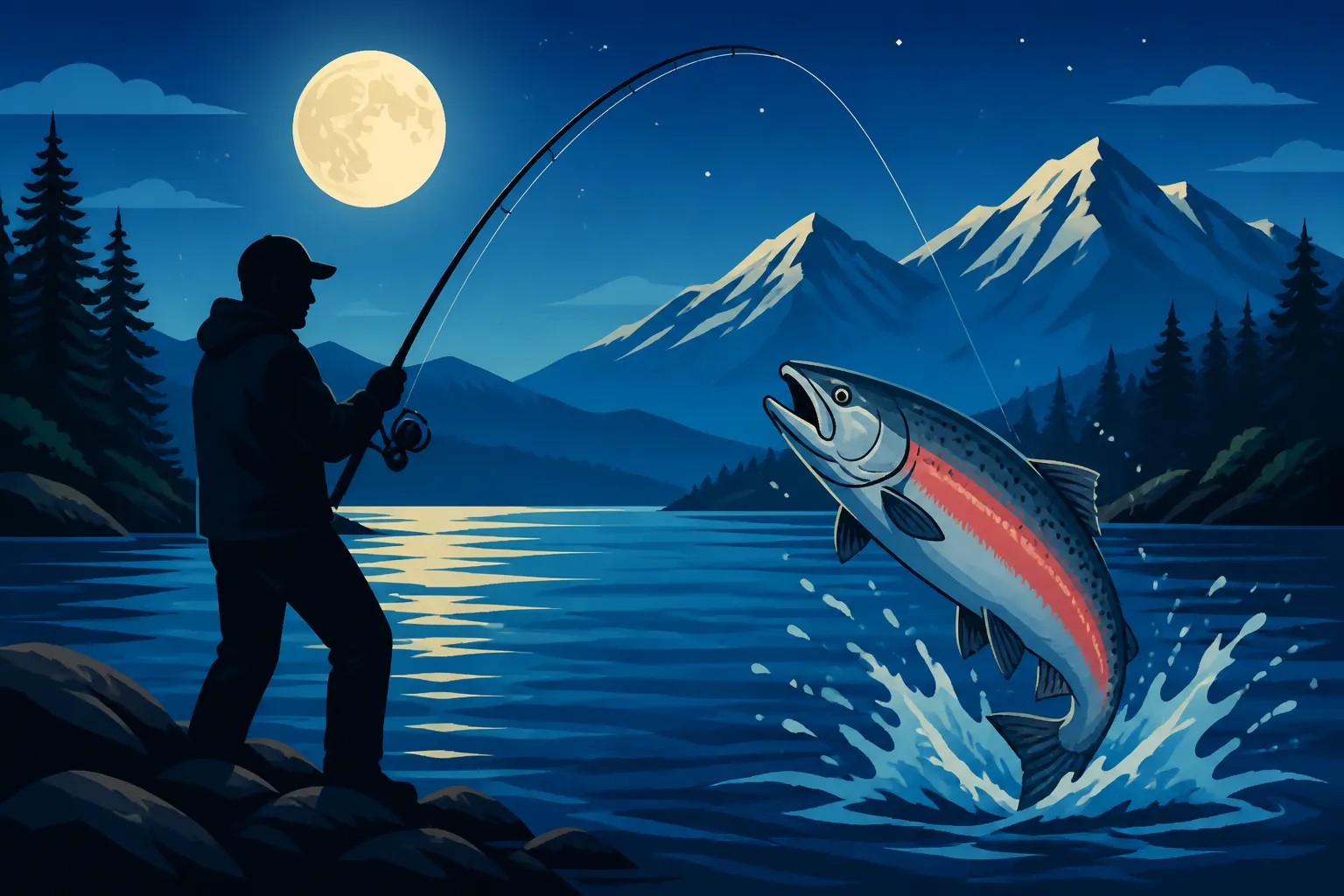
When the sun goes down, the underwater world transforms. Salmon, especially Chinook and Coho, tend to become less cautious and more active feeders. The reduced light levels mean they feel more secure venturing into shallower waters or closer to the surface to forage for baitfish. Think about it: during the day, a shadow or a strange movement on the bank might send them scattering. At night, those visual cues are largely removed, making them bolder and less spooky. This can result in more aggressive strikes and a higher chance of hooking up with a truly impressive fish. It's not just about them being hungrier; it's about them feeling safer in their environment. This shift in their predatory instincts is why many seasoned anglers swear by the witching hours.
Escaping the Crowds and Enjoying Solitude
One of the biggest frustrations of fishing in popular BC spots during peak season is the sheer number of other anglers. Boat traffic, bank anglers elbowing for space, and the general hubbub can make for a less-than-relaxing experience. Night fishing, however, offers a beautiful escape from this chaos. You'll often find yourself with entire stretches of river or vast areas of open water practically to yourself. This solitude isn't just about peace of mind; it also means less competition for prime fishing lanes and undisturbed fish that haven't been pressured by countless lures and baits throughout the day. It's a chance to truly connect with the water and the pursuit, without the constant distraction of others.
Cooler Temperatures and Unique Conditions
Summer days in BC can be scorching, making prolonged fishing uncomfortable for both you and the fish. Night fishing brings with it significantly cooler air and water temperatures. This isn't just a comfort factor for the angler; cooler water can often mean more active fish, especially during warmer months when salmon might become sluggish in heated surface waters during the day. The calmer winds that often accompany nightfall also create ideal conditions for boat control and casting. Plus, the subtle changes in tide and current that occur around dusk and dawn can often trigger significant feeding windows for salmon. Being out there when the air is crisp and the stars are out adds another layer to the magic of the experience.
Top Coastal and River Spots for Night Salmon Fishing in BC
British Columbia boasts an incredible array of waters, and many of them offer fantastic opportunities for night fishing for salmon. While specific regulations and openings can vary by season and fishery notice, certain areas consistently produce excellent results after dark. Always check the latest BC Fishing Regulations Explained and How to Check BC Fishery Notices Before a Trip before heading out.
Coastal Hotspots for Pacific Salmon
The vast coastline of BC is a salmon angler's paradise, and many of the best daytime spots only improve under the cover of night. When considering coastal night fishing, look for areas where salmon are actively staging or migrating, often near river mouths, kelp beds, or around deep structure.
- Discovery Passage (Campbell River Area): Known as the "Salmon Capital of the World," the waters around Campbell River, particularly Discovery Passage, are a major migratory route for all five species of Pacific salmon. At night, especially during the peak runs of Chinook (spring salmon) and Coho (silver salmon), these fish move through the passage with less apprehension. Trolling with glow plugs or flashers and spoons that glow or emit UV light can be incredibly effective here. The currents can be strong, so understanding tidal shifts is crucial. Many local guides, which you can often find listed on platforms like FishingBooker, specialize in these productive night trips.
- Howe Sound (Near Vancouver): Closer to urban centers, Howe Sound offers surprising opportunities, especially for Coho and Pink salmon during their runs. The deep, sheltered waters and numerous feeder streams provide excellent habitat. Look for drop-offs and current lines around islands like Gambier and Bowen. Anchoring and mooching with bait or casting glow jigs into the dark can yield good results.
- Barkley Sound (West Coast Vancouver Island): This expansive sound on the west coast of Vancouver Island is a prime feeding ground and migratory corridor. Chinook and Coho salmon stack up here before moving into the rivers. Night fishing in this area can be fantastic for those targeting larger Chinook, often referred to as "tyee." Consider hiring a local charter through a service like FishingBooker to navigate these productive, yet sometimes challenging, waters safely after dark. They'll know the exact structures and current breaks where salmon hold.
River Systems for Night Salmon Angling
Rivers offer a different, but equally exciting, challenge for night salmon anglers. Fish move into rivers to spawn, and their behavior can be highly influenced by freshwater flows and moon cycles.
- Lower Fraser River (Sturgeon and Salmon Haven): While renowned for its massive sturgeon, the lower Fraser River is also a major highway for all salmon species. During peak migration, especially for Chinook and Sockeye, fishing the deeper channels and eddy lines at night can be incredibly productive. Anchoring with bait (like roe or eulachon) in known travel lanes or casting large spoons and spinners from accessible banks can work. Remember that BC Freshwater Salmon Retention Rules apply, and regulations can be complex, especially with specific windows like BC Fraser River Sockeye Closure Windows.
- Harrison River (Fraser Valley): A tributary of the Fraser, the Harrison River is famous for its large runs of salmon, particularly during the fall. Night fishing here can be fantastic for Coho and Chum. The river's relatively calm flow in many sections makes it more accessible for night fishing from a boat or bank. Float fishing with roe or drifting large spoons can be successful.
- **Squamish River System: North of Vancouver, the Squamish River and its tributaries see strong runs of Coho and Chum, with some Chinook as well. The clear, pristine waters here require a stealthier approach, even at night. Focusing on slower pools, tailouts, and seam lines can be effective. Fly fishing with dark, large intruder patterns or drifting glow beads can entice strikes from aggressive salmon.
Remember, regardless of where you fish, understanding the local BC tidal waters area boundary map for coastal fishing, or specific river sections for freshwater, is paramount for both safety and compliance.
Essential Gear and Critical Safety for Angling After Dark
Night fishing in BC is an exhilarating experience, but it comes with inherent risks that must be carefully managed. Proper gear and a strong emphasis on safety are not just recommendations; they are absolutely critical. Think about it: you’re dealing with limited visibility, colder temperatures, and potentially strong currents or open water. Preparation is key to an enjoyable and safe outing.
Lighting and Navigation Equipment
First and foremost, you need to see and be seen. This isn't just for comfort; it's a legal requirement and a safety imperative.
- Headlamps: A good quality, waterproof headlamp with adjustable brightness and a red light option is non-negotiable. The red light preserves your night vision and is less likely to spook fish or bother other anglers. Carry spare batteries or a rechargeable unit.
- Boat Lights: If you're on a boat, ensure all navigation lights are fully functional and compliant with BC Boating Laws for Anglers. A powerful spotlight can be invaluable for spotting hazards or navigating tight spots. Interior cabin lights should be dimmable.
- Navigation Tools: A reliable GPS unit (with up-to-date charts if on the water) is crucial. Don't rely solely on your phone, as batteries can die. Consider a backup compass and physical charts, especially in unfamiliar territory. Mark your fishing spots and safe travel routes during daylight hours.
- Auxiliary Lighting: Bring along a few chemical light sticks or small LED lanterns to illuminate your fishing area, your tackle box, or the inside of your boat without creating too much glare.
Specialized Night Fishing Tackle
While much of your daytime gear will work, some additions can significantly improve your success in the dark.
- Glow and UV Lures: Salmon are highly attuned to visual stimuli, even in low light. Lures that glow in the dark (charge them with a strong light source before casting) or feature UV reflective properties can be incredibly effective. Think glow spoons, hootchies, and even glow-in-the-dark beads for float fishing rigs.
- Scent Attractants: With reduced visibility, a salmon's other senses come into play. Applying strong scent attractants (like herring, krill, or anise) to your lures and baits can make a huge difference. These leave a scent trail that salmon can follow, even in complete darkness.
- Line Choice: Consider using a high-visibility mainline (like bright yellow or green braided line) for easier tracking under a headlamp, especially if you're float fishing or drift fishing. A fluorocarbon leader remains a good choice for its invisibility underwater.
- Tackle Organization: Keep your tackle box meticulously organized. Fumbling for hooks or weights in the dark is not only frustrating but also dangerous. A tackle box with clear, separate compartments is a lifesaver.
Personal Safety and Emergency Preparedness
This cannot be stressed enough: safety first. The consequences of an incident at night are far more severe than during the day.
- Personal Flotation Devices (PFDs): Everyone on board a boat must have an approved PFD, and it's highly recommended that you wear it at all times. This is a Life Jacket Requirements for BC Boaters legal requirement, not just a suggestion. Even bank anglers should consider wearing an inflatable PFD, especially near fast-moving water.
- Warm Clothing: Temperatures drop significantly at night, even on a warm day. Dress in layers, including waterproof and windproof outerwear. Hypothermia is a real risk.
- First Aid Kit: A comprehensive first aid kit is essential. Ensure it includes items for cuts, punctures (from hooks!), motion sickness, and any personal medications.
- Communication: Always let someone know where you're going and when you expect to return. Carry a fully charged cell phone (in a waterproof case) and consider a satellite messenger or VHF radio, especially if you're in a remote area or offshore.
- Buddy System: Never go night fishing alone. Having a fishing partner provides an extra set of eyes and hands, and crucial assistance in an emergency.
- Anchor and Rope: If fishing from a boat, ensure your anchor is adequate for the conditions and you have plenty of rope. Being able to anchor quickly is vital in strong currents or when unexpected conditions arise.
- Food and Water: Pack enough provisions, as local stores won't be open. Keep hydrated, even in cold weather.
| Essential Night Fishing Item | Description | Why It's Crucial for Night Angling |
|---|---|---|
| Headlamp | Waterproof with red light option & spare batteries | Hands-free illumination, preserves night vision, safety |
| Boat Navigation Lights | Functional & compliant with regulations | Legal requirement, avoids collisions, ensures visibility |
| GPS/Chartplotter | Up-to-date maps, marked waypoints | Navigational safety, avoids hazards, finds spots again |
| Glow Lures/Scent | Charged glow spoons, hootchies, strong attractants | Increases visibility/detection for salmon in darkness |
| PFD (Life Jacket) | Worn at all times | Critical for personal safety, legal requirement |
| Warm Layered Clothing | Waterproof, windproof, thermal base layers | Prevents hypothermia in cold night temperatures |
| Communication Device | Waterproof phone, VHF radio, satellite messenger | Emergency contact, ensures help can be called |
| First Aid Kit | Comprehensive, including hook removal tools | Addresses injuries and emergencies in remote settings |
| Buddy System | Fishing with at least one other person | Extra eyes, assistance in emergencies, shared responsibility |
Proven Tactics for Hooking Salmon in the Moonlight
Night fishing isn't just about showing up after dark; it requires a slight shift in your angling approach. The water feels different, the fish react differently, and your senses are heightened. Adapting your techniques will dramatically increase your chances of success. Understanding the Best Time of Day to Catch Salmon often extends into the early hours of darkness.
Employing Slower and More Deliberate Retrieves
In the low light of night, salmon rely more on their lateral line (which detects vibrations and pressure changes) and sense of smell than on sight. This means your presentation should be less erratic and more deliberate.
- Slower Trolling Speeds: If you're trolling from a boat, slow down your speed. A slower presentation allows salmon more time to detect your lure and react. It also gives your glow lures more time to be seen as they pass by. Using a reliable depth sounder at night is even more crucial to understand where the fish are holding relative to the bottom and bait schools.
- Subtle Jigging: When jigging, reduce the aggressiveness of your jigs. Instead of sharp, violent jerks, try smoother, longer lifts and drops. Allow the jig to flutter and fall naturally. Incorporate pauses to let the lure settle, giving curious salmon a chance to investigate and strike. This is particularly effective when Jigging for Halibut off Vancouver Island as well, a technique that shares principles with deepwater salmon fishing.
- Drift Fishing with Bait: If you're drift fishing in a river, ensure your bait (often roe or cured roe) is presented naturally with the current. Use just enough weight to get it down to the strike zone without dragging excessively. The goal is to make your bait look like an easy meal drifting effortlessly downstream. For river salmon, this can often be the most effective method, especially for those learning How to Fish a River for Chinook Salmon.
The Power of Scent and Visual Stimuli
With limited light, a salmon's other senses become paramount. Maximizing these can turn a slow night into a memorable one.
- Heavy Scent Application: Don't be shy with your scent. Liquid or gel scents, infused with baitfish oils, krill, or shrimp, should be liberally applied to your lures, spoons, and soft plastics. Reapply frequently, especially after a few casts or if you haven't had a bite. The goal is to create a strong, irresistible scent trail.
- Glow-in-the-Dark and UV Enhancements: As mentioned, glow and UV are your best friends at night. Many anglers carry a powerful UV flashlight or a strong camera flash to "charge" their glow lures before each cast or drop. The brighter and longer the glow, the more attractive your offering will be. Experiment with different glow colors – green, blue, and chartreuse are popular for various species and water conditions.
- Flashers and Doodads: For boat fishing, a flasher or dodger ahead of your lure or bait adds significant visual attraction and vibration. Many modern flashers come with built-in glow or UV panels, which are especially effective at night. The erratic movement and flash created can draw salmon from a distance.
Stealth, Silence, and Understanding Structure
At night, every little sound and movement can be amplified in the quiet darkness. Maintaining stealth is crucial.
- Minimize Noise: Avoid banging tackle boxes, stomping around the boat, or loud conversations. Sound travels incredibly well underwater, and unnecessary noise can easily spook fish, sending them deeper or away from your fishing lane. Soft-soled shoes are a good idea.
- Slow, Purposeful Movements: Whether casting from shore or moving around a boat, make your movements slow and deliberate. Sudden shifts or bright lights flashing erratically can be just as alarming to salmon as loud noises.
- Familiarity with Structure: Even in the dark, salmon will relate to underwater structure. This includes drop-offs, ledges, current seams, submerged logs, and weed beds. Use your fish finder to mark these features during the day or rely on detailed charts if you're on the ocean. Knowing where the structure is allows you to target these productive areas precisely, even when you can't see them. Many productive Best Salmon Fishing Spots in BC are defined by their unique underwater topography.
- Current and Tides: For both river and coastal fishing, understanding the current and tidal patterns is paramount. Salmon often use current breaks to rest or ambush prey. Knowing when the tide is turning or when river flows are increasing can help you predict prime feeding windows. This knowledge is an extension of understanding the Best Time of Year to Fish in BC and will guide your strategy significantly, especially for targeting specific runs like Best months to catch chinook in BC. Don't forget to account for BC Salmon Conservation Stamp Rules when planning to retain your catch. If you're looking to book a guided trip to experience this, many reputable outfitters, often listed on platforms like FishingBooker, offer night excursions and can provide invaluable local knowledge.
By embracing the darkness, prioritizing safety, and adapting your techniques, night fishing for salmon in British Columbia can become one of the most rewarding and exciting ways to experience this incredible fishery.
Disclaimer
Fishing regulations in British Columbia are dynamic and can change frequently due to conservation efforts, environmental factors, and in-season adjustments. It is solely the angler's responsibility to verify and adhere to all current fishing regulations, possession limits, and licensing requirements before engaging in any fishing activity. This includes consulting the official BC Freshwater Fishing Regulations Synopsis, DFO Pacific Fishery Notices, and any local advisories. The information provided in this guide is for general informational purposes only and should not be considered a substitute for official regulatory documents.