BC prawn trap license requirements
It can be incredibly confusing trying to figure out all the specific rules and regulations when you're just trying to enjoy a simple day out on the water in beautiful British Columbia. Many anglers, especially those new to saltwater pursuits, often wonder if they need a special, separate license just for setting prawn traps, on top of their general fishing license. This guide is here to clear up that very common question and walk you through exactly what’s required to legally and responsibly harvest prawns in BC’s tidal waters.
Unpacking the Core Prawn Fishing License Requirement
The world of fishing licenses can sometimes feel like a maze, especially with different rules for freshwater, tidal waters, and specific species. When it comes to prawning in BC, the good news is you don’t need a separate, distinct "prawn trap license" as a standalone purchase. However, the activity is still heavily regulated and requires a foundational license, along with strict adherence to gear and area rules.
The Foundation: Your Tidal Waters Sport Fishing License
Before you even think about dropping a trap, the absolute first and most crucial step is possessing a valid British Columbia Tidal Waters Sport Fishing License. This license is your golden ticket for any recreational fishing activity in the ocean, estuaries, and tidal portions of rivers throughout the province. Whether you're casting for salmon, jigging for halibut, or, yes, setting out prawn traps, this is the essential document you need in your possession.
Many people, particularly those who typically fish freshwater lakes and rivers in the interior, assume their freshwater license covers everything. This is a common and understandable mistake! But it's vital to remember that BC operates with distinct licensing for its freshwater and tidal (saltwater) environments. Your freshwater license won't cut it for prawning in the Strait of Georgia or off Vancouver Island. If you're unsure which one you need, our detailed guide on BC Freshwater vs Tidal Waters License, Explained can help clarify.
The "Prawn Trap License" Misconception Explained
The confusion around a "prawn trap license" often stems from the very specific regulations concerning the traps themselves, rather than a separate permit for the act of prawning. While you don't buy a license for the trap, each trap you deploy must be clearly marked with your personal information and, most importantly, your valid Tidal Waters Sport Fishing License number. This requirement is often what people misinterpret as needing a separate license for their gear.
Think of it less like a unique license and more like a mandatory identification system. The Department of Fisheries and Oceans (DFO), which manages tidal water fisheries, needs a way to identify the owner of any gear found in the water. This helps with enforcement, ensures accountability, and allows them to track compliance with trap limits and other rules. Without proper identification tags, your traps could be confiscated, and you could face significant penalties. It's a system designed to protect the resource and ensure fair play for all recreational anglers.
Why Such Specific Gear Regulations?
The reason for such detailed rules about prawn traps – from the number you can use to their physical construction – boils down to conservation. Prawns, particularly spot prawns, are highly sought after and can be easily overfished if not carefully managed. Without limits on traps, proper escape mechanisms, and clear identification, it would be much harder to:
- Prevent overharvesting: Too many traps or too many prawns caught per person can quickly deplete local populations.
- Reduce bycatch: Specific trap designs, like those with mandatory escape holes, help non-target species (like small fish or crabs) escape, minimizing incidental harm.
- Address lost gear: Properly tagged traps make it easier for DFO or other responsible citizens to report or even retrieve lost gear, reducing "ghost fishing" where lost traps continue to catch marine life.
These regulations are a collective effort to ensure that the delicious BC spot prawn fishery remains sustainable for generations to come.
Essential Steps and Requirements for Legal Prawn Trap Deployment
So, you’ve got your Tidal Waters Sport Fishing License. Great! Now, let’s dive into the specifics of what you need to do to legally set your prawn traps in British Columbia. It’s more than just dropping a trap; it's about preparation, compliance, and ongoing vigilance.
Obtaining and Carrying Your Tidal Waters Fishing License
First and foremost, make sure you actually have your license. You can easily purchase one online through the DFO's National Recreational Licensing System. While you can often buy them at local tackle shops or sporting goods stores, buying online is convenient and ensures you have it before you even leave home. For all the details on where and how to get one, check out Where and How to Buy a BC Fishing License. Remember, whether it's printed or on a digital device, you must have proof of your valid license readily available while fishing. Our guide on Printing or Carrying a Digital Fishing License in BC offers practical advice on this.
The license isn't just a piece of paper; it contains your unique license number, which is critical for identifying your gear. Ensure you know your license number by heart or have it quickly accessible, as you'll need it for tagging your traps.
The Mandatory Prawn Trap Tagging Protocol
This is where the "license for traps" confusion really comes into play. While you don't purchase a separate tag, every single prawn trap you deploy must be clearly and durably tagged with the following information:
- Your Full Name: The name of the license holder who owns and is operating the trap.
- Your Address: Your current residential address.
- Your Valid Tidal Waters Sport Fishing License Number: This is the most critical piece of identification linking you directly to the gear.
These tags must be legible and permanently affixed to the trap. This isn't just about writing it on a piece of paper and hoping for the best. The marine environment is harsh – saltwater, currents, and sun exposure can quickly degrade flimsy tags. Many experienced prawner's use:
- Engraved plastic tags: These are highly durable and can withstand the elements for multiple seasons.
- Waterproof labels: Industrial-strength, marine-grade labels are a good option. You can find excellent durable, waterproof label options on platforms like Amazon that are designed for outdoor use and can handle immersion.
- Permanent markers on floats or trap frames: If writing directly on a float or the trap frame, ensure the marker is truly permanent and won't wash off.
Using a single, large float at the surface with your tag information clearly displayed is also a common practice. This makes it easy for DFO patrol vessels to identify your gear without needing to pull up the traps.
Understanding Gear Specifications and Limitations
Beyond tagging, there are strict rules about the design and number of traps you can use:
- Maximum Traps: Recreational anglers are typically limited to a maximum of two prawn traps per license holder. This is a hard limit designed to distribute the fishing effort and prevent any single individual from over-harvesting.
- Trap Diameter: The maximum diameter for a prawn trap is typically 1 meter (approximately 39 inches). This prevents the use of excessively large traps that could impact catch limits.
- Mesh Size: There are often minimum mesh size requirements to ensure smaller prawns can escape, allowing them to grow and reproduce.
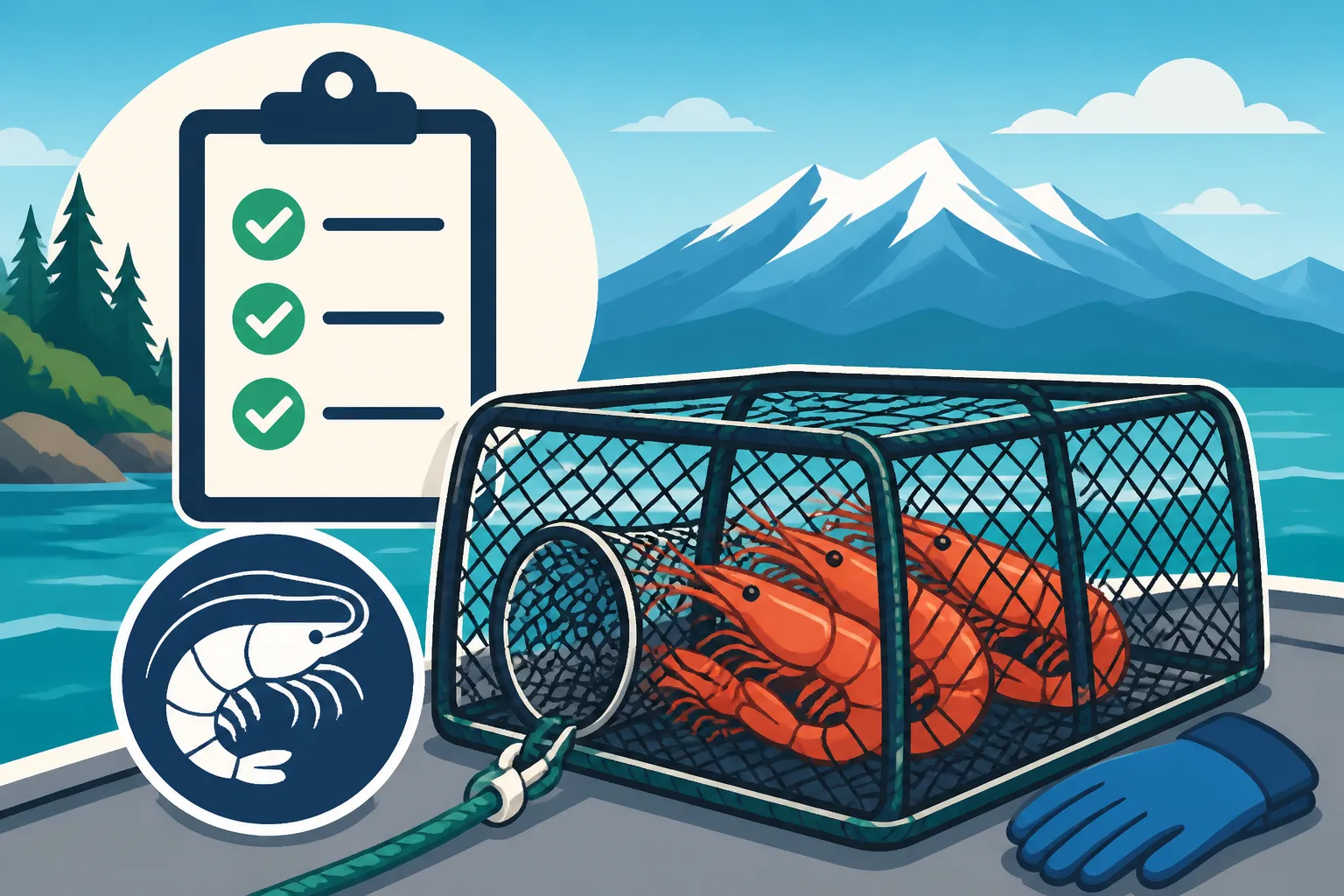
- Escape Mechanisms: This is a crucial conservation measure. Traps must include an escape opening (often a panel made of biodegradable material like untreated cotton twine) that, if the trap is lost, will eventually rot away, creating a large opening for entrapped marine life to escape. This prevents "ghost fishing," where lost traps continue to catch animals indefinitely. Make sure you understand the specific requirements for escape ring sizes and biodegradable panel materials as outlined in the DFO regulations. These are often updated, so a quick check of the DFO website or the current BC Fishing Regulations Explained is always a good idea.
- Buoy and Line Requirements: Your traps must be marked with a single, brightly colored buoy that clearly displays your license number. The line must be appropriately weighted to avoid entanglement with other vessels' propellers.
It's a good idea to research and purchase prawn traps that are already designed to meet DFO specifications, especially regarding escape mechanisms. Many fishing supply stores or online retailers like Amazon offer DFO-compliant prawn trap options, often clearly labelled as such.
Table: Prawn Trap Tagging Checklist
To help you keep track, here's a quick checklist for properly tagging your prawn traps:
| Requirement | Detail | Example/Notes |
|---|---|---|
| Tidal Waters License | Must be valid and in your possession. | Ensure your license is current for the season. |
| Information Required | Full Name, Residential Address, Tidal Waters License Number | Example: "John Doe, 123 Angler Way, Victoria, BC, License #123456789" |
| Legibility | Information must be clearly readable, even from a distance. | Use large, clear print or engraving. |
| Durability | Tag must withstand saltwater, sun, and currents without degrading or detaching. | Use engraved plastic tags, marine-grade waterproof labels, or permanent markers. |
| Affixation | Tag must be securely attached to the trap or main buoy. | Zip-tie to trap frame, attach to float rope, or write directly on sturdy buoy. |
| Number of Traps | Max 2 traps per licensed individual. | Each trap must be individually tagged with the angler's license info. |
Navigating Prawn Retention Limits and Critical Closures
Even with your license and properly tagged traps, your prawning adventure isn't complete without understanding daily limits and, perhaps most critically, the ever-changing area closures. Ignoring these can lead to heavy fines and impact the future of the fishery.
Daily Quotas and Possession Limits
The standard recreational daily limit for prawns in British Columbia is 125 prawns per day per licensed angler. This means that at the end of your fishing day, you can't have more than 125 prawns caught that day. There's also usually a possession limit, which is often twice the daily limit (e.g., 250 prawns), meaning you can't have more than that amount in your possession at any given time, including those in your freezer at home.
These limits are in place to ensure that the harvest is shared fairly among anglers and to prevent rapid depletion of local stocks. It's crucial to count your catch carefully. If you're fishing with friends or family, each licensed individual can keep their own limit, but you cannot combine your limits to exceed the individual possession limit if DFO officers deem the catch to be "in possession" by one person. For more detailed information on specific species limits, our guide on BC Bag and Possession Limits by Species is an excellent resource.
The Ever-Changing Landscape of Area Closures and Fishery Notices
This is arguably the most frustrating, yet critical, aspect of prawning in BC: area closures. The DFO regularly implements prawn fishing closures in specific management areas. These closures can be seasonal, or they can happen in-season with little advance notice, often due to:
- Conservation concerns: If DFO surveys show prawn stocks are declining in an area.
- High bycatch rates: If too many juvenile fish or other species are being incidentally caught.
- Commercial fleet interactions: To separate recreational and commercial fishing efforts.
- Biotoxin contamination: In rare cases, closures might occur to protect public health from shellfish toxins.
Imagine the disappointment of driving hours, launching your boat, and then discovering your favourite prawning spot has been closed just days before. This happens to people all the time, and it’s a real bummer. To avoid this heartbreak and ensure you're always compliant, you must check the DFO's Fishery Notices before every single prawning trip.
These notices are the official word on openings and closures and are updated frequently. Relying on old information or hearsay from a friend is a recipe for disaster. Our guide on BC Fishery Notices and In-Season Closures, Explained offers comprehensive advice on how to access and interpret these vital updates. Make it a habit: check the DFO website or subscribe to their email updates right before you head out.
Responsible Prawning Practices
Beyond the legal requirements, responsible prawning involves a few best practices:
- Minimize Bycatch: Handle any non-target species (like small crabs or fish) caught in your traps with care and release them quickly.
- Avoid Overlapping Gear: Be mindful of other anglers' gear. Space your traps appropriately to avoid tangling lines or setting in someone else's spot.
- Don't Disturb Sensitive Habitats: Avoid setting traps in areas known for sensitive marine life or habitats.
- Report Lost Gear: If you lose a trap, report it to the DFO. This helps them track and potentially recover ghost fishing gear.
Avoiding Common Prawning Pitfalls in British Columbia
Even with the best intentions, it's easy to fall into common traps (pun intended!) when prawning in BC. Being aware of these pitfalls can save you from frustration, fines, and even losing your gear.
The Mismatched License Number Debacle
One of the most frequent issues DFO officers encounter is incorrect or mismatched license information on prawn trap tags. Remember, the license number on the tag must belong to the person who set the trap and is actively fishing. You cannot:
- Use a friend's license number: Even if your buddy is on the boat with you, if they aren't actively operating that specific trap or haven't tagged it with their own license, it's a violation.
- Use an expired license number: Make sure your license is current for the season. An old license number is just as bad as no number.
- Forget your own number: If you're tagging your traps on the water, ensure you have your license number readily available.
The DFO takes gear identification seriously because it's their primary tool for managing effort and enforcing limits. If your tag information doesn't match your active license, it raises a red flag immediately.
The "I Didn't Know It Was Closed!" Excuse
As mentioned earlier, failing to check DFO Fishery Notices is a recipe for trouble. Area closures are frequent and dynamic. Anglers often face the frustration of getting all their gear ready, driving to a launch, heading out, and then discovering the area they planned to fish has been closed. Not only is it a wasted trip, but setting traps in a closed area, even unknowingly, can still result in fines and confiscation of gear.
Make checking the DFO notices part of your pre-trip ritual, just like checking the weather or fuel levels. Setting a reminder on your phone or signing up for email alerts can be incredibly helpful. This proactive step ensures you stay compliant and don't end up fishing illegally, which could lead to severe penalties.
The Allure of Illegal Gear Modifications
It might seem tempting to try to maximize your catch by modifying your traps – maybe adding more traps than allowed, removing escape mechanisms, or using illegal baiting methods. Resist this urge! The DFO is well-versed in illegal gear and frequently conducts inspections.
Using traps that don't meet the DFO's specifications, such as those without a required biodegradable escape mechanism or that are oversized, is a direct violation. These rules are not arbitrary; they are meticulously crafted based on scientific data to protect prawn stocks and the broader marine ecosystem. Trust me, it's not worth the risk. The fines can be substantial, and you could lose all your fishing gear.
The Tangible Cost of Non-Compliance
Let's be blunt: fishing illegally in British Columbia, whether it's for prawns or salmon, carries real consequences. Failing to have a valid license, improperly tagging your traps, exceeding bag limits, or fishing in closed areas can result in:
- Significant fines: These can range from hundreds to thousands of dollars, depending on the severity of the offense.
- Seizure of gear: Your prawn traps, boat, and even your vehicle could be seized.
- Forfeiture of catch: Any illegally caught prawns will be confiscated.
- Future fishing restrictions: Repeated offenses could lead to a ban from fishing in BC waters.
It's a stark reminder that these regulations are serious. Our article on Fishing Without a License in BC: Penalties delves deeper into the repercussions of not adhering to the rules. Always err on the side of caution, stay informed, and enjoy the amazing prawning opportunities BC has to offer responsibly.
Disclaimer
The information provided in this guide is for general informational purposes only and does not constitute legal advice. Fishing regulations in British Columbia, particularly those managed by the Department of Fisheries and Oceans (DFO) for tidal waters, are subject to frequent change. Anglers are solely responsible for checking the most current regulations, fishery notices, and closures directly with Fisheries and Oceans Canada (DFO) or the BC Freshwater Fishing Regulations Synopsis before engaging in any fishing activity. Reliance on the information in this article is at your own risk.