Best technique for fishing pocket water
Picture this: you’re standing river-side in British Columbia, the water is rushing, tumbling over rocks, creating a chaotic mosaic of white foam and dark eddies. It looks daunting, right? Like a fisherman’s nightmare of snags and impossible drifts. But here’s the secret: that turbulent, frothy water, often called "pocket water," is actually a goldmine for anglers. It’s where some of the biggest, most aggressive fish hold, eagerly waiting for food to wash into their hungry mouths. This guide is all about demystifying those tricky pockets, helping you understand their appeal, gear up properly, and master the techniques to turn frustration into triumphant catches.
Decoding the Dynamics of Pocket Water: Why Fish Love It (and You Should Too)
Pocket water is, quite simply, any section of a river or stream where the flow is broken up by numerous rocks, boulders, logs, or other obstructions, creating small, distinct areas of calmer water — the "pockets" — amidst the swirling chaos. Think of a mountain stream tumbling down a rocky gradient, or even a larger river with exposed gravel bars and scattered bedrock. Each rock forms a mini-ecosystem, offering a haven for fish and a buffet line of insects and small baitfish.
The sheer volume of oxygen in these highly agitated sections is a huge draw for fish, especially trout and steelhead. They don't have to work as hard to breathe, and the constant current provides a conveyor belt of food. Plus, the broken surface acts as natural camouflage, making it harder for predators (like us!) to spot them. For an angler, it’s a beautiful challenge: a puzzle where each pocket presents a unique opportunity, demanding precision, stealth, and a willingness to embrace the wild nature of the river. You might be tempted to overlook these areas, preferring the long, smooth runs, but you'd be missing out on some incredible action.
The Science Behind the Sanctuary
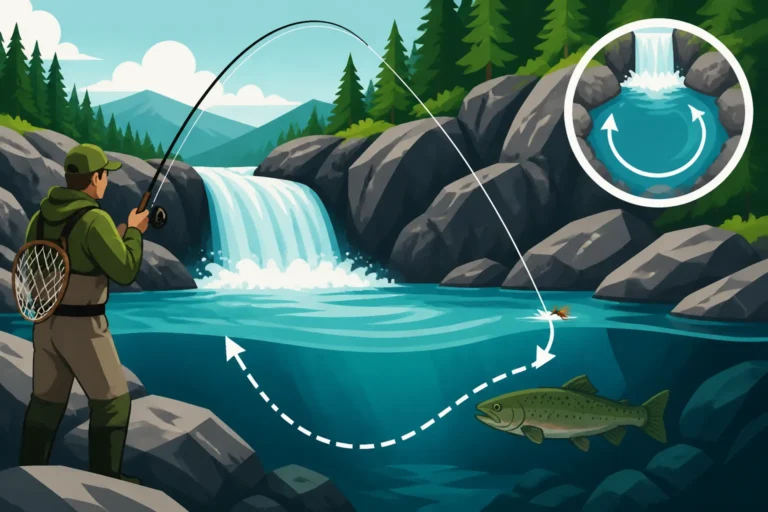
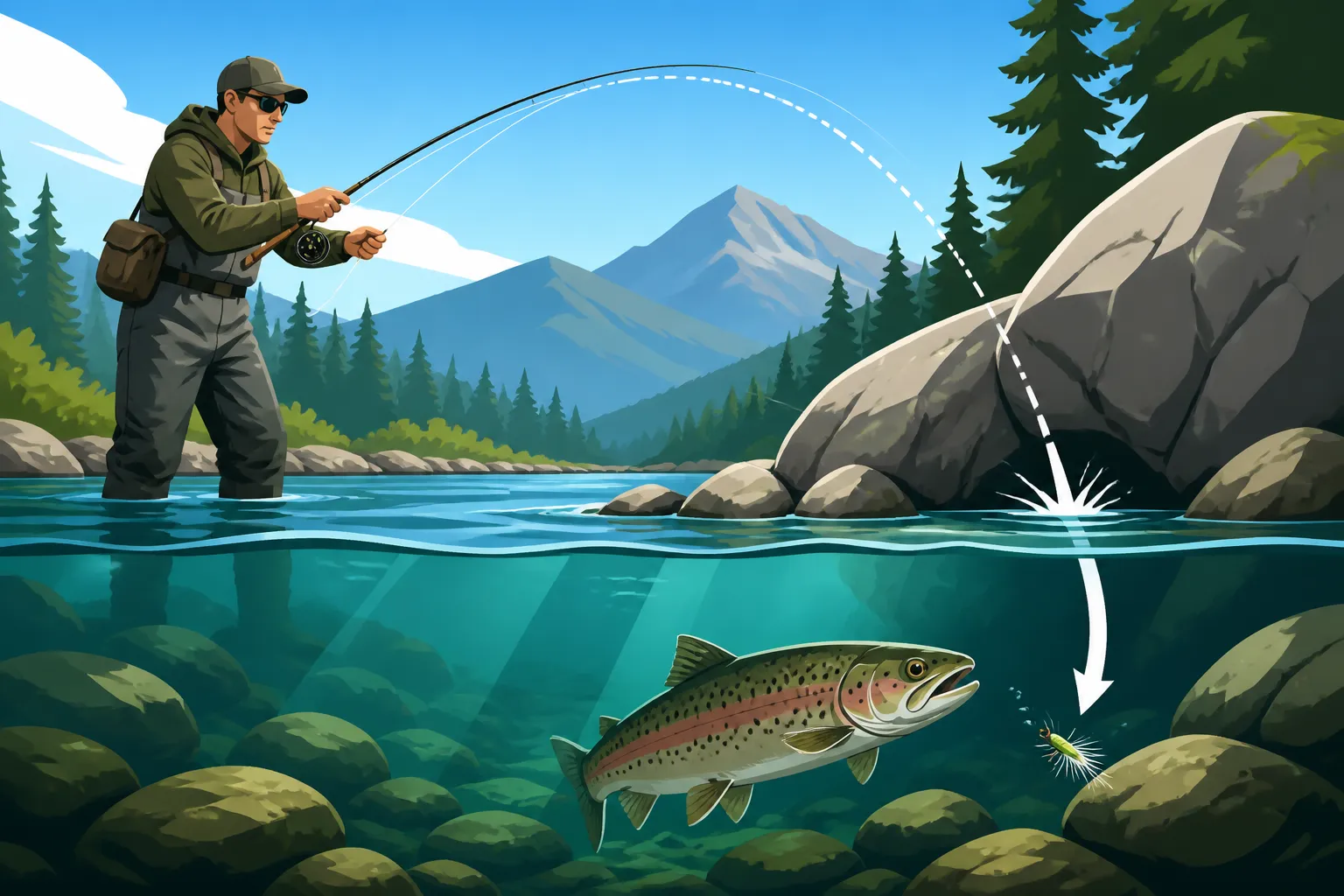
Fish aren't just in pocket water by accident; it's a strategic choice. The rocks and submerged structures create current breaks and pressure waves. On the downstream side of a boulder, a distinct "cushion" of slower water forms, often with a small eddy. This is a prime lie. Fish can hold here with minimal effort, conserving energy, while keeping an eye out for food being swept past in the main current. The faster water actually brings more food, so it's a perfect balance of low energy expenditure and high feeding opportunities.
Think about it: if you were a fish, would you rather fight a relentless current all day, or sit comfortably behind a rock, letting the groceries come to you? Exactly. This is why even a small rock in what seems like insignificant pocket water can hold a surprisingly large trout or a hard-fighting steelhead. They are incredibly efficient at finding these sweet spots. You’ll find these prime locations everywhere, from the fast-flowing tributaries feeding into a major system like the Fraser River to smaller, tucked-away mountain streams.
Identifying the Productive Pockets
Not all pockets are created equal, though. The best ones offer a combination of cover, accessible food, and a comfortable current speed. Look for:
- Downstream Eddies: These are classic. The calm water immediately behind a prominent rock or submerged log. Fish will sit facing upstream, waiting for food to drift over the obstacle and into their zone.
- Current Seams: Where fast water meets slow water. These are highways for drifting insects and can be incredibly productive. You'll often see distinct lines on the water surface.
- Depressions and Holes: Deeper sections within the pocket water provide more cover and a bit more reprieve from the current.
- Under Overhanging Banks or Roots: While not strictly "pocket water" in the sense of rocks, these structures create similar current breaks and overhead cover.
The key is to train your eye to see beyond the chaos and identify these subtle changes in current speed and depth. What might look like just a jumble of rocks to the untrained eye will soon reveal itself as a series of distinct fish-holding lies. This is where patience and observation pay off big time.
The Right Tools for the Job: Gearing Up for Pocket Water Success
Approaching pocket water requires a slightly different gear setup than what you might use for long, open runs. The emphasis here is on precision, stealth, and durability. You're going to be casting in tight quarters, managing tricky currents, and likely doing some serious wading, so having the right equipment makes all the difference.
Rods and Reels: Short and Sweet
For fly fishing in pocket water, a shorter rod is often your best friend. Think a 7.5 to 9-foot rod in a 3- to 5-weight for trout, or a 7 to 9-weight for larger trout or steelhead. Why shorter? Because you'll be dealing with overhanging branches, steep banks, and limited back-casting room. A shorter rod allows for more control in tight spaces and easier roll casts or bow-and-arrow casts. A medium-fast action rod is usually ideal, offering enough backbone for control but enough flexibility for delicate presentations.
For spin fishing, a light to medium-light rod, 6 to 7 feet long, with a fast action tip will give you the sensitivity to feel subtle bites and the power to steer fish away from snags. Pair it with a small, lightweight spinning reel spooled with 4-8 pound monofilament or fluorocarbon. Braided line can be effective too, especially if you're dealing with abrasion around rocks, but consider a fluorocarbon leader for stealth.
Lines, Leaders, and Tippet: Control is Key
When fly fishing, a weight-forward floating line is versatile, allowing for both delicate dry fly presentations and turning over heavier nymph rigs. Consider lines designed for close-range accuracy. For leaders, you'll want something shorter than usual, perhaps 7.5 feet, with a relatively strong butt section to turn over flies quickly. Tapered leaders around 3X to 5X are good starting points for trout, while 0X to 2X might be necessary for larger steelhead. Don't be afraid to experiment with shorter, heavier tippets in truly turbulent water; the fish have less time to inspect your offering. You can find specialized, high-quality leaders and tippet material on Amazon that are perfect for these conditions.
For spin fishing, a fluorocarbon leader attached to your main line (braid or mono) is crucial for invisibility and abrasion resistance. Keep the leader length manageable, perhaps 18 inches to 3 feet, to maintain control and avoid tangles.
Wading Gear: Safety First, Always
Wading in pocket water can be treacherous. Submerged rocks are often slimy and uneven, and the current can be surprisingly strong. Invest in good quality breathable waders and sturdy wading boots with felt soles or sticky rubber with studs. A wading staff is not optional; it's a lifesaver. It provides a crucial third point of contact, helping you maintain balance and probe unknown depths before taking a step. Always take your time, shuffle your feet, and assess the current before committing. Many rivers in BC, like sections of the Elk River, are renowned for their wade-fishing opportunities, but safety should always be your priority.
| Gear Category | Recommended for Pocket Water (Fly Fishing) | Recommended for Pocket Water (Spin Fishing) | Why It Works |
|---|---|---|---|
| Rod | 7.5 – 9 ft, 3-5 wt (trout), 7-9 wt (steelhead), medium-fast action | 6 – 7 ft, light to medium-light, fast action | Shorter for tight spaces, more control, fast action for sensitivity and hook sets. |
| Reel | Lightweight, smooth drag, appropriate for rod weight | Small, lightweight spinning reel, smooth drag | Balances rod, smooth drag for fighting strong fish. |
| Line | Weight-forward floating line, designed for accuracy | 4-8 lb monofilament or fluorocarbon (main line) / braid with fluorocarbon leader | Good for presentation, casting heavy flies/lures, sensitivity. |
| Leader/Tippet | Shorter tapered leaders (7.5 ft), 3X-5X (trout), 0X-2X (steelhead) | Fluorocarbon leader (18 in – 3 ft) | Stealth, abrasion resistance, turns over flies/lures effectively. |
| Wading Gear | Breathable waders, sturdy studded/felt-sole boots, wading staff | Same as fly fishing | Safety, stability, insulation, essential for navigating uneven riverbeds. |
| Accessories | Polarized sunglasses, nippers, forceps, floatant, compact fly box | Polarized sunglasses, small pliers/forceps, lure selection box | Eye protection, seeing fish/structure, tool access, organized tackle. |
Mastering the Art of Presentation: Delivering Your Offering in Turbulent Waters
Getting your fly or lure into those tight pockets, and keeping it drifting naturally, is the real challenge and the ultimate reward. It's not about casting for distance; it's about casting for accuracy and immediate line control.
Precision Casting in Close Quarters
Forget the long, graceful overhead casts you might use on a wide-open lake. In pocket water, you'll need a repertoire of short, precise casts:
- The Roll Cast: This is your bread and butter. It allows you to cast without much backcasting room. It's perfect for delivering a nymph or a small streamer from directly downstream into an eddy. The trick is to smoothly accelerate the rod forward, letting the line roll out over the water in a controlled loop.
- Bow-and-Arrow Cast: When there's literally no room for even a roll cast, this gem comes into play. Hold the fly between your fingers, pull back on the line to load the rod, and release the fly like an arrow from a bow. It’s a very short-range, highly accurate technique for poking a fly into the tiniest pockets or under overhanging brush.
- Short Overhead Casts: Sometimes you'll have a small window for a quick, compact overhead cast. Keep it low and tight to minimize wind resistance and avoid snags. Focus on a flick of the wrist rather than a full arm motion.
- Flick Casts: Similar to a short overhead, but often used to just "flick" a small nymph or weighted lure upstream and let it sink into a pocket.
Practice these casts. Seriously. Go to a local park or even your backyard and set up some targets. The more comfortable you are with precision casting, the more fish you’ll connect with. Best fly fishing rivers in British Columbia often present these exact challenges.
The Dance of the Drag-Free Drift
Once your fly or lure hits the water, the real work begins: maintaining a drag-free drift. Drag occurs when your line is pulled by currents moving at different speeds than your fly, making your presentation look unnatural to the fish. In pocket water, with its myriad of conflicting currents, fighting drag is a constant battle.
- Mending: This is the act of repositioning your line on the water to compensate for varying current speeds. If your line starts to pull your fly too fast, you'll make an upstream mend (a flip of the rod tip upstream) to add slack. If it's too slow, a downstream mend can help. It's a constant, subtle adjustment.
- High-Sticking/High-Sticking Nymphing: This technique involves holding your rod tip high, keeping most of your line off the water. This minimizes drag dramatically by reducing the amount of line subject to surface currents. It allows your fly to sink quickly and drift naturally through pockets. You often follow the fly downstream with the rod tip, staying just ahead of it. This is particularly effective when Euro Nymphing BC Interior Streams.
- Short Drifts: Don't expect long, uninterrupted drifts in pocket water. Focus on making numerous short, effective drifts through individual pockets. If your fly drifts out of the prime zone, retrieve it and cast again. Quality fly lines and specialized leaders can make a huge difference in achieving these critical drifts, and you can explore options on Amazon.
For spin anglers, similar principles apply. Cast slightly upstream of the pocket you're targeting, let your lure sink, and retrieve just fast enough to impart action without pulling it unnaturally through the current. Watch your line for any twitch or hesitation – that could be a bite!
Strategic Attack: Reading the Water and Approaching Pockets Like a Pro
Understanding the mechanics of pocket water and having the right gear is fantastic, but it won't do much good if you don't know where to cast or how to approach the water. Strategy is paramount here.
Identifying Fish Lies in the Rapids
Every rock, every seam, every bubble line tells a story. Your job is to read it:
- Current Breaks: As mentioned, fish will be directly behind or slightly to the side of large rocks and boulders where the current slows down. These are prime ambush points.
- Depth Changes: Pockets with slightly deeper water offer more security and thermal refuge. Look for darker patches of water.
- Foam Lines: Bubbles and foam accumulate where currents converge or slow down. These lines often mark productive current seams and holding areas. They also carry food!
- Shelter from the Sun/Predators: Overhanging vegetation, undercut banks, or large boulders provide crucial shade and cover.
Spend a few minutes observing before you even make a cast. Watch for rising fish (though less common in truly turbulent pockets, it does happen), or simply observe the current's flow and where it creates those juicy-looking lies. You'll find that these principles hold true whether you're targeting Rainbow Trout Fishing in BC in a small creek or Steelhead Fishing in BC in a larger river.
The Art of the Stealthy Approach
Fish in pocket water, despite the broken surface, are often more skittish than you might think. The noise and vibration of heavy footsteps on the bank can easily put them down.
- Stay Low: Keep a low profile. Crouch, kneel, or stay behind natural cover like trees and bushes.
- Approach from Downstream: Always try to approach a pocket from downstream, casting upstream into it. This puts you out of the fish’s direct line of sight (they typically face upstream) and prevents your line or shadow from spooking them.
- Wade Wisely: If wading, move slowly and deliberately. Avoid splashing. Your wading staff isn't just for balance; it's also for quietly probing the bottom.
- First Cast Counts: Make your first cast into a pocket count. Often, the first presentation is the best chance you have before the fish becomes wary. Try to land your fly or lure softly and accurately on the very edge of the pocket.
Think of yourself as a hunter, stalking your prey. Patience and a quiet demeanor will consistently lead to more hook-ups. Don't rush; the fish aren't going anywhere.
Flies, Lures, & Bait: What to Tie On (or Hook On) for Pockets
Now for the fun part: choosing what to present to these eager fish. The key in pocket water is often "heavy and buggy" for nymphs, or aggressive for lures.
Fly Fishing: Nymphs, Streamers, and a Few Dries
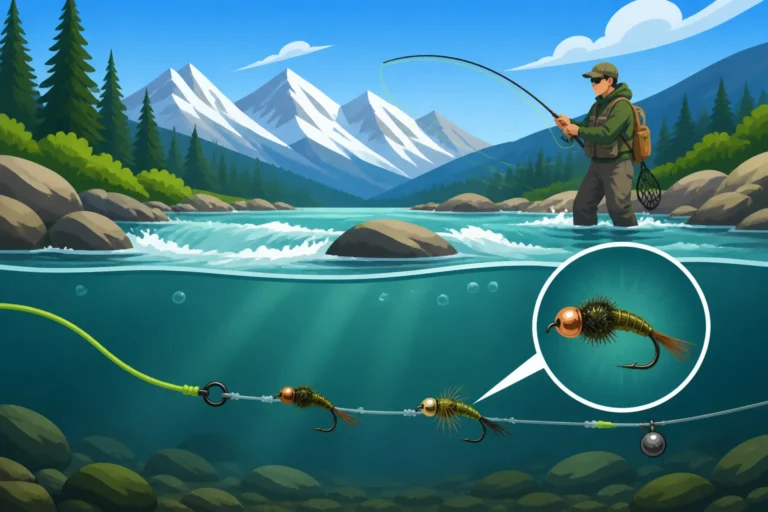
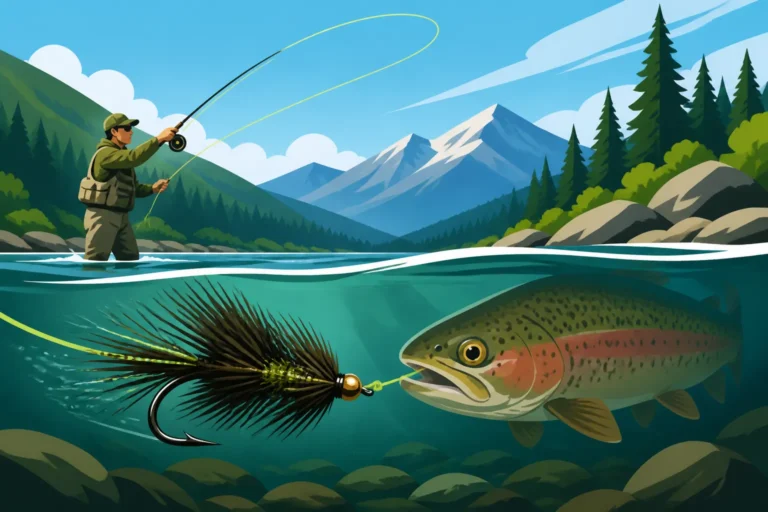
- Weighted Nymphs: These are arguably the most effective flies for pocket water. Patterns like the Copper John, Prince Nymph, Hare's Ear, or Pheasant Tail Nymph (often with a tungsten bead) are essential. You need flies that sink fast and get down to where the fish are holding in the turbulent current. Don't be shy about adding a split shot or two above your leader for extra weight. Often, two nymphs are fished in tandem, with a heavier "point" fly and a lighter "dropper" fly.
- Stonefly Nymphs: Larger, heavily weighted stonefly patterns imitate a common food source in rocky rivers. These can be particularly deadly for larger trout and steelhead in these swift-water environments.
- Small Streamers: Patterns like Woolly Buggers (black, olive, brown) or Sculpzillas can entice aggressive fish looking for a bigger meal. Strip them erratically through the pockets to mimic baitfish.
- Attractor Dry Flies: While less common for the main pocket, sometimes fish will rise in the calmer eddies or along the current seams. A large, visible dry fly like a Royal Wulff or a Stimulator can be effective, especially during a hatch. Always have a few on hand. You can find excellent multi-packs of nymphs and streamers on Amazon that are perfect for building up your pocket water fly box.
Spin Fishing: Small Lures and Baits
- Small Spinners: Classic Mepps, Blue Fox, or Rooster Tail spinners in sizes #0 to #2 are deadly. The flash and vibration in the turbulent water are irresistible. Silver, gold, copper, or bright fluorescent colors work well.
- Small Spoons: Little Cleo or Krocodile spoons in similar sizes can also be very effective. Their erratic wobble imitates injured baitfish.
- Soft Plastics/Jigs: Small curly-tail grubs or marabou jigs fished under a float (bobber) or bounced along the bottom can be incredibly effective, especially for trout. Tip them with a small piece of worm or scented bait for added appeal.
- Natural Bait: If regulations allow, a simple worm or a piece of roe fished on a small hook with a split shot can be a guaranteed fish-catcher in pocket water. The scent and natural movement are hard to beat. Always check the Reading the BC Freshwater Fishing Regulations Synopsis before using bait, as many waters are fly-fishing-only or have bait restrictions.
When choosing your offering, think about what fish naturally expect to see. In fast, rocky water, dislodged nymphs, struggling baitfish, or worms washed in by rain are common. Your presentation should mimic these natural food sources as closely as possible. The goal is to make it look like an easy meal drifting right into their feeding lane.
Disclaimer
This article is for general informational purposes only and does not constitute professional advice. Laws, prices and regulations vary by location and change over time. Consult a qualified professional for guidance on your specific situation.