Best technique for fan casting a new lake
There's nothing quite like the thrill of discovering a brand new lake in British Columbia, but let's be honest, it can also be a bit daunting. You pull up, gear in hand, stare out at that beautiful, expansive water, and the big question hits: "Where do I even start?" The frustration of making random casts and feeling like you're just guessing can quickly sour the experience. This guide is all about equipping you with the proven technique of fan casting, transforming that initial overwhelm into a systematic, effective strategy for exploring unfamiliar BC lakes and pinpointing where the fish are hiding.
Understanding Fan Casting Fundamentals for New Waters
Venturing onto an unfamiliar lake, whether it's a vast glacial expanse or a cozy interior pond, presents a unique challenge. You don't have the benefit of prior knowledge about structure, depth changes, or fish hangouts. That's where fan casting truly shines, becoming your most valuable reconnaissance tool.
What is Fan Casting and Why it's Essential
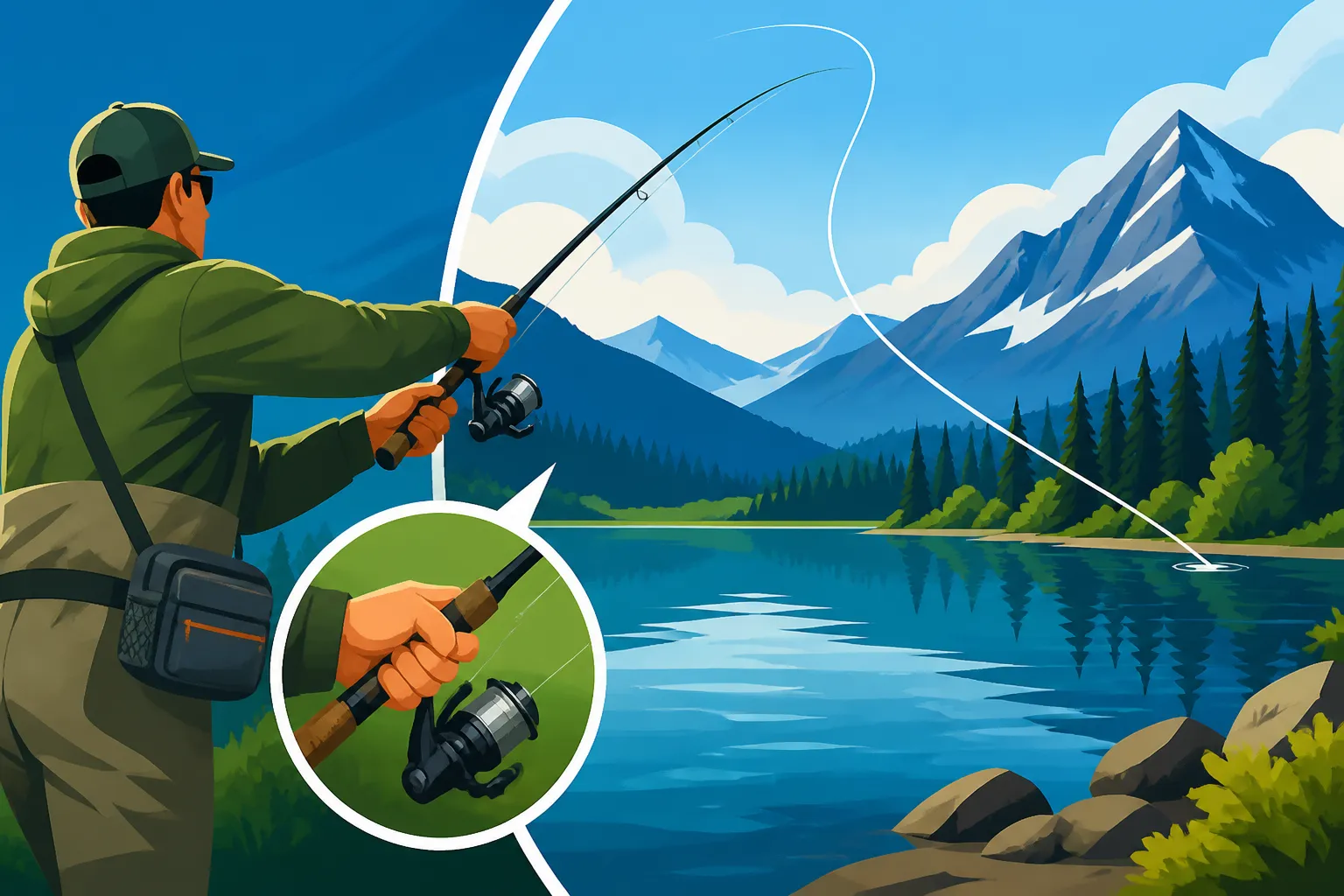
At its core, fan casting is a methodical approach to covering a broad section of water by casting your lure or bait in a series of arcs, much like the spokes of a fan. Instead of simply casting straight out, you make your first cast, then move your next cast slightly to one side, then again, slowly fanning out across the water in front of you. Once you've covered one side, you can reverse the process to complete the "fan" on the other side. This systematic coverage ensures that you're not leaving large un-fished areas, which is absolutely crucial when you're essentially blind-fishing.
Think of it as painting with your lure. Each cast is a brushstroke, and you're trying to cover the canvas in front of you. For BC's incredibly diverse lake environments, this technique is indispensable. From the clear, deep waters of the Okanagan, potentially holding large trout and bass, to the often murkier, nutrient-rich smaller lakes of the Cariboo known for their productive trout fisheries, fan casting helps you efficiently locate those subtle changes in depth, weed lines, rock piles, or submerged timber that fish love to call home. It's not just about getting a bite; it's about gathering information with every retrieve.
The Importance of a Systematic Approach
While the idea of fan casting might sound simple, the true effectiveness lies in being truly systematic, not just randomly throwing your line out. A calculated approach helps you avoid two common pitfalls: leaving unfished gaps in the water column and overlapping casts excessively, which wastes valuable time and energy.
To truly master it, start by mentally (or even physically, if you're on a boat) dividing the water in front of you into manageable segments. Imagine a clock face, with your position as the center. Your first cast might be at 12 o'clock, straight out. Your next cast could be at 11 o'clock, then 10, and so on, until you've covered a wide arc to, say, 9 o'clock. Then, you can return to 12 o'clock and work your way to 1, 2, and 3 o'clock. Each cast should land just a little further along the imaginary arc than the previous one, ensuring a thorough sweep. This deliberate movement prevents you from missing crucial pockets where fish might be holding. Remember that How to pattern trout on an unfamiliar BC lake often starts with this kind of systematic exploration.
Moreover, a systematic approach allows you to experiment with different retrieval speeds and depths within each fan. You might retrieve slowly on one cast, then faster on the next, or allow your lure to sink deeper before beginning the retrieve. This experimentation is vital for understanding what the fish are responding to on a given day, providing clues even if you don't immediately hook up. The goal is to maximize your chances of encountering fish by covering as much varied water as possible in a logical, efficient manner.
Gear Selection and Setup for Effective Fan Casting
Having the right tackle can make a huge difference in the success of your fan casting efforts, especially when you're trying to cover a lot of water on an unfamiliar BC lake. You want gear that offers versatility, good casting distance, and sensitivity to help you "feel" what's going on beneath the surface.
Rod, Reel, and Line for Maximum Coverage
When it comes to your rod, length and action are key. A medium-light to medium power rod, typically between 7 to 8 feet long, offers a great balance. Longer rods generally allow for longer casts, which is a significant advantage when you're trying to cover a wide fan. The action (how much the rod bends) should be moderate-fast or fast, providing enough backbone to cast heavier lures while maintaining sensitivity for detecting subtle bites. For many BC lake anglers, a sensitive rod is crucial for feeling the bottom structure or even light takes from species like kokanee or trout.
For reels, a spinning reel is often the go-to for fan casting, especially for shore anglers or those in smaller boats. They are incredibly versatile, easy to use, and excel at casting lighter lures long distances without much fuss. Look for a reel in the 2500-4000 series range for a good balance of line capacity and retrieve speed. While baitcasting reels offer incredible precision and power, they can have a steeper learning curve for beginners and might not be as forgiving for casting lighter presentations over a wide fan. You can find a fantastic selection of both rod and reel combos, or individual pieces, on platforms like Amazon to suit your budget and preferences.
Line choice is also critical. Braided line, typically in the 8-15 lb test range, is an excellent choice for its incredible casting distance, zero stretch (which translates to phenomenal sensitivity), and strength-to-diameter ratio. This sensitivity allows you to feel every bump, tick, and subtle change in the lake bed, which is crucial when exploring. Because braid is visible in clear water, many anglers will tie a fluorocarbon leader (6-10 lb test, 3-6 feet long) to the end. Fluorocarbon is nearly invisible underwater, providing that stealth factor without sacrificing the benefits of braid for your main line.
Lure and Bait Choices for Initial Exploration
When you're fan casting a new lake, your goal is to find fish and gather information, so you want versatile lures that can cover water quickly and appeal to a broad range of species. This isn't the time for highly specialized presentations; you need search baits.
Spoons are perennial favorites for a reason. They cast a mile, have an enticing wobbling action on the retrieve, and can be fished effectively at various depths depending on their weight and retrieve speed. Classic patterns like the Five of Diamonds, Crocodiles, or EGB spoons in silver, gold, or brass finishes can imitate many of the baitfish or minnows that BC trout and kokanee key on. Spinnerbaits are another excellent choice, particularly for targeting bass in warmer Okanagan lakes or aggressive trout in shallower, weedier sections. Their flashing blades and vibrating skirts create a lot of commotion, drawing strikes from curious fish. For those wondering about options, a quick search on Amazon reveals countless varieties and colors of these proven lures.
Soft plastics, like paddle tail swimbaits or grub tails rigged on a jig head, offer incredible versatility. They can be retrieved slowly along the bottom, jigged through the water column, or twitched near structure. Their natural appearance and action can fool even the wariest of fish. When selecting colors, start with natural patterns (silver, olive, brown) for clear water, and consider brighter or more contrasting colors (chartreuse, orange, white) for stained or murky conditions. Always remember to check the local BC Fishing Regulations Explained for any restrictions on bait or lure types in the specific lake you are fishing. Sometimes, for Best Bait for Opening Day Trout in BC, powerbait or worms are effective, but for fan casting, a more active lure is often preferred.
Executing the Fan Cast: Step-by-Step on a New Lake
Now that you're geared up, it's time to put the fan casting technique into action. The goal here is a methodical approach that maximizes your chances of finding fish and learning the contours of your new fishing grounds.
Positioning and Initial Casts
Your starting position is crucial. If you're fishing from shore, look for points, small coves, or areas where the shoreline changes abruptly – these are often fish highways. If you're in a boat, position yourself to allow for a full, unobstructed fan in front of you. Try to start at a location where you can cover both shallow and potentially deeper water.
Your very first cast should typically be straight out, directly in front of you. This establishes your "center" and gives you a benchmark for distance and depth. As soon as your lure hits the water, pay attention to how quickly it sinks; this gives you an initial idea of the water depth. Start your retrieve, noting any immediate bites or snags. Once that cast is complete, your next cast will be slightly to one side – say, 10-15 degrees to your left. Make a similar cast, trying to land it roughly the same distance as your first, but further along the arc. Continue this pattern, making successive casts that move progressively further to the left until you've covered a wide arc (e.g., from straight ahead to 45-60 degrees to your left).
Once you've covered that initial leftward sweep, you can either move to a new spot and start fresh, or return to your "straight out" cast and repeat the fanning motion to the right. The key is to visualize the arcs your lure is traveling through and ensure there are no significant gaps. Imagine slicing a pie; each cast is a wedge. Your retrieves should be consistent within each fan, but you can certainly vary the depth you're targeting. For example, some casts might be retrieved immediately after splashdown to target shallower water, while others might be allowed to sink for several seconds to explore deeper pockets.
Adapting and Moving Through the Water
Fan casting isn't just a static exercise; it's dynamic. Once you've thoroughly covered a section of water from one position, it's time to move. If you're shore fishing, take a few deliberate steps down the bank – maybe 10 to 20 feet – and then repeat the entire fan casting process. This allows you to gradually work your way along a shoreline, systematically exploring every potential fish-holding spot. For boat anglers, a controlled drift or short motor moves can achieve the same effect, allowing you to cover vast areas.
The most important part of adapting is reading the water. As you retrieve your lure, pay close attention to what it tells you. Do you feel distinct bumps, indicating rocky bottom? Does it suddenly feel lighter, suggesting a drop-off? Do you snag on weeds, revealing a weed line? These are all valuable clues. And, of course, the ultimate clue is a strike! If you get a bite, that's your signal to change tactics. Don't just keep fan casting away from the strike zone. Instead, concentrate your efforts around that spot. Make several more casts to the exact same area where you got the bite, trying different angles and retrieve speeds. There's a good chance that where there's one fish, there are more. This adaptive approach is crucial for finding and then exploiting productive zones. For example, if you're trying to figure out How to locate kokanee in BC lakes, fan casting helps you find their preferred depth and then you can hone in on that layer.
Reading the Water and Fine-Tuning Your Approach
Fan casting is just the first step. The real magic happens when you start interpreting the information your casts provide and fine-tuning your strategy based on what you learn. Every retrieve, every snag, and every subtle change in feel is a clue.
Interpreting Your Casts and Identifying Structure
As your lure travels through the water, your rod tip and line become your "eyes" beneath the surface. A sudden drop in the retrieve resistance could indicate a drop-off, a key feature where many fish species, including rainbow trout, love to ambush prey. Feeling distinct taps or bumps might signal a rocky bottom or gravel bed. Conversely, a mushy, heavy feel often means you're dragging through thick weeds. These are all vital pieces of the puzzle for understanding the lake's topography.
Beyond feeling, look for visible clues: partially submerged logs, dense weed beds, rock piles near shore, or areas where an inlet stream flows into the lake. These are all prime fish real estate. For boat anglers, a fish finder (which you can also find on Amazon, often with glowing reviews) becomes an invaluable companion to fan casting. It can confirm those drop-offs, reveal submerged humps, or even show you schools of baitfish or larger game fish that you might not be reaching with your casts. When you feel something interesting with your lure, glance at your fish finder to confirm the structure. This dual approach gives you a comprehensive understanding of the underwater landscape. Best Fishing Lakes in British Columbia often have a lot of varied structure to explore.
Species-Specific Adjustments for BC Lakes
British Columbia's lakes are teeming with diverse fish species, and while fan casting is a general search technique, you'll want to make some species-specific adjustments once you start identifying potential holding areas.
- Rainbow Trout: In many BC lakes, especially those stocked by the Freshwater Fisheries Society of BC, rainbow trout are often found near drop-offs, points, inlets, or around submerged structure like old stumps. Once you identify these areas through fan casting, switch to lures or flies that imitate local baitfish or insects. For example, using Best fly size for BC interior trout lakes in spring might be very effective if you discover a productive weed line or a shoal with fly patterns. Remember, How to Catch Rainbow Trout in BC Lakes often involves targeting these specific features.
- Kokanee Salmon: These landlocked sockeye are often found suspending in open water, rather than hugging the bottom, especially in larger, deeper lakes like Okanagan Lake or Kootenay Lake. If your initial fan casts reveal open water without much bottom structure, you might need to adjust your retrieve depth to target different parts of the water column. Allowing your lure to sink longer before retrieving, or using different lure weights, can help you find their preferred feeding depth. How to Catch Kokanee in BC frequently involves this kind of depth targeting.
- Bass (Largemouth & Smallmouth): In lakes like those in the Okanagan Valley, bass thrive around cover. If your fan casts are constantly snagging on reeds, docks, or woody debris, you've likely found a bass hot spot. Switch to weedless presentations like Texas-rigged soft plastics or topwater frogs and cast them right into that cover. You'll find great information on specific tactics in articles like Best Largemouth Bass Lakes in the Okanagan.
- Sturgeon (limited to certain lake systems with river connections): While primarily a river species, some lake systems connected to the Fraser River can hold sturgeon. If your fan casts in these specific, deep areas yield no results, it's a sign that a stationary, bait-fishing approach might be more appropriate, as sturgeon prefer to scavenge on the bottom.
By combining the exploratory power of fan casting with careful observation and species-specific knowledge, you'll be well on your way to unlocking the secrets of any new British Columbia lake.
| Factor | Benefit for Fan Casting | Considerations |
|---|---|---|
| Long Rod (7-8 ft) | Maximizes casting distance, covers more water per cast. | Can be cumbersome in tight quarters or heavily treed banks. |
| Braided Line | Excellent sensitivity for feeling structure/bites, long casting. | Requires a fluorocarbon leader for clear water; visible to wary fish. |
| Spinning Reel | Easy to use, good for casting a wide range of lure weights. | Less torque for heavy lures than baitcasters; can twist line if not managed. |
| Versatile Lures | Spoons, spinners, swimbaits cover multiple depths and species. | May not be the "best" lure for a specific species once located, but good for search. |
| Systematic Pattern | Ensures thorough coverage, avoids gaps and excessive overlap. | Requires discipline; temptation to cast randomly can be strong. |
| Reading the Retrieve | Detects depth changes, bottom composition, presence of weeds. | Requires focus and practice to differentiate between snags and bites. |
| Adaptive Movement | Continually explores new water; capitalizes on bites. | Must recognize when to move vs. when to focus on a productive spot. |
Disclaimer
This article is for general informational purposes only and does not constitute professional advice. Laws, prices and regulations vary by location and change over time. Consult a qualified professional for guidance on your specific situation.