Best center console charters in BC
The diverse and often challenging waters of British Columbia demand a fishing vessel that offers a unique blend of versatility, efficiency, and comfort. Many anglers and charter operators swear by center console boats for their ability to tackle everything from exhilarating salmon runs in coastal straits to bottom fishing for halibut in deeper offshore waters. If you're looking to book a charter that provides an unhindered fishing experience, this guide will dive deep into why center console charters are an excellent choice in BC and what to look for to ensure a fantastic trip.
Why Center Console Charters Are a Top Choice for BC Fishing
British Columbia's fishing scene is as varied as its geography, stretching from the protected inlets of Vancouver Island to the powerful tidal currents of the Discovery Islands and the open Pacific. Finding a boat that can excel in these diverse conditions is key to a successful outing, and that's where center console charters truly shine.
Unmatched Versatility Across Diverse Waters
One of the biggest advantages of a center console boat is its incredible versatility. Unlike larger cabin cruisers that might be slower and less maneuverable in tight spots, or smaller open skiffs that struggle in rougher seas, center consoles strike a perfect balance. They are typically agile enough to navigate narrower channels and shallows, yet robust enough to handle the choppier conditions often encountered in Georgia Strait or Queen Charlotte Sound. This means your charter captain isn't limited to just one type of fishing ground; they can adapt to where the fish are biting, whether it's near a kelp bed, along a tidal rip, or over a deeper reef structure.
Imagine a morning where the salmon are schooled up tight against a rocky shoreline, but an afternoon bite for lingcod is happening further offshore. A center console allows the captain to transition between these different environments seamlessly. This adaptability is invaluable when conditions or fish patterns change, as they often do in BC. This flexibility means less time travelling and more time with lines in the water, maximizing your chances of a productive day.
Furthermore, these boats are designed for various fishing styles. From trolling for Chinook salmon to jigging for rockfish or even anchoring up for sturgeon in appropriate tidal river sections, a good center console can accommodate it all. Their open layout allows for different rigging setups and ensures everyone has space to cast and retrieve, no matter the target species or technique.
360-Degree Fishability and Unobstructed Casting
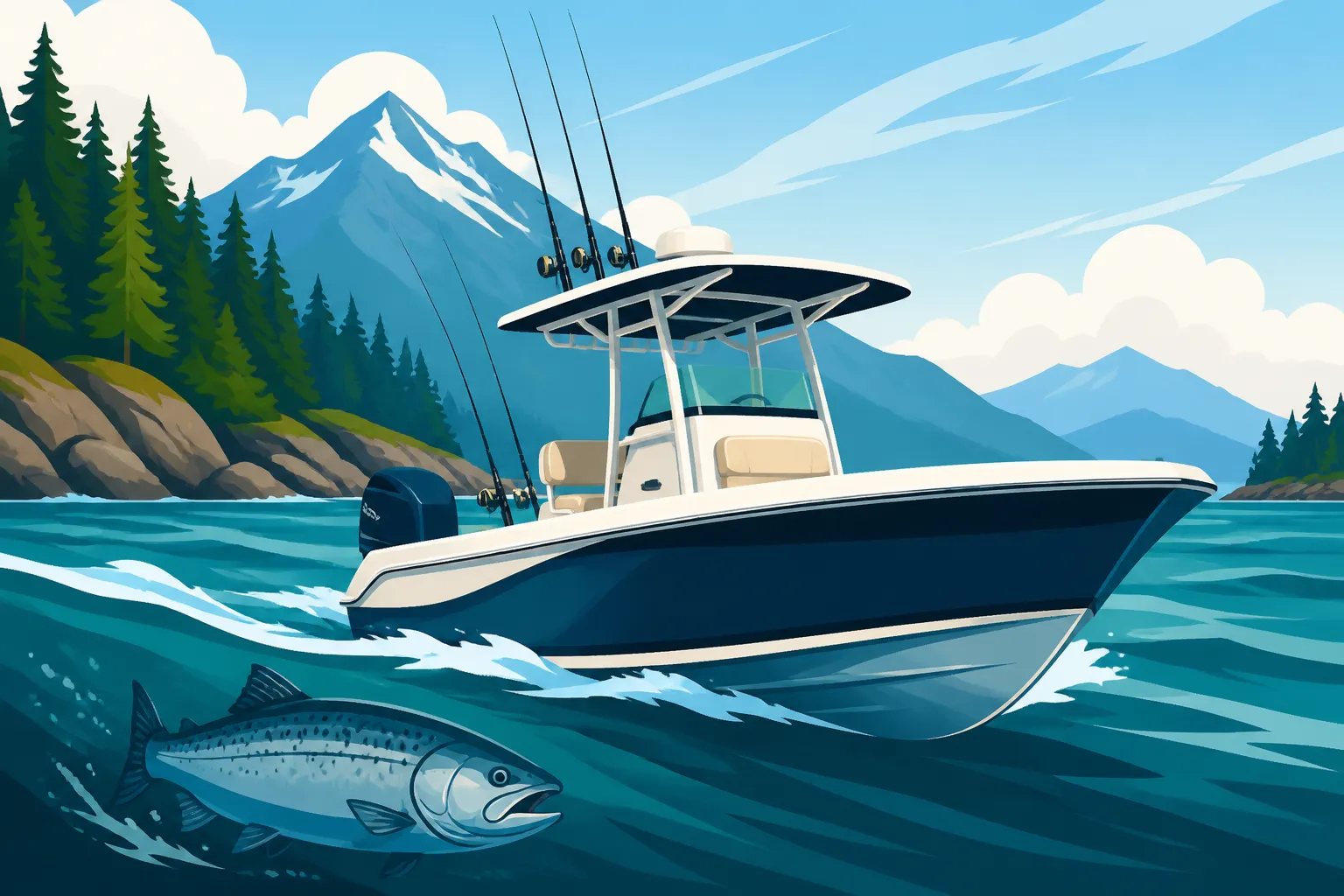
For serious anglers, the ability to move freely around the boat and cast from any angle is paramount. Center console designs place the helm in the center, leaving clear, unobstructed deck space from bow to stern and along both gunwales. This "360-degree fishability" is a game-changer, especially when multiple anglers are on board or when you're battling a strong fish that decides to run around the boat.
Think about a hot salmon bite: a school of coho salmon boils on the surface, and everyone needs to cast quickly. On a center console, there's no cabin wall to impede your backcast or a fixed seat to limit your access to the action. You can easily pivot, follow a fish, and assist fellow anglers without feeling cramped. This design also makes it much easier for the captain or crew to net fish from any side, leading to fewer lost fish at the boat.
Compared to boats with larger cabins or cuddy-style bows, the open deck space also allows for more comfortable baiting and rigging. It's easier to prepare your gear, handle live bait, or even store extra tackle boxes without feeling confined. This ergonomic advantage contributes significantly to a more enjoyable and productive fishing experience, making it easier to stay focused on the fishing rather than navigating around boat obstacles.
Speed, Stability, and Maneuverability for BC Waters
British Columbia's fishing grounds can be vast, and sometimes the best spots are a significant run from the dock. Center console boats are generally known for their efficient hull designs and powerful outboard engines, allowing them to reach distant fishing grounds quickly. This speed translates directly into more fishing time, which every angler appreciates. You don't want to spend half your charter day just getting to the spot.
Beyond speed, stability is crucial when fishing in potentially choppy conditions. Modern center consoles are engineered with deep-V hulls or other advanced designs that cut through waves smoothly, providing a drier and more stable ride. This is especially important for comfort on longer runs or when fishing in areas prone to swells. A stable platform reduces fatigue and seasickness, ensuring everyone can fully enjoy the experience.
Finally, their maneuverability is a huge asset. The ability to quickly position the boat precisely over a hot spot, follow a running fish, or hold position against a current is a skill that center console captains master. Whether it's hovering over a deep rock structure for lingcod or making precise turns while trolling for Chinook, the boat responds swiftly and predictably. This fine control often makes the difference between a frustrating outing and a memorable day of consistent action.
Key Features to Look for in a BC Center Console Charter
When you're ready to book your next British Columbia fishing adventure, knowing what to look for in a center console charter can make all the difference. Not all boats are created equal, and specific features can greatly enhance your fishing experience on BC's dynamic waters.
Size, Power, and Seating Capacity
The size of the center console matters, especially depending on your group size and the type of fishing you plan to do. For families or groups of 3-4 anglers heading out for a full day of salmon fishing, a 24 to 28-foot center console often provides ample space and comfort. If you're planning an offshore halibut excursion or have a larger group, charters running 30-foot plus vessels will offer more deck space, better stability, and usually more robust power to handle bigger seas. Discussing your group size and fishing aspirations with the charter operator is crucial to ensure the boat is a good fit.
The power of the vessel, typically measured in horsepower, dictates not only speed but also safety and efficiency. Twin outboard engines are common on larger center consoles, offering redundancy for safety and powerful acceleration, which can be beneficial when making long runs to offshore banks or swiftly responding to changing weather conditions. A well-maintained, adequately powered boat means a more reliable and enjoyable journey.
Seating is another important aspect. While the open deck offers standing room, comfortable seating is essential for travel and breaks. Look for boats with cushioned bow seating, a leaning post or bench at the helm, and possibly additional jump seats at the stern. A good center console charter will prioritize angler comfort during the non-fishing portions of the trip.
Advanced Electronics and Navigation Systems
In BC's vast and often foggy coastal environment, advanced electronics are non-negotiable for safety and successful fishing. A top-tier center console charter will be equipped with modern GPS chartplotters that accurately display navigation routes, depths, and fishing hotspots. Radar is critical for navigating in low visibility conditions, common during early morning departures or unexpected fog banks.
For finding fish, a high-quality sonar or fish finder is paramount. Look for charters that boast state-of-the-art CHIRP sonar, side-scan, or even 3D imaging capabilities. These technologies provide incredibly detailed views of the underwater world, helping the captain identify bait schools, fish holding near structure, or changes in bottom contour where trophy fish might lurk. This technological edge directly translates into more opportunities to hook up.
Beyond navigation and fish finding, a good center console should have reliable VHF radio for communication with other vessels and shore, as well as a robust safety kit including EPIRB (Emergency Position Indicating Radio Beacon) or satellite communication devices. A diligent captain will ensure all safety equipment is up-to-date and easily accessible, providing peace of mind for all on board. When browsing options, a platform like FishingBooker often allows you to filter by boat amenities and equipment, giving you an idea of the electronics on board.
Rod Holders, Livewells, and Fish Storage
Practical fishing amenities are what turn a good boat into a great fishing platform. Center consoles typically excel here. Ample rod holders strategically placed around the gunwales, transom, and T-top are essential for various trolling setups, storing extra rods, and keeping gear organized. You don't want a tangled mess when the bite turns on!
For those targeting species like salmon with bait or requiring live bait for bottom fishing, a robust livewell system is a huge plus. This keeps your bait fresh and lively, which can be the difference between a slow day and a hot bite. A good livewell will have proper aeration and circulation to maintain water quality.
Finally, adequate fish storage is critical, especially when fishing for larger species like halibut or a limit of salmon. Insulated fish boxes built into the deck or large coolers are necessary to keep your catch fresh on ice throughout the day. Some charters even have built-in macerator pumps for easy cleaning of fish boxes, making the end-of-day process smoother. These details might seem minor, but they contribute significantly to the overall quality and enjoyment of your trip.
Reputable Captain and Crew
Ultimately, the boat is just a tool; the captain and crew make the experience. A knowledgeable and experienced captain who specializes in center console operations will know the local waters like the back of their hand – where to find the fish, how to read the tides and currents, and how to safely operate the vessel in all conditions. Look for charters with captains who are passionate about fishing, prioritize safety, and are excellent communicators, willing to share their expertise.
A good crew will further enhance your trip, providing assistance with rigging, baiting, netting fish, and cleaning your catch at the end of the day. They should be friendly, professional, and attentive to your needs. Reading reviews on platforms like FishingBooker or checking testimonials can give you valuable insight into the captain's reputation and the overall quality of the service provided. Don't be shy to ask about their experience, their guiding philosophy, and what their typical day on the water looks like. It’s important to know that you're in capable hands for your BC fishing adventure.
Top Regions and Targeted Species for Center Console Charters in BC
British Columbia offers an incredible array of fishing opportunities, and center console charters are perfectly suited to explore many of its most productive waters. From the bustling coastal towns to serene, remote coves, these boats unlock access to some truly world-class angling.
Coastal Hotspots for Salmon, Halibut, and Lingcod
The vast coastline of Vancouver Island and the mainland offer prime territory for center console charters. Regions like Campbell River, often dubbed the "Salmon Capital of the World," are fantastic for targeting all five species of Pacific salmon. Here, center consoles are ideal for zipping between productive trolling lanes in Discovery Passage or exploring the nutrient-rich waters around the Discovery Islands. Charters in this area will often focus on Chinook and Coho salmon, particularly during their robust runs. Best Salmon Charters in Campbell River often utilize center console boats for their agility and fishability.
Further north, destinations like Prince Rupert and the Queen Charlotte Islands (Haida Gwaii) offer phenomenal fishing for both salmon and groundfish. These areas are renowned for their monstrous halibut and robust lingcod populations. Center console boats are well-suited for the sometimes-rougher waters of the outer coast, providing a stable platform for jigging and bottom fishing over deep reefs and banks. Anglers often combine a day of salmon trolling with a few hours of chasing these powerful bottom dwellers. Best Halibut Fishing Spots in BC are frequently accessed by these versatile vessels.
The protected waters of the Gulf Islands and Howe Sound, closer to Vancouver, also offer excellent salmon fishing. Center consoles can navigate these islands and channels efficiently, allowing captains to follow salmon migrations or target resident fish. These areas can be excellent for Chinook and Coho salmon, especially during the spring and fall runs. Understanding Best Time of Year to Fish in BC can help you plan your trip to these regions.
Nearshore Opportunities: Estuaries and Inlet Explorations
While many associate center consoles with open ocean fishing, their maneuverability makes them excellent for exploring nearshore areas, including the mouths of larger rivers and deeper inlets. The Fraser River estuary, for instance, sees massive salmon returns, and center consoles can be effective here for intercepting migrating salmon as they stage before heading upstream. While dedicated sturgeon charters on the Fraser often use specialized jet boats for shallow river sections, a robust center console can still target salmon in the lower, tidal reaches. Knowing Chinook Salmon Fishing in BC techniques can be particularly useful in these waters.
Inlets like those found along the Sunshine Coast or deep fjords on the west coast of Vancouver Island also present unique opportunities. These calm, protected waters can hold resident salmon and various rockfish species. A center console provides the ability to explore these intricate shorelines, cast into hidden coves, and efficiently move between different depths and structures. This type of fishing offers a beautiful blend of scenic cruising and productive angling, often providing a more sheltered experience than the open ocean.
Comparison of Center Console Versatility by Region
To give you a better idea of how center console charters fit into different BC fishing landscapes, consider this table outlining typical targets and conditions:
| Region | Primary Fish Species Targeted | Typical Water Conditions | Center Console Advantage |
|---|---|---|---|
| Campbell River Area | Chinook, Coho Salmon, Lingcod, Rockfish | Moderate currents, occasional chop in straits | Efficient trolling, quick movement between spots, 360-degree fishability |
| Tofino/Ucluelet | Halibut, Chinook, Coho Salmon, Lingcod | Open ocean swells, protected inlet opportunities | Stable offshore platform, speed to distant banks |
| Prince Rupert/Haida Gwaii | Halibut, Chinook, Coho, Pink Salmon, Lingcod | Often rougher open ocean, strong currents | Robust hull design for comfort, large fishing platform |
| Lower Fraser River Estuary | Chinook, Sockeye, Coho Salmon | Tidal currents, sometimes debris | Agility for targeting staging salmon, good for trolling |
| Howe Sound/Gulf Islands | Chinook, Coho Salmon, Lingcod, Rockfish | Generally calmer, protected channels | Easy navigation of intricate shorelines, versatile fishing |
This table clearly illustrates why center consoles are such a popular choice; they are not limited to one specific type of fishery but excel across many of BC's most iconic fishing grounds.
Booking Your Ideal Center Console Fishing Adventure
Embarking on a fishing charter in British Columbia is an exciting prospect, but a bit of planning goes a long way. When it comes to booking a center console, there are some specific questions and preparations that will ensure your trip is smooth, safe, and ultimately, unforgettable.
What to Ask Before Booking Your Charter
Don't be afraid to ask plenty of questions before you commit to a charter. A reputable captain and booking agent will be happy to provide detailed answers.
- What's included in the price? This is fundamental. Does it cover bait, tackle, fuel, and fish cleaning? Some charters may offer all-inclusive packages, while others might charge extra for certain items.
- What is the capacity of the boat? Understand the comfortable capacity for fishing, not just maximum passenger limit, to ensure you have enough room for your group.
- What fishing gear is provided? Ask about the quality and type of rods, reels, and tackle. Are they suitable for the species you want to target? Is there an option to bring your own specialized gear if you prefer?
- What about fishing licenses and stamps? Remember, every angler needs a valid BC fishing license, and often a BC Salmon Conservation Stamp Rules if you plan to retain salmon. Clarify if the charter assists with purchasing these or if it's solely your responsibility. It's usually best to have your Where and How to Buy a BC Fishing License handled beforehand.
- What safety equipment is on board? Inquire about life jackets (especially for children), first aid, communication devices, and emergency procedures. A professional charter will prioritize safety above all else.
- What's the cancellation policy for weather? BC weather can be unpredictable. Understand what happens if the captain deems conditions unsafe for fishing.
Using platforms like FishingBooker can streamline this process, as many details about the boat, included amenities, and captain's policies are often listed upfront. However, direct communication with the captain is always recommended for specific queries. This will give you a clear picture of What to Expect on a BC Fishing Charter.
Preparing for Your Center Console Trip
Once booked, a little preparation on your part will ensure you're ready for anything BC's waters throw at you.
- Check the weather forecast: While a center console is versatile, dressing appropriately for the weather is key. Layers are always best, as conditions can change rapidly. Waterproof outerwear, including a good jacket and pants, is essential.
- Bring appropriate footwear: Non-marking, non-slip shoes are a must for safety on a wet deck.
- Sun protection: Even on cloudy days, UV rays can be strong. Bring sunscreen, a wide-brimmed hat, and sunglasses.
- Food and drinks: Most charters don't provide meals, so pack plenty of snacks, water, and any other beverages you might want. A small cooler is often a good idea.
- Motion sickness medication: If you're prone to seasickness, take preventative medication well before departure. Being on an open center console in choppy waters can be exhilarating but also challenging if you're sensitive.
- Camera: You'll want to capture those trophy shots and the stunning BC scenery! Ensure it's waterproof or in a protective case.
Remember, the captain will often provide What Gear a BC Charter Provides, but personal items and comfort gear are your responsibility.
Understanding Costs and Inclusions
Fishing charter costs in BC can vary widely based on the duration of the trip (half-day, full-day, multi-day), the size of the boat, the number of anglers, and the species being targeted. Center console charters are often competitively priced due to their efficiency and popularity. Expect a per-trip or per-hour rate, which sometimes changes if you exceed a certain number of guests.
It’s always a good idea to confirm what's included to avoid surprises. Are fishing licenses, bait, and tackle covered, or are these extra? What about fuel surcharges for longer runs? Some charters might include processing your catch (filleting and bagging), while others might offer it as an add-on service.
Finally, don't forget about gratuities. Tipping your captain and crew is customary in the charter fishing industry, much like in restaurants. A standard tip for excellent service is generally around 15-20% of the charter fee. If you're unsure, check out Tipping Etiquette for BC Fishing Charters for more guidance. Clarifying these details upfront ensures there are no misunderstandings and you can simply focus on enjoying your time on the water. For a general idea, you can consult a BC Fishing Charter Cost Guide.
Disclaimer
This article is for general informational purposes only and does not constitute professional advice. Laws, prices and regulations vary by location and change over time. Consult a qualified professional for guidance on your specific situation.