BC Arctic grayling limit in northern BC
It's incredibly frustrating when you're planning a fishing trip, especially to a remote and wild place like northern British Columbia, only to find the regulations for a specific species like Arctic grayling are a bit murky or scattered. You want to do things right, protect these beautiful fish, and avoid any costly mistakes, but finding clear, comprehensive information can feel like a scavenger hunt. This guide is here to untangle the complexities of BC's Arctic grayling limits, helping you understand the rules and enjoy your angling adventure responsibly.
Understanding Arctic Grayling Regulations in Northern BC
British Columbia's fishing regulations are designed to protect fish populations and ensure sustainable angling for generations to come. For a species as unique and often localized as the Arctic grayling, these regulations can be quite specific, varying not just by region but sometimes even by individual lake or river system. Ignoring them can lead to significant penalties, but more importantly, it can harm these delicate ecosystems.
Why Specific Limits Exist for Arctic Grayling
Arctic grayling ( Thymallus arcticus) are a truly special fish, easily recognized by their large, sail-like dorsal fin and iridescent coloring. They thrive in the cold, clear waters of northern environments. Unlike some other species, grayling can be particularly susceptible to overfishing due to their relatively slow growth rate and preference for specific, often isolated, habitats. Their populations can take a long time to recover if depleted. The provincial government, through the Ministry of Water, Land and Resource Stewardship, carefully monitors these populations. Limits are put in place to ensure that enough fish survive to spawn and maintain healthy numbers, especially in areas where angling pressure might be higher. This conservation effort also helps preserve the unique experience of fishing for them.
General Daily Quotas for Arctic Grayling
When it comes to the general daily quotas for Arctic grayling across northern BC, the standard regulation for most open waters is often a daily aggregate limit of five (5) Arctic Grayling. This means that in any single day, you are allowed to retain no more than five grayling in total. It's important to remember that this is a daily limit, not a possession limit, though possession limits often mirror daily limits unless otherwise specified. For example, if you catch and keep three grayling in the morning and decide to go out again in the afternoon, you can only keep two more to reach your daily total of five. These general limits are a starting point, but as we'll discuss, you absolutely need to check specific regional rules.
Regional Variations in Grayling Limits
This is where it gets a little more complex, and frankly, it's where many anglers can get tripped up. While the general limit might be five, many areas in northern BC, particularly those with more sensitive or heavily fished grayling populations, have reduced limits or even catch-and-release only rules. These regional variations are critical to understand. For instance, some lakes or river sections might have a daily limit of two grayling, or perhaps even one. Others might specify a maximum size, like "not more than one over 30 cm," or a minimum size, meaning smaller fish must be released.
For example, waters in the Omineca region (which covers a large part of northern BC, including areas around Prince George, Fort St. James, and Vanderhoof) often have specific regulations for grayling. Similarly, lakes and rivers in the Peace Region (further north and east, around Fort St. John and Dawson Creek) will have their own detailed listings. It's not uncommon to find that specific creek systems or smaller, remote lakes fall under "catch-and-release only" mandates to protect fragile populations. Always, and I mean always, check the most current BC Fishing Regulations Explained for the specific Management Region and water body you intend to fish. These specific regulations override any general provincial guidelines and are paramount to ethical and legal angling. You can find detailed breakdowns in the annual Freshwater Fishing Regulations Synopsis, available both online and often in print at local tackle shops.
Identifying Arctic Grayling and Their Habitat
Successfully and legally fishing for Arctic grayling requires more than just knowing the limits; you also need to know how to identify them and where they live. Getting this wrong can lead to accidentally keeping a protected fish or missing out on prime grayling opportunities.
Key Identification Features of Arctic Grayling
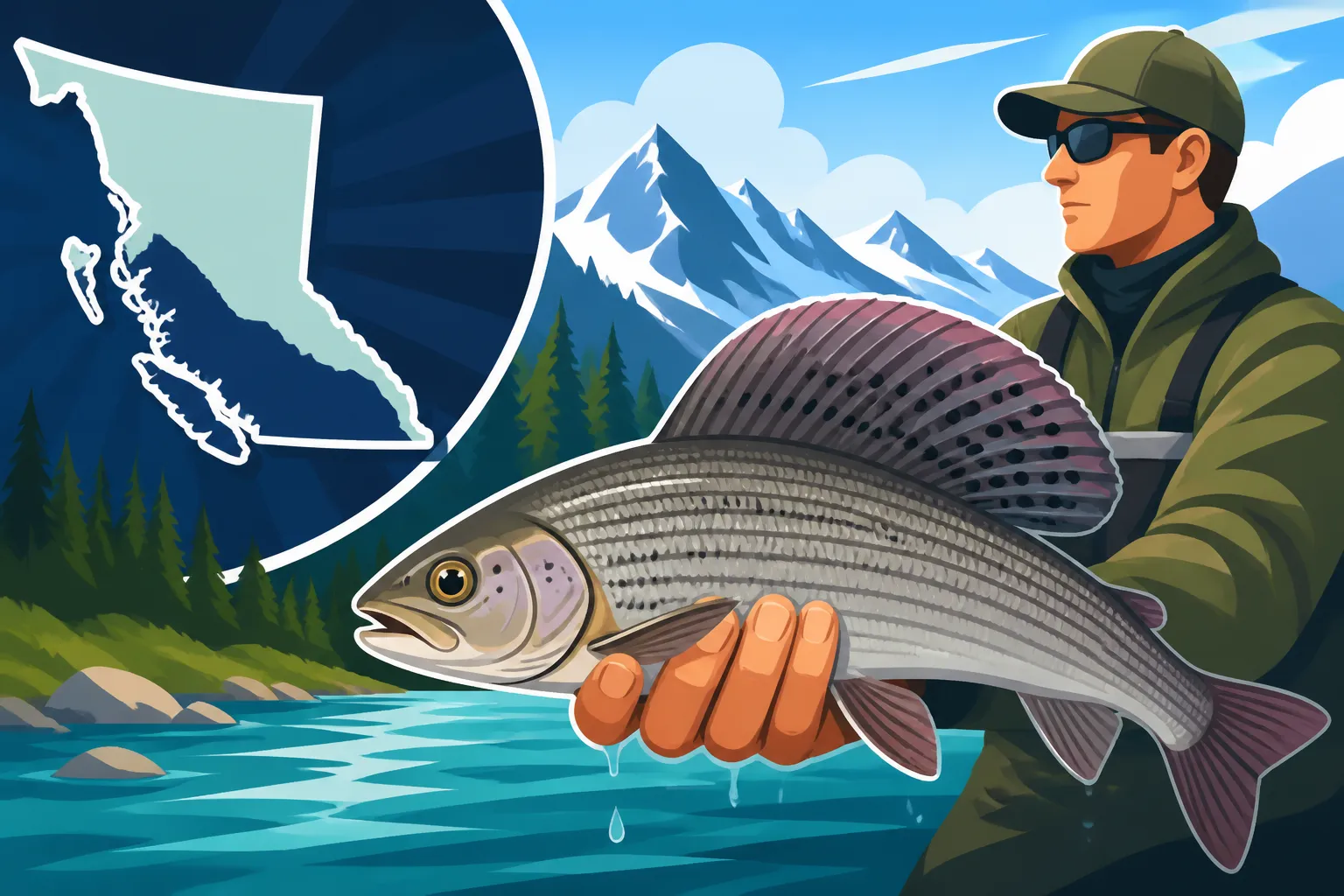
Arctic grayling are truly unmistakable once you know what to look for. Their most prominent feature is their incredibly long, high, and colourful dorsal fin, which often has rows of iridescent spots and a vibrant purplish or reddish fringe. This dorsal fin is much larger and more sail-like than that of any trout or char species found in the same waters. Their bodies typically have a beautiful bluish-grey to purplish sheen on their sides, fading to a lighter belly. You might also notice distinct black spots, especially towards the front of their body, and some may have a series of V-shaped markings along their sides. They have a relatively small mouth with fine teeth. When you encounter them, especially in clear water, their vibrant colours and distinctive fin are a dead giveaway. They really are one of the most aesthetically pleasing fish to catch in BC. To avoid any mix-ups, you might want to consider a good fish identification guide, which you can often find on sites like Amazon. For a broader understanding of different species, you can refer to a comprehensive fish species identification guide for BC.
Typical Habitats in Northern BC Rivers and Lakes
Arctic grayling are creatures of cold, clear, well-oxygenated water. In northern BC, you'll primarily find them in medium to large rivers, smaller tributary streams, and certain cold-water lakes. They prefer areas with gravelly or rocky bottoms, often congregating in slower runs, riffles, and the deeper pools of rivers. Look for them in stretches of rivers that have a good mix of current and calmer water, especially near submerged structures like logjams or undercut banks that offer shelter. In lakes, they'll often be found near inflowing streams or spring-fed areas, particularly in shallower bays during the cooler parts of the year or near drop-offs into deeper, cooler water during the summer months. Their preference for these pristine environments makes them an excellent indicator species for water quality. Knowing their preferred habitat is key to successfully targeting them.
Best Times and Methods for Encountering Grayling
The prime time for targeting Arctic grayling in northern BC typically runs from late spring through early fall, roughly May to October. Once ice-out occurs and water temperatures begin to rise, grayling become more active and are generally easier to locate. Summer can be excellent, especially in morning and evening hours when the water is cooler. They are often caught using light tackle. Fly fishing is incredibly popular for grayling, with dry flies being particularly effective during hatches, but small nymphs and streamers also work well. For spin anglers, small spinners, spoons, or even tiny jigs can be very successful. Because grayling have relatively delicate mouths and fight with a lot of head shakes, a lighter rod and reel setup with appropriate line (e.g., 4-6 lb test) is ideal. When wading, exercise caution as northern rivers can be swift and cold.
Practical Tips for Responsible Grayling Angling
Fishing for Arctic grayling in northern BC isn't just about catching fish; it's about experiencing the wilderness and practicing responsible angling to ensure these fisheries remain vibrant. It's a privilege to fish for them, and with that comes a responsibility to protect them.
Catch and Release Best Practices for Grayling
Given the conservation concerns for Arctic grayling, especially in some areas, practicing careful catch and release is paramount, even if the regulations allow retention. If you intend to release a grayling, minimize its time out of the water. Handle the fish with wet hands to protect its delicate slime coat, and avoid squeezing it, particularly around the gills or belly. Use barbless hooks, which are often required in many sensitive BC waters anyway, as they make for easier and less damaging hook removal. If the hook is deeply set, consider cutting the line as close to the hook as possible rather than tearing the hook out, as the hook will often rust away.
When releasing, gently support the fish upright in the water, facing into a gentle current, until it regains its strength and swims away on its own. Never just toss a fish back into the water. These practices significantly increase the survival rate of released fish. Many designated BC Catch and Release Only Waters are home to grayling, making these skills essential. A good quality pair of forceps or pliers for hook removal is an item you'll find useful, readily available on Amazon, for clean releases.
Essential Gear for Northern BC Grayling Trips
Preparing for a northern BC grayling trip means more than just having the right rod and reel; it means preparing for the wilderness. Beyond your light action rod (5-7 ft ultra-light to light spinning, or 3-5 weight fly rod), appropriate line, and a selection of small lures or flies, consider the following:
- Waders and Boots: Chest waders (neoprene or breathable) and sturdy wading boots are almost a necessity for accessing prime river spots and staying warm. The water in northern BC is often very cold.
- Layered Clothing: Weather can change rapidly. Bring waterproof outerwear, warm layers (fleece, wool), and a good hat.
- Bear Spray & Bear Bell: You're in bear country. Carry bear spray, know how to use it, and consider a bear bell for hiking to make noise.
- Navigation Tools: A reliable GPS device or a mapping app on your phone (with downloaded offline maps) is crucial, as cell service is often non-existent in remote areas.
- First-Aid Kit: A comprehensive kit for minor injuries is essential.
- Insect Repellent: Mosquitoes and blackflies can be relentless, especially during summer.
- Sun Protection: Sunscreen, sunglasses, and a wide-brimmed hat.
- Water & Food: Sufficient supplies for your outing. A portable water filter or purification tablets are also smart.
- Fishing License & Synopsis: Always carry your valid British Columbia Fishing License Guide for 2026 and a copy (digital or print) of the current regulations synopsis for the region you're in. This allows you to verify BC Bag and Possession Limits by Species on the spot.
Navigating Fishery Notices and Regulation Changes
British Columbia's fishing regulations, especially for specific species and regions, are not static. They can change throughout the year based on conservation concerns, biological assessments, and environmental factors. It's incredibly important to stay updated. The primary source for official, real-time updates is the BC government's Fishery Notices. Before every trip, even if you’ve fished the spot recently, you should consult these notices.
These notices can announce sudden closures, changes in limits, gear restrictions, or even reopenings. Ignoring them can lead to serious fines. You can find these on the Ministry of Water, Land and Resource Stewardship website. Many local tackle shops and guide services also keep tabs on these notices. Always be proactive in checking the BC Fishery Notices and In-Season Closures, Explained to ensure your planned trip is compliant with the very latest rules. This diligence is part of being a responsible angler in BC.
Where to Find Arctic Grayling in Northern BC
Northern British Columbia is a vast and wild region, offering incredible opportunities for anglers. Arctic grayling are not found in every water body, but where they are, they can provide fantastic fishing experiences.
Specific River Systems Known for Grayling
When it comes to river systems, northern BC boasts several renowned for their healthy Arctic grayling populations. The Finlay River system, part of the larger Peace River drainage, is perhaps one of the most famous. Its tributaries and connecting lakes offer exceptional grayling fishing, often in stunning wilderness settings. The Omineca River and its feeder streams also hold good numbers. Further to the west, parts of the Skeena River watershed, particularly its upper reaches and some of its clear, cold tributaries that aren't dominated by salmon, can also be productive. Similarly, headwaters and smaller rivers flowing into the Liard River system in the far north of BC are known grayling haunts. These river systems are often remote, requiring careful planning and sometimes even float plane access, but the reward is pristine water and eager grayling. For those seeking adventurous trips, these are among the Best Fishing Rivers in British Columbia.
Lake Systems with Healthy Grayling Populations
While rivers are often the first thought for grayling, many lakes in northern BC also provide excellent opportunities. These are typically cold, oligotrophic (nutrient-poor) lakes with good oxygen levels. The Williston Lake reservoir, one of the largest man-made lakes in North America, has some fantastic grayling fishing in its various arms and feeder streams. Connecting to river systems like the Finlay and Omineca, it's a key area. Further north, numerous smaller, unnamed lakes accessible by float plane or extensive bush roads in the Cassiar Mountains and Skeena Mountains ranges can hold thriving populations. Lakes in the Cariboo Chilcotin region, although not strictly "northern" BC in the same way, also contain grayling in their upper elevations. Remember that lake grayling can be a bit more nomadic, often following baitfish or insect hatches, so a fishfinder can be a useful tool, or just keen observation of surface activity. These lakes offer some of the Best Fishing Lakes in British Columbia for this specific species.
Accessing Remote Grayling Fisheries
Accessing the best grayling fisheries in northern BC often means embracing true wilderness. Many of the most productive spots are not roadside attractions. Expect to drive long distances on gravel logging roads, potentially requiring a 4×4 vehicle. Some prime locations are only reachable via ATV trails, hiking, or even small bush planes and helicopters. Float plane services operate out of various northern towns like Prince George, Fort St. James, and Fort Nelson, offering access to remote lakes and river stretches.
For river fishing, drift boats or rafts can be invaluable for covering water, especially in larger systems. Always inform someone of your itinerary, carry emergency communication devices (like a satellite messenger or SPOT device), and be prepared for self-sufficiency. This is rugged country, and proper planning, including understanding all BC Boating Laws for Anglers, is non-negotiable. Being prepared to truly get off the beaten path is the key to unlocking some of the most memorable Arctic grayling fishing experiences BC has to offer. A rugged, waterproof backpack, perhaps one you scouted on Amazon, is essential for carrying your gear into these remote locations.
Here's a quick overview of typical grayling limits in open areas. Please note, specific waters will often have different rules!
| Management Region (Example) | General Daily Limit | Size Restrictions (Example) | Key Considerations |
|---|---|---|---|
| Omineca (e.g., Finlay River) | 5 | Often no size restriction, but check | Highly popular, susceptible to pressure |
| Peace (e.g., remote lakes) | 5 | Varies, some may be catch-and-release | Check specific lake/river regulations |
| Skeena (e.g., upper tributaries) | 5 | Often no size restriction, but check | Remote access common, conservation focus |
| Kootenay (e.g., high elevation) | 2 or 0 (C&R) | May have length limits or C&R only | Always verify specific water body rules |
Disclaimer
The information provided in this guide is for general informational purposes only and is not legal advice. Fishing regulations in British Columbia can change frequently and vary significantly by region and specific water body. It is the sole responsibility of the angler to consult and adhere to the most current British Columbia Freshwater Fishing Regulations Synopsis, any in-season fishery notices, and all applicable provincial and federal laws before engaging in any fishing activity. Failure to do so may result in penalties.