Best technique for fishing a plunge pool
Have you ever stood at the edge of a roaring river, watching a powerful waterfall or cascade churn into a deep, dark pool below, and felt that surge of excitement mixed with a bit of intimidation? That's a plunge pool, and they can be some of the most frustrating yet rewarding places to fish in British Columbia. Many anglers struggle to effectively target fish in these turbulent waters, often losing tackle or simply not getting their presentation right. This guide is here to unravel the secrets of fishing plunge pools, offering actionable techniques to help you hook into some truly spectacular fish.
Understanding the Plunge Pool Ecosystem
Plunge pools are incredible natural fish magnets, but their chaotic appearance can be deceiving. What looks like a washing machine of water to us is often a sanctuary for fish, providing essential elements like deep holding lies, consistent oxygenation, and an endless conveyor belt of food. The key to successfully fishing these areas isn't just about casting into the white water; it's about understanding the complex hydrodynamics at play and how fish utilize these unique environments.
The Dynamics of Water Flow and Depth
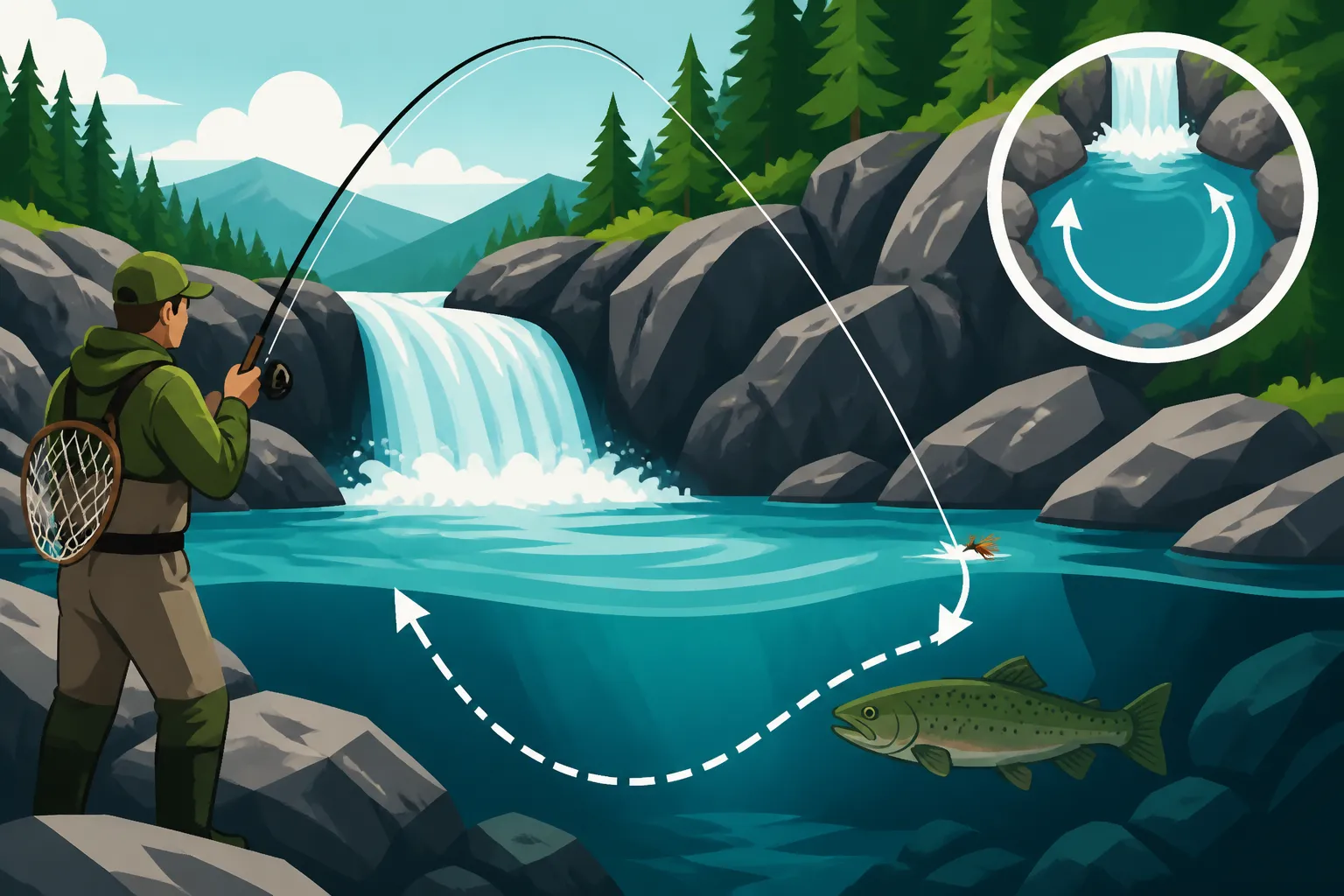
Imagine a river hitting a rock face or cascading over a ledge. The sheer force of the falling water carves out a deep basin in the riverbed – that's your plunge pool. The water here is constantly churning, dropping down, then often swirling back up or creating strong eddy lines along the edges. This constant movement brings a high concentration of dissolved oxygen, which is vital for active fish, especially anadromous species like salmon and steelhead that are often holding here before moving further upstream.
Beneath the surface, it’s a whole different world. The deepest parts of the plunge pool offer refuge from the fastest currents, giving fish a place to rest and expend less energy while still being close to the food source. Strong currents entering the pool will create a "current seam" where fast water meets slower water. These seams are prime ambush points, as they deliver food directly to waiting fish. Understanding how the current flows and where it slows down, creates eddies, or forms backwashes is paramount. You'll often find fish tucked into these calmer pockets or just on the edge of the main current, waiting for an easy meal to drift by.
Identifying Fish Holding Lies within a Plunge Pool
Fish aren't just randomly distributed in a plunge pool; they position themselves strategically. The deepest part of the pool, often directly under the main waterfall or cascade, can hold large fish seeking shelter and cooler water, especially during warmer months. However, the most active feeding lies are often found on the "cushion" of water where the main current begins to slow, or along the prominent eddy lines.
Think of it like this: the fish don't want to fight the full force of the current all day. They'll find a boulder, a submerged log, or a deep depression in the riverbed that provides a break. The trick is to identify these subtle pockets of calmer water within the churning mass. Look for areas where bubbles congregate, or where the surface shows a slight ripple in contrast to the surrounding turbulence. These are often indicators of underlying structure or a change in depth. For species like BC Steelhead, these lies are critical staging areas. Sometimes, a smaller, shallower lip at the downstream end of the plunge pool can also hold fish as they prepare to move into less turbulent water.
Essential Gear and Tackle for Plunge Pool Success
Fishing plunge pools effectively requires a specific approach to gear. It’s a battle against strong currents, potential snags, and often large, powerful fish. Many anglers find themselves losing rigs or feeling undergunned when trying to tame a chrome bright salmon or a hefty steelhead from the depths of a churning pool. Don't be that angler who snaps a light leader or loses a prize fish because their tackle wasn't up to the task.
Rod and Reel Combinations for Precision and Power
For plunge pool fishing, you need a rod with enough backbone to handle heavy weights, fight strong currents, and subdue powerful fish, yet still sensitive enough to detect subtle bites. A medium-heavy to heavy power rod, typically between 9 and 11 feet in length, is often ideal. For freshwater applications, a casting rod paired with a baitcasting reel is a popular choice, offering excellent line control for drift fishing and the stopping power needed for large species. Some anglers prefer longer spinning rods (10-12 feet) for specific techniques or improved casting distance, particularly when targeting fish from the bank.
The reel should have a smooth, reliable drag system, capable of handling blistering runs. A high-capacity spool is also a good idea, as powerful fish in current can peel off a lot of line quickly. For instance, if you're targeting big Chinook Salmon Fishing in BC, you'll want a reel that can hold plenty of strong line and won't buckle under pressure. Don't skimp on your reel; it's your direct connection to the fish, and a failing drag in a plunge pool scenario means a lost fish nine times out of ten.
Line Choices: Mono, Fluoro, or Braid?
Your choice of fishing line is critical for plunge pool success. Each type has its advantages:
- Braided Line: Many anglers swear by braided line for their main line. Its zero-stretch quality provides excellent sensitivity, allowing you to feel every bump and subtle take, even in strong currents. Braid's thinner diameter for its breaking strength also cuts through the water more efficiently, reducing drag from the current. A common setup would be 30-50 lb braid for your main line, which then ties to a leader.
- Fluorocarbon Leader: Given braid's visibility, a fluorocarbon leader is almost a necessity. Fluorocarbon is nearly invisible underwater, extremely abrasion-resistant (which is crucial around rocky plunge pools), and offers a good balance of stretch and sensitivity. Leaders typically range from 15-30 lb test, depending on the target species and water clarity. Many tackle shops, including those you can find on Amazon, offer excellent bulk spools of fluorocarbon leader material.
- Monofilament Line: While not as popular for main lines in plunge pools due to its stretch and thicker diameter, monofilament does have its place. Some anglers prefer a short mono leader section for certain drift fishing scenarios, as its slight stretch can act as a shock absorber. However, for most heavy-duty plunge pool fishing, the advantages of braid and fluorocarbon leaders far outweigh mono.
Always ensure your knots are strong and well-tied. A weak knot will be the first thing to fail under the intense pressure of a plunge pool fish.
Lures and Baits: Matching the Hatch (or the Plunge)
The turbulent environment of a plunge pool often calls for specific types of lures and baits that can get down quickly and stay in the strike zone.
- Drift Baits: For species like Steelhead Fishing in BC, roe bags, worms, or even artificial baits like gooey bobs are incredibly effective when drift fished. The key is to use enough weight (often pencil lead or heavy slinky weights) to get your bait down to the fish quickly and keep it bumping along the bottom without getting swept away. This is a core technique covered in detail in guides like Drift Fishing for Steelhead in BC Rivers.
- Jigs: Heavy jigs, especially those with marabou or rubber skirts, are excellent for probing the depths of plunge pools. Their weight helps them sink fast, and their pulsating action can be irresistible to predatory fish. Vary your jig retrieve from a slow lift-and-drop to a more aggressive twitch to see what triggers a strike.
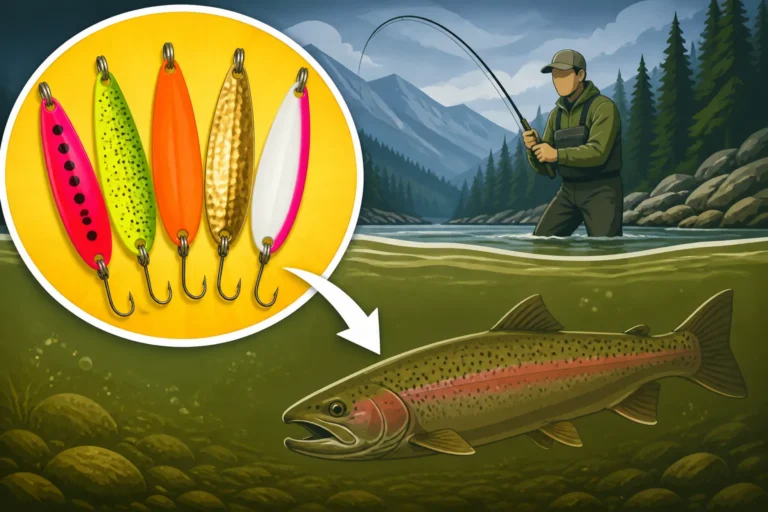
- Spoons and Spinners: While more often associated with casting and retrieving in open water, heavy spoons and spinners can be effective in the edges of plunge pools or in the slightly slower water where fish are holding. Their flash and vibration can mimic fleeing baitfish, triggering an aggressive reaction bite.
- Plugs: Diving plugs, especially those designed for strong currents, can be worked through the calmer seams of a plunge pool. Their erratic wobble can be very enticing. Ensure your plugs are heavy enough to stay down and track properly in the current.
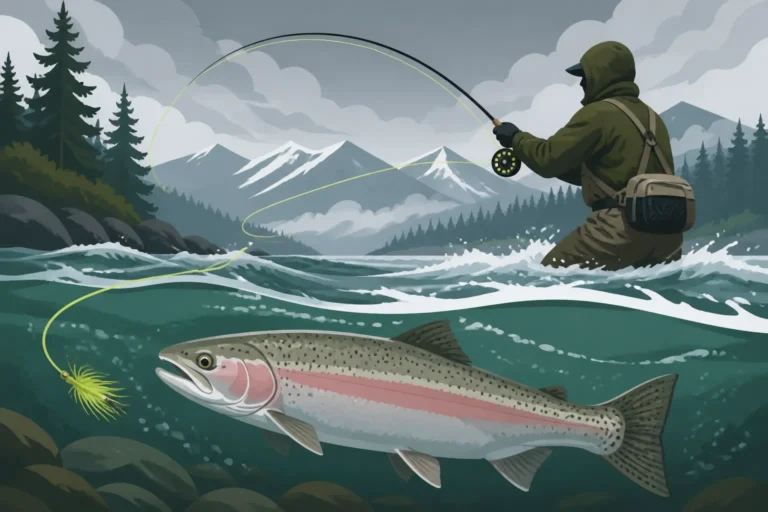
- Flies: Fly anglers also have success in plunge pools. Heavy weighted streamers, intruder patterns, or even large stonefly nymphs can be drifted or swung through the fish-holding lies. A good understanding of Fly Patterns for BC Steelhead Rivers will certainly help.
The common thread here is weight and profile. You need something that can battle the current and get to where the fish are holding, whether that's bouncing bottom or swinging through a deeper column of water. Don't be afraid to experiment with different weights and lure colours until you find what the fish are keying in on that day.
Mastering Plunge Pool Fishing Techniques
Once you understand the anatomy of a plunge pool and have your gear dialled in, it’s time to talk technique. This is where many anglers either shine or struggle. It's not just about a powerful cast; it's about precision, timing, and an understanding of how your presentation interacts with the complex currents.
Reading the Water and Approaching Stealthily
Before you even make your first cast, take a few minutes to observe the plunge pool. Identify the main current, where it slows down, where eddies form, and where any obvious structure might be. Look for visible seams, changes in water colour or texture, and any areas where debris or foam collects. These visual cues are your roadmap to finding the fish.
Approaching a plunge pool requires stealth, especially if the water is clear or if you're targeting wary fish like wild steelhead. Heavy footfalls on the bank can send vibrations through the water, spooking fish that might be holding closer to the edges. When possible, approach from downstream or from a higher bank, keeping a low profile. Avoid casting a long shadow over the water. Position yourself strategically so that you can make effective casts into the likely holding lies without putting yourself in a precarious position or spooking fish. This initial reconnaissance is often the difference between a successful outing and a frustrating one.
Drift Fishing and Presentation Strategies
Drift fishing is one of the most effective techniques for plunge pools, allowing your bait or lure to tumble naturally through the strike zone, mimicking dislodged food.
- Gauging Weight: This is perhaps the most critical aspect. You need just enough weight to get your offering down to the bottom without dragging excessively or getting swept up by the current. A good starting point is to use a weight that allows your rig to occasionally tick the bottom as it drifts. Too little weight, and your bait will fly over the fish. Too much, and you'll snag constantly. Pencil lead, slinky weights, or even heavy split shot are common choices.
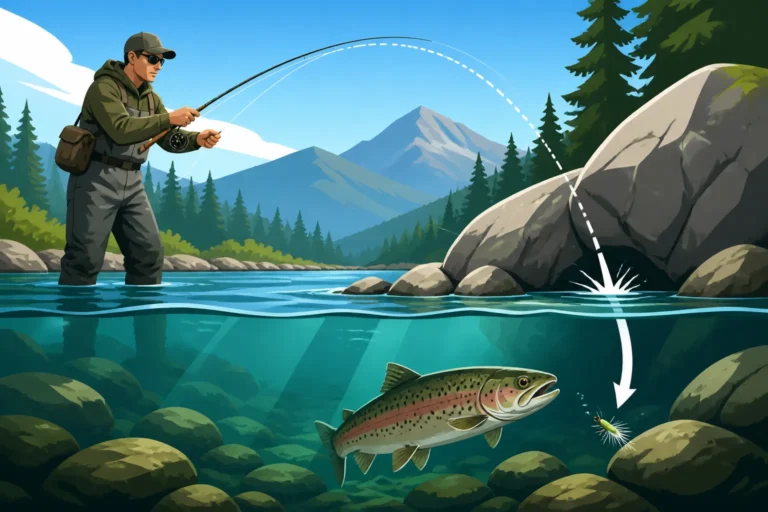
- Casting Upstream: Make your cast well upstream of the suspected fish-holding lie. This allows your weight and bait/lure time to sink to the desired depth before it reaches the fish. The distance upstream depends on the current speed and the depth of the pool.
- Mending and Line Control: As your rig drifts downstream, you'll need to "mend" your line. This involves flipping a loop of line upstream to counteract the drag of the current on your main line. This ensures your weight and bait continue to drift naturally at the speed of the current, rather than being pulled too fast or too slow. Effective line control is vital when you're wading a BC Steelhead River.
- Feel for the "Tick": Pay close attention to your rod tip. You should feel an occasional "tick" as your weight bumps along the bottom. If you stop feeling it, either you're drifting too high or you've got a bite! Any unusual stop, pull, or dead weight feeling should prompt a quick, firm hook set.
- Targeting Seams: Focus your drifts along the current seams where the fast water meets the slower water. These are natural feeding lanes. Sometimes, a series of short, repeated drifts through the same seam will entice a wary fish to strike.
This technique is highly effective for a variety of species, from Rainbow Trout Fishing in BC to aggressive salmon.
Jigging and Swinging for Deeper Holds
When fish are holding very deep or are less inclined to chase a drifting bait, jigging or swinging can be deadly.
- Vertical Jigging: This technique is best suited for the very deepest parts of the plunge pool, or when you can position yourself directly over a known holding lie. Drop a heavy jig straight down to the bottom. Once it touches down, lift your rod tip sharply a foot or two, then let the jig flutter back down on a semi-slack line. The strike often happens on the fall. Vary the speed and height of your lifts until you find what the fish prefer. This method is often used effectively by those targeting Best Lures for Sturgeon on the Fraser River in deep channels, even if not specifically plunge pools.
- Swinging Lures/Flies: Swinging is a classic technique, especially popular with fly anglers using large streamers or weighted wet flies, but it can also be adapted for conventional gear with spoons or plugs. Cast your lure across and slightly downstream of the plunge pool. Allow it to sink to the desired depth. Then, let the current do the work, sweeping your lure in an arc across the likely holding lies. Maintain a tight line throughout the swing, feeling for any resistance or subtle pull. The fish often hit the lure as it pauses at the end of its swing or as it begins to move into slower water. This can be especially productive for chrome bright salmon as they enter the river.
Remember, the fish in plunge pools are often powerful. When you get a strike, be prepared for a strong fight, and ensure your drag is set appropriately to handle the initial surge.
Safety and Etiquette in Plunge Pool Environments
Fishing in and around plunge pools, while exhilarating, comes with inherent risks and responsibilities. The very features that make them attractive to fish also make them potentially dangerous for anglers. Moreover, these often-productive spots can draw a crowd, making good etiquette essential.
Navigating Tricky Terrain
The rocks and banks surrounding plunge pools are frequently wet, mossy, and incredibly slippery due to the constant spray and humidity. A misstep can lead to a serious fall, especially if you're carrying gear or trying to land a fish.
- Wader Safety: If you're planning to wade, invest in high-quality waders with felt soles or stud-enabled rubber soles for maximum grip. A wading staff is not optional; it’s a critical piece of safety equipment that provides a third point of contact and helps you probe the riverbed for stable footing.
- Bank Stability: Always check the stability of riverbanks before committing your weight. Erosion from the powerful currents can undercut banks, making them prone to collapse. Stick to established paths or areas with solid ground.
- Current Awareness: Understand that currents in a plunge pool can be deceptively strong. Even seemingly calm areas can have powerful undertows. Never wade into water that is above your knees unless you are an experienced and confident wader, and always be aware of your escape route should you lose your footing. Knowing proper Wading Techniques for BC Steelhead Rivers is invaluable here.
- Life Jackets: If you're fishing from a boat near a plunge pool, or if you're wading in particularly deep or swift water, wearing a life jacket is a smart choice. Accidents can happen quickly, and a PFD could save your life.
Your safety is always more important than catching a fish. Assess the risks, and if a spot feels too dangerous, move on. There are always other fish to be caught.
Practicing Responsible Angling
Plunge pools can be high-traffic areas, especially during peak salmon and steelhead runs. Practicing good etiquette ensures a pleasant experience for everyone and helps conserve our precious fish stocks.
- Give Space: If another angler is already fishing a plunge pool, give them ample space. Don't crowd them or cast over their line. Wait your turn, or find another spot. A simple nod or verbal greeting can go a long way.
- Don't High-Grade: This often means casting for fish you can see, then moving on if they don't bite. This can harass fish and reduce their willingness to strike. Be patient and work your spot thoroughly before moving.
- Minimize Disturbance: When moving through the area, try to keep noise and movement to a minimum. Loud talking or splashing can spook fish for other anglers.
- Leave No Trace: Pack out everything you pack in. This includes discarded fishing line, bait containers, and any other garbage. Our rivers are beautiful; let's keep them that way.
- Understand Regulations: Always consult the current BC Fishing Regulations Explained before heading out. Plunge pools often fall within special regulation waters or areas with specific gear restrictions, particularly for species like Fraser River Sturgeon Catch and Release Requirement or specific salmon runs. Be sure to understand BC Catch and Release Only Waters rules if you're in one of those areas. Ignorance of the rules is no excuse.
- Practice Catch and Release with Care: If you are releasing fish, do so quickly and carefully. Keep the fish in the water as much as possible, use wet hands, and revive it thoroughly before letting it go. Strong currents can be tough on released fish, so ensuring a full recovery is even more critical in plunge pools.
By being mindful of both your safety and your impact on the environment and fellow anglers, you contribute to a positive and sustainable fishing culture in British Columbia.
| Technique | Best For | Gear Considerations | Pros | Cons |
|---|---|---|---|---|
| Drift Fishing | Deep runs, turbulent water, wary fish | Heavy weights, sensitive rod, strong fluorocarbon | Natural presentation, covers lots of water | High snag potential, requires constant line management |
| Vertical Jigging | Deepest parts of the pool, stationary fish | Heavy jigs, short precise casts | Direct presentation, good for pinpointing fish | Limited casting range, can be tiring |
| Swinging Lures | Eddy lines, current seams, aggressive fish | Weighted streamers/spoons, long rod for control | Covers broad areas, triggers reaction bites | Less effective in extreme turbulence, can be challenging with wind |
| Bottom Bouncing | Very deep pools, strong currents, bottom feeders | Slinky/pencil weights, heavy baitcasting gear | Gets bait to fish quickly, stable in current | High snag risk, can be less sensitive |
Disclaimer
This article is for general informational purposes only and does not constitute professional advice. Laws, prices and regulations vary by location and change over time. Consult a qualified professional for guidance on your specific situation.