Best technique for pre-spawn kokanee
The pre-spawn period for kokanee can be one of the most exciting, yet perplexing, times to target these silver dynamos in British Columbia. Many anglers find themselves frustrated as kokanee seem to vanish from their usual haunts or refuse to bite with their characteristic enthusiasm. This guide will walk you through the nuances of kokanee behavior before they head to the spawning grounds and equip you with the best techniques, gear, and strategies to successfully fill your cooler.
Understanding Pre-Spawn Kokanee Behavior
Before you can hope to catch pre-spawn kokanee, you really need to get inside their heads – or at least understand what's driving their movements and feeding patterns. This isn't your typical summer kokanee fishing; things are shifting, and so should your approach.
Why Pre-Spawn Kokanee Are Different
During the peak summer months, kokanee are often found in deeper, cooler waters, actively feeding on zooplankton. They're typically cruising in open water, forming schools that show up nicely on a fish finder. However, as summer starts to wane and fall approaches, usually from late August through September in many BC lakes, a profound shift occurs. Kokanee, being landlocked sockeye salmon, are genetically programmed to spawn and die, just like their anadromous cousins. This instinct begins to kick in, fundamentally changing their priorities.
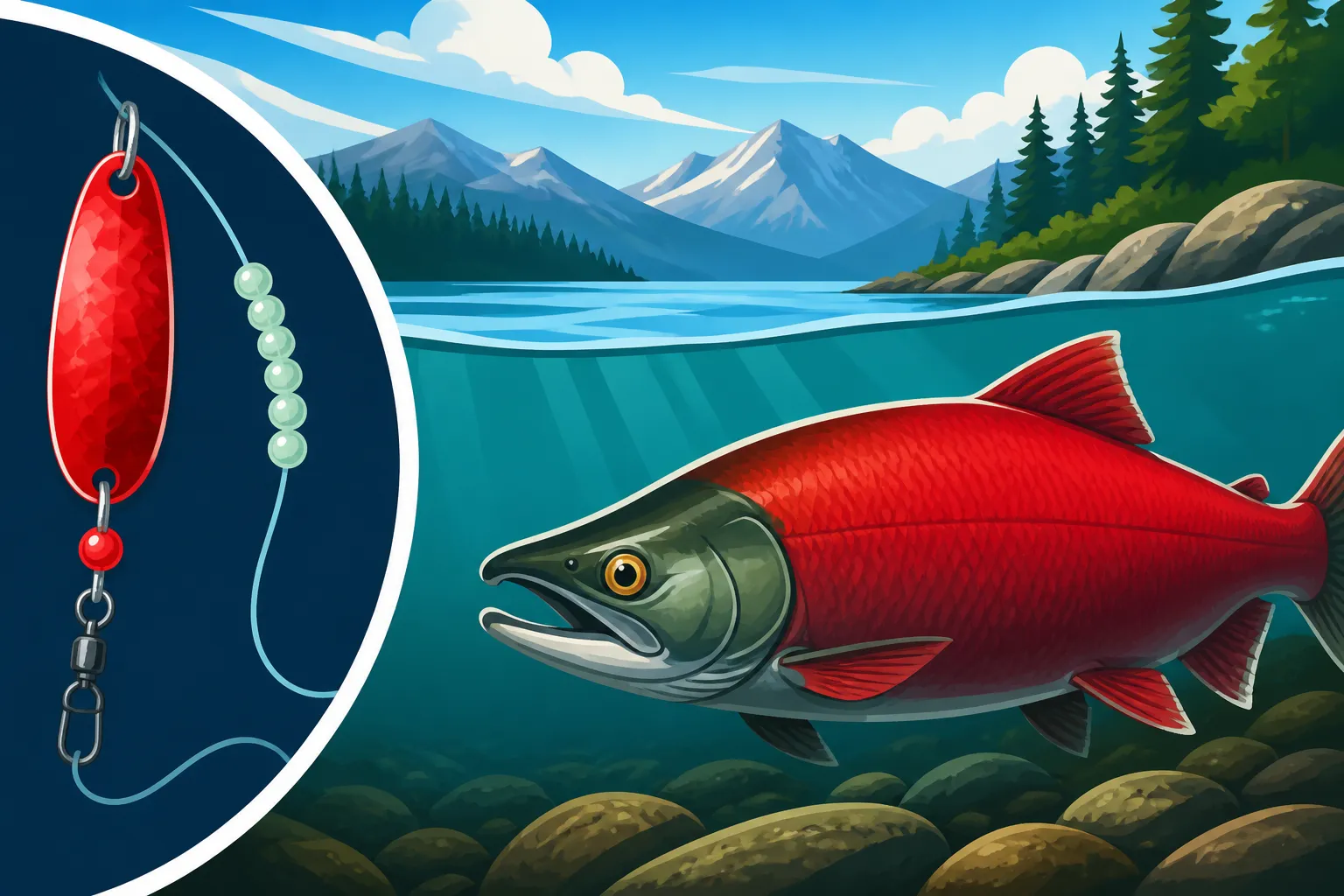
Instead of chasing food purely for growth, their focus shifts to energy reserves for the upcoming spawn. They start to move out of the deep, open water and begin staging in shallower areas closer to their ancestral spawning grounds – often river mouths, creek inlets, or gravelly shoals. Their bodies start to change too; the males develop hooked jaws (kypes) and turn a vibrant red, while females also redden and become heavy with eggs. This physiological change often leads to a decrease in their aggressive feeding behavior. They might not be actively gorging themselves, but they still need to feed to maintain energy. They become more opportunistic, often hitting lures out of instinct, irritation, or a last gasp for sustenance. Recognizing this transition is key to locating them and enticing a strike.
Key Environmental Factors Affecting Pre-Spawn Kokanee
Several environmental factors play a huge role in how and when pre-spawn kokanee will move and feed. Ignoring these can lead to a very slow day on the water.
Firstly, water temperature is paramount. As lake temperatures begin to drop in late summer and early fall, it signals to the kokanee that spawning time is nearing. They’ll seek out water columns that are comfortable for staging, often slightly warmer than their deep summer haunts but still cool enough to be oxygenated and safe from predators. Keep an eye on your boat's temperature gauge; understanding the thermal layers can help you pinpoint where they might be holding.
Secondly, light penetration influences their depth. Kokanee, like many salmonids, tend to be light-sensitive. On bright, sunny days, they might hold a bit deeper, even if they're staging in shallower areas overall, using the available depth for cover. Overcast days or early mornings/late evenings might see them rise higher in the water column, making them more accessible.
Finally, the time of year itself dictates the pace. The pre-spawn window is typically narrow. It's usually the few weeks leading up to the full-on spawning run. Missing this window means you'll either be dealing with highly aggressive, actively feeding fish (earlier summer) or completely uninterested, already-spawning fish (later fall). Knowing the general Kokanee Spawning Season in BC for your target lake is crucial. For instance, in many Okanagan lakes, this transition period can be very productive.
Essential Gear and Tackle for Pre-Spawn Kokanee
Having the right tools for the job makes all the difference, especially when fish are starting to get a bit finicky. Pre-spawn kokanee require a subtle approach, and your gear should reflect that.
Rods, Reels, and Line Selection
For kokanee, whether pre-spawn or otherwise, light tackle is your friend. You're dealing with a fish that, while strong, isn't a massive brute, and often takes lures with a gentle touch.
Rods: Look for a sensitive, light-action trolling rod. A length of 7 to 8.5 feet is generally ideal. The soft tip helps cushion the aggressive strikes that kokanee can sometimes deliver, preventing hooks from tearing out, especially when trolling with a dodger. A longer rod also helps spread out your lines if you're running multiple rods. You can find excellent options on platforms like Amazon that offer the necessary sensitivity without breaking the bank.
Reels: A small, level-wind baitcasting reel or a good quality spinning reel spooled with light line is perfect. The key is smooth drag, as a sudden run from a hooked kokanee can snap light line instantly. Line counters on baitcasting reels are a huge asset, allowing you to replicate successful depths accurately.
Line: This is critical. Many seasoned kokanee anglers opt for a main line of 8-10 lb braided line, not for strength necessarily, but for its minimal stretch, which provides excellent sensitivity. To this, attach a fluorocarbon leader of 6-8 lb test, typically 15-30 feet long. Fluorocarbon is nearly invisible underwater and has excellent abrasion resistance, which can be useful when you’re fishing near structure as the kokanee stage. For your downrigger release, a monofilament main line might be preferred by some for its stretch. The principles are similar to those outlined in our guide on Trolling Techniques for BC Lake Trout, focusing on precision and finesse.
Lures, Baits, and Scents
Pre-spawn kokanee are often targeted with a specific set of lures and baits designed to entice them, even when they’re not aggressively feeding.
Dodgers and Flashers: These are fundamental for kokanee fishing. They create attraction, flash, and vibration that draw kokanee from a distance. For pre-spawn fish, smaller dodgers (4-6 inches) or small flashers are often preferred over the larger ones used for salmon. The action created by the dodger imparts movement to your trailing lure, making it irresistible. Popular choices include the Sling Blade or Arrow Flash dodgers from brands like Macks Lure.
Trailing Lures: Directly behind the dodger, you'll attach your main lure. The most common and effective choices are:
- Wedding Rings: These classic lures feature a small spinner blade, beads, and often a single hook. They come in a myriad of colors, but combinations of silver, pink, orange, and chartreuse are often top producers.
- Small Hoochies: These soft plastic squid imitations, usually 1.5-2 inches long, are incredibly effective. Again, pink, orange, and chartreuse are popular.
- Small Spoons: Tiny trolling spoons, like those from Gibbs Delta or similar brands found on Amazon, can also be very productive, especially in metallic finishes.
- Jigs: While trolling is primary, small jigs can be surprisingly effective for How to Catch Kokanee Through the Ice or when vertical jigging directly over a marked school. For this, look at our tips on Best Kokanee Jig Colors for Deep Trolling.
Bait: This is the secret sauce for many kokanee anglers. The universally accepted kokanee bait is shoepeg corn, dyed in various colors (pink, green, or natural) and infused with scent. Thread 2-3 kernels onto your hook. The corn provides visual attraction and, more importantly, a scent trail that kokanee simply can't resist.
Scent Attractants: This cannot be overstated. Kokanee are highly scent-oriented. Even if they’re not actively feeding, a strong scent can trigger a strike. Popular scents include garlic, krill, anise, and various salmon-egg formulations. Apply scent directly to your corn, hoochies, or wedding rings frequently throughout your fishing session. There are many great scent brands available, and you can usually find a good selection on Amazon.
Top Techniques for Targeting Pre-Spawn Kokanee
Now that we understand their behavior and have the right gear, let's talk about how to get those pre-spawn kokanee into the boat. This period often demands precision and patience.
Trolling Tactics
Trolling is overwhelmingly the most effective technique for pre-spawn kokanee. The goal is to present your offering at the right depth, at the right speed, in the right areas.
Depth Control is Paramount: As kokanee begin to stage for spawning, they might move into shallower waters than their typical summer haunts, but "shallower" is relative. They could still be anywhere from 20 to 80 feet deep, depending on the lake, light conditions, and specific time in the pre-spawn cycle. This is where a downrigger becomes invaluable. It allows you to precisely place your lure in the strike zone where you're marking fish on your sonar. Without a downrigger, you can still use leaded line or snap weights, but precision will be harder to achieve. Pay close attention to your fish finder; if you see schools at 45 feet, set your downrigger ball at 45 feet. For guidance on How to Locate Kokanee in BC Lakes, your fish finder is your best friend.
Speed and S-Turns: Kokanee generally prefer slower trolling speeds than many other salmonids, typically between 0.8 and 1.5 mph. Experiment to find what the fish prefer on any given day. More importantly, incorporate S-turns into your trolling pattern. As your boat turns, the outside lines speed up and rise, while the inside lines slow down and drop. This change in speed and depth can often trigger strikes from otherwise hesitant fish. Many anglers find that strikes often occur just as the boat is coming out of a turn.
Stacking Lines: If you're allowed multiple lines (check BC Bag and Possession Limits by Species and BC Freshwater Fishing Regulations Explained), consider stacking lines on your downriggers. This involves clipping another line onto the same downrigger cable, above the main line. This lets you cover more of the water column efficiently, testing different depths simultaneously. Just be mindful of tangles!
Still-Fishing and Jigging (When Applicable)
While trolling dominates the pre-spawn kokanee scene, there are specific situations where still-fishing or jigging can be productive.
Still-Fishing: This technique is rarely the primary method for pre-spawn kokanee, but it can be effective if you've located a very dense school holding in a specific area, such as a deep channel near a river mouth or over a prominent underwater structure. Anchor upwind of the school and drop baited jigs or small spoons straight down. The slow, natural drift of your bait might be just what's needed for those less active fish. This can also be a good option for Best Shore Fishing near Kelowna or for those without a boat.
Jigging: This is more commonly associated with ice fishing for kokanee, but it can work from a boat. If your fish finder shows a tightly packed school of kokanee holding at a specific depth, especially if they appear suspended, vertical jigging with small, flashy jigs can be deadly. Drop the jig to the desired depth, then use short, sharp lifts and drops of your rod tip to make the jig "dance." Add a piece of scented corn to the hook for extra appeal. The flash and erratic movement can provoke a reaction strike. Understanding Best Kokanee Jig Colors for Deep Trolling will be beneficial here.
Reading Your Electronics
Modern fish finders are indispensable tools for kokanee anglers. They don't just show you fish; they help you understand the underwater environment.
Locating Schools: Your primary goal is to find schools of kokanee. Look for dense arches or blobs, often appearing as distinct clouds on the screen. Pre-spawn kokanee tend to school up more tightly as they prepare to move. Don't just look for fish; look for patterns. Are they near a drop-off? Are they suspended at a specific depth throughout a large area?
Understanding Depth and Structure: Use your sonar to identify underwater structure like submerged points, humps, or old river channels. As kokanee stage, they will often congregate around these features before heading to the actual spawning areas. Your electronics can also show you the thermocline – the layer where water temperature changes rapidly – which can indicate where fish are most comfortable. Pay attention to how deep the fish are, and adjust your downrigger accordingly. Even a few feet can make all the difference when kokanee are particular.
Seasonal Considerations and Best Practices
Successful pre-spawn kokanee fishing isn't just about technique; it's about timing and mindful angling.
Timing Your Approach
The exact timing of the pre-spawn kokanee bite varies significantly by lake and region within BC. Generally, it begins in late summer (mid-August to early September) and can extend into early October. However, once the kokanee move fully into their spawning phase, their coloration changes to bright red, their bodies become gaunt, and their flesh degrades. At this point, they typically stop feeding entirely and become focused solely on reproduction.
Therefore, the "pre-spawn" window is when they are still relatively silvery, their flesh is firm, and they are still willing to strike a lure, even if not aggressively feeding. This period can last anywhere from a couple of weeks to over a month. Consult local fishing forums, tackle shops, and local knowledge for the specific lake you're targeting. Our guide to Best Time of Year to Fish in BC offers a broader perspective, but for kokanee, hyper-local intel is often best.
Conservation and Responsible Angling
Kokanee are a precious resource, and responsible angling is crucial to ensure their populations remain healthy for future generations.
Adhere to Regulations: Always, always check the current BC Freshwater Fishing Regulations Synopsis for the specific lake you are fishing. Pay close attention to daily bag limits, possession limits, and any special restrictions on specific lakes or rivers. This includes any BC Kokanee Retention Rules that might be in effect. Regulations can change quickly, so check before every trip.
Handle with Care: If you intend to release fish, handle them as little as possible. Use barbless hooks to make unhooking easier. Keep the fish in the water as much as you can, and use wet hands if you need to touch them. Even if you're keeping your catch, avoid unnecessary stress on the fish.
Respect Spawning Grounds: As kokanee near their spawning areas, avoid disturbing them. Fishing directly on active spawning beds is generally frowned upon and often prohibited. The goal is to catch them before they are actively spawning, when they are still a viable food source and offer a good fight.
By understanding the unique challenges and opportunities presented by pre-spawn kokanee, equipping yourself with the right gear, and employing targeted techniques, you can enjoy some truly rewarding fishing in British Columbia's beautiful lakes.
| Technique | Description | Ideal Conditions | Recommended Gear | Notes |
|---|---|---|---|---|
| Trolling | Pulling lures behind a boat at slow speeds, typically with downriggers for depth control. | Best for covering large areas, locating scattered schools, and precise depth presentation. | Light-action rod, small level-wind reel, braided mainline with fluorocarbon leader, small dodgers, hoochies/wedding rings, scented corn. | Vary speed (0.8-1.5 mph) and incorporate S-turns. Use a fish finder to monitor depth. |
| Jigging | Dropping and retrieving a small jig vertically over a marked school of fish. | Effective when kokanee are tightly schooled and suspended, or in specific deep holes. | Sensitive rod, spinning reel, small metal or plastic jigs (1-2.5 inches), scented corn. | Often a secondary technique; best with good sonar. Jerk and pause retrieves. |
| Still-Fishing | Anchoring over a known kokanee holding area and fishing with bait or jigs. | Suitable for very dense, localized schools in deeper staging areas, or for shore anglers. | Medium-light spinning rod, baitcasting reel, weighted bait rig (e.g., slip sinker), scented corn on a small hook. | Requires patience; can be good for multi-rod setups if legal. |
Disclaimer
This article is for general informational purposes only and does not constitute professional advice. Laws, prices and regulations vary by location and change over time. Consult a qualified professional for guidance on your specific situation.