Best kokanee jig colors for deep trolling
Oh, the age-old question that keeps many of us anglers scratching our heads out on British Columbia's beautiful, deep lakes: "What in the world is the best kokanee jig color for deep trolling?" It’s a common frustration, isn't it? You spend good money on gear, meticulously set your downriggers, and then stare at your tackle box, wondering if that iridescent chartreuse or the subtle silver flake is the one. This guide is here to unravel that mystery, helping you pick the perfect hues to entice those tasty landlocked sockeye.
Understanding Kokanee Vision and Preferences in Deep Water
Before we dive into specific colors, it’s really helpful to understand a bit about how kokanee perceive their underwater world, especially when they're holding deep. It's not just about tossing in any flashy thing; there's a method to the madness, and it starts with light.
The Science Behind Kokanee Color Perception
When you're trolling jigs at 50, 70, or even 100 feet deep in a BC lake, the light environment is drastically different from what you see on the surface. Water acts like a filter, absorbing different wavelengths of light at varying rates. The first colors to disappear are reds, followed by oranges and yellows. As you go deeper, greens become muted, and eventually, only blues and purples are truly visible. This is why a bright red jig that looks fantastic in your hand can appear as a dull, dark silhouette to a kokanee at significant depth.
Kokanee are primarily sight feeders, especially when targeting the tiny zooplankton they love. Their eyes are adapted to this low-light, blue-green world. So, when we talk about "best colors," we're really talking about what colors or contrasts remain visible and appealing in their specific depth zone. Understanding this optical trickery is crucial to selecting jigs that truly stand out, even when the sun's rays barely penetrate.
Mimicking Natural Prey and Attractants
Kokanee mostly feed on zooplankton, which are microscopic organisms. They don't typically key in on large baitfish like a trout or salmon might. This means your jig isn't necessarily trying to imitate a shiner or a minnow in terms of scale or exact color. Instead, it's often about creating a flash, a silhouette, or a subtle glow that mimics the reflective qualities of a zooplankton cloud or a small, vulnerable invertebrate. Sometimes, the goal isn't direct imitation, but rather to trigger a strike response through curiosity or aggression.
Think about how sunlight catches tiny particles in the water – that sparkle and shimmer is often what you're trying to replicate. While zooplankton themselves aren't brightly colored, their collective movement and the way light refracts off them can create an attractive disturbance. This is why many successful kokanee jigs aren't just one solid color but incorporate elements of flash, translucence, or UV reflectivity. The idea is to make your presentation look like something worth investigating in the kokanee's dim, deep-water domain.
Top Kokanee Jig Colors for BC Deep Trolling
Alright, let's cut to the chase and talk about the actual colors that put kokanee in the boat. While conditions vary, there are some undeniable winners for deep trolling in British Columbia's lakes.
The Irresistible Silver and Chrome Family
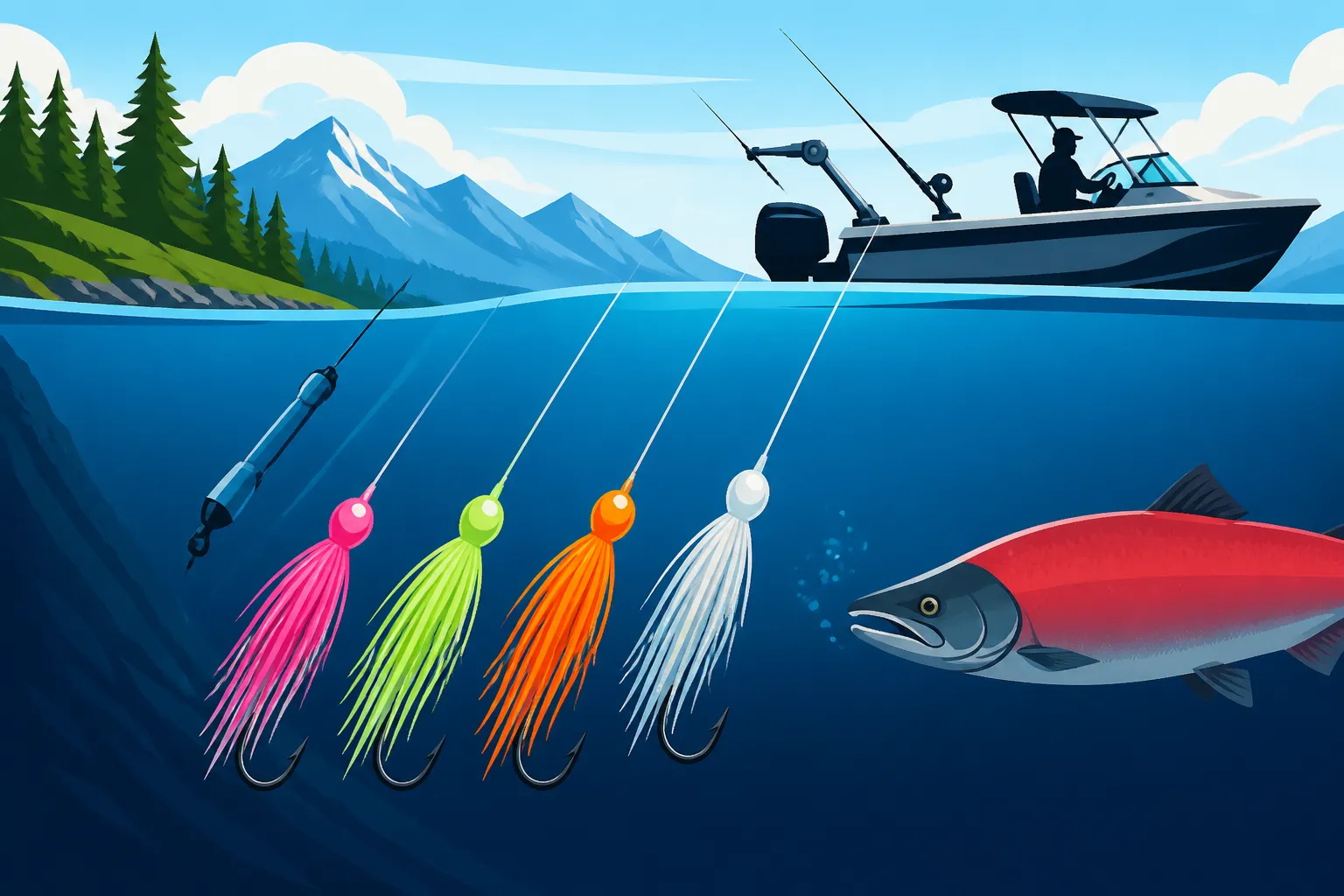
If there's one family of colors that should always be in your kokanee tackle box, it's silver and chrome. These aren't just pretty; they're incredibly effective because they excel at reflecting ambient light, even in deep, low-light conditions. A highly reflective silver or chrome jig doesn't just "show up"; it sends out flashes that mimic the natural shimmer of small baitfish or the reflective sheen of zooplankton. This flash can be a huge trigger for kokanee, drawing them in from a distance.
Variations within this family, like hammered chrome, silver flake, or even a subtle pearl white, can make a significant difference. Sometimes a mirror-like finish is best, while other times a more textured or flecked surface creates just the right amount of diffuse reflection. Many anglers swear by jigs with a chrome back and a colored belly, such as chrome-blue or chrome-green, getting the best of both worlds. You can find a huge variety of these on online retailers like Amazon, making it easy to stock up on different patterns.
Greens and Blues: The Deep Water Mainstays
Given what we discussed about light penetration, it should come as no surprise that greens and blues are rock stars for deep-water kokanee. These colors penetrate deeper into the water column and remain visible much longer than reds or yellows. Bright, fluorescent greens like chartreuse or lime green, and vibrant blues, often mimic the natural color spectrum of deeper lake environments and the subtle hues of zooplankton.
Many seasoned kokanee anglers will start their day with a green or blue jig, especially if they're targeting depths beyond 40 feet. Imagine a slight greenish or bluish glow amidst the dimness; that's often what these jigs present. Mixing these with some metallic flake or a bit of UV enhancement can make them even more potent. A jig that's half blue, half green, or has contrasting stripes can also create an appealing visual break that triggers strikes. These reliable colors are often the backbone of any successful kokanee fishing trip, whether you're on Okanagan Lake or a smaller interior gem.
Pinks and Reds: Surprisingly Effective in Certain Conditions
Now, this might sound counter-intuitive given that red is the first color to disappear in the water column. However, fluorescent pinks and certain shades of red can be surprisingly effective for kokanee, especially in specific scenarios. The key here often isn't the true "red" color itself, but rather how it interacts with available light or its UV properties. Some fluorescent reds and hot pinks, even when appearing as a dark silhouette at depth, create a strong contrast that can provoke a strike.
They also shine in low-light conditions closer to the surface (early morning, late evening) or in stained or murky water where their vibrancy can cut through the murk. Furthermore, some jigs are designed with UV-reactive paints. While the red wavelength might be gone, the UV reflectance can still make the jig "glow" or appear differently to fish, which have a broader spectrum of vision than humans. Don't discount these colors entirely; they can be the difference-maker when the fish are finicky or when you're targeting specific depths or water clarities. For more general advice on how to target these fish, check out our guide on how to catch kokanee in BC.
Factors Influencing Jig Color Choice Beyond Depth
While depth and light penetration are huge, they aren't the only pieces of the puzzle when choosing your kokanee jig colors. Savvy anglers know that several other factors play a critical role in what the kokanee will strike.
Water Clarity and Light Conditions
The clarity of the water you're fishing in dramatically impacts how colors appear. In crystal-clear mountain lakes, more natural and subtle colors might be preferred, as the fish have excellent visibility. Think light silvers, transparent blues, or even glow-in-the-dark options that hold a charge. However, in lakes with some turbidity or stain, brighter, higher-contrast colors like chartreuse, hot pink, or jigs with strong UV properties can cut through the murk and get noticed.
Daylight conditions also matter. On bright, sunny days, reflective jigs (chrome, silver) can produce incredible flash. On overcast days or during those magical low-light periods like dawn and dusk, the subtle glow of a fluorescent green or a UV-enhanced pink might be the ticket. It's not just about how deep you are, but what's happening above and around your jig. This is particularly important if you're fishing in varied environments like the Best Kokanee Lakes in the Interior of BC.
Kokanee Mood and Pressure
Fish, like people, have moods. Sometimes they're aggressive and will smash anything that moves; other times they're finicky and require a delicate presentation. When kokanee are aggressive, brighter, more vibrant colors, or even multiple contrasting colors on a single jig, can trigger a feeding frenzy. If you're seeing lots of strikes and active fish on your sonar, don't be afraid to try bolder patterns.
However, when the bite is slow, or if the fish are highly pressured from a lot of angling activity, a more subdued approach might be needed. This is when natural, realistic colors like subtle silver, pearl white, or a muted green can be highly effective. They might not grab attention from a mile away, but they can convince a hesitant kokanee to strike when brighter options fail. Experimentation with color is crucial here; don't be afraid to change things up if what's "supposed" to work isn't getting bites.
Matching Your Scent and Attractant
Even the most perfectly chosen jig color can be made even better with the addition of scent. Kokanee have an excellent sense of smell, and pairing your visual attractant with an olfactory one can be a game-changer. Many anglers tip their jigs with a kernel of Pautzke's Fire Bait-soaked corn, or a small piece of shrimp or a maggot. Others use specialized kokanee scents infused with krill, garlic, or other potent attractants.
The goal is to create a scent trail that draws kokanee in, even if they're not immediately seeing your jig. This combination of visual appeal (color, flash, action) and scent can be incredibly deadly. The color might get their attention, but the scent often seals the deal, making them commit to a strike. You'll often find popular kokanee scents available for purchase alongside jig kits on Amazon.
Rigging and Presentation Tips for Deep Trolling Kokanee Jigs
Choosing the right color is only half the battle. How you get that jig to the kokanee and how you make it dance is just as important. Deep trolling for kokanee requires specific rigging and presentation techniques to maximize your chances of success.
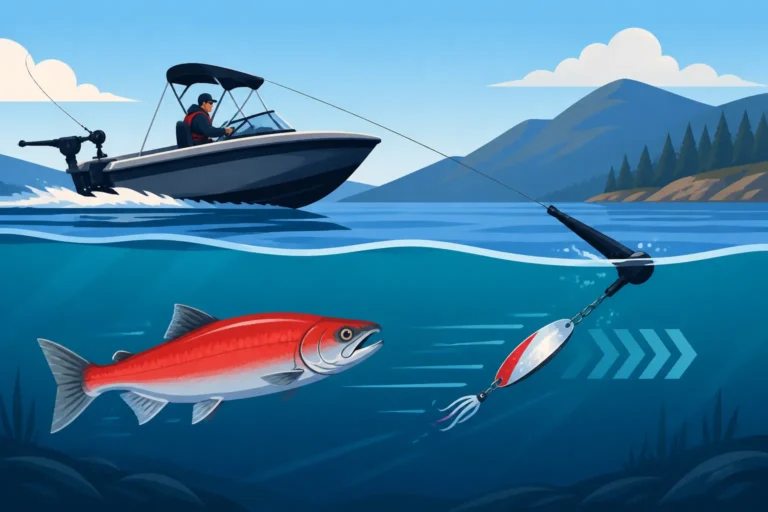
The Right Gear for Depth: Downriggers, Dipsy Divers, and Lead Core
To effectively target kokanee in deep water, you need gear that can accurately and consistently get your jigs down to their preferred depth.
- Downriggers are often the top choice for precision. They allow you to set your lure at an exact depth using a heavy cannonball and then release your line once you're at the desired depth. This ensures your jig is right in the strike zone, especially when you've pinpointed kokanee on your fish finder.
- Dipsy Divers or similar diving devices are another popular option. These clip onto your main line and dive when trolled, pulling your jig down. They're adjustable to various depths and can be set to run out to the side of the boat, helping to spread out your lines and avoid tangles.
- Lead Core Line is a traditional method that uses a colored line with a lead core to sink your lure. Each color section typically sinks your lure approximately 5 feet at a given trolling speed. It's a more hands-on approach but very effective once you learn to manage it.
Regardless of your chosen method, ensuring your gear is properly calibrated and running true is key. Your jig needs to be where the fish are, not just generally "deep."
Jig Action and Speed: Making Your Jig Irresistible
Kokanee prefer a subtle, enticing action rather than an erratic, aggressive one. Most jigs are designed to flutter, dart, or gently sway when trolled. The right trolling speed is paramount here – generally, slower is better for kokanee, often between 0.8 to 1.5 miles per hour. Too fast, and your jig might spin unnaturally, or the kokanee might not have time to react. Too slow, and it might not have enough action.
Experiment with your speed until you find that sweet spot where your rod tip is pulsing with the correct action of your jig. Tipping your jig with a piece of corn or maggot also adds to the action and attraction. The goal is to make your jig look like a vulnerable food source or an interesting anomaly that triggers an investigation. For more specific advice on making your offerings dance, delve into our guide on Best Kokanee Trolling Techniques for Okanagan Lake.
Leader Length and Material: The Final Presentation Finesse
The connection between your main line (or downrigger release) and your jig is surprisingly important. Many anglers prefer a fluorocarbon leader for its near-invisibility in water. Kokanee have excellent eyesight, and a heavy, visible monofilament leader can deter them. A lighter leader, typically 6-10 lb test, is often all you need for these relatively smaller fish.
As for leader length, a good starting point is usually 12 to 24 inches. Too short, and the jig might not have enough freedom of movement. Too long, and it can affect the jig's action or make it prone to tangles, especially if you're using an attractor like a dodger or a small flasher ahead of your jig. The exact length can be a matter of personal preference and what the fish are telling you on a given day, so don't be afraid to experiment. You also need to keep track of rules for retention, so be sure to check out BC Kokanee Retention Rules before you head out.
| Color Family | Key Colors | Why It Works Deep | Best Conditions / Notes |
|---|---|---|---|
| Silver/Chrome | Silver, Chrome, Pearl White, Nickel | Excellent light reflection, mimics baitfish/zooplankton | All conditions, especially sunny days or subtle bite |
| Green/Blue | Chartreuse, Lime Green, Fluorescent Blue | Penetrates deep, visible in low light, natural water hues | Overcast, deep water, stained water |
| Pink/Red | Hot Pink, Fluorescent Red | High contrast, UV properties, silhouette effect | Low light (dawn/dusk), murky water, aggressive fish |
| Glow-in-the-Dark | White, Green, Blue Glow | Emits light in absolute darkness | Very deep water, extremely low light, often tipped |
| UV Reactive | Various (often with added UV paint) | Appears differently to fish (broader spectrum vision) | All conditions, particularly effective in dim light |
Disclaimer
This article is for general informational purposes only and does not constitute professional advice. Laws, prices and regulations vary by location and change over time. Consult a qualified professional for guidance on your specific situation.