BC Chinook Salmon Non-Retention Areas
It can be incredibly frustrating to head out to your favourite fishing spot in British Columbia, rods rigged and anticipation high, only to discover that the prized Chinook salmon you’re hoping to catch might be off-limits for retention. These regulations, often put in place to protect vulnerable wild stocks, can change frequently and make planning a fishing trip feel like navigating a legal maze. This comprehensive guide is here to help you understand the complexities of BC's Chinook salmon non-retention areas, shedding light on why these rules exist, where they apply, and how you can still enjoy a successful and compliant fishing experience.
Understanding the 'Why' Behind Chinook Non-Retention
British Columbia is world-renowned for its salmon fisheries, but behind the scenes, there's a constant battle to protect and restore the various wild Chinook salmon populations that call these waters home. Non-retention rules aren't arbitrary roadblocks; they're critical conservation measures designed to ensure these magnificent fish continue their life cycles for future generations.
Conservation Imperatives for Wild Chinook Stocks
The reality is, many of BC's wild Chinook salmon runs are facing significant challenges. Habitat degradation, climate change, and historical overfishing have all contributed to declines in specific populations, particularly those from the Fraser River and some coastal streams. Unlike hatchery-enhanced stocks, wild Chinook are often more vulnerable and less resilient to environmental pressures. When conservation concerns are high for a particular run – meaning there aren't enough fish returning to spawn and sustain the population – the Department of Fisheries and Oceans (DFO) steps in with measures like non-retention.
Imagine a specific run of Chinook heading up the Thompson River. If DFO predicts a critically low return, a non-retention rule might be implemented across its migration path, from the ocean approaches through the Fraser River and all the way to the Thompson, to ensure every single returning fish has the best chance to make it to the spawning grounds. This isn't just about catching fewer fish; it's about protecting the genetic diversity and long-term viability of these incredible species. It's a tough pill to swallow when you're out on the water, but it's vital for the future of British Columbia Fishing.
The Role of Science and Stock Assessment
You might wonder how these decisions are made. It’s not just a guess! DFO relies heavily on scientific data, sophisticated stock assessment models, and extensive monitoring programs to gauge the health of Chinook populations. Fisheries scientists analyze everything from ocean survival rates and historical return data to in-season test fisheries and sonar counts in rivers. They're constantly tracking the number of fish, their size, age, and where they're heading.
This information is then used to predict the strength of various runs throughout the year. If the numbers indicate a low return for a specific stock, DFO will implement management actions, which often include non-retention. For example, forecasts for specific Fraser River Chinook runs can dictate closures or non-retention periods across huge swaths of the province, from the mouth of the Fraser all the way into the interior. These decisions are regularly updated, often several times throughout the season, as new data becomes available. This scientific backbone is what makes the regulations, despite their complexity, an essential tool in sustainable fisheries management.
Navigating Specific Non-Retention Areas and Seasons
One of the biggest headaches for anglers is understanding where and when these non-retention rules apply. British Columbia is vast, with diverse ecosystems, and the rules can vary significantly between coastal waters and interior rivers, and even from one river system to another.
Coastal vs. Interior River Systems
The regulations for Chinook salmon can diverge dramatically once you move from BC's expansive coastline into its numerous interior river systems. In coastal waters, such as the Strait of Georgia or around Vancouver Island, non-retention periods often target Chinook as they migrate towards their spawning rivers. These might be broad closures affecting large marine areas. For instance, parts of the Strait of Georgia might have specific non-retention periods for larger "red-coded" Chinook, meaning those identified as being from a critically low returning wild stock.
Once these Chinook enter freshwater river systems, like the Fraser, Skeena, or Thompson Rivers, the rules can become even more granular. River sections might be designated as "non-retention" during specific migration windows to protect vulnerable runs. For example, the upper reaches of the Fraser River might be closed to Chinook retention earlier in the season than the lower Fraser, based on the timing of different runs. These interior river systems are often vital spawning corridors, making protective measures extremely important. Understanding this distinction is key to staying compliant.
Tidal vs. Freshwater Considerations
It's absolutely critical to know the difference between tidal and freshwater regulations, as the DFO manages these zones separately, even though they're often adjacent. Tidal waters are generally defined as the marine environment up to the head of tide in rivers or estuaries. Freshwater begins beyond that point. A common scenario is a river mouth or estuary, like the Fraser River mouth near Vancouver, where you might be fishing in what feels like a river, but it's still considered tidal waters by regulation.
The rules for BC Freshwater vs Tidal Waters License, Explained are different, and so too are the specific Chinook retention rules. For example, certain areas within the tidal portion of the Fraser River may be non-retention for Chinook, while just a few kilometers upstream, in the freshwater section, different rules or even different seasons might apply for other salmon species. This means you need to be acutely aware of whether you're in tidal or freshwater zones, as indicated by fishery notices and regulation synopsis maps. Carrying a current map, either a printed version you can get from a local tackle shop or even a digital one on your phone, is highly recommended to avoid confusion. Some anglers even mark these boundaries on their GPS units.
In-Season Updates and Fishery Notices
This is perhaps the most challenging aspect of fishing for Chinook in BC: the rules change, often without much warning! DFO issues "Fishery Notices" to communicate these changes, which can include opening or closing specific areas, changing retention limits, or declaring non-retention for certain species. These notices can come out weekly, or even daily, during peak migration periods or when stock assessments reveal unexpected changes.
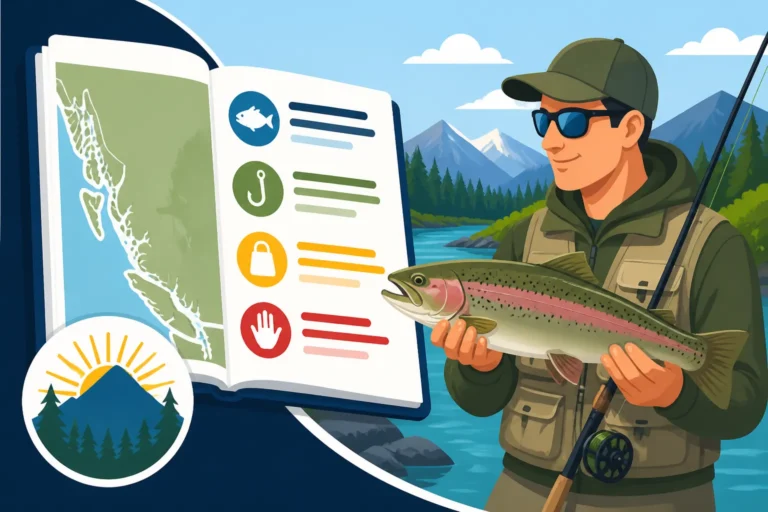
Relying solely on the annual BC Freshwater Fishing Regulations Synopsis or the Marine Tidal Waters Sport Fishing Guide is simply not enough for Chinook, especially during summer and fall. You absolutely must check the DFO's official Fishery Notice website before every single fishing trip. Many experienced anglers subscribe to email alerts so they get real-time updates directly to their inbox. Missing a single notice could mean the difference between a legal catch and a hefty fine. Think of it like checking the weather forecast – you wouldn't head out without it, and you shouldn't head out fishing without checking the latest fishery notices. For a deeper dive, check out our guide on BC Fishery Notices and In-Season Closures, Explained.
Practical Implications for Anglers: Gear, Techniques, and Compliance
So, you're out on the water, and you're in a Chinook non-retention area. What does that mean for your actual fishing? It means you need to be prepared to adapt your approach, use specific gear, and, most importantly, be diligent about fish identification and release practices.
Adapting Your Fishing Strategy
When Chinook are non-retention, you have a few choices: either change your location to an area where retention is permitted, or shift your focus to other species that are open for retention. For example, if you're in a marine area closed to Chinook retention, but coho salmon are plentiful and open, you might switch to smaller lures or flies that are more appealing to coho.
In rivers, if you're in a non-retention Chinook zone but sockeye or pink salmon are abundant and open, adjust your gear accordingly. This could mean using different fly patterns for sockeye on the Fraser, or specific jigs for pinks in coastal streams. It's also a good idea to consider your gear setup. Even if you're targeting other species, if there's a chance of accidentally hooking a Chinook, you must be prepared for an immediate, safe release. This includes using appropriate tackle that minimizes fight time and harm to the fish. Many anglers will opt for slightly heavier gear than they might normally use for smaller species, just in case a large Chinook strikes.
Proper Identification and Release Techniques
This is arguably the most critical aspect of fishing in Chinook non-retention areas. You will hook Chinook, even if you're not targeting them directly. When you do, you must be able to identify them quickly and accurately and then release them with the utmost care to maximize their survival chances. Misidentification is not an excuse for illegal retention, and the DFO takes this very seriously.
Here's what you need to know:
- Identification: Learn to distinguish Chinook from other salmon species. Chinook typically have a black mouth and black gums, and irregular black spots on both lobes of their tail. Other salmon species have different identifying features. For instance, coho usually have a white mouth with black gums, and spots primarily on the upper lobe of the tail. Field guides, waterproof fish identification cards (easily found on platforms like Amazon), and even apps can be invaluable. Consider reading our guide on How to Tell a Chinook from a Coho Salmon for more details.
- Barbless Hooks: In many areas of BC, especially those with conservation concerns, single barbless hooks are mandatory for all salmon species. This isn't just a suggestion; it's a regulation. Barbless hooks greatly aid in quick and clean releases, minimizing injury. Always check if this is a requirement in your chosen fishing area. If not explicitly required, using them voluntarily is a fantastic conservation practice, especially in non-retention zones. You can purchase barbless hooks or crimp down the barbs on your existing hooks with pliers.
- Minimizing Handling: The less you handle a fish, the better. Try to keep the fish in the water as much as possible. If you must bring it aboard for hook removal or identification, use a knotless, rubberized landing net to support its body, and get it back into the water as quickly as possible.
- Hook Removal: Use long-nosed pliers or a dehooker tool (again, Amazon has many great options for these) to quickly and gently remove the hook. Avoid tearing or excessive force. If the hook is deeply set, cut the line as close to the hook as possible. Don't try to rip it out.
- Revival: Hold the fish gently in the current, facing upstream, until it can swim away under its own power. Don't simply toss it back; ensure it's fully revived and strong enough to swim off naturally.
Penalties and Consequences of Non-Compliance
Let's be blunt: fishing without adhering to non-retention rules can lead to serious consequences. DFO Fisheries Officers are regularly patrolling popular fishing spots, and they are well-versed in the regulations. Ignorance of the law is not a defence.
Penalties can range from hefty fines to the forfeiture of your fishing gear, your boat, and even your vehicle. Repeat offenders can face suspension or permanent revocation of their fishing licenses, and even potential jail time in severe cases. For instance, fishing without a license or retaining a prohibited species could result in fines starting from several hundred dollars and escalating into the thousands.
It’s simply not worth the risk. Always consult the latest fishery notices, understand BC Fishing Regulations Explained thoroughly, and ensure you’re adhering to all limits and closures, including BC Bag and Possession Limits by Species. The DFO has zero tolerance for actions that threaten wild fish stocks, and they are equipped to enforce these rules.
Key Non-Retention Hotspots and Their Unique Rules
While non-retention rules can apply almost anywhere at any time, certain areas are known for frequent or specific Chinook salmon closures due to the presence of highly vulnerable runs. Understanding these hotspots can help you plan your trips more effectively.
Fraser River Chinook Restrictions
The Fraser River system is the largest salmon-producing river in British Columbia, and it's also ground zero for some of the most complex Chinook regulations. This is because the Fraser hosts numerous distinct Chinook runs, some of which are healthy, and others that are critically endangered. Early-season Fraser Chinook, for example, are often protected with widespread non-retention periods that can extend from the tidal waters near Vancouver all the way up through the Fraser Canyon and beyond.
These restrictions are often implemented to protect specific "Interior Fraser River" Chinook stocks, which have seen severe declines. You might find "BC Chinook salmon spring season dates on the Fraser" that indicate non-retention for certain periods, sometimes overlapping with other salmon runs. Even when other salmon species are open for retention, Chinook might still be non-retention. This requires extreme diligence in identification, particularly in the bustling lower Fraser where anglers are targeting sockeye or pinks, but Chinook are also present. Always refer to the specific Fraser River fishery notices for the most current information, which can change rapidly during migration season. Check out our in-depth Fraser River Fishing Guide for more area-specific insights.
Georgia Strait and Vancouver Island Inlets
The marine waters of the Strait of Georgia, including the numerous inlets and sounds around Vancouver Island, are vital feeding and migration routes for Chinook salmon. Consequently, these areas are often subject to non-retention rules, especially during periods when sensitive wild stocks are moving through. These might include time-of-year closures, size restrictions, or even specific gear requirements like single barbless hooks only.
A significant point of concern here is the impact of fishing on specific Chinook stocks that originate from smaller, more vulnerable coastal streams. DFO often implements "BC Chinook non-retention area hook restrictions" in these marine zones, requiring single barbless hooks for all salmon fishing to minimize incidental mortality of released Chinook. This is common in areas like Discovery Passage near Campbell River or around the Gulf Islands. Anglers often target hatchery-marked Chinook (those with an adipose fin clip) when wild Chinook are non-retention, but identifying these correctly is paramount, as an unmarked Chinook (wild) must still be released.
Northern BC River Systems
While the Fraser often takes the spotlight, Northern BC's iconic rivers like the Skeena, Bulkley, and Thompson (which flows into the Fraser) also have critical Chinook runs that are subject to non-retention rules. These rivers are legendary for their powerful steelhead and salmon, and conservation efforts are intense. Chinook non-retention in these regions often aligns with the migration of specific runs, particularly those identified as being in conservation concern.
For example, sections of the Skeena River might implement non-retention for Chinook during critical periods to protect local wild stocks or those migrating to tributaries. This often goes hand-in-hand with regulations aimed at protecting steelhead, as both species often share migration corridors. The "BC Interior Fraser steelhead protection closures" are a prime example of how regulations for one species can impact others in shared waterways. Always check the specific notices for these major river systems, as their remote nature doesn't exempt them from strict enforcement. If you're planning a trip to the area, definitely consult our Skeena River Steelhead Fishing guide, as Chinook and steelhead regulations often intertwine.
Planning Your Trip Around Retention Rules
Facing non-retention rules for Chinook doesn't mean your fishing trip is ruined. With a little planning and flexibility, you can still have a fantastic time on BC's waters.
Best Times to Target Retainable Salmon Species
When Chinook are off the table, shift your focus to the many other incredible salmon and fish species BC has to offer. British Columbia boasts five species of Pacific salmon: Chinook, Coho, Sockeye, Pink, and Chum, plus Steelhead, Trout, Halibut, and Sturgeon, among others. Each has its own peak seasons and retention rules.
Here’s a general idea:
- Coho Salmon: Often arrive slightly later than early Chinook runs, providing excellent opportunities in both fresh and saltwater during late summer and fall. They're known for their acrobatic fights and can be targeted with light tackle.
- Pink Salmon: Known as the "humpies," these are typically extremely abundant in odd-numbered years (e.g., 2023, 2025) and offer incredible action in late summer. They are a great species to target when other salmon are closed, particularly in the Fraser River and coastal areas.
- Sockeye Salmon: Famous for their vibrant red meat and strong runs, sockeye usually peak in mid-to-late summer, especially in the Fraser River system. When open, they provide thrilling fishing.
- Chum Salmon: These powerful fish arrive in late summer and fall, often in large numbers. They are aggressive biters and offer a fantastic fight, making them a great alternative target.
By researching the peak seasons for these species in your desired location, you can plan your trip to coincide with retention opportunities. Sometimes, buying a fishing calendar or looking up "BC Fishing Seasons by Month" online can help you strategize.
Utilizing Guides and Charters for Up-to-Date Info
One of the best ways to navigate the ever-changing landscape of BC's fishing regulations, especially concerning Chinook non-retention, is to enlist the help of a professional fishing guide or charter operator. These individuals are on the water constantly and make it their business to stay current with all the latest DFO Fishery Notices and local conditions.
A good guide will not only know where the fish are biting but also what can and cannot be retained. They understand the nuances of the regulations, the boundaries between tidal and freshwater, and the specific conservation concerns for different fish stocks. They'll have the correct gear, the expertise for safe catch and release, and can ensure your trip is fully compliant. If you're new to a specific area, or if the regulations feel overwhelming, hiring a guide is a fantastic investment. They can turn a potentially confusing and frustrating trip into a successful and stress-free adventure, even when Chinook are non-retention. Many guides even offer educational services to help you understand the rules.
Summary of Common Chinook Non-Retention Scenarios
| Non-retention Area | Typical Season(s) | Primary Reason for Closure | What Anglers Can Do |
|---|---|---|---|
| Coastal Fisheries | |||
| Georgia Strait | Peak Season: May-September | Conservation of wildcard (likely wild and therefore likely weak) Chinook stocks. Certain coastal Chinook runs are vulnerable due to habitat issues and exploitation, warranting broad non-retention periods to protect them. | Target marked (adipose clipped) Chinook if permitted, or shift focus to Coho, Pink, or Lingcod if open. Ensure immediate and careful release of unmarked Chinook. Use single barbless hooks. |
| Vancouver Island Inlets (e.g., Alberni, Nootka) | Peak Season: May-August | Protection of specific wild Chinook stocks that are either returning to small coastal rivers or are part of larger, depressed Fraser River runs migrating through coastal areas. | Focus on other salmon species like Coho when they arrive, or target bottom fish outside of salmon migration routes. Utilize charts to identify boundary changes between open and closed areas. |
| Interior River Fisheries | |||
| Fraser River (Lower to Mid-River) | Spring/Early Summer (April-July) | Critical protection for vulnerable Interior Fraser River Chinook stocks that are migrating upstream to spawn. These runs are often critically low. | Target other species like White Sturgeon (catch and release) or switch to Sockeye or Pink salmon later in the season when retention might open. Always use single barbless hooks. Check for BC Chinook salmon spring season dates on the Fraser. |
| Fraser River (Upper/Tributaries like Thompson, Chilcotin) | Summer (July-August) | Protection of endangered or threatened Chinook populations in their spawning tributaries. These areas are the final destination, making protection paramount. | Focus on catch-and-release fly fishing for Rainbow Trout or Bull Trout if those fisheries are open. Strict adherence to fly-fishing-only rules or bait bans is common here. |
| Skeena River System | Spring/Early Summer (May-July) | Protection of specific wild Chinook runs originating from the Skeena and its tributaries. These runs are highly valued but can be vulnerable. | Focus on early-season Steelhead (catch and release generally) or switch to targeting other salmon species like Sockeye and Pink when they arrive later in the season and if open for retention. Read our Skeena River Steelhead Fishing guide for more context on the interconnected fisheries. |
| Vancouver Harbour & Area 13 (Discovery Passage) | Spring/Early Summer (April-June) | To protect "red-coded" Chinook stocks, often originating from the Fraser River, as they pass through these highly trafficked marine areas. | Focus on hatchery-marked (adipose clipped) Chinook if permitted and identifiable. Otherwise, target Coho, Lingcod, or Rockfish where open. Be especially diligent about identifying unmarked Chinook and releasing them carefully. |
Disclaimer
The information provided in this guide is for general informational purposes only and is not legal advice. Fishing regulations in British Columbia are complex and subject to frequent change. Always consult the official DFO (Department of Fisheries and Oceans Canada) website for the most current Fishery Notices and the British Columbia Freshwater Fishing Regulations Synopsis or Marine Tidal Waters Sport Fishing Guide before embarking on any fishing trip. Your local tackle shop or a professional fishing guide can also provide valuable, up-to-date information. Failure to comply with regulations can result in significant penalties.