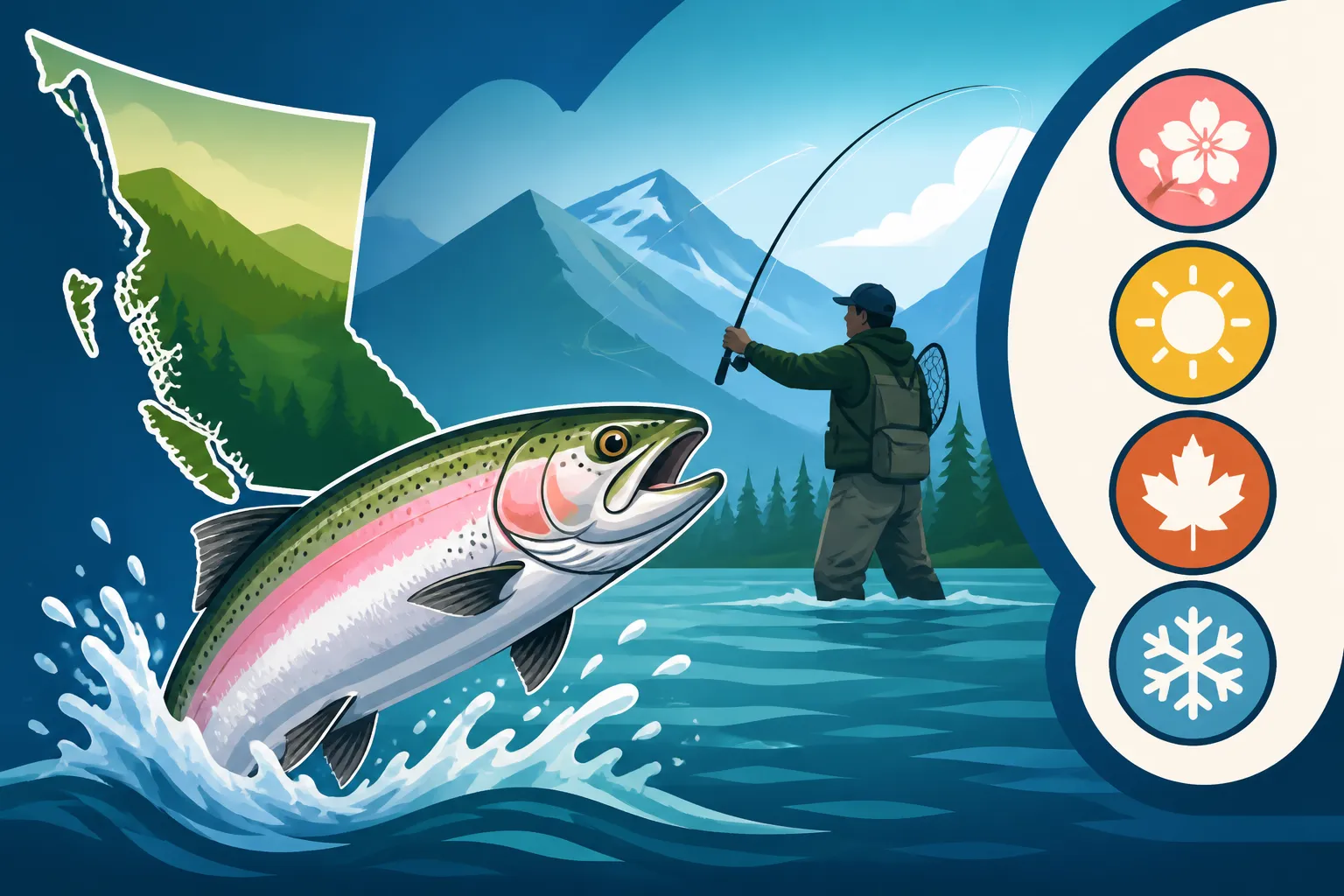
BC Steelhead Season Dates
Few things are as frustrating for a passionate angler in British Columbia as planning a steelhead trip, only to discover that the season dates or regulations have shifted. The truth is, BC's steelhead seasons are incredibly dynamic, constantly adapting to conservation needs, run forecasts, and environmental conditions. This guide aims to cut through the confusion, offering a comprehensive look at how steelhead season dates are determined, where to find the most current information, and what to expect when chasing these incredible fish across the province.
Understanding British Columbia's Steelhead Seasons
Steelhead fishing in British Columbia isn't just a pastime; for many, it's a way of life, an almost spiritual pursuit. But unlike some fisheries with fixed dates, steelhead seasons are a moving target, shaped by a complex interplay of natural cycles and human management. It's a dance between the needs of the fish and the desires of the angler, always with conservation as the leading partner.
The Elusive Nature of Steelhead Runs
Steelhead, the anadromous form of rainbow trout, are creatures of incredible resilience and mystery. They spend years in the ocean, growing large and powerful, before returning to their natal rivers to spawn. What makes them so challenging to define by fixed season dates is the variability of these return runs. Some years, the fish arrive early and in strong numbers; other years, they're late, or the run is incredibly sparse. This natural fluctuation means that a "season" isn't just a calendar entry, but a reflection of the fish's presence and health in the river system.
For example, a river might traditionally see its main winter steelhead run from December through March. However, if a particular year brings unusually low water or extreme cold, the fish might hold in the lower river longer, delaying their upstream migration. Conversely, heavy rains in the fall could trigger an earlier push of fish. This makes it impossible to simply declare "Steelhead Season: January 1 – March 31" for every river, every year. It requires constant monitoring and adaptive management to ensure sustainability. This constant variability is why checking current conditions and official notices is paramount for anyone planning a trip, particularly to renowned systems like those covered in our guide on Best Steelhead Rivers in BC.
Key Factors Influencing Season Dates
So, what exactly dictates when you can chase these magnificent fish? It’s a multi-faceted decision-making process involving scientific data, environmental observations, and a deep understanding of the steelhead's life cycle. The primary drivers are the health of the steelhead populations themselves, followed by environmental conditions that might impact their migration or spawning success.
One of the biggest factors is run strength. If a particular river's steelhead run is projected to be weak, managers might impose stricter regulations, shorten the season, or even close the fishery entirely to protect the spawning population. Water levels and temperatures also play a huge role. Rivers that are too low can strand fish, making them vulnerable, while extremely high, turbid water can make fishing impractical and stress fish. Furthermore, the presence of other salmon species in the river can sometimes lead to concurrent closures, especially to protect vulnerable stocks. Climate change is also increasingly influencing these factors, leading to warmer water temperatures and altered precipitation patterns that directly affect steelhead returns and, by extension, our fishing opportunities.
General Timing for Winter and Summer Steelhead
Despite the variability, there are general patterns for when steelhead return to BC's rivers. It helps to think of them in two broad categories: winter-run and summer-run steelhead. These aren't just arbitrary distinctions but reflect different life histories and migration timings.
Winter-run steelhead typically enter rivers from late fall through winter, often reaching spawning grounds in the spring. These fish are powerful, aggressive, and can be found in many coastal rivers from late November through April, sometimes even into May depending on the system and the year. Think of the rivers along Vancouver Island or the Lower Mainland, which see strong winter runs. The anticipation for these late-fall runs is palpable, with anglers gearing up as soon as the rains start to swell the rivers.
Summer-run steelhead, on the other hand, enter freshwater in the spring and summer, spending months in the river before spawning the following spring. These are often the fish of legend, found in the vast river systems of Northern BC, like the Skeena and its tributaries. Their season typically runs from July or August through October or November, though specific timings will vary greatly by river system. The early summer fish can be incredibly bright and acrobatic. Knowing these general windows, as detailed in our comprehensive piece on When steelhead run in BC rivers, helps you narrow down your options, but remember, the specifics are always subject to change.
Navigating Official Resources for BC Steelhead Season Dates
The single most critical piece of advice for any angler targeting steelhead in British Columbia is this: always consult official sources before you wet a line. Relying solely on past experiences or word-of-mouth, while valuable for local knowledge, can quickly lead you astray and potentially into a regulatory violation. The dynamic nature of steelhead regulations means that what was open last year might be closed today, or vice-versa.
Why Fishery Notices Are Your Best Friend
Fishery Notices are the official, real-time updates issued by Fisheries and Oceans Canada (DFO) and, for freshwater, the Province of British Columbia. These aren't just dry legal documents; they are the absolute gospel for current regulations, including season dates, closures, gear restrictions, and catch limits. Ignoring them is like driving without paying attention to road signs – you're bound to hit a snag.
These notices are particularly crucial for steelhead because their runs are so vulnerable to environmental changes and conservation needs. A river might be open for retention of other species but closed for steelhead, or designated as catch-and-release only for steelhead. Sometimes, specific sections of a river, or even certain days of the week, might have different rules. For example, parts of the Thompson River are often under very strict regulations due to conservation concerns. Regularly checking the DFO website for tidal waters and the BC Freshwater Fishing Regulations Synopsis for freshwater, along with checking for updated BC Fishery Notices and In-Season Closures, Explained, is not optional; it's a necessity. It might feel like a chore, but it ensures you’re fishing legally and responsibly.
Provincial vs. Federal Jurisdiction
Understanding who sets the rules can be a bit confusing in BC, as both provincial and federal governments have a hand in fisheries management. This jurisdictional split is important because it dictates which regulations apply to which waters.
Generally speaking, the federal government, through Fisheries and Oceans Canada (DFO), is responsible for managing all anadromous species—those that migrate between salt and freshwater—like all species of Pacific salmon and, crucially, steelhead. This means DFO issues the overarching regulations, especially concerning closures and openings related to conservation status and run assessments. They also manage all tidal (saltwater) fisheries.
The provincial government, specifically the Ministry of Forests (and its predecessors), manages non-anadromous freshwater species like resident rainbow trout, kokanee, and char, and also regulates specific freshwater fishing practices, license sales, and stocking programs. While DFO sets the primary steelhead regulations, provincial regulations also apply to how you fish for them in freshwater, covering things like tackle restrictions, bait use, and specific regional rules. So, to be fully compliant, you need to consult both federal fishery notices and the provincial Freshwater Fishing Regulations Synopsis. For a deeper dive into the general rules, take a look at our guide to BC Fishing Regulations Explained.
The Role of Regional Management in Steelhead Seasons
British Columbia is a vast and ecologically diverse province, and its steelhead populations reflect that. What works for a coastal river on Vancouver Island might be completely inappropriate for a remote system in the Skeena region or the Interior Fraser. This is where regional management comes into play, tailoring regulations to specific local conditions and stock assessments.
DFO and the provincial fisheries branches operate with regional offices and biologists who monitor local conditions closely. They conduct fish counts, analyze environmental data, and gather input from local communities, Indigenous groups, and angling stakeholders. This regional focus allows for more nuanced and responsive management. For example, if a specific tributary of the Skeena River is experiencing a particularly strong return of steelhead, it might have slightly different rules than a neighboring river facing a weaker run. These regional nuances are often communicated through specific addendums in Fishery Notices or specialized sections within the provincial synopsis. Being aware of the specific management region for your chosen river is just as important as knowing the provincial-wide rules.
A Closer Look at Regional Steelhead Seasons Across BC
British Columbia's diverse geography means that steelhead seasons can vary dramatically from one region to another. What’s in full swing on the North Coast might be winding down on the South Coast, and the Interior has its own unique timings. Understanding these regional differences is key to planning a successful and legal steelhead adventure.
Skeena Region Steelhead Season Dates
The Skeena River system in Northern British Columbia is world-renowned for its truly wild steelhead, often considered the holy grail by many anglers. The sheer size of these fish and the wilderness experience they offer are unparalleled. The Skeena's steelhead are predominantly summer-run fish, with a season that generally kicks off in late July or early August and can extend well into November or even early December, depending on the specific tributary and conditions.
Iconic Skeena tributaries like the Bulkley, Kispiox, and Babine rivers see their peak runs typically from late August through October. Early season anglers might target the lower Bulkley, while those seeking prime fall fishing will move upstream as the season progresses. However, these dates are highly susceptible to change based on DFO's in-season run assessments. For instance, sometimes parts of the system might close prematurely if run sizes are deemed insufficient to meet conservation targets. Due to the remote nature and highly prized status of these fisheries, it's particularly important to check current fishery notices and consider booking with experienced guides, many of whom are intimately familiar with Bulkley River Guide Services and can offer the most up-to-date information. If you're planning a trip to this region, you'll find more specific details in our dedicated article on Steelhead Runs on BC's North Coast Rivers.
Thompson and Chilcotin Steelhead Season Dates
The Thompson River, a major tributary of the Fraser, and its associated Chilcotin River system, once boasted some of the most celebrated summer-run steelhead fisheries in the world. These fish were legendary for their size and power. Sadly, due to severe population declines over many years, these specific runs have faced drastic conservation measures.
In recent years, the Thompson and Chilcotin rivers have seen prolonged closures or extremely restrictive catch-and-release-only seasons, often with gear limitations and short windows, or sometimes no open fishing at all for steelhead. The intent behind these stringent measures is to allow the severely depleted stocks to recover. Anglers must be incredibly diligent about checking DFO Fishery Notices for any potential openings, which, if they occur, are often very limited in scope and duration. It’s a stark reminder of the fragile nature of these wild populations and the critical need for conservation. Our article on Thompson River Steelhead Fishing delves deeper into the specifics of this challenging but important fishery.
Vancouver Island and South Coast Steelhead Seasons
Vancouver Island and the numerous rivers of the South Coast (including areas like the Fraser Valley and Howe Sound) are primarily known for their robust winter-run steelhead populations. These fish, returning from the ocean in late fall and throughout the winter, offer exhilarating cold-weather angling opportunities.
The season typically begins in late November or early December on many of these systems, with fishing often peaking in January and February and extending through March. Some rivers, especially on Vancouver Island like the Gold River or the Stamp River, can hold fish well into April or even early May, particularly in their upper reaches. While these systems don't generally experience the same long-term closures as the Thompson, they are still subject to localized closures or restrictions based on in-season monitoring and conservation goals. Heavy rainfall can also make some rivers unfishable for periods, while prolonged dry spells can delay runs. The accessibility of many of these rivers makes them popular, leading to a strong community of anglers who are always keen to share local insights—but again, official sources are the final word.
Interior Fraser Steelhead Protection Closures
Beyond the Thompson and Chilcotin, other tributaries within the vast Interior Fraser system also host steelhead populations, many of which are also considered highly vulnerable. These rivers and streams are often subject to specific protective closures, which are critical for the survival of these unique and often genetically distinct stocks.
For instance, certain areas or entire smaller river systems within the Interior Fraser watershed might be designated as permanent catch-and-release only for steelhead, or closed to fishing entirely during specific sensitive periods like spawning. These closures are not arbitrary; they are the direct result of scientific assessments highlighting the critical status of these populations. Anglers planning to fish any part of the Interior Fraser drainage for steelhead must be acutely aware of these localized restrictions. It's not uncommon for these closures to be complex, with specific dates, boundaries, and gear restrictions, all designed to give these precious fish the best chance at recovery. Information on these sensitive areas, like Interior Fraser steelhead protection closures, is often prominently featured in the provincial fishing regulations synopsis and DFO Fishery Notices.
The Impact of Conservation on Steelhead Fishing Seasons
Steelhead are not just incredible sport fish; they are also an indicator species, reflecting the health of our aquatic ecosystems. Their vulnerability to environmental changes and habitat degradation means that conservation is not just a buzzword but the driving force behind virtually all steelhead season decisions in British Columbia. Without robust conservation efforts, the opportunity to fish for these magnificent creatures could vanish.
Steelhead Populations and Management Challenges
British Columbia's steelhead populations face a myriad of challenges, from habitat loss and degradation due to logging, urbanization, and agriculture, to climate change impacts like altered stream flows and increased water temperatures. On top of this, interactions with other fisheries, particularly those targeting Pacific salmon, can inadvertently impact steelhead. This complex web of threats makes managing steelhead incredibly difficult.
Fisheries managers employ a variety of tools, including stock assessment, habitat restoration, and, critically, regulation of the recreational fishery. When populations are strong, seasons might be more liberal; when they are weak, managers err on the side of caution, often imposing tighter restrictions or full closures. The goal is always to ensure enough steelhead return to spawn successfully, thereby sustaining future generations. This management philosophy explains why seasons can seem to change so frequently and why a particular river might have very different rules from one year to the next. The focus is on the long-term health of the resource, which sometimes means short-term sacrifices for anglers.
Catch and Release Only Waters and Their Seasons
A significant portion of British Columbia's steelhead fishery operates under strict catch-and-release rules. This isn't just a suggestion; it's a legal requirement designed to minimize mortality and maximize the number of fish that complete their spawning cycle. Many of the most iconic steelhead rivers, especially those with vulnerable stocks, are designated as catch-and-release only for steelhead, and this designation can apply for entire seasons or specific periods within them.
For example, most of the major steelhead rivers in the Skeena region, including the Bulkley and Kispiox, are managed as catch-and-release for steelhead. This means that every steelhead hooked must be released unharmed. This requires anglers to use appropriate gear and techniques to minimize stress and injury to the fish. Barbless hooks are usually mandatory, and careful handling is paramount. The season dates for these waters still apply, but the "retention" aspect is entirely removed. This practice allows anglers to still experience the thrill of the catch while giving the fish the best possible chance of survival. Our guide on How to Catch Steelhead in BC emphasizes techniques that aid in successful catch and release.
Specific Conservation Surcharge Stamps for Steelhead
Beyond the general fishing license, British Columbia requires anglers to purchase specific conservation surcharge stamps if they intend to fish for certain species, and steelhead are definitely on that list. This isn't just an extra fee; it's a direct investment in the conservation and management of these precious fish.
The BC Steelhead Conservation Surcharge Stamp is mandatory for anyone planning to fish for steelhead in freshwater. The funds generated from the sale of this stamp are directly dedicated to steelhead conservation efforts, including habitat restoration, stock assessment, and research. It's a way for anglers to directly contribute to the resource they enjoy. While you won't typically find these stamps physically on store shelves anymore—most are purchased online when you buy your license—their purpose remains vital. You can usually add this to your digital license purchase, much like you might add other fishing accessories to your online shopping cart on sites like Amazon. It's a small price to pay for the future of steelhead fishing.
Planning Your Steelhead Trip Around Season Dates
Embarking on a steelhead trip in British Columbia is an adventure, but it requires meticulous planning, especially given the variable season dates. Beyond just knowing when you can fish, you need to consider the practicalities of gear, logistics, and what to expect from the environment itself.
Gear and Preparation for Different Seasons
The gear you'll need for steelhead fishing can vary significantly depending on the season and the river system. Winter steelhead fishing on the coast, for example, demands robust rain gear, warm layers, and perhaps waders designed for frigid water. Rivers might be high and turbid, requiring heavier leaders, brighter lures, or larger baits. Many anglers choose to use centerpin setups or drift fishing rigs in these conditions, often opting for specialized floats and weights.
Summer steelhead fishing in the interior, particularly on large, clear rivers like parts of the Skeena system, might call for lighter fly rods, spey rods for swinging flies, or even spin gear with smaller presentations. Water levels might be lower and clearer, making fish more spooky and requiring a stealthier approach. You might find a good selection of specialized fly patterns and leaders on Amazon, perfect for these clear-water conditions. Regardless of the season, a good quality fishing vest or backpack, a reliable landing net (preferably rubberized to protect fish), and a first-aid kit are essential. Always pack more layers than you think you’ll need, as conditions in BC can change on a dime, especially in remote areas.
Booking Guides and Accommodations
Given the complexities of steelhead fishing in BC, especially with constantly changing regulations and often remote locations, many anglers opt to hire a professional guide. A good guide not only knows the river and where the fish might be holding but also stays on top of all the latest Fishery Notices and local nuances. They often have access to prime fishing spots and the necessary equipment to navigate challenging waters, like jet boats for accessing remote runs. If you're looking for an expert to navigate the waters and regulations, consider reviewing options in our Best Guided Steelhead Trips in BC article.
Booking accommodations also needs to be done with season dates in mind. Popular lodges and hotels in prime steelhead regions, particularly around the Skeena, Bulkley, or even the Stamp River, book up months in advance, sometimes a year or more, especially for peak season dates. If you're planning a trip to a remote area, you might need to consider self-catering options, RV camping, or even remote cabins. Always confirm that your accommodation provider is aware of your fishing plans and can offer any local insights, but remember, their advice is supplementary to official notices.
Seasonal Considerations Beyond Just Dates
Fishing season dates are just one piece of the puzzle. There are many other factors that influence the overall experience and success of your steelhead trip. Weather, for instance, is paramount. Winter fishing can mean freezing temperatures, snow, and torrential rain. Summer fishing can mean intense heat, forest fire smoke, and buzzing insects. Each requires different preparation and mindset.
River conditions, independent of official season openings, are also critical. A river might be "open," but if it's blown out from heavy rain (too high and muddy) or locked up with ice, fishing will be impossible or unproductive. Conversely, if water levels are too low, fish might not move upstream, or they might be concentrated in ways that stress them, making catch and release more difficult. Checking river gauges and local reports is as important as checking the official season dates. Finally, consider the angling pressure. Peak season dates, especially on popular rivers, can mean crowded banks and competition for prime spots. Sometimes, fishing just before or after the absolute peak can offer a more solitary and equally rewarding experience, potentially leading to encounters with Steelhead Average Size in BC Rivers fish.
General BC Steelhead Season Dates Overview (Always Verify with Official Notices!)
Please remember, the dates below are general historical patterns and are highly subject to change. Always consult DFO Fishery Notices and the BC Freshwater Fishing Regulations Synopsis for the most current and accurate information before planning your trip.
| Region / Steelhead Type | General Start | General End | Primary Run Type | Typical Peak Fishing | Key Rivers (Examples) |
|---|---|---|---|---|---|
| Skeena (Bulkley, Kispiox) | Late July/Aug | Nov/Early Dec | Summer-Run | Mid-August – October | Bulkley, Kispiox, Babine, Morice |
| Thompson/Chilcotin | (Highly Restricted/Closed) | (Highly Restricted/Closed) | Summer-Run | (Historically Aug-Oct) | Thompson, Chilcotin |
| Vancouver Island Rivers | Late Nov/Dec | April/Early May | Winter-Run | Jan – March | Stamp, Gold, Cowichan, Nimpkish |
| South Coast Mainland | Mid-Nov/Dec | March/April | Winter-Run | Dec – Feb | Vedder/Chilliwack, Chehalis, Harrison, Squamish |
| Interior Fraser Tributaries | Varies (often restricted) | Varies (often restricted) | Summer/Winter-Run | Varies (check specific notices) | Nicola, Nahatlatch, Bonaparte (often conservation focused) |
This table provides a snapshot, but it absolutely cannot replace checking real-time official sources. For instance, an early October cold snap or a late-summer drought can completely alter fishing prospects, even within these general windows.
Disclaimer
The information provided in this guide is for general informational purposes only and is based on historical patterns and publicly available knowledge as of the date of publication. British Columbia fishing regulations, including steelhead season dates, closures, and licensing requirements, are subject to frequent change by Fisheries and Oceans Canada (DFO) and the provincial government. It is the sole responsibility of the angler to consult the most current DFO Fishery Notices and the BC Freshwater Fishing Regulations Synopsis before engaging in any fishing activity. Failure to do so may result in fines or penalties. We are not responsible for any actions taken based on the information provided herein without independent verification.