How baitfish schools affect BC salmon fishing
There's nothing quite as perplexing, and let's be honest, downright maddening, as being out on the vast, beautiful waters of British Columbia, scanning the horizon, and just knowing the salmon are somewhere but having no clue where that somewhere is. Many anglers feel like they're playing a perpetual game of hide-and-seek, and the biggest secret often lies with the tiny fish that salmon love to eat. This guide will unreel the mystery of how baitfish schools profoundly influence salmon fishing success in BC, helping you decipher their movements and significantly improve your catch rates.
The Undeniable Link Between Baitfish and BC Salmon
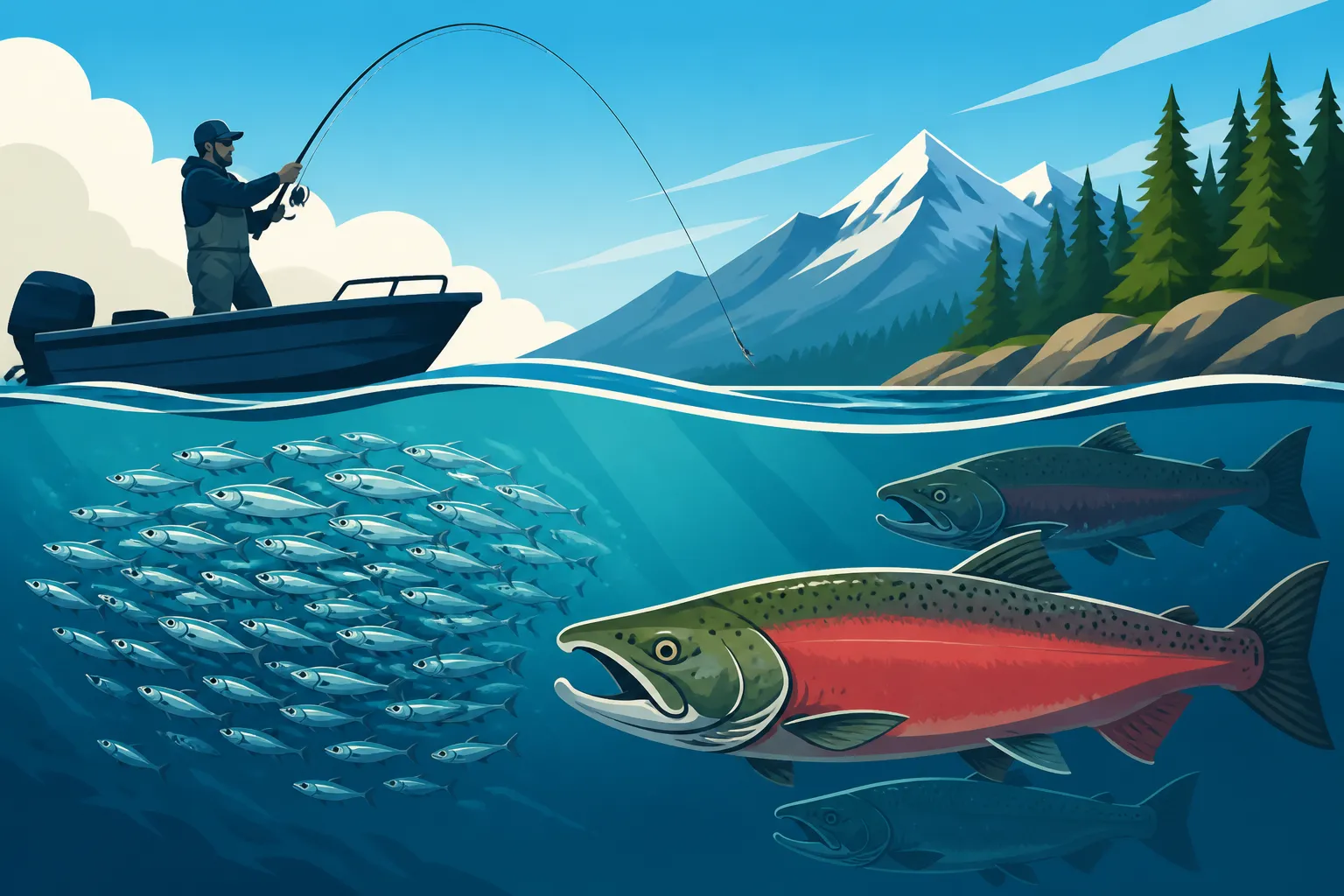
It's a fundamental truth of the aquatic world: where the food is, the predators will follow. For British Columbia's magnificent salmon, whether we're talking about mighty Chinook, acrobatic Coho, or abundant Sockeye, their very existence in the ocean and even during their migration rests heavily on finding dense schools of baitfish. Understanding this isn't just academic; it's the cornerstone of becoming a consistently successful salmon angler in BC. You might have the best gear, the sharpest hooks, and the latest sonar, but if you're not where the food chain is active, you're essentially fishing in a desert.
Why Salmon Shadow Baitfish
Salmon are highly efficient hunters, and they don't expend energy needlessly. They are constantly on the lookout for dense concentrations of their preferred prey because it allows them to feed effectively and store energy for their epic spawning migrations. Think of it like a grocery store for them – they want a well-stocked aisle! If baitfish are scattered and sparse, salmon have to work much harder to fill their bellies, making them less likely to be in a particular area, or less aggressively feeding even if they are present. Conversely, when baitfish are schooling in tight, large formations, salmon will often gorge themselves, making them more predictable and easier to target.
The Role of Tides and Currents
The ocean is a dynamic environment, and tides and currents play a massive role in concentrating baitfish, which in turn concentrates salmon. In many of BC's coastal waters, such as around Vancouver Island or the Gulf Islands, currents act like conveyor belts, pushing vast schools of herring, anchovies, and needlefish into specific bays, points, and transition zones. Salmon know these patterns instinctively. An incoming tide, for instance, might push baitfish into a shallow bay where they become temporarily trapped or disoriented, creating a feeding frenzy opportunity for salmon. Similarly, strong currents around underwater structures like reefs or kelp beds can create eddies where baitfish gather for shelter or to feed on plankton, and salmon won't be far behind. Knowing the local tidal patterns and how they interact with the underwater topography is almost as important as knowing where the baitfish are themselves. It helps you predict where the bait will be, and thus, where the salmon will be.
Identifying Key Baitfish Species for BC Salmon
British Columbia's waters are teeming with various baitfish, but a few species stand out as prime targets for salmon. Knowing what these key species are, what they look like, and their typical habits can give you a significant advantage. This knowledge helps you select the right lures, the right fishing depths, and ultimately, the right locations.
Herring: The Ocean's Gold Standard
When most people think of salmon food on the BC coast, herring are probably the first thing that comes to mind, and for good reason. These small, silvery fish are incredibly abundant and form massive schools. Both Chinook and Coho salmon absolutely gorge themselves on herring. You'll often find herring schools congregating in areas with strong tidal flows, especially around kelp beds or structure that offers some protection from predators. Observing diving birds or seals can be a huge clue that herring are in the vicinity, as salmon often push baitfish to the surface, making them vulnerable to other predators. What herring are and why salmon key on them is a fantastic read if you want to dive deeper into this crucial relationship.
Anchovies and Sardines: Pelagic Powerhouses
While perhaps not as universally abundant as herring in all BC waters, anchovies and sardines are also vital components of the salmon diet, particularly in the more southern coastal regions and during warmer months. These oily, protein-rich fish are smaller than herring and often form incredibly tight, dense schools, making them an easy meal for hungry salmon. They tend to prefer warmer surface waters and are often found further offshore or in open water rather than tight to structure. When these species are abundant, mimicking their size and profile with lures can be exceptionally effective. Often, you'll see large "bait balls" on your sonar when these fish are around.
Needlefish (Sand Lance): The Elongated Snack
Often overlooked by the casual angler, needlefish (also known as sand lance) are a critical food source, especially for Coho and smaller Chinook. These long, slender, silvery fish bury themselves in sandy bottoms during periods of low activity but emerge to feed in vast schools. Salmon will often "graze" over sandy flats or along drop-offs where needlefish are prevalent. Their unique body shape makes them easy to identify, and lures that mimic their elongated profile can be deadly. You'll often find these fish in shallower waters, especially in protected bays and estuaries.
Other Important Forage: Krill and Juvenile Fish
Beyond the main baitfish, other forage plays a role. Krill, tiny crustaceans, are a primary food source for Sockeye salmon, especially in offshore waters. While you won't typically "match the hatch" for krill with traditional lures, knowing Sockeye feed on them explains why they are often caught by trolling small, flashy lures or hoochies that suggest a dense cloud of small organisms. Furthermore, juvenile salmon and other small fish, like juvenile rockfish or sticklebacks, can also become prey for larger salmon, particularly opportunistic feeders like Coho. This is why some larger, more aggressive lures or even fly patterns that imitate juvenile fish can be successful.
Locating Baitfish Schools: Tools and Techniques
Finding baitfish isn't always about seeing them jump out of the water. Modern technology combined with good old-fashioned observation can dramatically increase your chances of finding these critical concentrations. This is where investing in some key gear and honing your observational skills really pays off.
Using Sonar and Fish Finders
Your sonar (fish finder) is your absolute best friend when it comes to locating baitfish. It's essentially your underwater eyes.
- Interpreting Returns: Baitfish schools will typically show up as dense clouds or balls on your screen, sometimes extending from the surface down to significant depths. They often look like a fuzzy mass or many small, tightly packed dots. Larger, individual arches or lines around these clouds indicate salmon actively feeding.
- Adjusting Settings: Don't be afraid to adjust your sonar's sensitivity and range. Sometimes, lower frequencies are better for seeing larger, deeper schools, while higher frequencies give you finer detail for surface-oriented bait. Many anglers find high-frequency CHIRP sonar systems to be incredibly effective for distinguishing bait balls from larger fish. If you're looking for a new unit or just want to upgrade, checking out options on Amazon can be a great way to compare features and prices for different brands.
- Scanning: Don't just motor straight ahead. Do wide sweeps, circles, and zig-zags, constantly watching your screen. Baitfish often move, so what was there five minutes ago might have shifted.
Reading the Water and Observing Wildlife
While technology is powerful, your eyes are still one of your most valuable tools. Pay close attention to your surroundings:
- Diving Birds: Gulls, terns, and especially diving birds like shearwaters or murres, are keen observers. When they are actively diving and feeding, it's a sure sign of baitfish near the surface, often pushed up by salmon or other predators. A frenzy of birds working an area is almost always a sign of a hot bite below.
- Seals and Sea Lions: These marine mammals are also excellent indicators. If you see seals or sea lions actively hunting and splashing, they're likely after baitfish, and salmon will often be right there with them, capitalizing on the chaos.
- Surface Disturbance: Look for subtle ripples, splashes, or even "nervous water" where baitfish are breaking the surface to evade predators. Sometimes you'll see flashes of silver as schools turn quickly. On a calm day, these signs are unmistakable.
- Water Color and Temperature Breaks: Baitfish often congregate where different water masses meet, such as at a tidal current line or where warmer surface water meets colder, nutrient-rich water. These "breaks" can be visible as subtle changes in water color or texture.
Using a Test Net or Cast Net
While not always practical or legal in all areas (always check regulations!), some anglers use a small test net or cast net to sample the water and confirm the presence and type of baitfish. This is more common in freshwater or very specific tidal areas, but it can provide definitive proof of what salmon are currently feeding on, allowing you to match your presentation perfectly.
Adapting Your Fishing Strategy to Baitfish Behavior
Once you've located the baitfish, the real game begins: presenting your lure or bait in a way that salmon can't resist. This often means adjusting your gear and techniques to mimic what the salmon are already eating.
Matching the Hatch: Lures and Baits
This concept is paramount. If salmon are keying in on small, silvery anchovies, throwing a large, gaudy spoon might not be as effective.
- Size Matters: Select lures or cut bait that are roughly the same size as the prevalent baitfish.
- Color and Flash: Most baitfish are silvery or have iridescent sides. Lures in chrome, silver, blue, green, or even black/purple can be highly effective. The amount of flash should also be considered; sometimes a subtle flash is better, other times an aggressive, erratic flash is what triggers a bite.
- Action: How your lure moves through the water is critical. Does it dart and weave like a panicked anchovy? Does it wobble like a wounded herring? Experiment with different retrieves, trolling speeds, and lure designs to find what works. For deeper presentations, you might find that a high-quality dodger or flasher in front of a small hoochie or spoon, available from many outdoor retailers or even online through Amazon, effectively mimics a confused baitfish school. How to fish a spoon for BC coastal salmon offers some excellent insights into this.
Depth and Presentation
Baitfish don't always stay at one depth, and neither do salmon. Your presentation needs to follow the food.
- Downriggers and Dipsy Divers: These tools are essential for getting your lures down to the precise depth where salmon are feeding on baitfish. Watching your sonar for bait balls and salmon arches will tell you exactly what depth to target. Adjust your downrigger balls or dipsy diver settings to keep your lure consistently in the strike zone. Sometimes, salmon will hit just above a dense bait ball, other times they'll be right in the middle.
- Trolling vs. Mooches: If baitfish are scattered or moving quickly, covering ground with trolling is often the best strategy. However, if you find a very concentrated bait ball with active salmon, slowing down to a mooching presentation (drifting and jigging bait) can be incredibly effective. This allows your bait to stay in the strike zone longer. Best trolling speed for chinook salmon can help you refine your technique.
- Adjusting Speed: The speed at which you troll or retrieve can significantly alter your lure's action and make it more or less appealing to salmon. Faster speeds might make a lure dart more erratically, mimicking an escaping baitfish, while slower speeds might imitate a wounded or disoriented one. Pay attention to what triggers bites and try to replicate it.
Understanding Salmon Feeding Patterns
Salmon are not always actively feeding, even when bait is present. They can have distinct feeding windows.
- Aggressive Feeding: During these times, salmon will strike almost anything that looks like a meal. This often happens at dawn and dusk, or during specific tide changes when baitfish are most vulnerable.
- Passive Feeding: Sometimes salmon are present and will eat, but they are pickier. This is when matching the hatch precisely and presenting your lure perfectly becomes crucial. They might "nudge" or "slash" at baits rather than fully committing.
- Non-Feeding: There will be times when salmon are simply not interested, perhaps moving through an area or resting. In these situations, persistence and trying different areas where bait might be more active are your best bets. Knowing Best time of day to catch salmon on an incoming tide can help you identify these peak feeding windows.
Advanced Strategies and Local Knowledge
While the fundamentals of baitfish detection are crucial, seasoned BC anglers often rely on advanced tactics and deep local knowledge to consistently find and catch salmon.
Following Seasonal Migrations and Patterns
Baitfish, like salmon, have seasonal movements. For example, large schools of herring often move into specific bays and inlets in late winter and early spring to spawn. This influx of food draws in hungry salmon preparing for their own migrations. Understanding these broader seasonal patterns—not just daily movements—can help you predict where salmon will be concentrating. Local knowledge, often gleaned from years on the water or from speaking with local tackle shop owners, is invaluable here. They often have real-time information about where baitfish have been spotted and what species are currently being targeted by salmon. BC Fishing Seasons by Month is a great resource for understanding the broader seasonal context.
The Influence of Ocean Conditions
Beyond tides and currents, larger oceanographic conditions can dramatically impact baitfish distribution. El Niño or La Niña weather patterns, for example, can lead to shifts in water temperature and nutrient upwellings, which in turn affect the abundance and location of baitfish. Warmer ocean temperatures might push some baitfish species north or deeper, and salmon will follow. Staying informed about these broader environmental changes through local fishery notices or reputable online sources can give you an edge. Sometimes, you'll hear whispers about "the bait being in" a certain area, and that's usually the signal to drop everything and go.
Using Technology to Your Advantage
Modern fish finders are becoming increasingly sophisticated.
- Side Scan and Down Scan: These technologies provide photographic-like images of the bottom and water column to the sides and directly below your boat, making it even easier to identify baitfish schools and predatory salmon. You can often see the distinct shape of a bait ball and even salmon lurking on the edges or in the middle.
- Mapping and GPS: Marking areas where you consistently find baitfish and salmon on your GPS can help you build a valuable database of productive spots over time. Combine this with bathymetric charts to understand the underwater structure that attracts bait. Many anglers use pre-loaded mapping chips for their fish finders, which are widely available at outdoor stores and online, including through platforms like Amazon.
The Importance of Stealth
Sometimes, baitfish can be skittish, and salmon can be wary. Approaching an active feeding area quietly can make a big difference.
- Motor Noise: Be mindful of your outboard motor noise. If you spot active bait and salmon on your sonar or visually, consider cutting your main engine and using a quiet electric trolling motor to approach the area.
- Shadows and Movement: On calm, sunny days, your boat's shadow or sudden movements on deck can spook surface-feeding salmon. Stay low, move slowly, and keep your profile minimal.
| Baitfish Species | Typical Location | Salmon Species Attracted | Key Lure/Bait Characteristics |
|---|---|---|---|
| Herring | Coastal waters, kelp beds, tidal rips, often deeper | Chinook, Coho, Sockeye | Medium to large spoons, cut plug herring, hoochies (silver, blue, green) |
| Anchovy/Sardine | Warmer, open offshore waters, sometimes bays | Chinook, Coho, Pink | Smaller spoons, anchovy imitations, hoochies, small plugs (silver, iridescent) |
| Needlefish | Sandy bottoms, shallower bays, estuaries | Coho, smaller Chinook | Long, slender spoons, plastic worms/grubs, flies (silver, black, green) |
| Krill | Open ocean, deeper waters | Sockeye, Pink | Small, flashy hoochies, small spoons, very small flies (pink, red, clear) |
| Juvenile Fish | Near shore, estuaries, kelp beds | Coho, Chinook | Larger spoons, plugs, bucktail jigs (various colors mimicking small fish) |
Finding baitfish isn't just a tactic; it's a way of thinking that fundamentally shifts your approach to salmon fishing in British Columbia. By understanding the predator-prey relationship, learning to identify key baitfish, and diligently searching for their schools, you'll spend less time wondering and more time hooking into those incredible BC salmon.
Disclaimer
This article is for general informational purposes only and does not constitute professional advice. Laws, prices and regulations vary by location and change over time. Consult a qualified professional for guidance on your specific situation.