Reading the BC Freshwater Fishing Regulations Synopsis
Many anglers, from seasoned veterans to excited beginners, find themselves staring at the British Columbia Freshwater Fishing Regulations Synopsis with a mixture of confusion and dread. It’s a dense document, often feeling more like a legal textbook than a guide to your next peaceful day on the water. But understanding it is crucial, not just for compliance but for successful, responsible fishing. This comprehensive guide aims to demystify the Synopsis, breaking down its complexities into digestible, actionable information so you can hit the water confidently.
The Initial Overwhelm – Why the Synopsis Feels So Complicated
It’s not just you. Seriously, almost every angler I talk to, myself included sometimes, has felt that familiar pang of anxiety when trying to navigate the BC Freshwater Fishing Regulations Synopsis. You open it up, whether online or in print, and you’re immediately hit with what feels like a wall of text, obscure tables, and symbols that demand interpretation. It's a lot to take in, and it often leaves you wondering if you've missed something vital.
The Sheer Volume of Information
Imagine trying to plan a road trip across the entire province, and instead of a simple map, you're handed a phone book-sized document detailing every single road, every turn, every speed limit change, and every potential detour, all at once. That's a bit like what the Synopsis feels like. It covers an immense geographic area, from the smallest interior ponds to major river systems like the Fraser and Skeena, and a huge array of fish species. Each of these can have different rules depending on the time of year, the specific stretch of water, and even the method of fishing.
This volume is necessary because BC’s fisheries are incredibly diverse and dynamic. We have salmon runs in coastal rivers, massive sturgeon in the Fraser, various trout species in thousands of lakes and streams, and unique species like kokanee in specific habitats. Managing these requires detailed rules to protect stocks, ensure sustainable harvesting, and provide fair access for all. But for the average angler, it translates into a dense, multi-page document that can be daunting to flip through.
Decoding the Legal Jargon
Let's be honest, government documents aren't exactly known for their lively prose. The Synopsis is no exception. It's written in precise, legalistic language to avoid ambiguity, which is fantastic for enforcement and clarity in a court of law, but less so for casual reading. Terms like "retention limits," "daily quota," "possession limits," "closed waters," and "gear restrictions" are commonplace.
Sometimes, the phrasing can seem contradictory or overly technical, especially when defining what constitutes a "single-pointed hook" versus a "barbless hook," or the exact measurements for a "legal length" fish. You might find yourself re-reading a sentence three or four times, just to ensure you've grasped its full meaning. This isn't a reflection of your understanding; it's simply the nature of regulatory language. Don't be afraid to take your time, and perhaps even highlight key definitions as you go, just like you might for a textbook.
The Challenge of Frequent Updates
Perhaps one of the biggest frustrations for anglers is that the regulations aren't static. While the main Synopsis is typically released annually, BC fisheries are incredibly sensitive to environmental conditions, salmon returns, and conservation needs. This means that in-season closures, openings, and modifications to existing rules happen all the time. You might read the Synopsis cover-to-cover in March, only to find that come July, a critical section of river is now catch-and-release only for a specific species, or a particular lake has had its bag limit reduced.
This fluid nature means that relying solely on the printed annual Synopsis can leave you out of compliance if you're not also actively checking for updates. It adds an extra layer of responsibility and vigilance, which can feel like a chore when all you want to do is focus on landing that trophy fish. We'll dive deeper into how to stay on top of these crucial updates later in this guide, but for now, just know that this constant evolution is a major contributor to the perceived complexity.
Where to Find Your Official Guide – Accessing the Synopsis
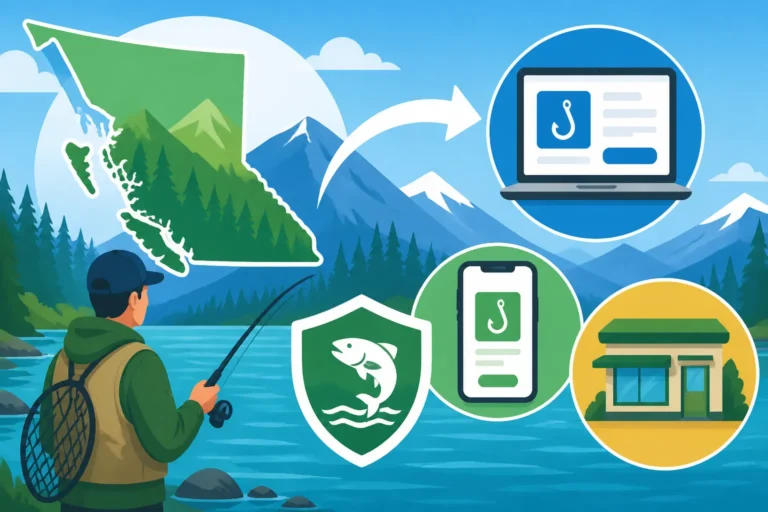
Before you can even begin to understand the regulations, you need to know where to find the official, most up-to-date version of the BC Freshwater Fishing Regulations Synopsis. Luckily, accessing this critical document is easier than ever, with both digital and physical options available to suit your preference.
The Digital Advantage: Online and Mobile
In this day and age, the internet is your best friend when it comes to getting the latest information quickly. The official BC Freshwater Fishing Regulations Synopsis is readily available for free download as a PDF from the Government of British Columbia's website, specifically through the Ministry of Water, Land and Resource Stewardship or its related fisheries pages. A quick search for "BC Freshwater Fishing Regulations Synopsis" will almost always lead you directly to the current year's version.
The advantages of the digital format are numerous. You can carry it on your smartphone or tablet, making it accessible even when you're out on the water, provided you have a signal or have downloaded it beforehand. Many anglers find it easier to search for specific keywords (like "Fraser River" or "Chinook") within a PDF document than flipping through pages. Plus, the online version is always the most current, reflecting any minor revisions that might occur early in the season before printed copies are widely distributed. You can even check for official BC Fishery Notices and In-Season Closures, Explained directly from the same government sites, which is vital.
Holding It In Your Hands: Printed Copies
For those of us who prefer the tactile experience of a physical document, printed copies of the Freshwater Fishing Regulations Synopsis are also available. These are typically provided free of charge at most fishing license vendors across the province, including many sporting goods stores, tackle shops, and some general stores in fishing-heavy regions. Places like Kootenay Fly & Tackle in Cranbrook or Fred's Custom Tackle in Chilliwack usually have stacks available.
While convenient for reading away from a screen, remember that printed copies are static at the time of publication. This means they will not include in-season regulation changes, which are posted online as Fishery Notices. It's perfectly fine to have a physical copy as your primary reference, but always, always supplement it by checking the official government website for updates before heading out. Some anglers even print out relevant sections of Fishery Notices and tape them into their physical Synopsis as a workaround.
Demystifying the Document – Structure and Key Sections
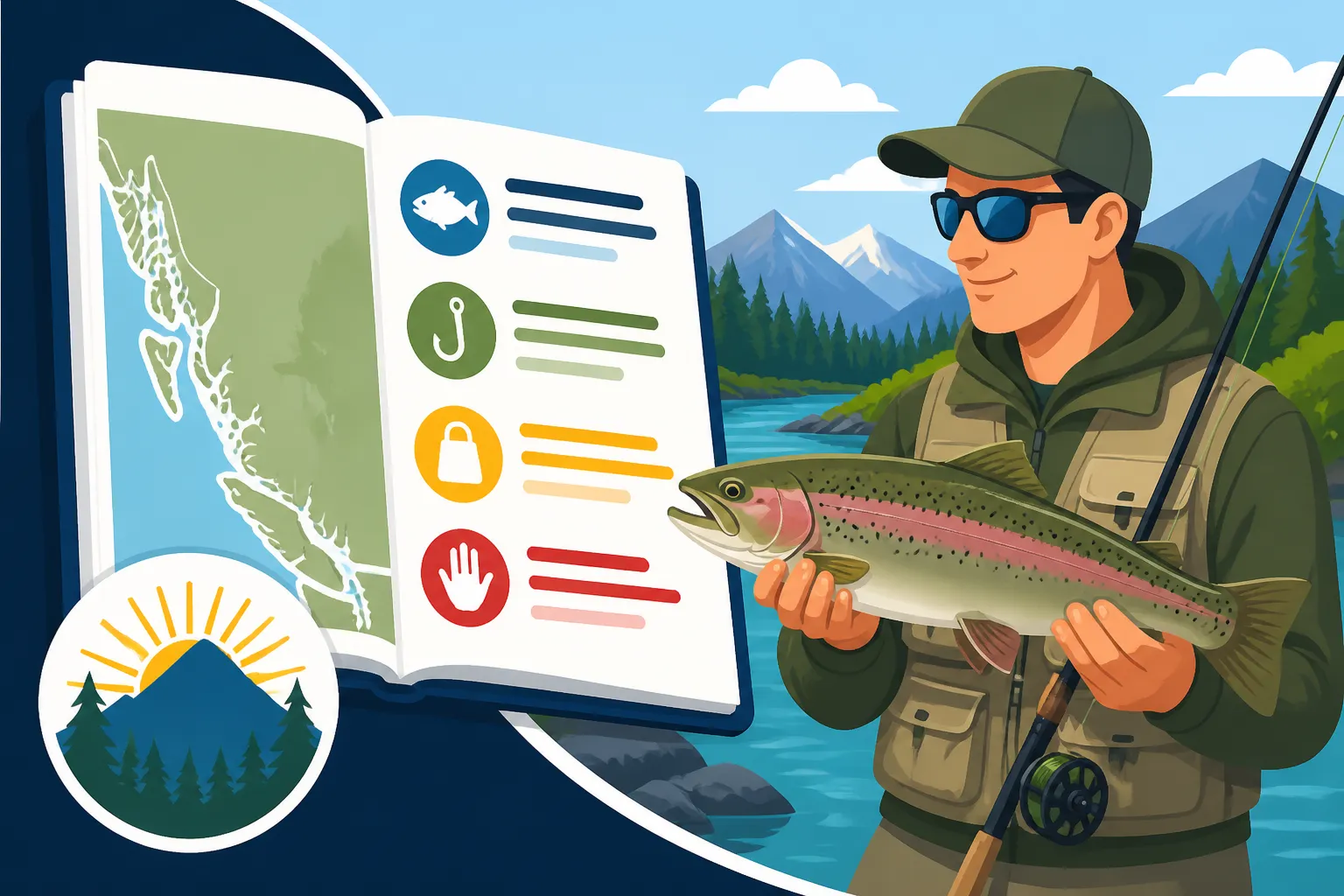
The BC Freshwater Fishing Regulations Synopsis might look like a monolithic block of text, but it's actually a very logically structured document once you understand its layout. Think of it like a well-organized library; you just need to know how to use the card catalog (or in this case, the table of contents and headings) to find what you need.
Navigating the Table of Contents
Your very first stop should always be the Table of Contents. This isn't just a list of pages; it's a roadmap to the entire document. It clearly outlines the major sections, such as "General Regulations," "Regional Regulations," "Tidal vs. Freshwater," "Definitions," and "Species Identification." Take a few minutes to skim through it. This initial overview will give you a mental framework of how the information is organized and where to look for specific details.
For instance, if you're planning a trip to the Okanagan Valley, you'll quickly see a section dedicated to "Okanagan Region" or "Region 8," and within that, subsections for specific lakes or rivers. This saves you from wading through pages of regulations that don't apply to your chosen fishing spot. Understanding the flow from general, province-wide rules down to specific, localized rules is key to efficient navigation.
The Crucial "General Regulations" Section
Before you even think about your specific fishing hole, you must familiarize yourself with the "General Regulations" section. These are the overarching rules that apply throughout the entire province, unless explicitly overridden by a regional or special regulation. Think of them as the default settings for fishing in BC. This section covers fundamental aspects like:
- Licensing Requirements: This is where you'll find details on who needs a license, age exemptions (for example, children under 16 often don't need a license, but still fall under catch limits), and how to carry proof of your license. This is crucial reading; you definitely don't want to face Fishing Without a License in BC: Penalties. It also touches on what stamps are required, like the BC Salmon Conservation Stamp Rules if you plan to retain salmon. For detailed information, you can check BC resident freshwater fishing license cost 2026.
- Definitions: This might sound boring, but it's incredibly important. What exactly constitutes a "barbless hook"? What's the difference between a "daily quota" and a "possession limit"? How is a "fish" defined for regulatory purposes? These seemingly minor details can have significant implications for compliance. For example, knowing the difference between "freshwater" and "tidal waters" is vital, as it determines whether you need a freshwater or saltwater license. (For more on this, check out our guide on BC Freshwater vs Tidal Waters License, Explained).
- Gear and Bait Restrictions: Here you’ll learn about what types of tackle are generally allowed or prohibited. For instance, the general rule is often "single barbless hook" in many areas, but there might be exceptions. This section will also detail bait restrictions (e.g., live bait is generally prohibited in BC freshwater, but there are nuances).
By understanding these foundational rules first, you build a solid base of knowledge. Any subsequent regional or species-specific rule you encounter will then be understood as either reinforcing or modifying these general principles.
Regional and Species-Specific Overviews
Following the general regulations, the Synopsis breaks down the province into several management regions. British Columbia is vast, and what works for managing fish stocks in the Lower Mainland (Region 2) might be entirely different from the Kootenays (Region 4) or the Skeena region (Region 6). Each region will have its own dedicated section, listing waters within that region and their specific rules.
Within these regional sections, and sometimes in a separate "Species Index," you'll find detailed rules for different fish species. This is where you'll look up the BC Bag and Possession Limits by Species for rainbow trout in Okanagan Lake, or the BC Steelhead Season Dates for the Bulkley River. It's often organized by fish type (e.g., Trout, Salmon, Sturgeon) and then further by specific species. Always cross-reference the regional rules with the species-specific rules for your target fish in your chosen location to ensure you're fully compliant.
General Rules vs. Hyper-Local Specifics – A Hierarchy of Regulations
One of the trickiest parts of navigating the Synopsis is understanding the hierarchy of rules. It’s not a flat document where every rule holds equal weight everywhere. Instead, there's a system where general, province-wide rules can be superseded by regional rules, which in turn can be further modified by specific rules for individual water bodies. Finally, in-season Fishery Notices can override everything.
Provincial-Wide General Regulations
As discussed, the General Regulations are your baseline. These apply across British Columbia unless a more specific regulation is in place. Think of them as the default settings for fishing in BC. For example, the general prohibition on using live finfish as bait applies everywhere unless a specific water body explicitly states otherwise (which is rare in freshwater). Similarly, the definition of a "barbless hook" is uniform across the province.
These general rules also cover basic ethical practices, such as ensuring proper release techniques for catch-and-release fishing, and regulations around waste disposal. They aim to establish a consistent standard for responsible angling behaviour that protects the environment and fish stocks at a broad level. Always start here to grasp the fundamentals of BC Fishing Regulations Explained.
Regional Management Zones
British Columbia is divided into several administrative regions for fisheries management. Each region has unique ecological characteristics, fish populations, and angling pressures, which necessitate tailored regulations. For example, the Lower Mainland (Region 2) has high population density and urban rivers, while the Skeena Region (Region 6) is remote with vast wild salmon and steelhead rivers.
When you consult the Synopsis, you'll first locate your intended fishing area within one of these regions. The regional section will then outline rules specific to that entire region. This might include regional closures, special gear rules for all waters within that region, or general bag limits for common species that differ from other parts of the province. For instance, bag limits for kokanee might be different in the Kootenay Region compared to the Thompson-Nicola region.
Special Regulation Waters and Individual Water Body Rules
This is where it gets truly granular, and often, the most confusing. Within each region, specific lakes, rivers, or even stretches of rivers can have "Special Regulations" that override both the provincial general rules and the regional rules. These are often highlighted in the Synopsis with distinct symbols or in dedicated subsections for "Special Regulation Waters".
These hyper-local rules are put in place for a variety of reasons:
- Conservation: To protect vulnerable stocks, like wild steelhead on certain rivers or unique trout strains. Many of the BC Catch and Release Only Waters fall under this category.
- Fishery Enhancement: To manage stocked lakes (often found on the List of BC stocked trout lakes) or specific areas where angling pressure is high.
- Unique Ecology: Some water bodies have sensitive ecosystems or specific fish behaviours that require unique rules.
You might find a lake that has a reduced bag limit for rainbow trout, or a river that is fly-fishing-only, or a specific closure window for a particular salmon run. It's not uncommon to find very specific instructions like "single barbless hook, bait ban, no motors over 10hp, closed to angling from September 1 to October 31." Always look for these specific water body rules, as they always take precedence over broader regulations. This is where paying close attention to detail is paramount, and overlooking a small symbol could lead to serious issues.
Decoding Species-Specific Rules and Conservation Stamps
Once you’ve grasped the general and regional rules, the next step is to dive into the specifics for the fish you’re hoping to catch. Every species, especially popular game fish, comes with its own set of rules, often intricately tied to conservation efforts.
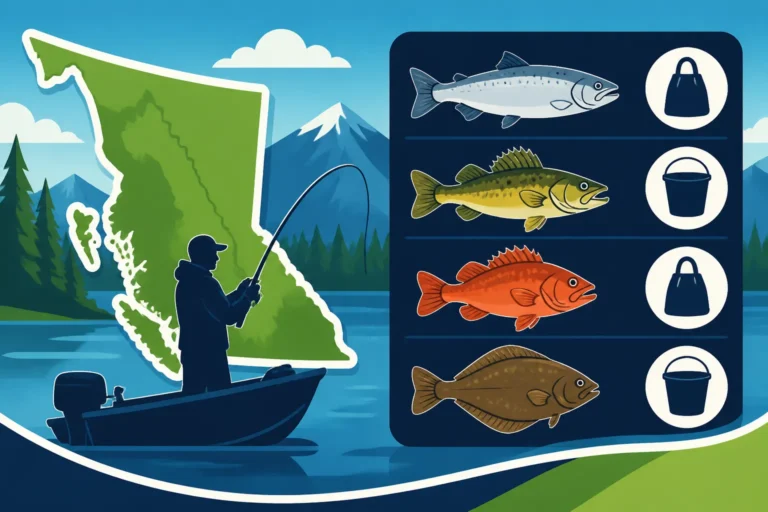
Understanding Bag and Possession Limits
This is perhaps the most fundamental species-specific rule.
- Daily Quota (or Daily Limit): This is the maximum number of a particular species you are allowed to catch and retain in a single day. For instance, the Synopsis might state "Rainbow Trout: 4 per day." This means that once you've kept four rainbow trout, you must cease fishing for that species for the remainder of the day, even if you could easily catch more.
- Possession Limit: This is the total number of a particular species you are allowed to have in your possession at any given time, regardless of when or where they were caught. This includes fish in your cooler, freezer, or at your campsite. Often, the possession limit is twice the daily quota, but it can vary. For example, if the daily quota for Kokanee is 4, the possession limit might be 8. This is especially important for multi-day trips. Always check the BC Kokanee Retention Rules for specific details.
It's crucial to understand the difference and adhere to both. Exceeding either limit is a serious violation. Remember, "catch and release" means you don't keep the fish, so it doesn't count against your daily quota unless you chose to retain it.
Size Limits and Gear Restrictions
Beyond just numbers, many species have size restrictions, either a minimum or a maximum length, or sometimes both. These are typically in place to protect juvenile fish, allowing them to reach maturity and spawn, or to protect trophy-sized broodstock that are vital for future generations.
For example, Lingcod might have a strict minimum size limit to ensure they've had a chance to reproduce. If you catch a fish below the minimum size, you must release it immediately and carefully. Similarly, some waters or species might have specific gear restrictions:
- Single, Barbless Hooks: This is very common, especially for sensitive species like Steelhead. The idea is to minimize injury to fish that are to be released.
- Bait Bans: Many trout streams and salmon rivers prohibit bait (like roe, worms, or powerbait) to prevent incidental hooking of non-target species or to ensure higher survival rates for released fish.
- Prohibited Methods: Using nets, spears (unless specified for a traditional fishery), or explosives are universally prohibited for recreational angling.
Always check the "Gear and Bait Restrictions" section for your specific region and target species. What might be legal for Bass in one lake could be strictly prohibited for Salmon in a nearby river.
The Role of Conservation Surcharge Stamps
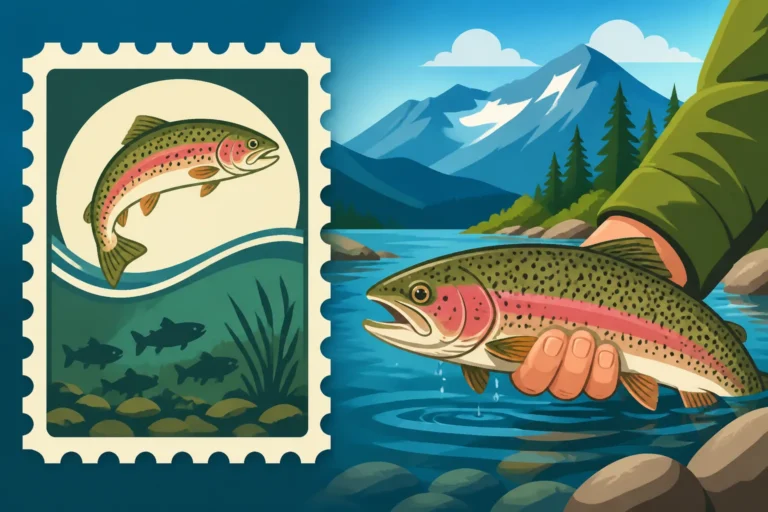
If you plan on retaining certain species, specifically Salmon or Steelhead, you will need to purchase additional conservation surcharge stamps on top of your base fishing license. These stamps are not just another fee; they are direct contributions to the conservation and management efforts for these vital fish populations.
- BC Salmon Conservation Stamp Rules: If you intend to keep any species of Pacific salmon (Chinook, Coho, Sockeye, Pink, Chum) from freshwater, you need a Salmon Conservation Stamp. This applies to both freshwater and tidal waters, though this guide focuses on freshwater. The funds from these stamps go directly towards salmon habitat restoration, stock assessment, and enhancement programs. For example, if you're targeting Chinook salmon in the Fraser River, not only do you need your base license, but you also need a valid salmon stamp if you plan to keep any legal fish. You can learn more about this by reading BC Freshwater Salmon Retention Rules.
- BC Steelhead Conservation Surcharge Stamp: For those targeting the elusive Steelhead, a separate Steelhead Conservation Surcharge Stamp is required in addition to your freshwater license if you wish to retain one. However, most Steelhead fisheries in BC are catch-and-release only, reflecting their vulnerable status. Always verify the specific regulations for the river you intend to fish, as many areas are BC Catch and Release Only Waters for steelhead.
These stamps are easy to purchase online when you buy your main license, or from authorized vendors. They typically need to be attached to or noted on your license document. Failing to have the correct stamps when retaining fish can result in significant fines.
| Regulation Type | Description | Example | Precedence |
|---|---|---|---|
| General Regulations | Broad, province-wide rules applying to all freshwater fishing, unless specified otherwise. | All recreational fishing requires a valid license; live finfish bait is prohibited. | Lowest baseline, overridden by regional/special. |
| Regional Regulations | Rules specific to one of BC's regional management zones, overriding general rules where noted. | Region 8 (Okanagan) has specific closure dates for certain lakes not found provincially. | Overrides General Regulations for that region. |
| Special Regulation Waters | Highly specific rules for individual lakes, rivers, or stream sections, often for conservation. | "Mill Creek (Kelowna): Fly-fishing only, single barbless hook, catch & release for Rainbow Trout." | Overrides General and Regional Regulations. |
| Species-Specific Rules | Limits, sizes, and gear for particular fish species within a given region or special water. | "Chinook Salmon (Fraser River): 1 per day, 62-80 cm, adipose fin intact." | Applied within the context of general, regional, special. |
| Fishery Notices | In-season changes, closures, or openings issued by government, overriding all printed regulations. | "Fraser River Sockeye closure window extended until August 15th due to low returns." | Highest precedence, overrides everything else. |
The Unpredictable Element – Fishery Notices and In-Season Changes
You’ve read the Synopsis, understood the general rules, found your regional section, and drilled down into the specifics for your chosen lake or river. You feel confident. But wait! There’s one last, absolutely crucial step before you head out: checking for Fishery Notices.
What are Fishery Notices?
Fishery Notices (sometimes referred to as "in-season regulation changes" or "variation orders") are official government announcements that modify, open, or close fisheries after the annual Synopsis has been published. These notices are issued by the Department of Fisheries and Oceans Canada (DFO) for tidal waters (which often affects freshwater salmon runs as well) and by the Province of BC (Ministry of Water, Land and Resource Stewardship) for freshwater species.
These notices are critical because they override anything written in the printed or digital Synopsis. They are dynamic responses to real-time events that impact fish populations:
- Conservation Concerns: If a salmon run comes in weaker than expected, DFO might issue an immediate closure or reduce bag limits to protect the stock. This often impacts rivers like the Fraser, leading to situations like BC Fraser River Sockeye 5-week closure window dates.
- Stronger-than-Expected Returns: Occasionally, a run might be exceptionally strong, leading to temporary openings or increased limits to allow for responsible harvest.
- Environmental Factors: Events like droughts, extreme heat, or floods can stress fish, prompting temporary closures to reduce mortality from angling pressure.
- Management Adjustments: New scientific data or management strategies might necessitate mid-season rule changes.
Essentially, Fishery Notices are the government's way of staying agile and responsive to the health of BC's diverse aquatic ecosystems. Ignoring them is not only illegal but also incredibly detrimental to conservation efforts. You must always consult BC Fishery Notices and In-Season Closures, Explained before every trip.
Where and How to Check for Updates
The primary place to find the latest Fishery Notices is online:
- DFO Recreational Fishery Notices: For salmon and other anadromous species that spend time in salt water but spawn in fresh (like most salmon, some steelhead), you’ll want to check the DFO website. They have a dedicated section for recreational fishing notices that is updated frequently. You can often sign up for email alerts, which is an excellent way to stay informed without constantly checking the website.
- BC Government Fish and Wildlife Website: For purely freshwater species (like resident trout, kokanee, bass, sturgeon), the BC provincial government website (Ministry of Water, Land and Resource Stewardship) will host any specific in-season changes. Again, look for a "Fishery Notices" or "Regulation Updates" section.
I highly recommend bookmarking these pages on your web browser or even creating a shortcut on your smartphone. Before every single fishing trip, regardless of how recently you last checked, take five minutes to quickly scan for any new notices affecting your specific area and target species. Think of it as part of your pre-trip checklist, just like checking your gear or ensuring your waders don't leak. It's truly that important.
Common Pitfalls and How to Sidestep Them
Even with the Synopsis in hand and a commitment to staying informed, anglers can still inadvertently fall foul of the regulations. It's usually not intentional, but rather a result of misinterpretation or overlooking crucial details. Knowing these common pitfalls can help you avoid them.
Misinterpreting Dates and Times
One of the most frequent mistakes is misunderstanding season dates or daily time restrictions. The Synopsis will clearly list "open seasons" and "closed seasons" for various species and waters. For example, a river might be open for trout all year, but closed for salmon retention during certain months. Or, a specific lake might have a general open season, but then a "5-week closure window" specifically for Sockeye salmon.
It's common for anglers to see "open season" and assume it applies to all species in that water body, which is rarely the case. Always check the specific species you are targeting and the exact dates for that species in your chosen location. Pay close attention to "until" dates versus "starting on" dates. For example, a closure "until March 31st" means it opens on April 1st, not March 31st. Similarly, be aware that some regulations specify fishing is only allowed between certain hours of the day, particularly around sensitive spawning areas or for specific methods. For more on this, consult BC Fishing Season Dates and Closures.
Overlooking Special Regulation Waters
As we touched on earlier, the "Special Regulation Waters" sections are critical and often where anglers make mistakes. They might assume the regional general rules apply everywhere, not realizing that a specific lake or a short stretch of river they are fishing has completely different rules.
Imagine you're fishing a large river that generally allows bait, but a 2-kilometer section upstream has been designated "fly-fishing only, single barbless hook" to protect a sensitive wild trout population. If you enter that section with your spinning rod and worm, you're instantly in violation, even if you didn't know. Always scan for any symbols (like triangles, stars, or shaded areas on maps) or footnotes next to the specific water body you're fishing. These indicate Special Regulation Waters in BC, and you must look them up. Local tackle shops or guides often know these spots inside out and can offer invaluable advice.
Neglecting Fishery Notices – The Biggest Risk
This one cannot be stressed enough. The biggest and most impactful mistake an angler can make is failing to check Fishery Notices. The annual Synopsis is a snapshot in time; Fishery Notices are the living, breathing updates. A river might be listed as "open for Chinook salmon" in the printed Synopsis, but a Fishery Notice issued last week could have closed it to Chinook retention due to low returns.
If you fish based solely on an outdated printed Synopsis, you could be unknowingly violating a serious conservation measure. This not only puts you at risk of hefty fines and equipment seizure but also undermines the collective efforts to protect BC's precious fisheries. Make checking Fishery Notices a non-negotiable part of your pre-fishing routine. Set a reminder on your phone, subscribe to email alerts, or even call a local Ministry office if you're uncertain. Your diligence contributes directly to the health of the fishery.
Assuming Reciprocity with Other Jurisdictions
While BC has some agreements, it's a common misconception that fishing licenses or regulations from other provinces or states are reciprocal. For example, while there might be some specific arrangements on boundary waters, a general fishing license from Alberta or Washington State is not valid for fishing in BC. You need a specific British Columbia Fishing License Guide for 2026 for BC waters.
Similarly, even within BC, freshwater and tidal (saltwater) fishing are governed by separate licenses and regulations. You cannot use a freshwater license to fish for halibut in the ocean, nor can a tidal license be used for trout in an interior lake. Always ensure you have the correct license for the water you are fishing. For a deeper dive into these distinctions, explore Resident vs Non-Resident Fishing License Costs in BC and BC Freshwater vs Tidal Waters License, Explained.
Becoming a Regulations Pro – Tips for Staying Informed and Compliant
Navigating the BC Freshwater Fishing Regulations Synopsis might seem like a Herculean task initially, but with a systematic approach and consistent effort, you can become adept at it. The goal is to spend less time worrying about rules and more time enjoying the incredible fishing opportunities British Columbia offers.
Develop a Routine for Checking Regulations
The single most effective strategy is to integrate regulation checks into your fishing routine.
- Annual Review: At the start of each fishing year (April 1st, when new licenses and synopses are typically released), download the new Synopsis and give it a thorough read-through, particularly the General Regulations and any regions you plan to fish. Note any significant changes from the previous year.
- Pre-Trip Check: Before every fishing trip, no matter how short or how familiar you are with the spot, spend 5-10 minutes checking the official DFO and BC government websites for Fishery Notices relevant to your specific water body and target species.
- In-Season Monitoring: If you fish frequently or target sensitive species, consider signing up for email alerts from DFO. Many local tackle shops also do an excellent job of posting or announcing critical updates, so frequenting your local shop can be a great source of information.
Consistency is key here. It only takes one overlooked notice to turn a great fishing day into a stressful encounter with a Conservation Officer.
Utilize Digital Tools and Resources
Embrace technology to your advantage:
- Download the PDF: Having the latest Synopsis PDF on your phone or tablet means you can quickly reference it even without an internet connection in many remote areas (provided you downloaded it when you had signal). The search function within the PDF is invaluable.
- Government Websites: Bookmark the DFO Recreational Fishery Notices page and the BC Ministry of Water, Land and Resource Stewardship fisheries page. These are your ultimate authoritative sources.
- Third-Party Apps (with caution): While there are fishing apps that aim to consolidate regulations, always cross-reference them with the official government sources. Apps can sometimes be slow to update or contain errors. They can be a good aid but should not be your sole source of truth.
- Online Forums and Social Media Groups: While not official sources, many BC fishing communities on Facebook or dedicated forums are incredibly active. Members often share new Fishery Notices and discuss their implications. These can serve as early warning systems, prompting you to go check the official sources.
When looking for fishing supplies to aid your regulation tracking, like a waterproof notebook or a small portable printer for printing notices on the go, you might find a good selection on online retailers like Amazon. Just remember, the official Synopsis isn't something you purchase there.
Don't Be Afraid to Ask
If you've genuinely tried to understand a regulation and are still unsure, don't guess!
- Contact a Local Conservation Officer: Their job is to enforce regulations, but they are also a fantastic resource for clarification. A quick, polite phone call can save you a lot of grief.
- Visit a Local Tackle Shop: These folks live and breathe local fishing. They often have the most up-to-date local knowledge, can point out common pitfalls for specific waters, and explain complex rules in layman's terms. They're often the first to know about local changes and closures.
- Hire a Guide: If you're completely new to an area or a species, hiring a licensed fishing guide is an excellent investment. They are experts in local regulations, fishing techniques, and safety, ensuring you have a compliant and successful trip. This is especially true for complex fisheries like Fraser River Fishing Guide or Best Steelhead Rivers in BC.
By adopting these proactive strategies, you move beyond simply reading the Synopsis to truly understanding and applying its rules. This not only keeps you on the right side of the law but also fosters a deeper appreciation for the conservation efforts that preserve British Columbia's world-class fishing for generations to come.
Disclaimer
Please remember that fishing regulations in British Columbia are subject to change at any time. While this guide aims to provide accurate and comprehensive information, it is your sole responsibility to consult the most current official BC Freshwater Fishing Regulations Synopsis and all relevant DFO Fishery Notices before engaging in any fishing activity. This article is for informational purposes only and does not constitute legal advice.