How to tell a sockeye from a pink salmon
Alright, fellow anglers, let's talk about something that can genuinely stump even seasoned folks out on the water: telling the difference between a Sockeye and a Pink salmon. It might seem like a small detail, but trust me, understanding these subtle distinctions is absolutely crucial for staying on the right side of British Columbia's fishing regulations, not to mention respecting the species and ensuring you’re targeting what you intend to. This guide will walk you through the tell-tale signs, common misconceptions, and practical tips to confidently identify whether you've hooked into a vibrant Sockeye or a feisty Pink.
Why Accurate Salmon Identification Matters on BC Waters
Imagine you're out on the Fraser River, the rod tip bouncing, and suddenly, you're into a hard-fighting salmon. Your heart is pounding, and as you bring the fish closer, you realize it's a Pacific salmon, but which one? In British Columbia, the regulations for different salmon species can vary wildly, from daily bag limits to specific retention rules, or even complete closures for certain runs. Misidentifying your catch isn't just a minor mistake; it can lead to hefty fines, conservation violations, and a real black eye for responsible angling. Knowing your Sockeye from your Pink isn't just about showing off your fish smarts; it's about being a responsible steward of our incredible salmon resources. It's about ensuring you're not mistakenly keeping a fish from a vulnerable run or missing out on a legal catch you're entitled to.
Navigating Complex Regulations
British Columbia's fishing regulations are a tapestry of rules that change not only by species but often by specific river systems, management areas, and even by the time of year. What might be perfectly legal for a Pink salmon on the Squamish River could be a strict no-go for a Sockeye on the same river, or vice versa, depending on the current fishery notices. This complexity means that a quick identification is essential. You don't want to spend precious minutes on the water trying to consult an entire binder of regulations, especially when a fish is thrashing at your feet. Understanding the core differences between these two species allows you to quickly assess your catch against the current limits, which you should always check before heading out. BC Fishing Regulations Explained is a great resource to get familiar with the overarching rules before you even think about putting a line in the water.
Conservation and Respect for the Resource
Beyond the legalities, there's a deep-seated ethical responsibility that comes with fishing in BC. Our salmon populations, while resilient, face numerous challenges, and careful management is key to their long-term health. Sockeye and Pink salmon often have very different run strengths and conservation statuses in any given year. For instance, a particular Sockeye run might be experiencing low returns, leading to strict catch-and-release rules or even full closures, while a Pink salmon run might be incredibly abundant, allowing for generous retention limits. Accidentally keeping a Sockeye when the regulations are catch-and-release only for that species, simply because you thought it was a Pink, directly undermines conservation efforts. Learning the identification nuances demonstrates a commitment to responsible angling and helps protect these magnificent fish for future generations.
Key Physical Differences: Spotting Sockeye vs. Pink Salmon
When you first see a salmon in the water, or on the end of your line, there are several key physical traits you can look for to distinguish between a Sockeye and a Pink. These differences become more pronounced as the fish transition from ocean-phase bright silver to their spawning colours, but even in their "chrome" state, there are clues.
Body Shape and Size
One of the most immediate and often noticeable differences is the overall build and typical size of the fish.
The Sleek Sockeye Silhouette
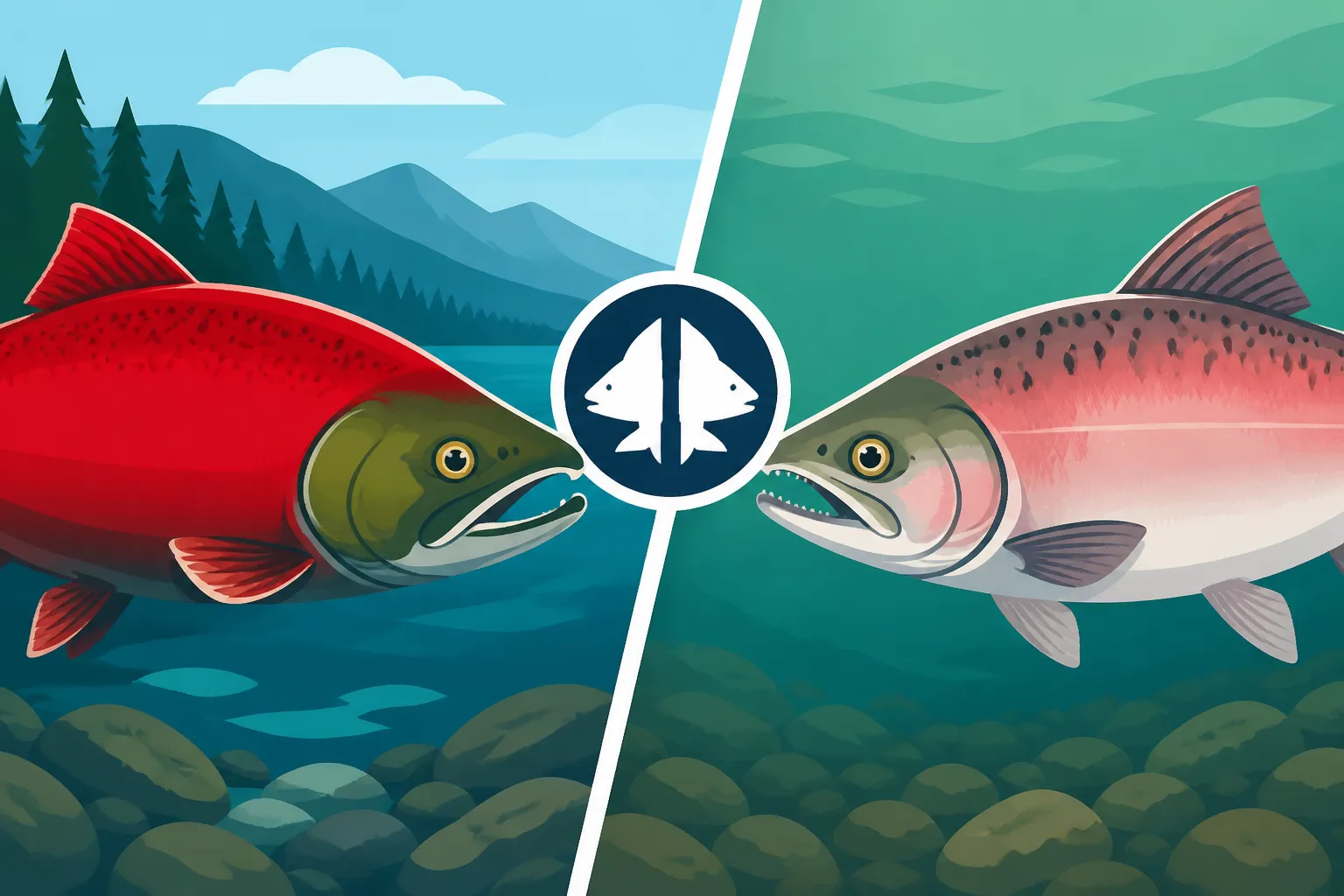
Sockeye salmon are generally more streamlined and torpedo-shaped. They tend to be a mid-sized salmon species, not as small as Pinks, but typically not reaching the gargantuan sizes of a trophy Chinook. An ocean-phase Sockeye is often a beautiful, shimmering silver, but as they enter freshwater to spawn, their bodies transform dramatically. They take on a striking, almost iridescent red colouration, often with green heads and tails, becoming truly unmistakable. Their body is generally quite deep and compressed laterally, giving them that classic salmon look. Typically, a mature Sockeye in freshwater might range from around 4 to 8 pounds, though larger specimens certainly exist, especially from robust runs in systems like the Fraser.
The Distinctive Pink Salmon Form
Pink salmon, on the other hand, are the smallest of the Pacific salmon species found in BC. They have a noticeably more slender body compared to the Sockeye when ocean-bright. However, as they move into freshwater, particularly the males, they develop a very pronounced, almost grotesque, hump on their back just behind the head. This "humpback" is where they get their other common name. While Pinks can be bright silver in the ocean, their spawning colours tend to be a duller greenish-brown on the back, fading to white on the belly, often with patches of pink or reddish-brown along their sides. They are generally smaller than Sockeye, usually weighing between 3 and 5 pounds, making them quite manageable on lighter tackle. This size difference, combined with the male's developing hump, is often the first visual cue many anglers pick up on.
Colouration and Markings
Beyond the general body shape, the specific patterns and colours on a salmon's body, especially their tails, are critical identifiers.
Sockeye's Signature Red and Silver
In the saltwater, or when they've just entered a river system, Sockeye are famously known for their almost iridescent silver sides, deep blue-green backs, and a relatively clean, unmarked tail. There are usually no significant spots on their tail or upper back. This pristine, unblemished appearance is a strong indicator. As they push further upstream and begin their spawning ritual, the Sockeye's transformation is arguably the most dramatic of all Pacific salmon. Their bodies become an intense, fiery red, and their heads often turn a vivid green, sometimes with a yellowish tinge. Their fins also become darker. This bright red body and green head combo is the quintessential Sockeye spawning look that most people instantly recognize. The absence of large, oval spots on the tail is a consistent feature, regardless of their colour phase.
Pink Salmon's Speckled Tail and Hump
Pink salmon, even in their bright ocean phase, typically have many large, oval-shaped black spots on their back and, most notably, on both lobes of their tail fin. These spots are often quite distinct and can be a dead giveaway. Their backs are usually a metallic blue-green in saltwater, transitioning to a duller grey-green or brown on their backs and flanks, with a whitish belly, during their freshwater journey. As mentioned, male Pinks develop that unmistakable "humpback" as they approach spawning grounds. This pronounced hump, combined with the heavily spotted tail, are the two most reliable visual cues for identifying a Pink salmon. If you catch a fish with a strongly spotted tail and you're in an odd-numbered year (more on that later), it's almost certainly a Pink. Even on Amazon, if you're looking at identification guides or posters, the Pink salmon's tail spots are always highlighted.
Mouth and Teeth
Taking a peek inside the fish's mouth, or feeling the jawline, can also reveal important clues.
Sockeye's Toothless Grin
Sockeye salmon generally have relatively small teeth, and their mouths are less pronounced than other salmon species. In fact, many anglers describe them as having a "toothless" feel. Their gums are usually a pale colour, not black. The jaw structure itself is relatively clean and straight. This lack of prominent teeth is a key distinguishing feature from, say, a Chinook or Coho, but it's also helpful when comparing them to Pinks, which do have some noticeable dentition.
Pink Salmon's Small But Present Teeth
Pink salmon, despite their smaller size, do possess small, evenly spaced teeth on both their upper and lower jaws. These teeth are usually quite visible, especially if you gently open the fish's mouth. While not as formidable as a Chinook's canines, they are definitely present and can be felt. Their gums are also usually white or pale, similar to a Sockeye. The key here is the presence of these small but distinct teeth, which are more evident than what you'd typically find in a Sockeye. A quick glance inside the mouth can often confirm your initial visual assessment.
Here's a quick comparison table to help visualize these key differences:
| Feature | Sockeye Salmon | Pink Salmon |
|---|---|---|
| Typical Size | Medium (4-8 lbs) | Small (3-5 lbs) |
| Body Shape | Streamlined, torpedo-shaped, deep body laterally | More slender, males develop distinct "humpback" |
| Spawning Colour | Fiery red body, green head/tail | Grey-green/brown back, whitish belly, pinkish sides |
| Tail Spots | Generally absent, or very few faint spots | Many large, distinct oval black spots on both lobes |
| Back Spots | Generally absent | Many large, distinct oval black spots on back |
| Mouth/Teeth | Relatively small, often described as "toothless" | Small, evenly spaced teeth present |
| Gums | Pale/white | Pale/white |
| Spawning Cycle | Annual runs (though specific runs vary) | Strong biennial (odd-year) runs in southern BC |
Life Cycle and Run Timing Differences: More Than Just Looks
It's not just about what the fish looks like; understanding their unique life cycles and when and where they typically show up can provide huge clues for identification. This ecological knowledge is often as crucial as physical appearance, especially if you're trying to identify a fish quickly or in less-than-ideal lighting conditions.
Spawning Cycles: The Pink Salmon's Unique Biennial Pattern
This is perhaps one of the most critical differentiators, especially for Pink salmon in southern BC river systems.
Sockeye's Annual Returns
Sockeye salmon typically return to their natal rivers to spawn every year. While the strength of specific Sockeye runs can vary year to year due to complex oceanic conditions and environmental factors, there will almost always be Sockeye returning. For example, the mighty Fraser River Sockeye run, famous worldwide, sees fish returning annually, though every four years or so, one of those runs is traditionally much larger than the others, often referred to as a "dominant" year. Anglers need to check BC Fishery Notices and In-Season Closures, Explained regularly for updates on Sockeye runs, as regulations can change very quickly.
Pink Salmon's "Odd-Year" Dominance
Pink salmon have a fascinating and very distinct two-year life cycle. This means that in many river systems, particularly throughout southern British Columbia, they return to spawn almost exclusively in odd-numbered years. Think 2021, 2023, 2025, and so on. In even-numbered years, Pink salmon returns in these areas are often negligible to non-existent. For example, if you're fishing the Fraser River or any of its tributaries, like the Harrison or Vedder, in an odd-numbered year, the chances of encountering Pinks are incredibly high. These "odd-year" runs can be absolutely massive, with millions of fish pushing into the rivers, making for incredible light-tackle fishing opportunities. Conversely, if you're out there in an even-numbered year, and you hook into a salmon that looks like a Pink, you should be extremely suspicious of your identification and double-check all other physical characteristics, as it's far more likely to be another species, like a small Coho, or even a juvenile Chinook. This biennial cycle is a foundational piece of knowledge for any BC angler. Pink Salmon Runs in BC offers more details on where and when these spectacular runs occur.
Preferred Habitats and Diet
Where these salmon spend their lives, and what they eat, also influences their appearance and behaviour.
Sockeye's Oceanic Journey and Freshwater Focus
Sockeye salmon spend a significant portion of their lives feeding in the open ocean, often far from the coast. Their diet primarily consists of zooplankton, small crustaceans, and sometimes smaller fish. This diet is believed to contribute to their vibrant red flesh (which is highly prized!) and their sleek, silver, and blue-green ocean colouration. When they enter freshwater, Sockeye are famously non-feeding, focused entirely on their arduous journey to the spawning grounds. This means that once in the river, they are not actively hunting, which influences the techniques used to catch them. They tend to travel in large schools, often holding in deeper pools or faster currents as they push upstream. Understanding Sockeye Salmon Life Cycle in the Fraser System provides fantastic insight into their incredible journey.
Pink Salmon's Nearshore Life and Diverse Diet
Pink salmon, after hatching, typically migrate to saltwater much quicker than Sockeye and spend most of their two-year life cycle in nearshore coastal waters and estuaries. Their diet is more varied, including small fish, squid, and various crustaceans, which also impacts their flesh colour and general appearance. When they enter freshwater, Pinks, like Sockeye, largely cease feeding, focusing on spawning. However, because their runs are often so incredibly dense in odd years, and they are typically smaller, they can be incredibly aggressive towards flies and lures, even though they aren't technically "feeding." This willingness to strike makes them a favourite target for many anglers looking for consistent action. Pinks often utilize smaller streams and even the lower reaches of larger rivers for spawning, sometimes only traveling a short distance from the ocean.
Practical Identification Tips for Anglers
Alright, you've got a fish on the line, it's splashing at the boat or near the riverbank. What's the quick mental checklist to confirm whether it's a Sockeye or a Pink? Here are some actionable steps.
Examining the Gills and Mouth (Carefully!)
When you bring a fish alongside, if you're still unsure, a quick, careful examination of its features can seal the deal.
The Gill Plate and Mouth Check
Gently but firmly hold the fish (if you intend to release it, minimize handling and keep it in the water as much as possible). Take a look at the gill plate. While not the primary identifier for Sockeye vs. Pink, it's good practice. More importantly, peek into the mouth. For a Sockeye, remember the "toothless" feel – a smooth, relatively unthreatening mouth. For a Pink, you should be able to discern those small, even teeth. Don't go sticking your fingers in there unless you're absolutely confident and know what you're doing, but a visual check is often enough. If you're planning to keep the fish and are still unsure, this is a good final confirmation step before retention. If you're practicing catch and release, avoid gill handling and keep the fish wet. A good pair of long-nose pliers from a brand like Leatherman or Gerber, often found on Amazon, can help you remove hooks quickly with minimal fish stress.
Considering the Context: Location, Time of Year, Run Size
Fishing isn't just about the fish in your hand; it's about the bigger picture. The context of your catch provides huge clues.
Where Are You Fishing?
Different rivers and areas of BC are known for stronger runs of one species over another. For instance, the Fraser River is synonymous with Sockeye, but in odd years, also sees massive Pink runs, especially lower down. Smaller coastal streams, like those on Vancouver Island, might primarily see Pink salmon. Researching Best Salmon Fishing Spots in BC for your specific area before you go out will give you a good idea of what species you're likely to encounter. If you're fishing a small creek in an even year, and you catch a heavily spotted salmon with a hump, it's highly unlikely to be a Pink salmon, and you should consider it might be a small Coho or another species.
What Time of Year Is It?
As discussed, the year matters enormously for Pinks. Is it an odd-numbered year (like 2021, 2023)? Then expect to see Pinks in abundance. Is it an even-numbered year? Then Pinks are rare to non-existent in southern BC, and anything resembling one needs a very close second look. Sockeye typically have their peak runs in mid to late summer (July, August), while Pink salmon runs usually peak slightly later, often late August into September. Knowing these general timeframes helps set your expectations.
What Do the Fishery Notices Say?
This is non-negotiable. Always, always check the current fishery notices for your specific area before you head out. These notices will tell you precisely what species are open, what the bag limits are, and if there are any special restrictions. If a fishery notice states that Sockeye are closed or catch-and-release only, but Pinks are open, your identification skills become paramount. It's often where the rubber meets the road. Keeping a digital copy of the BC Freshwater Fishing Regulations Synopsis on your phone, or a laminated printout, is a smart move. Printing or Carrying a Digital Fishing License in BC is also covered in our other guides, and it's essential for compliance.
When in Doubt, Release
This is the golden rule, the ultimate safety net for responsible angling in British Columbia. If, after all your careful observation and consideration of the context, you are still genuinely unsure whether the fish on your line is a Sockeye or a Pink salmon (or any other species for that matter), the best and most ethical course of action is always to release it gently.
Err on the Side of Conservation
There's no shame in admitting you're stumped. The regulations are complex, and some fish can exhibit atypical characteristics. Releasing an unidentified fish ensures you're not breaking any regulations, and more importantly, it ensures you're contributing to the conservation of a potentially vulnerable stock. Use proper catch-and-release techniques: keep the fish in the water, minimize handling, use barbless hooks, and revive it carefully before letting it swim away strong. The health of our fisheries depends on every angler making responsible choices. Always remember your BC Salmon Conservation Stamp Rules are in place for a reason, supporting the continued health of these amazing fish.
Learning to distinguish between Sockeye and Pink salmon is a fundamental skill for any angler in British Columbia. It respects the law, honors the fish, and ensures you're part of the solution in preserving our incredible natural heritage. Happy fishing, and may your lines be tight with the right fish!
Disclaimer
This article is for general informational purposes only and does not constitute professional advice. Laws, prices and regulations vary by location and change over time. Consult a qualified professional for guidance on your specific situation.