Rockfish Species Identification Guide for BC
It's incredibly frustrating, isn't it? You're out on the water, having a fantastic day, and then you pull up a fish that you think is one thing, but it might be another. Especially here in British Columbia, where the waters teem with so many incredible species, telling one rockfish from another can feel like solving a riddle. Misidentification isn't just a minor slip-up; it can lead to unintentional conservation issues or even a hefty fine. This guide is designed to cut through that confusion, helping you confidently identify the common rockfish species you might encounter, understand their unique traits, and fish responsibly in our beautiful province.
Why Accurate Rockfish Identification Matters in BC
Fishing in British Columbia is more than just a hobby; it's a deep connection to nature and a tradition we all want to protect. When it comes to rockfish, understanding exactly what you've caught isn't just about showing off your knowledge; it's crucial for responsible angling and adhering to the vital regulations designed to keep these populations healthy.
Conservation and Regulation
Our coastal waters are home to a remarkable diversity of rockfish species, many of which are long-lived and slow to reproduce. This makes them particularly vulnerable to overfishing. Because of this, British Columbia has put in place some very specific and important rules. We have designated Rockfish Conservation Area Rules where fishing for groundfish, including rockfish, is completely prohibited or heavily restricted. Imagine accidentally keeping a Yelloweye Rockfish, which is often a species of concern, when you thought it was a more common Copper Rockfish. That's why being able to tell them apart is so vital. These regulations aren't there to make our lives harder; they're in place to ensure that future generations can also experience the thrill of catching these amazing fish. Knowing your rockfish helps us all be better stewards of the marine environment.
Angler Responsibility and Penalties
Let's be honest, no one wants to find themselves on the wrong side of the law, especially when you're just trying to enjoy a day on the ocean. Misidentifying a rockfish species can unfortunately lead to significant penalties. Fisheries officers patrol our waters, and they are well-versed in the subtle differences between species. For instance, possession limits vary dramatically between different rockfish types. Keeping an over-limit of a particular species, or even possessing a species that is closed to retention, can result in fines that easily run into the hundreds or even thousands of dollars. Beyond the financial hit, there's the personal responsibility we all feel as anglers. We want to do our part, and that starts with knowing the BC Fishing Regulations Explained inside and out, especially when it comes to species as sensitive as rockfish. It's about respecting the resource and playing fair.
The Diverse World of BC Rockfish: An Overview
The sheer variety of rockfish in BC waters can be astounding, and a little intimidating for anglers. They're a fascinating group of fish, but their similar body plans and sometimes variable coloration can make distinguishing them a real head-scratcher. Let's start with what generally makes a rockfish identifiable before diving into specific species.
General Rockfish Characteristics
Rockfish, belonging to the genus Sebastes, are generally characterized by their robust bodies, large mouths, and often pronounced spines on their fins and heads. These spines are a key defensive feature, and you'll want to handle any rockfish with care to avoid a painful jab! Most rockfish also have strong, bony plates on their operculum (gill covers) and typically possess a single, continuous dorsal fin with both spiny and soft-rayed sections. Their eyes are usually quite large, adapted for hunting in deeper, dimmer light conditions. While their colours can range from vibrant reds and oranges to muted greens and blacks, they are almost always associated with rocky, complex habitats – hence their name. You'll rarely find a rockfish far from some kind of structure, whether it's a deep-water reef or a kelp forest. When you're fishing for other species like salmon or halibut, it's not uncommon to pull up a rockfish, especially if you're jigging near the bottom.
Common Misconceptions and Look-alikes
One of the biggest challenges in rockfish identification is that they share some general characteristics with other groundfish, leading to common mix-ups. The most frequent confusion is between rockfish and Lingcod Habits Around Structure or various greenlings. While all these fish are typically found in similar habitats, there are clear distinctions. Lingcod have a much longer, more slender body, a large head with prominent teeth, and a distinctly different dorsal fin (two separate fins, not continuous like a rockfish). Greenlings, while also having spiny dorsal fins, generally have smaller mouths, and their overall body shape is usually more elongated and less robust than a typical rockfish. It's really about paying attention to the details: the number of dorsal spines, the presence of specific markings, and overall body profile. Don't assume a spiny, bottom-dwelling fish is automatically a rockfish; take a moment to observe its unique features. A good waterproof field guide can be an invaluable tool for on-the-spot comparisons, and you can find several excellent options on platforms like Amazon that fit right into your tackle box.
Key Identification Features for Common BC Rockfish Species
Alright, let's get down to brass tacks. While there are many rockfish species in BC, a handful are most commonly encountered by recreational anglers. Knowing the telltale signs for these will dramatically improve your identification skills.
Yelloweye Rockfish (Red Snapper)
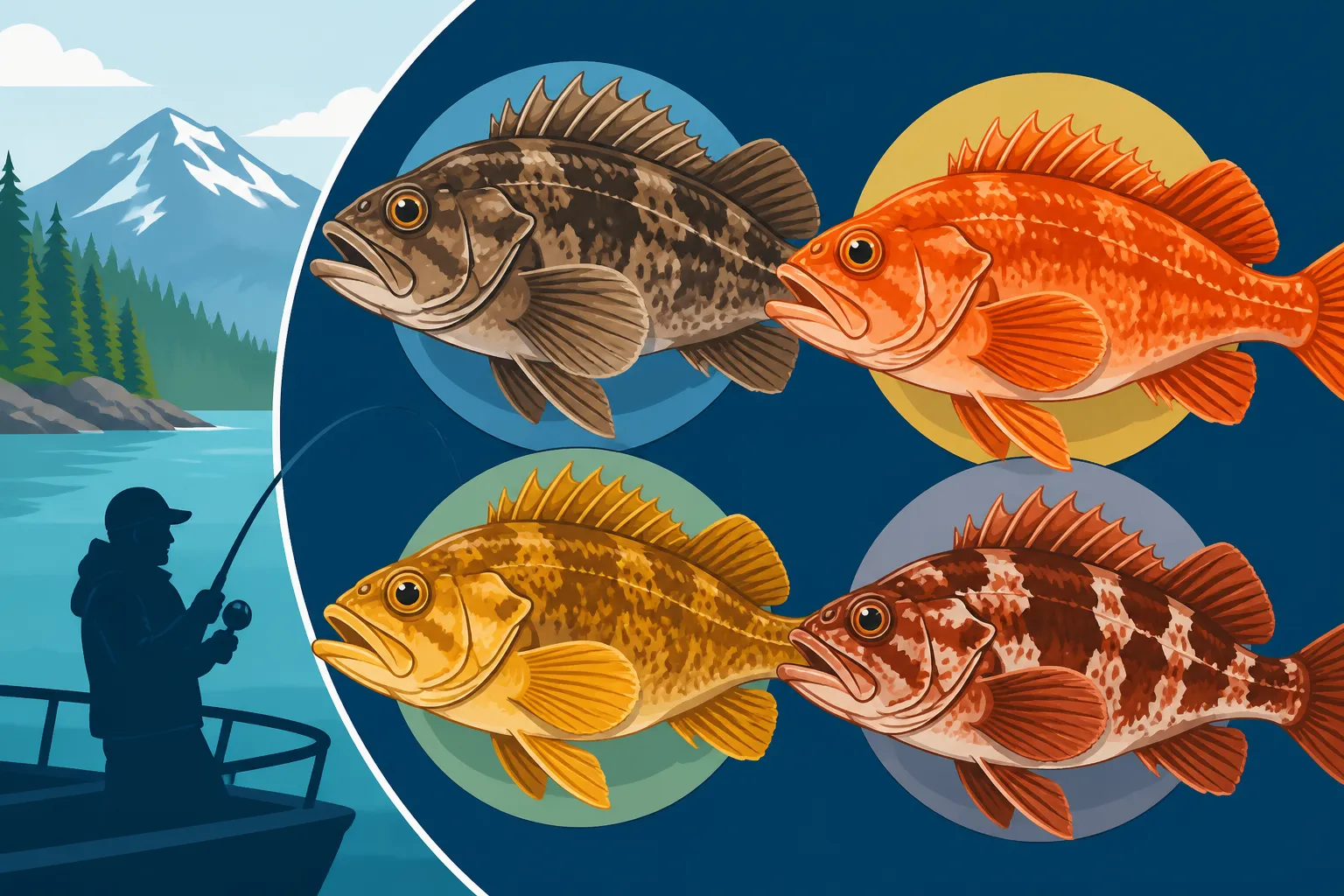
Ah, the legendary Yelloweye Rockfish – often affectionately, or sometimes mistakenly, called "Red Snapper." This is one of the most iconic and highly regulated rockfish in BC. They are generally a bright orange-red to reddish-orange colour, fading to a lighter yellow or white belly. The most defining feature, as their name suggests, are their brilliant yellow eyes. Adults often have a distinct rough ridge running along their lateral line. Juveniles might display two white stripes along their sides, which fade with age. You'll typically find them in deep, rocky areas, often near pinnacles or drop-offs, sometimes as deep as several hundred feet. They are slow growers and can live to be over 100 years old, which is why their conservation is so critical. Misidentifying another red rockfish for a yelloweye could lead to serious consequences, so always double-check those eyes!
Quillback Rockfish
The Quillback Rockfish is another distinctive species often found in our coastal waters. Their most striking feature is their very tall, deeply incised dorsal fin, which has extremely long, sharp spines, giving them a "quill-like" appearance. Their colouration is typically a mottled brown, orange, and yellowish-brown, often with darker blotches or bands on their sides, helping them blend seamlessly into rocky reefs. They usually have a dark, almost black patch on their operculum. You'll often find them clinging tightly to vertical rock faces or hiding in crevices, usually in depths from shallow subtidal zones down to a few hundred feet. Unlike some schooling rockfish, Quillbacks tend to be more solitary, territorial fish. If you're exploring Best Shore Fishing Spots in BC where there's rocky habitat, you might encounter a quillback closer to shore than some of their deep-water cousins.
Copper Rockfish
The Copper Rockfish lives up to its name with its beautiful, variable coppery-red to olive-brown colouration. What makes them tricky is that their colour can shift quite a bit depending on their habitat and depth. Those from shallower, kelpy areas might be more olive or greenish-brown, while deeper fish might lean more towards a vibrant copper. A key identifier is the presence of lighter blotches or white patches on their sides, often directly below the dorsal fin. They also usually have a pale stripe running from their eye to the start of their dorsal fin. You'll find Copper Rockfish in a wide range of habitats, from kelp forests and rocky reefs in shallow waters (often within diving depths) to moderately deep areas. They are more frequently encountered by recreational anglers due to their preference for shallower, more accessible depths compared to some other rockfish.
China Rockfish
The China Rockfish is one of the more easily identifiable rockfish species, thanks to its very distinct markings. They have a generally dark body, ranging from black to dark brown, but are instantly recognizable by a bright yellow or orange-yellow stripe that runs from their dorsal fin down their lateral line and often continues across their head, sometimes appearing like two separate stripes. They also have a few white or bluish-white blotches on their sides. This vibrant stripe against their dark body is a dead giveaway. Like Quillbacks, China Rockfish are also associated with rocky reefs, kelp beds, and boulder fields, and tend to be solitary, hiding in crevices or near the bottom. They are another species that can be found in relatively shallower waters, making them a common catch for anglers targeting structure.
Black Rockfish
Often caught by anglers jigging or trolling closer to the surface, the Black Rockfish is typically a dark, mottled black, charcoal, or dark grey on its back, fading to a lighter belly. They might have a silvery sheen on their sides, and their fins can be tinged with brown or black. While their name suggests a uniform black, they often have irregular, light-coloured blotches or mottling, especially when fresh out of the water. A key feature is a tendency for their lower jaw to protrude slightly, giving them a distinct profile. Unlike many other rockfish, Black Rockfish are often found schooling in mid-water columns over rocky reefs and around kelp beds, actively feeding on baitfish. This schooling behaviour means if you catch one, there are likely more around. They are a popular species for light tackle and can put up a decent fight.
Deacon Rockfish
The Deacon Rockfish is a relatively new kid on the block, scientifically speaking, as it was only formally recognized as a distinct species in 2015, previously often misidentified as a Black or Blue Rockfish. They are characterized by their deep, uniform indigo blue to purple-blue colouration over their entire body, lacking the mottling or stripes of other species. Their dorsal and caudal fins are also typically a darker blue. They have a slightly more slender body profile compared to some other rockfish. Like Black Rockfish, Deacon Rockfish are often found in large schools in mid-water over rocky reefs, feeding on plankton and small baitfish. You might encounter them while jigging for salmon or other pelagic species near structure.
Tiger Rockfish
The Tiger Rockfish is a striking and unmistakable species, aptly named for its appearance. It has a light, reddish-orange or pinkish-red body covered with four to seven distinct dark brown or black vertical bands or "tiger stripes" running down its sides. Its head also features similar dark bands radiating from the eyes. They have large, prominent eyes and a relatively large mouth. Tiger Rockfish are deep-water dwellers, typically found from 150 to over 900 feet deep, often associated with very rugged, rocky bottoms, pinnacles, and submarine canyons. They are less commonly caught by recreational anglers due to their deep habitat, but when they are, their distinctive pattern leaves no doubt about their identity. Always be prepared for deep-release techniques if you accidentally hook one of these deep-sea beauties.
Habitat, Behaviour, and Angling Considerations
Understanding where and how rockfish live can significantly improve your chances of identifying them correctly and, just as importantly, fishing for them responsibly. Their diverse habitats often dictate which species you're most likely to encounter.
Where to Find Different Rockfish
Rockfish, as their name implies, are structure-oriented fish. They love anything from shallow kelp beds to deep-water pinnacles and rocky reefs. You'll find species like Copper and China Rockfish in shallower waters, often in less than 100 feet, especially where kelp offers cover and ample food. These are the ones you might encounter while bottom fishing near coastal bluffs or around islands on Vancouver Island or the Gulf Islands.
Further out and deeper, species like Yelloweye and Quillback Rockfish prefer the complex topography of deep reefs, rocky ledges, and drop-offs, often in hundreds of feet of water. These are areas frequently targeted by anglers in search of Best Halibut Fishing Spots in BC or other deep-water species. Then you have the mid-water cruisers like Black and Deacon Rockfish, which often suspend in schools over these same structures, feeding on baitfish. Knowing these habitat preferences can give you a clue as to what you might pull up. If you're fishing a shallow, kelpy reef, you're less likely to find a deep-dwelling Tiger Rockfish, but highly likely to see a Copper or China.
Fishing Techniques and Gear
Most rockfish are caught incidentally by anglers targeting other species, but if you're deliberately fishing for them (within legal limits and outside of Rockfish Conservation Areas), bottom-fishing techniques are generally effective. Jigging with heavy metal jigs or soft plastics near structure is a popular method. You can also use bait rigs, typically employing a weighted dropper line with one or two baited hooks, fished right on the bottom. Cut bait like squid, herring, or even a piece of an earlier catch can be very effective.
When fishing for rockfish, especially in deeper waters, it's a good idea to use gear that allows for efficient retrieval and, critically, proper release. Medium-heavy to heavy rods with strong braided line are suitable for pulling fish off the bottom. Consider using barbless hooks, which can make catch and release much easier and less damaging. For deep-water fishing, some anglers use specialized electric reels or larger conventional reels to manage the heavy weights and deep retrieves. You can find a wide array of appropriate jigs and tackle on Amazon if you're looking to stock up before your next trip.
Catch and Release Best Practices
One of the most important considerations for rockfish, particularly those brought up from deep water, is barotrauma. When a fish is reeled up quickly from significant depths, the rapid change in pressure causes their swim bladder to expand, often pushing their stomach out of their mouth or bulging their eyes. This severely reduces their chances of survival if simply released at the surface.
To combat this, deep-release devices are absolutely essential if you're targeting rockfish or anticipate catching them from depths greater than about 30 feet. These devices, often called "descenders" or "release weights," allow you to attach the fish and quickly lower it back down to the depth it was caught or deeper. The pressure change on the way down re-compresses the swim bladder, allowing the fish to swim away safely. Many of these devices are simple to use and readily available. Investing in one is a fundamental part of responsible rockfish angling. Always handle rockfish as little as possible, avoid touching their eyes or gills, and get them back in the water with a release device as quickly as you can. It's a small effort that makes a huge difference in conservation.
Tools and Resources for Better Identification
Even with a mental checklist, positive identification in the field can sometimes be tricky. Luckily, there are excellent tools and resources available to help you confirm your catch and ensure you're compliant with regulations.
Using Field Guides and Apps
A good quality, waterproof field guide specifically for Pacific Coast fish species is truly your best friend on the water. These guides often feature clear illustrations or photographs, descriptions of key identification features, typical size, and habitat information. Having a physical copy means you don't have to worry about battery life or signal strength when you're out of cell service, perhaps exploring a remote inlet on Vancouver Island Fishing Guide. Many anglers find it helpful to keep one tucked away in their tackle box or boat.
In addition to traditional books, there are also some fantastic smartphone apps available that offer similar identification tools, sometimes with interactive keys or crowdsourced data. While they require a charged phone, they can be very convenient for quick reference. Just remember to download any necessary content for offline use before you head out! Browsing field guides or even waterproof fish identification posters on Amazon can give you a great head start on building your personal library of knowledge.
Consulting BC Fishery Notices
Beyond species identification, staying up-to-date on the latest regulations is paramount. Fisheries and Oceans Canada (DFO) issues Fishery Notices that detail openings, closures, bag limits, and any special restrictions for specific areas or species. These notices can change frequently, sometimes even in-season, due to conservation concerns or changes in stock assessments. Before every single fishing trip, it's your responsibility to check the latest Fishery Notices for the area you plan to fish. You can usually find these on the DFO website. Familiarizing yourself with BC Fishery Notices and In-Season Closures, Explained can save you a lot of heartache and potential fines. What was open last week might be closed today, so always verify.
Photography and Documentation
When in doubt, take a picture! High-quality photos of your catch can be incredibly helpful for later identification, especially if you're unsure in the moment. Try to get clear shots of the entire fish, paying particular attention to the head, eyes, dorsal fin, and any distinct markings or colour patterns. If possible, get a shot from directly above, and one from the side. You can then compare these photos to your field guide or even consult with more experienced anglers or local tackle shops once you're back on shore. Many online fishing forums or local fishing communities are also happy to help with identification if you provide good photos. This practice is not just for rockfish; it's a great habit for any species where regulations might be complex, like different salmon types or trout.
Here's a quick comparison of some common BC rockfish features:
| Feature | Yelloweye Rockfish | Quillback Rockfish | Copper Rockfish | China Rockfish | Black Rockfish |
|---|---|---|---|---|---|
| Colour | Orange-red to reddish-orange | Mottled brown, orange, yellowish-brown | Coppery-red to olive-brown (variable) | Dark (black/dark brown) | Dark grey, charcoal, or black (mottled) |
| Key Markings | Bright yellow eyes, rough lateral line | Tall, deeply incised dorsal fin | Lighter blotches/white patches on sides | Bright yellow/orange stripe (lateral line) | Often silvery sheen, slightly protruding jaw |
| Dorsal Fin | Moderately tall, continuous | Very tall, long, sharp spines, deeply incised | Continuous, moderate height | Continuous, moderate height | Continuous, moderate height |
| Habitat | Deep, rocky reefs, pinnacles | Rocky reefs, crevices, kelp (shallow to deep) | Rocky reefs, kelp beds (shallow to moderately deep) | Rocky reefs, kelp beds (shallow to moderate) | Mid-water over reefs, kelp (schooling) |
| Eyes | Prominent, distinct bright yellow | Moderate size | Moderate size | Moderate size | Large |
This table is a starting point, of course, but it highlights how a few key features can really help you distinguish between these beautiful but sometimes bewildering fish. The more you practice looking for these specific traits, the more confident you'll become!
Disclaimer
This article is for general informational purposes only and does not constitute professional advice. Laws, prices and regulations vary by location and change over time. Consult a qualified professional for guidance on your specific situation.