BC boat title vs registration difference
Navigating the world of boat ownership in British Columbia can feel a bit like trying to read a tide chart without a compass. Many anglers, especially those new to owning a vessel or upgrading their fishing setup, often get tangled up in the terminology around "boat title" versus "boat registration." It’s a common point of confusion, and frankly, the regulations aren’t always laid out in the clearest way. This guide is here to untangle that knot for you, breaking down the crucial differences between boat titles and registration in BC so you can hit the water with confidence, knowing all your paperwork is in order.
Understanding Boat Ownership Documentation in BC
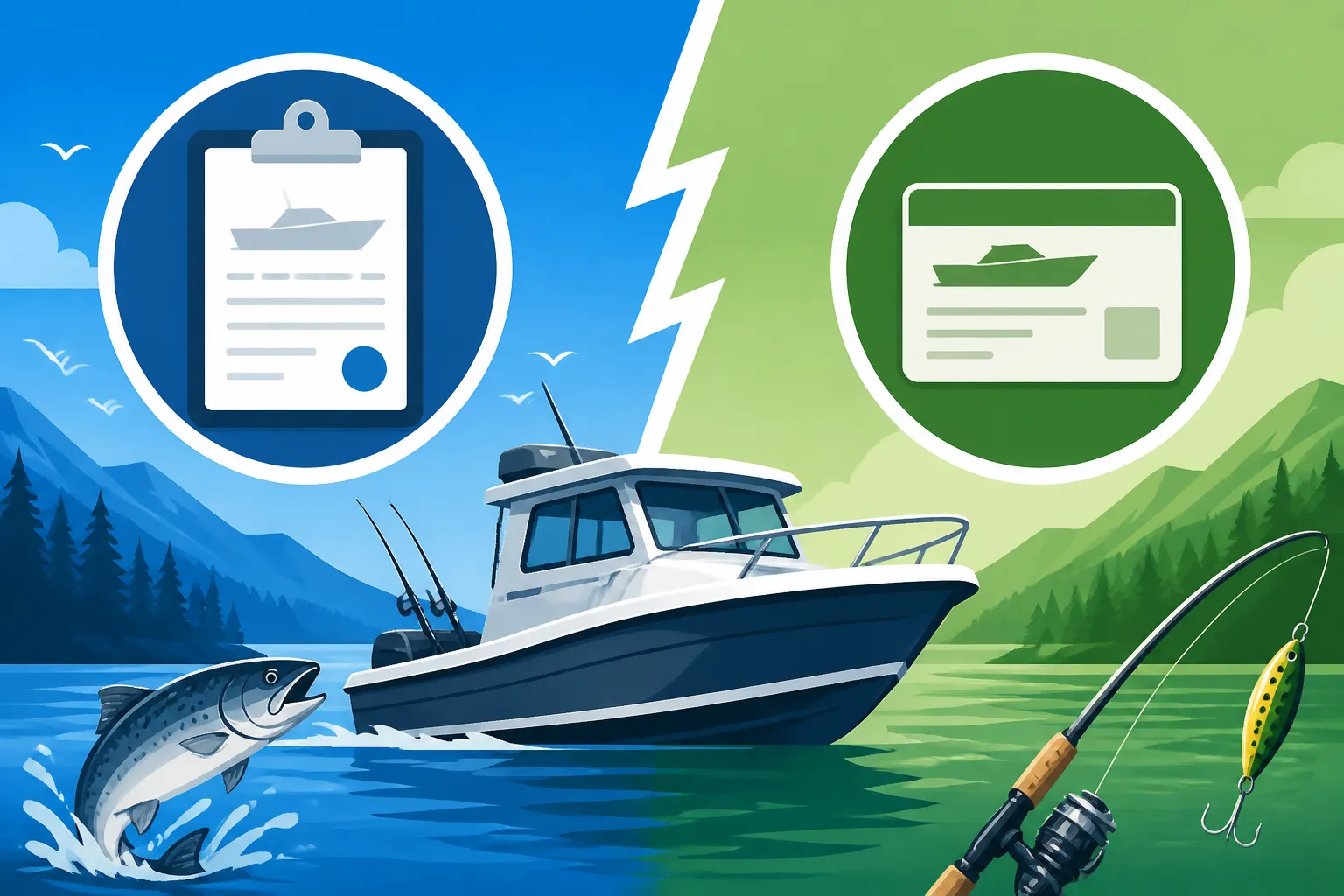
Before we dive deep into the nuances, let's establish a foundational understanding of what each term generally refers to. Think of it like owning a car: you have a vehicle title (proof of who legally owns it) and vehicle registration (permission to operate it on public roads). While not a perfect analogy for boats, it gets us in the right ballpark.
What is a Boat Title?
When we talk about a "boat title" in British Columbia, or more broadly in Canada, it’s important to clarify that the concept of a "title" as a single, uniform document similar to a car title in the US doesn't explicitly exist here. Instead, what functions as proof of ownership for a vessel in Canada is typically a combination of documents, often centered around Vessel Registration under Transport Canada's Canada Shipping Act, 2001. This form of registration is far more comprehensive than simple licensing and serves as definitive proof of ownership, encumbrances (like liens), and nationality for larger, commercial, or pleasure craft over a certain size.
For instance, if you've purchased a substantial fishing boat – perhaps a larger sportfisher or a yacht – that you intend to use for serious offshore angling or even for charter purposes, it will likely fall under Transport Canada’s Vessel Registration. This is a federal program that creates a public record of ownership, making it easier to secure financing, prove legal ownership in disputes, or operate the vessel internationally. It’s akin to a birth certificate and deed rolled into one for your boat. Without this formal registration, proving who truly owns a vessel can become a real headache, especially if you're trying to sell it or deal with insurance claims after an incident. This is far more than just a piece of paper; it's the legal backbone of your vessel's identity.
What is Boat Registration or Licensing?
Conversely, when most recreational anglers in British Columbia discuss "boat registration," they are usually referring to vessel licensing through Transport Canada. This is a much simpler process and applies to most pleasure craft fitted with an engine of 10 horsepower (7.5 kW) or more. Unlike full Vessel Registration, which establishes legal title and nationality, vessel licensing primarily serves as an identification system. It's about ensuring your boat has a unique license number prominently displayed, which helps search and rescue operations, law enforcement, and other marine agencies identify your vessel quickly.
Think of it as the license plate for your boat. It doesn't prove you own the boat in the definitive sense that formal Vessel Registration does, but it does show that your vessel is authorized to be on the water and can be identified. This is what most small to medium-sized fishing boats, like those often seen targeting salmon in the Georgia Strait or trout in interior lakes, will require. The process is free and relatively straightforward, often handled online or through a Service Canada Centre. The most common frustration here is simply remembering to display the license numbers correctly and ensuring you understand the BC Boat Registration and Licensing Rules. It’s a regulatory requirement designed for safety and traceability, not for defining property rights in the same way a title would.
Key Differences Between Title and Registration in British Columbia
The distinction between these two forms of documentation is crucial for boat owners in BC. Misunderstanding them can lead to compliance issues, insurance headaches, or even problems when trying to sell your vessel. It’s not just semantics; it's about navigating different legal frameworks and administrative processes.
Legal Purpose and Scope
The fundamental difference lies in their legal purpose. Vessel Registration (the "title" equivalent) under Transport Canada is about legal ownership and national identity. It's primarily for vessels that are:
- Over 15 gross tons (e.g., large commercial vessels, very large yachts).
- Mortgaged to a financial institution (the registration document will show the lienholder).
- Operating in foreign waters, requiring proof of Canadian nationality.
- Required to be registered for commercial purposes.
This type of registration provides irrefutable proof of ownership and allows for the recording of liens and mortgages against the vessel, which is critical for securing loans. It’s a complex legal document, often involving surveys and more rigorous checks. You would need this for significant financial transactions or international voyages.
On the other hand, vessel licensing (what most recreational boaters refer to as "registration") is about identification and compliance with basic regulations. It's required for:
- All pleasure craft equipped with an engine of 10 horsepower (7.5 kW) or more.
- It's free and simpler to obtain.
- It provides a unique license number that must be displayed on the bow.
This license helps authorities track down vessels in emergencies, enforce safety regulations, and identify vessels involved in incidents. It does not prove legal ownership in the same robust way as Vessel Registration. If your primary goal is to take your family fishing on Okanagan Lake or chase salmon off Vancouver Island in your 20-foot fibreglass boat, a vessel license is what you’ll almost certainly need. For anyone embarking on multi-day fishing trips, understanding these distinctions is paramount.
The Process: How You Get Each
The journey to obtaining each type of documentation is also vastly different, reflecting their distinct legal weight and purpose.
For Vessel Registration (the "title" equivalent), the process is quite involved. You'll need to apply through Transport Canada's Vessel Registration Office. This often requires:
- Completing a detailed application form.
- Providing proof of ownership (e.g., a builder's certificate for new vessels, a bill of sale for used).
- Obtaining a tonnage measurement certificate from an authorized surveyor if your vessel is over a certain size.
- Submitting a declaration of ownership.
- Paying associated fees, which can be substantial given the complexity and legal implications.
The entire process can take weeks, even months, as it involves thorough verification and official record-keeping. It's a significant administrative undertaking for a significant asset.
For Vessel Licensing (the standard recreational "registration"), the process is much simpler and faster. You can apply online through Transport Canada's website or visit a Service Canada Centre. You'll typically need:
- A completed application form.
- Proof of ownership (e.g., a simple bill of sale).
- A copy of a valid piece of government-issued identification.
- Photographs of all sides of your vessel.
The best part? It's free! Once approved, you'll receive your unique license number which you then need to display prominently on your boat’s bow. Many anglers often overlook this step, sometimes thinking their old registration from another province is still valid, or simply not realizing the requirement. It’s also worth noting that the BC non-motorized boat registration exemption applies if your vessel doesn't have a motor or if its motor is under 10hp, so you might be off the hook entirely for licensing if you're paddling a canoe or kayaking for trout.
Who Manages What
Another key differentiator is the government body responsible for each.
Vessel Registration is administered federally by Transport Canada. This means the rules and processes are consistent across all of Canada, not just British Columbia. It falls under the umbrella of the Canada Shipping Act, 2001, which governs maritime activities, safety, and commercial shipping across the country. This federal oversight ensures a standardized approach to vessel ownership, which is crucial for international maritime law and national economic activity.
Vessel Licensing is also managed federally by Transport Canada, specifically through its Office of Boating Safety. While it's a federal program, the display requirements and local enforcement will be handled by various provincial and municipal authorities, including the RCMP and local police forces. This federal management ensures that whether you're fishing in a small lake in northern BC or the busy waters off Vancouver, the basic licensing requirements are the same. It’s part of a broader set of BC Boating Laws for Anglers designed to ensure safety and order on the water.
Practical Implications for Anglers in BC
For the average angler dreaming of reeling in a trophy salmon or a monstrous sturgeon, these distinctions might seem overly bureaucratic. However, understanding them has very real, practical implications for your time on the water. Avoiding fines, ensuring insurance coverage, and smooth transactions all hinge on having the correct documentation.
Navigating Requirements for Recreational Boats
Most recreational anglers in British Columbia will fall under the requirement for vessel licensing. If your fishing boat has an engine of 10 horsepower or more, you need a license. It’s that simple. This includes everything from small aluminum fishing boats with outboards to mid-sized pleasure craft used for crabbing and salmon fishing. The license needs to be renewed every 10 years, which you can easily manage online. Make a note to check your BC boat registration renewal period to avoid any last-minute rushes.
Beyond the license itself, remember that proper display of your license number is paramount. It must be prominently displayed on both sides of the bow in block characters at least 7.5 cm (3 inches) high, contrasting with the background colour. Failing to do so is just as much a violation as not having a license at all. And while we're on the topic of compliance, don't forget your BC Pleasure Craft Operator Card Requirement if you’re operating any powered vessel. It’s often forgotten, but equally important for staying on the right side of the law. You can even find essential safety equipment like flares, first-aid kits, and whistles on Amazon, ensuring you’re ready for your next trip.
Consequences of Non-Compliance
Operating a vessel without the proper documentation in BC can lead to significant headaches and penalties. For an unlicensed pleasure craft with an engine of 10 horsepower or more, you could face fines starting at $250. This fine structure is a part of the broader BC minimum fine for no Pleasure Craft Operator Card and other boating safety regulations. It's a preventable expense that can quickly dampen a great day of fishing.
Beyond the immediate financial penalty, non-compliance can cause issues with insurance. In the event of an accident or incident on the water, your insurance claim might be denied or complicated if your vessel wasn't properly licensed. Imagine having a fender bender with another boat, or worse, an injury, only to find your coverage is void because of a missing license number. It's a risk no one wants to take. Furthermore, if you’re trying to sell your boat, lacking the appropriate documentation can delay the sale or significantly reduce its value. Buyers want clear, legal proof that the vessel is legitimate and transferable.
When Do You Need Both? (Or Just One?)
This is where the rubber meets the road for many boat owners. Deciding which type of documentation you need often depends on the size, purpose, and financial arrangements surrounding your vessel.
Scenarios Requiring Specific Documentation
For the vast majority of recreational anglers in BC, a vessel license will be sufficient. If you own a small to medium-sized fishing boat (with an engine 10hp or greater) that you use for personal enjoyment, day trips, or weekend adventures, the license is what you need. It covers your basic identification needs on BC waters and ensures you're compliant with federal regulations.
However, there are specific scenarios where Vessel Registration (the "title" equivalent) becomes necessary:
- Financing: If you're looking to get a marine mortgage or a substantial loan for a high-value vessel, the lender will almost certainly require it to be federally registered so they can record their lien on the official record.
- Selling a High-Value Vessel: When dealing with larger, more expensive boats, buyers and their financial institutions will demand the clear proof of ownership that Vessel Registration provides. It simplifies the legal transfer of ownership.
- International Travel: If you plan to take your boat across international borders, Vessel Registration provides the official proof of Canadian nationality required by customs and maritime authorities in other countries.
- Commercial Use: Any vessel used for commercial purposes, even if it's a fishing charter business with a "small" boat, will likely need to be federally registered, not just licensed. This distinction is crucial for business operators.
It’s important to remember that these aren't mutually exclusive. A federally registered vessel will also typically need to comply with the display requirements of a licensed vessel, though the registration certificate itself replaces the need for a separate license document.
Essential Checks Before Buying or Selling a Boat in BC
Before you commit to buying a new-to-you fishing boat or putting your beloved vessel up for sale, take the time to do your homework. This proactive approach can save you a world of trouble down the line.
If you're buying a boat:
- Ask for proof of ownership: For any powered vessel, ask to see the current Transport Canada vessel license or registration document. For larger vessels, verify federal registration with Transport Canada directly.
- Bill of Sale: Always get a detailed bill of sale signed by both parties, clearly stating the boat's make, model, hull identification number (HIN), engine details, and sale price. This is your primary proof of purchase.
- Check for Liens: For federally registered vessels, you can request an encumbrance search from Transport Canada to ensure there are no outstanding liens or mortgages against the boat. This is critical to ensure you're getting a clear title.
- HIN Verification: Ensure the HIN on the documentation matches the physical HIN on the boat.
- Understanding Maintenance Records: While not a legal requirement, maintenance records can give you a better idea of the boat's history.
If you're selling a boat:
- Ensure Current Documentation: Make sure your vessel license or federal registration is current and in your name.
- Clear Any Liens: If your boat is federally registered and you have a mortgage, you'll need to pay it off and ensure the lien is removed from the registration before transferring ownership.
- Prepare a Bill of Sale: Have a clear bill of sale ready, and ensure both you and the buyer sign it. Keep a copy for your records.
- Transfer of Ownership: Advise the buyer on the process of transferring the vessel license or federal registration into their name. For licensed vessels, you must notify Transport Canada of the change in ownership.
Being diligent about these checks, whether you're a buyer or seller, not only protects you legally and financially but also contributes to a smoother, more trustworthy boating community in British Columbia.
| Feature | Vessel Licensing (Recreational "Registration") | Vessel Registration (Federal "Title" Equivalent) |
|---|---|---|
| Purpose | Identification, search & rescue, basic compliance | Proof of ownership, nationality, security for loans |
| Required For | Pleasure craft >10 hp engine (most recreational boats) | Commercial vessels, pleasure craft >15 gross tons, mortgaged vessels, international use |
| Administered By | Transport Canada (Office of Boating Safety) | Transport Canada (Vessel Registration Office) |
| Cost | Free | Fees apply (can be substantial) |
| Process | Simple, online or Service Canada, quick | Complex, detailed application, surveys, can take months |
| Proof of Ownership | Basic (via bill of sale to obtain license) | Definitive, legal proof of title, records liens |
| Duration | 10 years (renewable) | Permanent (until vessel is removed from registry) |
This table should give you a quick visual breakdown of the key points.
Disclaimer
The information provided in this guide is for general informational purposes only and does not constitute legal advice. Boating regulations and requirements can change, and it is always recommended to consult the official Transport Canada website or seek legal counsel for specific circumstances related to vessel ownership and operation in British Columbia.