How to fish deep structure for summer halibut
Trying to dial in on those big, tasty halibut during the summer months in British Columbia can feel like searching for a needle in a haystack, especially when they move to deeper, more mysterious parts of the ocean. It's frustrating to spend hours on the water, only to come up empty-handed because you're not targeting their summer hideouts correctly. This guide will walk you through exactly how to effectively fish deep structure for summer halibut, giving you the knowledge and techniques to make those offshore trips count.
Understanding Summer Halibut Behavior and Habitat
When the sun really starts to beat down and the surface waters warm up, halibut, being cold-blooded creatures, don't just hang out where they were in the spring. They make a move, often seeking out deeper, more stable thermal zones where their preferred baitfish also congregate. It’s not just about temperature though; these fish are ambush predators, and deep structure provides the perfect terrain for them to lie in wait for an easy meal.
Why Deep Structure is Key in Summer
During the height of summer, the shallower areas can become less productive for halibut. The water column begins to stratify, creating what we call a thermocline – a distinct boundary between warmer surface water and cooler, deeper water. Halibut thrive in these cooler temperatures, typically ranging from 6-12°C (43-54°F). This is where you’ll find them most active and comfortable. They’re not just chasing comfort, though. Their prey, smaller fish like herring, cod, and various rockfish, also seek refuge in these stable, cooler depths or along the edges of deep structure, creating a perfect feeding ground.
Consider a hot July day: the top 50 feet of water might be pleasant for swimming, but for a halibut, it's just too warm and lacks the consistent food source they need. They'll drop down, sometimes to depths of 200 to 600 feet, or even more, finding those sweet spots. These deeper zones aren't just cold; they often have stronger currents that help concentrate baitfish, making it easier for halibut to conserve energy while still finding food. It's a strategic move for survival and feasting.
Identifying Productive Deep Structure
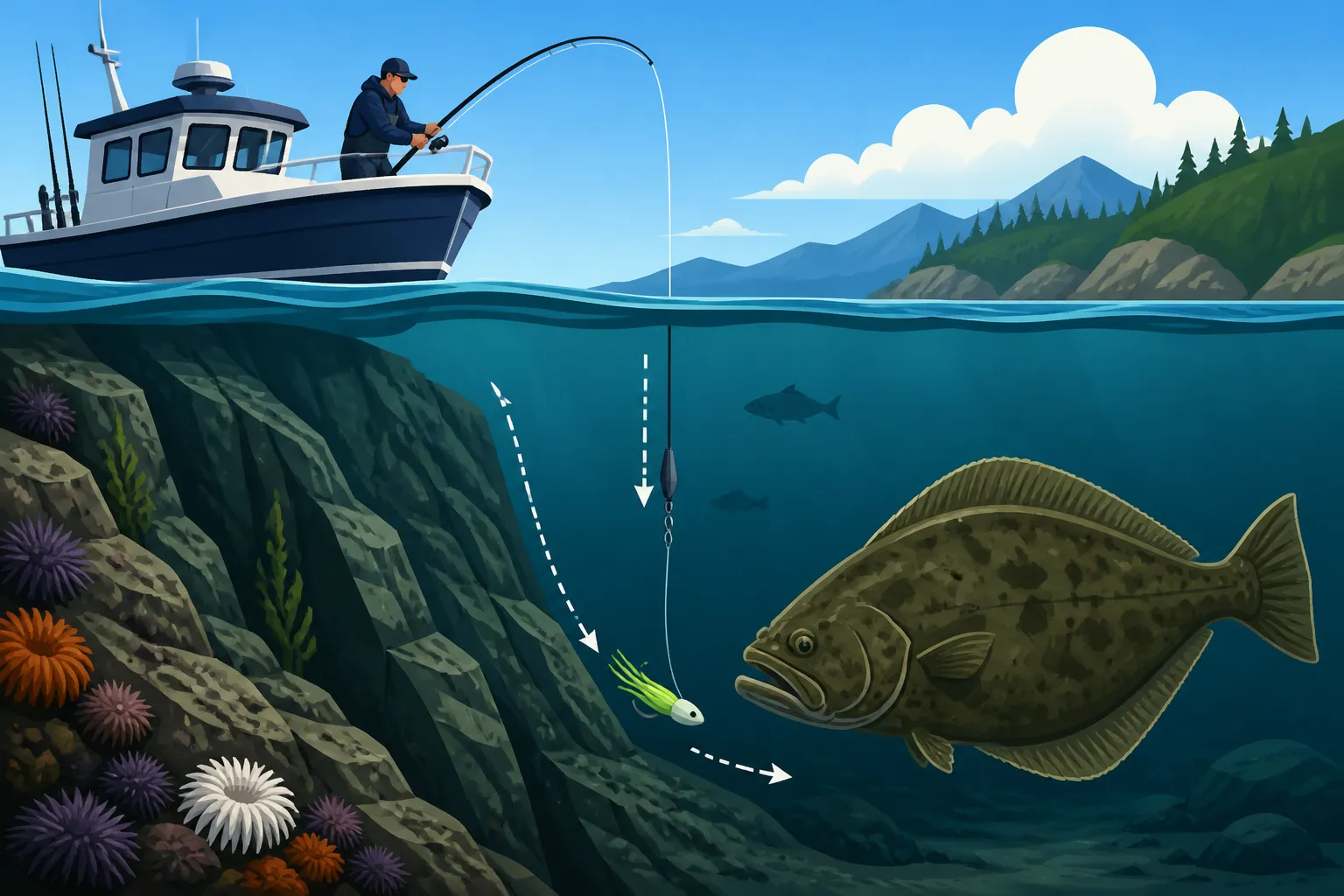
Finding the right "deep structure" isn't just about dropping your line into the abyss. It requires understanding what makes a particular piece of underwater geography appealing to a halibut. We're talking about specific features that act as natural fish magnets. Look for abrupt changes in depth, such as ledges, steep drop-offs, and submerged canyons. Halibut love to position themselves along these features, facing into the current, ready to ambush anything that washes over the edge.
Pinnacles and seamounts, which are underwater mountains or hills, are also prime targets. These structures create upwellings and current breaks that concentrate nutrients and baitfish, turning them into underwater oases. Reefs, especially those with jagged edges and numerous hiding spots, also hold immense potential. Think about how a rocky shoreline looks above water – now imagine that underwater, but on a massive scale. That complexity is what attracts bait and predators.
To find these spots, your boat's electronics are indispensable. A good sonar or fish finder will reveal these contours and potentially even mark fish holding tight to them. GPS and a detailed chartplotter, especially with bathymetric charts, will be your roadmap to these hidden gems. Without them, you’re just guessing. Before you even head out, spend some time studying charts for promising areas off the coast, perhaps around Vancouver Island or other known halibut regions. For more specific location insights, check out our guide on Best Halibut Fishing Spots in BC.
Essential Gear for Deep Structure Halibut Fishing
You can't just show up with your trout rod and expect to pull a barn door halibut out of 400 feet of water. Deep structure halibut fishing demands specialized gear built for power, depth, and endurance. This isn't just about catching the fish; it's about being able to withstand the immense pressure, the powerful fight, and the sheer weight of a large halibut.
Rods, Reels, and Line Selection
For serious deepwater halibut, you're going to need a heavy-duty setup. Think stout rods, often 6 to 7.5 feet in length, with a fast to moderate-fast action, capable of handling 50-100 pound test line. These rods need to have plenty of backbone to lift heavy weights and turn a powerful fish, but enough tip sensitivity to feel a bite in hundreds of feet of water. Look for rods specifically designed for halibut, cod, or deep-dropping. Companies like Penn, Shimano, and Daiwa all offer excellent options.
Your reel needs to be equally robust. A quality conventional reel (star drag or lever drag) with a high line capacity is essential. You’ll want something that can hold at least 500 yards of 80-100 pound braided line. The drag system must be smooth and powerful, capable of putting out at least 30-50 pounds of pressure consistently. The gears need to be strong enough to crank up heavy weights and a fighting fish from significant depths.
Speaking of line, braided line is the only way to go for deep structure halibut. Its minimal stretch provides incredible sensitivity, allowing you to feel bites and detect changes in the bottom even in extreme depths. It also cuts through the water better, reducing drag from current and allowing you to use lighter weights than you would with monofilament. Spool up with 80-100 lb test braid. For leaders, a 100-200 lb test monofilament or fluorocarbon leader, 6-10 feet long, is recommended. The heavy leader resists abrasion from the halibut's rough mouth and the sharp structure below.
Terminal Tackle and Weights
The terminal tackle for deepwater halibut needs to be robust. You'll primarily be using large, strong circle hooks, typically in sizes 16/0 to 20/0. Circle hooks are fantastic for halibut because they significantly reduce gut hooking, improving the chances of survival for released fish and ensuring a solid hookup in the corner of the mouth when the fish bites. Pair these with heavy-duty swivels (rated for 200+ lbs) and snaps.
Weights are a crucial component, and you'll need a lot of them. To get your bait down to 400+ feet and hold it against strong currents, you'll often need pyramid, cannonball, or lead ball weights ranging from 1 to 5 pounds, or even more on particularly windy or current-heavy days. Having a variety of weights onboard is key to adapting to changing conditions. Many anglers use a spreader bar or a three-way swivel rig to present their bait effectively above the weight. For specific insights into jigging techniques for these depths, our guide on Jigging for Halibut off Vancouver Island can offer some excellent tips.
Don’t forget a good selection of jigs! While bait is often king, large metal jigs (up to 16 oz or more) or big soft plastic swimbaits (8-15 inches) rigged on heavy jig heads can be incredibly effective, especially when worked aggressively near structure. You can find a fantastic selection of these heavier jigs and robust tackle on Amazon, often delivered right to your door before your next trip.
Electronics: Your Best Friend
In the realm of deep structure halibut fishing, your boat's electronics aren't just helpful, they are absolutely essential. Without a high-quality sonar and GPS unit, you'd be fishing blind. A good sonar (fish finder) will allow you to read the bottom contours, identify those crucial ledges, pinnacles, and drop-offs, and most importantly, mark potential halibut or baitfish schools holding tight to the structure. Look for units with powerful transducers and excellent deepwater penetration. Many modern units offer CHIRP sonar, which provides incredibly detailed images of the bottom and individual fish.
A reliable GPS and chartplotter are your navigation tools. They allow you to pinpoint exact locations of productive structure, mark waypoints where you've found fish, and precisely maneuver your boat to stay over those spots, even when drifting. Overlaying bathymetric charts that show detailed underwater topography on your chartplotter is crucial for identifying promising areas before you even drop a line. Many serious halibut anglers also use side-scan or down-scan imaging to get a clearer picture of what's directly beneath and to the sides of their boat. These technologies can help you visualize the structure and fish that might be just outside your main sonar cone. Being able to mark a specific submerged rock pile, then drift over it repeatedly, is how you convert potential into actual catches.
Effective Techniques for Fishing Deep Structure
Once you've got your gear dialed in and your electronics showing you promising signs, it's time to put those techniques to work. Fishing deep structure for halibut is a blend of precision, patience, and knowing how to present your offering effectively hundreds of feet below the surface.
The Art of Drifting and Jigging
Drift fishing is one of the most popular and effective ways to cover deep structure for halibut. The goal is to let the current and wind carry your boat, and therefore your bait, along a promising ledge or over a pinnacle. This allows you to present your bait to a wider area of potential feeding zones. You'll need to pay close attention to the wind and current direction and speed. Often, you might need to use a drift sock or sea anchor to slow your drift down, keeping your bait closer to the bottom and giving the halibut more time to react. The key is to maintain a vertical presentation as much as possible, keeping your line directly under the boat.
Once your bait hits bottom, or is just a few feet above it, you can begin to jig. This isn't always about aggressive, sweeping movements. Sometimes, a subtle lift-and-drop, or just a gentle bounce on the bottom, is all it takes to entice a halibut. Vary your retrieve and movement until you find what triggers a bite. Larger jigs, especially those with reflective or glow-in-the-dark properties, can be worked with a more pronounced lift-and-fall action to attract attention from a distance. If you're drifting over known structure, focus on feeling for the bottom. As your boat moves, the depth will change, so you need to constantly adjust your line, letting out or reeling in to keep that ideal bottom contact.
Bait Presentation and Scent
When it comes to deepwater halibut, bait is often king, though jigs can be highly effective too. The best baits are oily, scent-rich, and tough enough to withstand the journey down and stay on the hook. Whole or cut herring, octopus, cod pieces, and salmon bellies or strips are all excellent choices. Many anglers will "butterfly" their herring to increase scent dispersion and create a fluttering action. For additional scent, consider using commercial scent attractants that can be applied to your bait or jigs. These extra layers of appeal can make a big difference, especially in vast deepwater environments.
Rigging your bait properly is critical. Use a strong, sharp circle hook. When using whole bait, thread the hook through the head and out the body, ensuring the hook point is exposed. If using cut bait, make sure the hook can pivot freely and isn't masked by excessive bait. A popular rig involves a spreader bar with your heavy weight on one arm and your baited leader on the other, keeping your bait slightly elevated and away from the main line. Always check your bait frequently to ensure it's still fresh and properly presented, especially after a missed bite or if you feel any tugs. You can find quality rigging supplies and powerful scent sprays on Amazon, perfect for stocking up before your next offshore adventure.
Anchoring for Precision Fishing
While drifting covers a lot of ground, sometimes you hit a spot – maybe a specific rock pile, a small pinnacle, or a particularly hot feeding lane – that you want to fish with precision. This is where anchoring comes in. Anchoring in deep water, especially in current, requires skill and the right equipment. You'll need a substantial anchor (grapple or Bruce-style anchors are popular) with plenty of chain and anchor line, often 5-7 times the depth you're fishing.
The trick is to anticipate your drift. Motor up-current and up-wind from your target spot, drop your anchor, and let the boat drift back over the desired structure as the anchor line pays out. Once you're positioned, you can deploy multiple lines and saturate the target zone with bait. This method is particularly effective if your sonar shows a tight school of halibut or abundant baitfish directly on a specific piece of structure. However, be prepared for a workout when it’s time to retrieve the anchor! A good anchor retrieval system, like a robust electric windlass, can be a real back-saver. You'll want to review your BC Boating Laws for Anglers to ensure you're compliant with all anchoring and safety regulations while out on the water.
Playing and Landing Your Deepwater Halibut
So, you've done everything right, felt that unmistakable thud, and now you're hooked up to a true BC barn door. The fight is just beginning, and landing a big halibut from the deep is a test of strength, patience, and good technique.
The Fight: What to Expect
When a halibut hits your bait, it can range from a subtle tap to a rod-bending, line-stripping strike. Once hooked, their initial run is often powerful and deep. They'll try to get back to the bottom, hugging the structure if possible. This is why having strong, well-maintained gear is so important. Keep a steady, firm retrieve, letting the rod and reel do the work. Avoid trying to winch the fish up too quickly, as this can tear the hook out or exhaust you prematurely. Pump the rod, gaining line on the downstroke, and reel on the upstroke.
Halibut often make multiple strong runs, especially as they get closer to the surface. They can "death roll," twisting and turning their powerful bodies, so maintain constant pressure to prevent slack line. As the fish gets shallower, be ready for head shakes and sudden bursts of energy. This is often when anglers lose fish, so stay focused. The deeper you are, the longer the fight will be, not just because of distance but due to the fish's immense power and the water pressure working against you. Make sure you're well-hydrated and ready for a proper battle!
Bringing it Aboard: Harpoons, Gaffs, and Fish Bags
Once you've fought your halibut to the surface, the job isn't over. Bringing a large, thrashing halibut into the boat safely and efficiently is crucial. For bigger fish, a harpoon is often the preferred tool. A good harpoon, typically with a detachable dart, allows you to secure the fish from a safe distance before bringing it alongside. Aim for the white side, behind the head, or through the thickest part of the body, away from the guts.
For smaller to medium-sized halibut, a heavy-duty flying gaff can also be effective. Always aim for the head or shoulders, avoiding the belly, which can damage the meat. Once the fish is gaffed or harpooned, a common practice is to bleed the halibut immediately. This is done by making a deep cut across the gills or cutting the tail artery. Bleeding ensures the best meat quality by flushing out lactic acid and blood from the muscle.
Have a large fish bag or cooler ready with ice. Once bled, get the fish into the ice as quickly as possible to preserve the meat. Remember to check the BC Halibut Bag Limit Rules before you even head out, so you know exactly how many you can keep and what sizes are legal. Always prioritize safety for yourself and your crew when handling large, powerful fish.
| Gear Category | Item | Key Characteristics |
|---|---|---|
| Rods | Heavy-Duty Halibut Rod | 6-7.5 ft, 50-100 lb line rating, fast/moderate-fast action, strong backbone. |
| Reels | Conventional Lever/Star Drag Reel | High line capacity (500+ yds 80-100lb braid), powerful & smooth drag (30-50+ lbs), robust gears. |
| Line | Braided Mainline | 80-100 lb test, zero stretch for sensitivity, high abrasion resistance. |
| Monofilament/Fluorocarbon Leader | 100-200 lb test, 6-10 ft length, abrasion resistant. | |
| Terminal Tackle | Circle Hooks | 16/0 – 20/0, strong, sharp. |
| Heavy-Duty Swivels/Snaps | 200+ lb rating. | |
| Spreader Bar/Three-Way Swivel Rig | For optimal bait presentation, keeps bait off main line. | |
| Weights | Pyramid, Cannonball, Lead Ball | 1-5+ lbs, depending on depth and current. |
| Baits | Herring, Octopus, Cod, Salmon Strips | Oily, scent-rich, cut or whole, fresh. |
| Lures | Large Metal Jigs, Soft Plastics | 8-16+ oz metal jigs, 8-15 inch soft plastic swimbaits on heavy jig heads. |
| Scent Attractants | Commercial Scents | Applied to bait or jigs for added appeal. |
| Electronics | Sonar/Fish Finder | Powerful transducer, deepwater penetration, CHIRP, side-scan/down-scan (optional). |
| GPS/Chartplotter | Detailed bathymetric charts, waypoint marking, precise navigation. | |
| Landing Gear | Harpoon (with dart) | For securing large halibut safely. |
| Heavy-Duty Flying Gaff | For smaller/medium halibut, strong and sharp. | |
| Large Fish Bag/Cooler | Insulated, with ice for bleeding and preserving catch. You can often find great deals on these on Amazon as well. | |
| Safety | Drift Sock/Sea Anchor | To control drift speed. |
| Adequate Anchor/Chain/Line | For anchoring over specific spots. |
Disclaimer
This article is for general informational purposes only and does not constitute professional advice. Laws, prices and regulations vary by location and change over time. Consult a qualified professional for guidance on your specific situation.