How deep to jig for halibut off Vancouver Island
There’s nothing quite like the thrill of a big halibut hitting your line, a solid thump that reverberates right up your arm. But ask any angler who’s spent time chasing these magnificent flatfish off Vancouver Island, and they’ll tell you the biggest challenge often isn't fighting the fish, but finding them in the first place! It’s a deep game, both literally and figuratively, and knowing "how deep to jig for halibut off Vancouver Island" is the million-dollar question that can turn a frustrating day into an unforgettable one. This guide is all about demystifying those depths and giving you the insights to land that trophy.
Understanding Halibut Behavior and Habitat off Vancouver Island
Halibut aren't just swimming around aimlessly in the vast ocean; they have preferences, just like us, and understanding these can drastically improve your chances. It’s not just about a magic number on your depth sounder, but rather about the entire underwater landscape.
Where Halibut Like to Hang Out
When you’re out on the waters around Vancouver Island, especially in areas like Barkley Sound or the waters near Tofino and Ucluelet, halibut are creatures of structure and opportunity. They are bottom dwellers, perfectly camouflaged to lie in wait for an unsuspecting meal to swim by. This means they’re often found nestled on or near specific types of underwater terrain.
Typically, you'll be looking in depths ranging from 60 feet all the way down to 400 feet, and sometimes even deeper. The key isn't necessarily the deepest water, but the right deep water. Look for significant changes in bottom contour: ledges, drop-offs, underwater pinnacles, and rocky reefs. These features create eddies and current breaks where baitfish congregate, and where halibut can ambush their prey without expending too much energy. Imagine them like a predator hiding behind a bush, waiting for their dinner to walk past. The specific bottom composition matters too; while they might hide near rocks, they often prefer to settle on adjacent sandy, gravelly, or muddy flats where their camouflage is most effective.
Think of those dramatic underwater canyons and submerged mountain ranges off the coast. The edge of a steep drop-off, where the bottom transitions from 100 feet to 300 feet, is often a prime hunting ground. These "edges" are where currents sweep nutrients and baitfish, creating a buffet for hungry halibut. It's truly a game of underwater geography, and spending time studying nautical charts or using your sonar to map out the contours before you even drop a line can make a huge difference.
Seasonal Movements and Feeding Patterns
Halibut aren't static residents; they have distinct seasonal movements that influence their depth and location. Understanding these migrations is crucial for knowing where to focus your efforts throughout the year.
In the colder months, generally late fall and winter, many halibut tend to move into deeper, more stable waters, often exceeding 300-400 feet, to their wintering grounds. This is a time when they are less active and metabolism slows. As spring approaches and water temperatures begin to rise, they start their migration into shallower feeding grounds. This is when you'll find them actively hunting in that 60-250 foot range, often closer to the continental shelf or prominent coastal features. This spring movement often coincides with the arrival of baitfish like herring, needlefish, and eulachon, which are key food sources for halibut.
By summer, halibut are typically well-established in these shallower to mid-range depths, actively feeding to bulk up. However, don't discount the deep water during summer either; larger, older halibut sometimes prefer to stay deeper year-round. It's also important to remember that local baitfish movements can heavily influence halibut depth on any given day. If there’s a massive school of herring holding at 150 feet, you can bet halibut will be right underneath them, regardless of the calendar. Keeping an eye on local fishery notices and paying attention to what bait fish are present on your sonar can give you invaluable clues about where to target your jigs. For a broader understanding of annual fish movements, you might find our guide on BC Fishing Seasons by Month helpful.
Essential Gear for Deepwater Halibut Jigging
Deepwater halibut jigging is not for the faint of heart, nor for flimsy gear. The sheer weight of the jigs, the depth you're fishing, and the incredible power of a large halibut demand robust equipment that can withstand immense pressure. Skimping on tackle here is a recipe for heartbreak.
Rods, Reels, and Line Choices
When you’re dropping a heavy jig hundreds of feet down, you need a setup that can handle the abuse and the fight. Your rod, reel, and line are the triumvirate of deepwater halibut success.
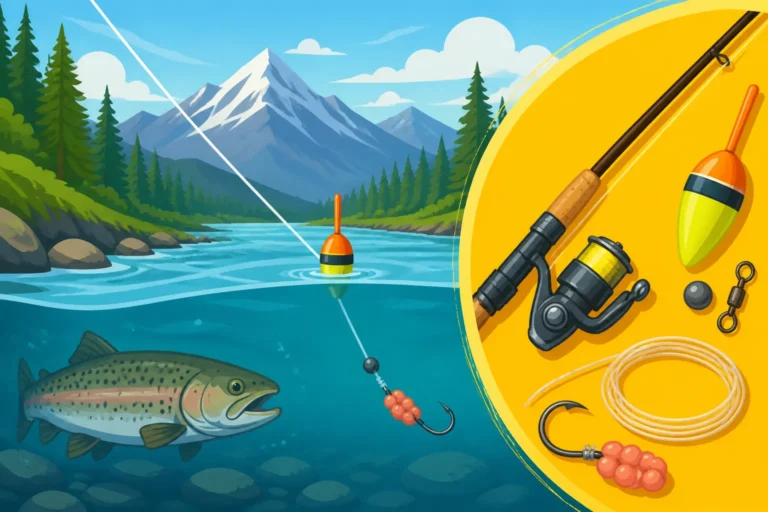
For rods, think heavy-duty conventional setups. We’re talking about powerful, short (typically 6'6" to 7'6") rods with a fast taper and an incredibly strong backbone. These rods need to absorb the shock of a strike, provide leverage during a prolonged fight, and lift substantial weight from the depths. Brands like Shimano, Penn, and Ugly Stik make excellent jigging rods suitable for this application. You’ll want a rod rated for at least 80-130 lb line, with a comfortable foregrip for those long battles. Paired with this rod should be a high-capacity conventional reel. Lever-drag reels are popular for their smooth operation and easy adjustment under pressure. Look for models like the Shimano TLD series, Penn International, or Daiwa Saltiga, capable of holding at least 400-600 yards of heavy braided line. These reels are built like tanks and designed for the rigorous demands of deep-sea fishing.
Speaking of line, braided line is almost universally preferred for deepwater jigging. Its lack of stretch provides unparalleled sensitivity, allowing you to feel the slightest tap from a halibut, even hundreds of feet down. Crucially, braid has a much smaller diameter for its breaking strength compared to monofilament, meaning less water resistance (drag) and a faster, straighter descent for your jig. This is vital when you’re trying to hit a precise depth in a strong current. Aim for 80-150 lb test braid. While braid is tough, it's also highly visible and can be prone to abrasion near the bottom. This is where a fluorocarbon leader comes in. A 6-10 foot section of 100-200 lb fluorocarbon leader, tied to your main braid with a strong knot like an FG or a Double Uni, provides stealth, abrasion resistance, and a bit of shock absorption. You can find a fantastic selection of these heavy-duty lines and leaders on Amazon, ensuring you have the right gear before your trip.
Selecting the Right Jigs and Baits
The business end of your line, the jig itself, is where all the action happens. Choosing the right jig involves considering weight, color, profile, and whether to tip it with bait.
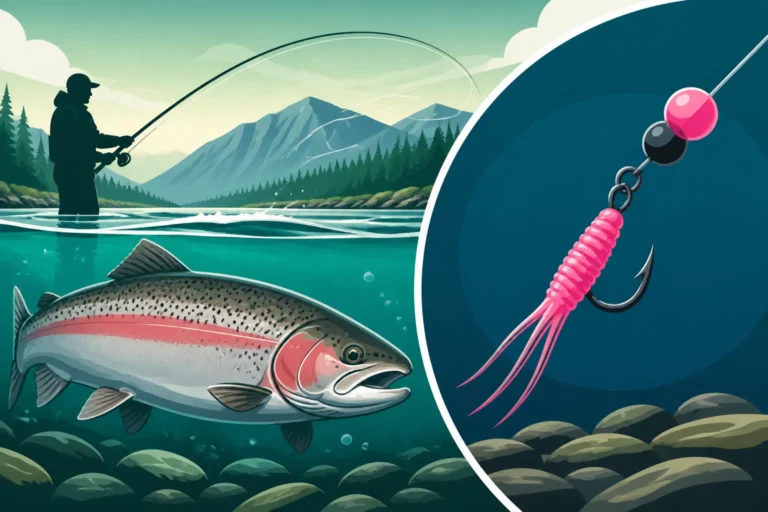
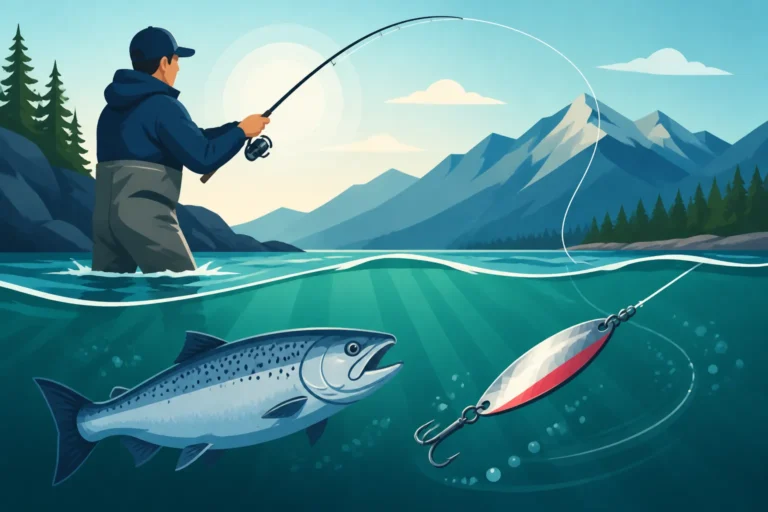
Halibut jigs are typically heavy, ranging from 8 ounces to a whopping 32 ounces or more, depending on the depth and current. In shallower waters (60-150 feet) with minimal current, an 8-16 oz jig might suffice. But once you start pushing 200-400 feet, or encounter strong tidal currents common in areas like Discovery Passage or even offshore Tofino, you’ll quickly find yourself needing 20-30 oz jigs just to reach the bottom and stay there. Popular choices include heavy metal "iron" jigs like those from Ahi USA (e.g., Ahi Assasins), Zuker’s, and P-Line. These typically have a slender profile designed to cut through the water and flutter on the drop. Some anglers also swear by lead-head jigs adorned with large curly-tail grubs or paddle-tail plastics, sometimes as long as 10-12 inches, providing a larger profile.
Color can be important, especially on brighter days or in clear water. Chartreuse, white, blue, and glow-in-the-dark (for deep or dark conditions) are common and effective. However, many experienced anglers believe action and bait presentation trump color, especially once you're in the deep, dim world of a halibut's habitat. Often, tipping your jig with bait can make a significant difference. Strips of squid, octopus, or a whole herring or salmon belly secured to the jig's assist hook or main hook can provide a scent trail and extra visual appeal that halibut simply can't resist. Experimentation is key; sometimes they prefer a fast-moving, flashy metal jig, other times a slow-drifting, scent-laden presentation. For more detailed strategies, check out our guide on Jigging for Halibut off Vancouver Island.
| Jig Weight Range (Oz) | Typical Depth (Feet) | Current Conditions | Notes |
|---|---|---|---|
| 8 – 12 | 60 – 150 | Light to Moderate | Good for shallower structure or calm days. |
| 16 – 20 | 100 – 250 | Moderate | Versatile for mid-depths, common choice. |
| 24 – 32+ | 200 – 400+ | Strong | Essential for deep water or heavy current. |
| 32+ (Up to 48) | 300 – 600 | Very Strong | For extreme depths or adverse conditions. |
Jigging Techniques for Different Depths and Conditions
Getting your jig to the right depth is only half the battle; how you work it is equally, if not more, important. Halibut are apex predators, but they can be finicky. Your presentation needs to entice them into striking.
Mastering the Drop and Retrieve
The way you get your jig to the bottom and then work it back up is fundamental to successful halibut fishing. It's more than just letting line out; it’s about control and feel.
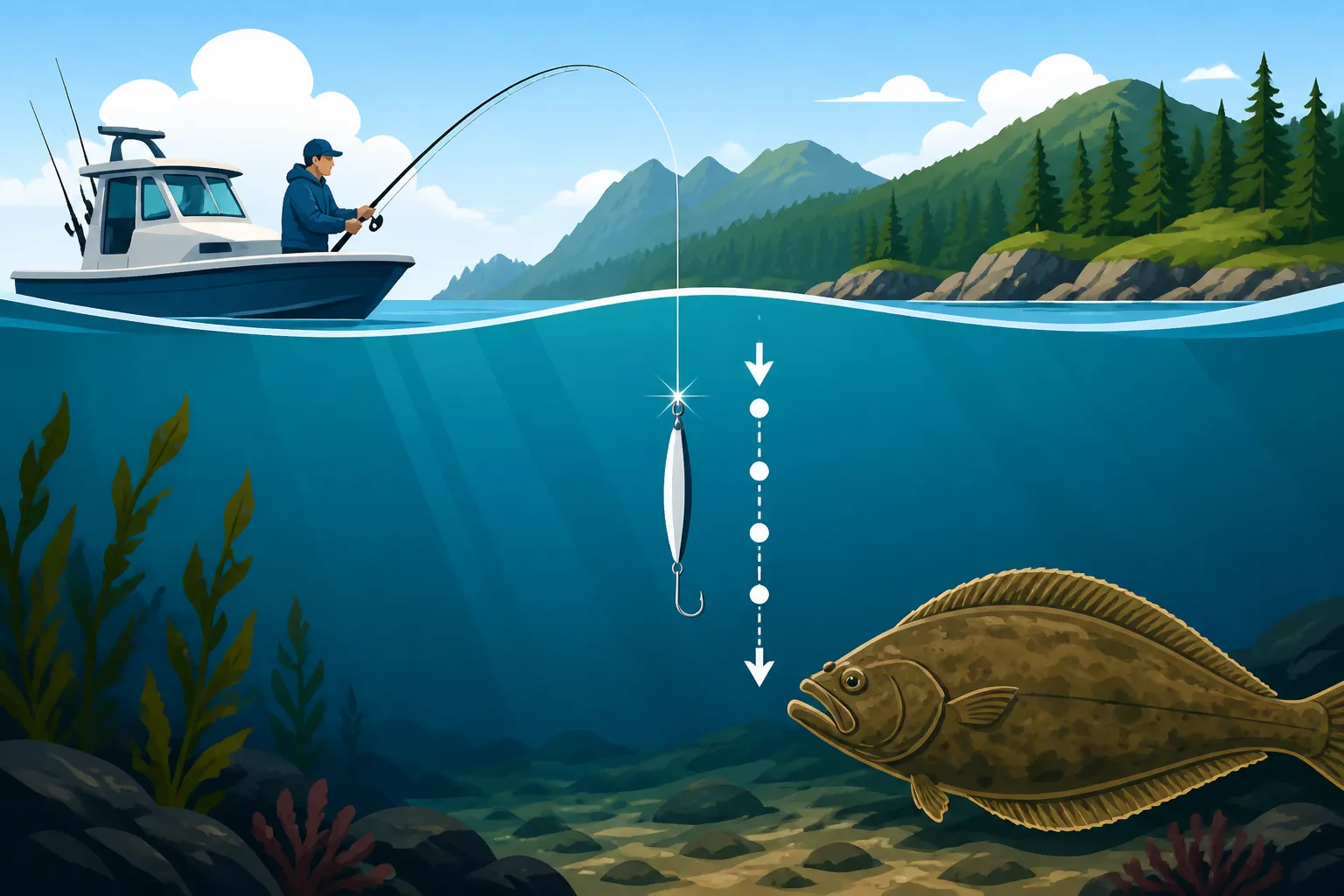
First, the drop: When you deploy your jig, you want it to fall as vertically as possible. This means minimizing boat drift during the initial descent, if possible, or using heavy enough weight to counteract it. Keep a thumb on the spool of your reel to prevent a bird’s nest and to feel the line as it descends. When you feel that distinct "thump" indicating your jig has hit the bottom, immediately engage your reel. If you let too much slack pile up on the bottom, you risk snagging and losing your expensive gear. The goal is to keep your jig consistently within a few feet of the seafloor, as this is where halibut are lying in wait.
Once on the bottom, the retrieve begins. This isn't a simple crank-and-reel operation. A common technique involves a series of lifts and drops. Lift your rod tip sharply, perhaps 2-4 feet, then quickly drop it back, allowing the jig to flutter and fall. This mimics a dying baitfish or a creature trying to escape. After letting it fall, pause for a moment to allow any interested halibut to commit to the strike. Sometimes a gentle bounce off the bottom is all it takes. Other times, a more aggressive jigging motion with longer lifts and faster drops can provoke a reaction strike. The trick is to vary your retrieve until you find what the fish prefer on that particular day. Pay close attention to your line angle; if it's drifting too far behind the boat due to current, you might need to increase your jig weight or reposition your boat. Remember, halibut strikes can range from a subtle peck to a rod-bending smash, so always be ready.
Reading Your Sonar and Drift Patterns
Modern fish finders are invaluable tools for deepwater halibut jigging, offering a window into the underwater world. Learning to interpret what your sonar is telling you can save you hours of fruitless fishing.
Your sonar unit, whether it's a Garmin, Lowrance, or Humminbird, can display crucial information like depth, bottom contour, and, most importantly, fish arches. Look for "hard" returns on the bottom, which indicate structure like rocks or ledges where halibut like to hide. Also, keep an eye out for bait balls suspended in the water column; where there's bait, predators are often nearby. Halibut themselves can sometimes appear as flat, elongated marks right on the bottom, or as strong arches just off the seafloor if they're actively hunting. Don't just look for fish, though; pay attention to the transition zones and the "edges" we discussed earlier. Mark these spots on your GPS so you can drift over them repeatedly.
Understanding your drift pattern is equally critical. Wind and current will dictate how your boat moves over the fishing grounds. A drift sock (or sea anchor) can be incredibly useful to slow down your drift, allowing your jigs to stay more vertical and giving you more time over productive areas. Before you even drop your line, observe the wind and current. Make a test drift without fishing to see how your boat moves. Once you understand your drift, you can position your boat upstream or upwind of your target structure and allow yourself to drift over it. The goal is to present your jig effectively through the strike zone, which is often a very specific, small area.
Targeting Specific Depths
While halibut are found across a wide depth range, your jigging technique might need to adapt whether you're working relatively shallower or much deeper water.
In the shallower range (60-150 feet), you can often afford to be a bit more aggressive with your jigging. The water column is shorter, less line is out, and you have more direct control over your jig. You can experiment with faster, more erratic retrieves, covering more ground with each lift. Halibut in these depths might be more active and willing to chase a quickly moving lure. It's also easier to feel the bottom and adjust quickly if your jig drifts off course. This is also where you might encounter other species like Lingcod around structure, which can be a welcome bonus. For more specific location insights, our guide on Best Halibut Fishing Spots in BC might be a useful read.
When you push into the deeper waters (150-400+ feet), your approach generally needs to become more methodical. The sheer amount of line out means there's more water resistance, making it harder to feel subtle bites and requiring heavier jigs to maintain bottom contact. Your lifts and drops might need to be slower and more pronounced to transmit movement effectively to the jig. Line angle becomes incredibly important; if your line is dragging too far behind the boat, you're not efficiently fishing the bottom. This is where a good electric reel can be a game-changer, especially for anglers who don't want to hand-crank heavy jigs from hundreds of feet repeatedly. Patience is key in these depths, as it takes longer for the jig to reach the bottom and for a fish to respond.
Safety and Ethical Considerations for Deepwater Halibut Fishing
Halibut fishing off Vancouver Island is an incredible experience, but it comes with responsibilities. Safety on the water and respectful angling practices are paramount, especially when dealing with large, powerful fish in deep water.
Safe Handling of Large Halibut
Bringing a large halibut, sometimes weighing over a hundred pounds, into the boat is a significant undertaking that requires planning and caution. These fish are incredibly strong and can cause serious injury if not handled properly.
Before you even think about bringing one aboard, ensure your deck is clear of obstructions and everyone knows their role. Once a halibut is alongside the boat, the most common methods for securing it are gaffing or harpooning. A sturdy gaff or harpoon should be aimed at the head or shoulder for a quick and humane dispatch if you intend to retain the fish. For truly massive halibut, a "pete" (a short, heavy club) is often used to stun the fish with a precise blow to the head, ensuring it’s incapacitated before it comes over the rail. Never try to lift a large halibut by its tail or mouth; use a strong tail rope or a halibut-specific lifting tool. Once on deck, cover its eyes and keep it calm; a thrashing halibut can easily break bones or damage gear. For those planning to release their catch, minimizing out-of-water time is crucial. Use a dehooker if possible, or cut the line close to the hook. Consider using a descending device to return fish from deep water, especially if they show signs of barotrauma (swelling due to gas expansion from being brought up too quickly).
Understanding Regulations and Conservation
Fishing in British Columbia is a privilege, and it’s critical that all anglers understand and adhere to the regulations designed to protect our precious fish stocks. Halibut are no exception, with specific rules governing size, bag limits, and seasons.
Before every trip, make it a habit to check the current Department of Fisheries and Oceans (DFO) regulations for halibut in the Pacific Region. These rules can change frequently based on stock assessments and conservation needs. Typically, there are strict daily and annual bag limits, and often size restrictions (minimum and/or maximum lengths) to protect both juvenile fish and critical breeding-size females. For instance, the regulations often specify a "slot limit" where only fish within a certain size range can be retained. You can find comprehensive details in resources like our BC Halibut Bag Limit Rules and general BC Fishing Regulations Explained. Always ensure your fishing license is current and includes any necessary stamps for the species you intend to target. Responsible angling also means practicing catch and release properly for any fish you don't intend to keep, minimizing stress and injury to ensure their survival. Conservation is a collective effort, and by following regulations and ethical practices, we can help ensure healthy halibut populations for future generations to enjoy.
Disclaimer
Please note that fishing regulations, conditions, and best practices can change rapidly. Always consult the latest official Department of Fisheries and Oceans (DFO) regulations for British Columbia before heading out on the water. This guide is for informational purposes only and should not replace official sources or professional advice. Fishing inherently involves risks, and safety should always be your top priority.