BC fishing license reciprocity on the Columbia River with Washington State
It’s a common scenario, isn’t it? You’re standing on the banks of a beautiful river, perhaps the mighty Columbia, a waterway that utterly ignores imaginary lines drawn on maps, and you think, "Wait, am I in Canada, or am I in the U.S. right now?" This exact confusion often leads to a genuine headache when it comes to fishing licenses, especially when that river straddles the border between British Columbia and Washington State. This guide is here to untangle that knot of international regulations, ensuring you know exactly which licenses you need to stay legal and enjoy your cross-border angling adventures.
Understanding Boundary Water Regulations on the Columbia River
Fishing shared waters, particularly those that form an international boundary like parts of the Columbia River, can feel like navigating a legal minefield. Many anglers assume there might be some kind of reciprocity or special agreement that allows one license to cover both sides of the border. Unfortunately, in the vast majority of cases, that simply isn’t true for international boundaries. Each country, and often each province or state within that country, maintains its own distinct set of rules and licensing requirements, and the Columbia River is no exception.
The Jurisdictional Conundrum: Why It's Confusing
The primary source of confusion stems from the very nature of a shared waterway. From a fish's perspective, there's no "Canadian side" or "American side" of the Columbia. They swim where they please, crossing invisible lines constantly. However, from a legal standpoint, human activities like fishing are strictly governed by the jurisdiction you are physically in, or from which you launched your vessel. This means that even if your line drifts into Washington waters while you're standing in BC, or vice-versa, you could technically be subject to the regulations of that other jurisdiction if you are catching fish there.
The Columbia River, in particular, flows through several regions before reaching the Pacific, and the stretch we’re discussing here often refers to the areas where it either forms or is close to the Canada-U.S. border, particularly around places like Trail, Castlegar, or even further up near Revelstoke within BC, before it truly enters the U.S. However, the query specifically pertains to the reciprocity aspect at the border, which implies fishing where the river itself is the border or immediately adjacent to it. It’s a bit of a trick, because while the headwaters are in BC, and it flows into the U.S. and then back into Canada (briefly), and then finally out to the Pacific in the US, there isn't a long stretch where the river is the actual border itself between BC and Washington. The border is generally a land boundary. However, the spirit of the question is about fishing near the border, or even just crossing to fish in the other country. So, let’s clarify the reality: you need separate licenses.
Key Principle: What License You Really Need
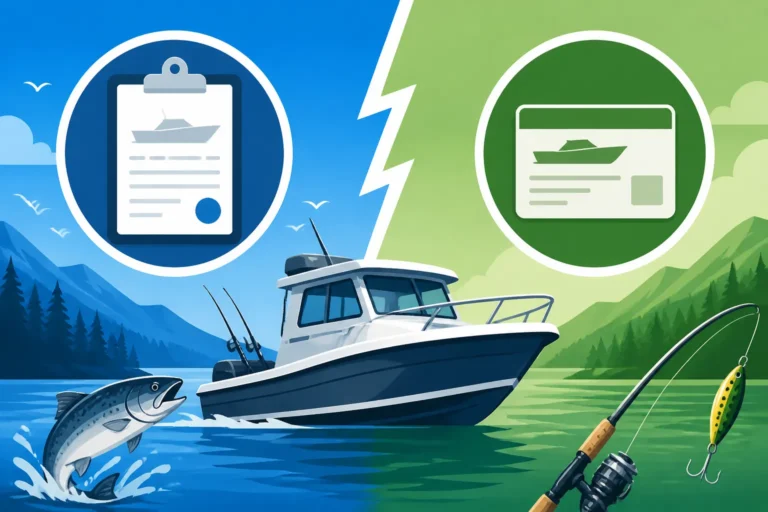
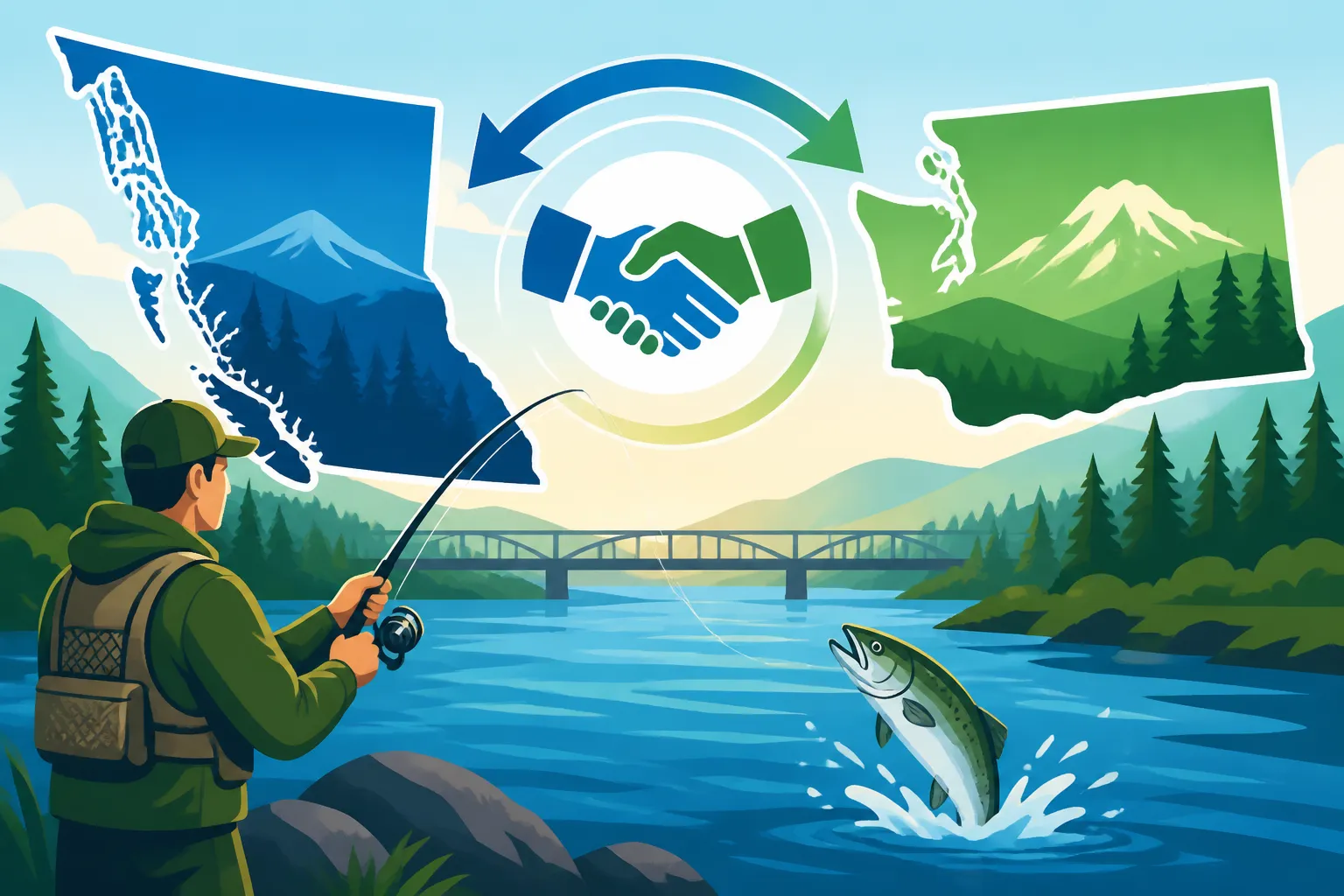
Here’s the plain truth that can sometimes be a bitter pill to swallow for cross-border anglers: there is no fishing license reciprocity agreement between British Columbia and Washington State for the Columbia River, or any other shared water. This means if you intend to fish in British Columbia waters, you need a valid BC Freshwater Fishing License. If you plan to fish in Washington State waters, you need a valid Washington State Fishing License. It's not one or the other; if you fish in both, you need both.
Think of it like this: if you drive a car from BC into Washington, you don't expect your BC driver's license to let you drive indefinitely in Washington without potentially needing to adhere to their specific traffic laws or even needing a Washington license if you become a resident. Fishing licenses operate under a similar principle regarding jurisdiction. Each license grants you the privilege to fish within the issuing jurisdiction, subject to its specific rules and regulations.
Specifics of the Columbia River Boundary
While the Columbia River isn't an international boundary river in the same way the St. Lawrence Seaway might be between Canada and the US, it's a massive river system that originates in BC, flows south into Washington and Oregon, and eventually hits the Pacific. Anglers often travel between the two jurisdictions to fish different sections. If you're fishing the Columbia within British Columbia, say near Castlegar or Trail, you only need a BC license. If you then decide to drive across the border and fish the Columbia within Washington State, you absolutely must possess a valid Washington State fishing license for those waters.
This often catches people off guard because they might be familiar with provincial or state boundary water agreements within their own country (like between Ontario and Quebec, or certain US states). But when an international border is involved, the rules reset, and sovereignty takes precedence. Always err on the side of caution: if you're not 100% sure, assume you need both licenses or consult the regulations for the specific area you plan to fish. Checking the BC Fishing Regulations Explained can give you a solid foundation for the Canadian side.
Navigating BC and Washington State Fishing Licenses
Given that you'll need separate licenses if you plan to fish both sides of the "invisible line" on the Columbia, understanding how to acquire each is paramount. It’s not overly complicated, but it requires a bit of planning, especially if you’re a non-resident of either jurisdiction.
Obtaining Your BC Freshwater Fishing License
For anyone planning to wet a line in the British Columbia portion of the Columbia River, a BC Freshwater Fishing License is a non-negotiable requirement. This applies whether you're a BC resident, a Canadian non-resident from another province, or an international visitor.
- Who Needs One: Pretty much everyone aged 16 and over. There are exemptions for youth under 16, but they still need to be aware of bag limits and other regulations. You can learn more about BC Fishing License Age Requirements.
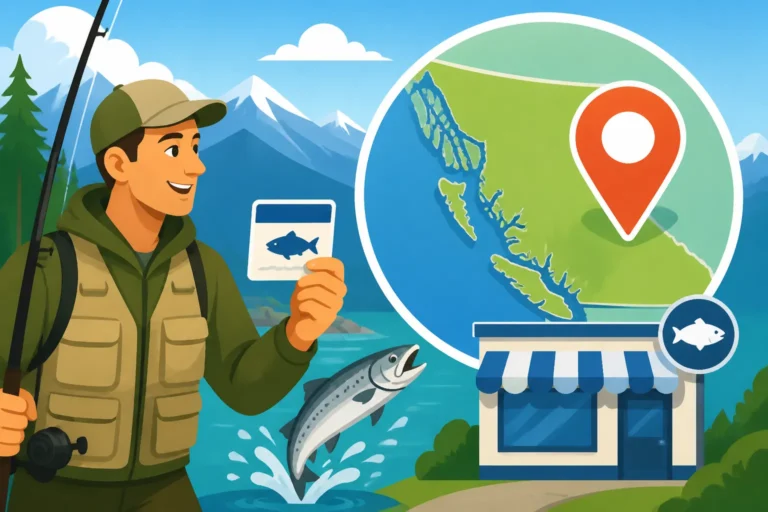
- Where to Buy: The most convenient way for most people these days is online through the provincial government's website. You can also purchase them from various independent vendors like tackle shops, sporting goods stores, and some general stores across the province. For a detailed guide, check out Where and How to Buy a BC Fishing License.
- Cost Considerations: The cost varies depending on your residency status and the duration of the license (annual, 1-day, 8-day). A BC resident freshwater fishing license will be significantly less expensive than one for a non-resident. If you're from outside Canada, the BC non-resident non-Canadian freshwater fishing license cost 2026 will apply, which is the highest tier. Make sure you understand whether you qualify as a resident or non-resident.
- Additional Stamps: Depending on what you're targeting, you might need additional conservation stamps. For instance, if you plan to retain salmon, you'll need a BC Freshwater Salmon Conservation Stamp. Always check the current Reading the BC Freshwater Fishing Regulations Synopsis for any species-specific stamps or endorsements.
After purchase, you can either print your license at home or carry a digital copy on your smartphone. It’s always a good idea to have it readily accessible in case a Conservation Officer asks to see it.
Securing Your Washington State Fishing License
If your angling plans include crossing the border to fish the Washington State section of the Columbia River, a separate Washington State fishing license is essential.
- Who Needs One: Similar to BC, most individuals aged 15 and over need a license. Washington also has different license types for residents, non-residents (from other U.S. states), and international visitors.
- Where to Buy: Washington fishing licenses can be purchased online through the Washington Department of Fish and Wildlife (WDFW) website. You can also find them at authorized license vendors across Washington, which include many tackle shops, sporting goods stores, and even some Walmart locations.
- Types of Licenses: Washington offers various license options, including freshwater, saltwater, and combination licenses, as well as different durations (annual, temporary). For fishing the Columbia River, you'll generally need a freshwater license.
- Endorsements: Similar to BC's stamps, Washington has endorsements. If you plan to fish for salmon or steelhead, you will almost certainly need a "Catch Record Card" and possibly specific endorsements depending on the species and area. It's crucial to consult the current WDFW fishing regulations pamphlet for the most up-to-date requirements. These pamphlets are often available for free at license vendors or can be downloaded from the WDFW website.
- Non-Resident Fees: If you are a Canadian resident fishing in Washington, you will be considered a non-resident, and the fees will reflect this. These can be quite a bit more than resident fees, so factor that into your trip budget.
Remember, laws can change, sometimes without much notice, especially concerning specific fisheries or conservation efforts. Always double-check the latest regulations from both jurisdictions before you head out. Websites like Amazon might offer printed fishing guides or regional maps that could help you stay informed about localized regulations for both BC and Washington, though official government websites are always your primary source for current rules.
Common Mistakes and How to Avoid Them
The biggest mistake, as we’ve established, is assuming reciprocity. Beyond that, here are a few other common pitfalls:
- Not checking the latest regulations: Seasons, bag limits, and gear restrictions can change year-to-year, and sometimes in-season via fishery notices. What was legal last year might not be this year. Always consult the most current regulations for both jurisdictions. Check BC Fishery Notices and In-Season Closures, Explained for BC.
- Misunderstanding residency requirements: Just because you own property in BC or Washington doesn't automatically make you a resident for licensing purposes. There are specific criteria (e.g., how long you've lived there, where you pay taxes, where your primary vehicle is registered). If in doubt, assume non-resident status as it's better to over-comply than under-comply.
- Forgetting additional stamps/endorsements: A basic license might not cover everything. If you target salmon, steelhead, or other specific species, you'll often need extra stamps or catch record cards. Failing to have these can lead to fines, even if you have the basic license.
- Not carrying your physical or digital license: An officer needs to verify your license. Make sure you have it on you, whether it's a printed copy in a waterproof holder or readily accessible on your phone.
- Ignoring boating regulations: If you’re fishing from a boat, you need to be aware of the boating laws for both jurisdictions. For instance, BC Boating Laws for Anglers covers safety equipment, operator cards, and registration rules specific to BC waters, and Washington will have its own equivalent.
It truly pays to spend a bit of time doing your homework before your trip. It’s far better to invest a small amount of time and money upfront than to face hefty fines or have your equipment confiscated.
Practical Scenarios and Cross-Border Considerations
Let's dive into some real-world scenarios that often pop up when fishing the Columbia River and how the dual-license requirement applies. Understanding these nuances can save you a lot of grief.
Fishing from a Boat vs. Shore
The mode of fishing often dictates where and how regulations apply, especially in boundary waters.
- Shore Angling: If you're standing on the BC side of the Columbia River, fishing the waters immediately adjacent to you, you only need a BC fishing license. If you then decide to pack up, drive across a border crossing, and fish from the shore on the Washington side, you must have a Washington State fishing license. The key is your physical location and where your line is actively fishing. It's pretty straightforward: BC land, BC license; Washington land, Washington license.
- Boat Angling: This is where it gets a little more complex. If you launch your boat from the BC side and remain entirely within BC waters, only your BC license is needed. However, if your boat crosses into Washington waters, even temporarily, or you drift into their jurisdiction while actively fishing, then you and everyone on board who is fishing must possess a valid Washington State fishing license in addition to your BC license. This is critical. Game wardens from either side can patrol the waters, and ignorance of the boundary is no excuse. Always be aware of your position, especially if you have a GPS with mapping capabilities. For safety and compliance, having both licenses is the safest bet if there's any chance you'll operate or fish in both jurisdictions from a boat. Also, remember to comply with BC Boating Laws for Anglers and Washington's equivalent when operating your vessel.
Gear, Bait, and Species Regulations
Beyond just the license, the specific rules regarding how you fish and what you can catch can differ significantly between BC and Washington.
- Gear Restrictions: One jurisdiction might allow barbed hooks while the other mandates barbless, especially for salmon and steelhead. Lead weights might be restricted in one area but not another. Certain types of nets or traps could be legal in one and illegal in the other. Always check the specific gear regulations for the precise stretch of water you are fishing at that moment.
- Bait Use: Live bait regulations are a common point of divergence. One area might permit worms but prohibit minnows, while another has different rules. Using illegal bait, even accidentally, can lead to serious penalties.
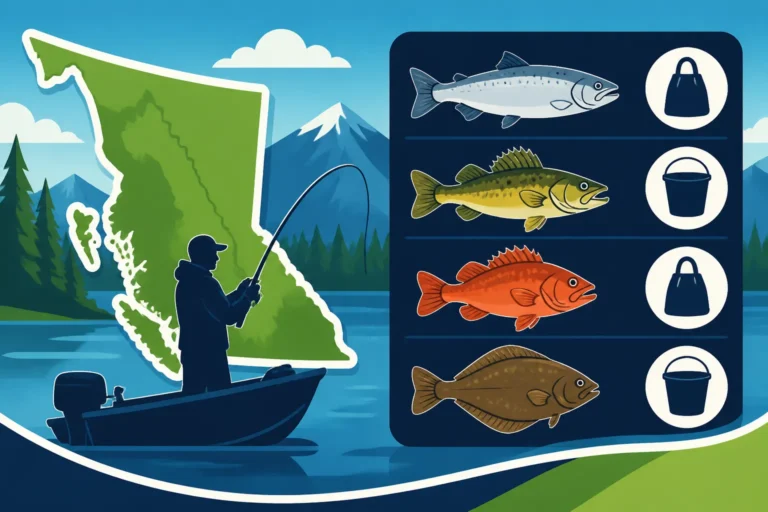
- Species-Specific Rules: Bag limits, size restrictions, and open/closed seasons vary wildly by species and location. For instance, the timing of salmon runs on the Columbia can be critical, with very specific windows for retention or even complete closures. What is open season for Chinook in BC might be closed in Washington, or vice-versa. Be particularly vigilant for species like sturgeon or steelhead, which often have highly complex and restrictive regulations, including mandatory catch and release in some areas (e.g., BC Fraser River Sturgeon Catch and Release Requirement). Some areas might even be designated BC Catch and Release Only Waters.
- Conservation Initiatives: Both BC and Washington have robust conservation programs, but their specifics can differ. For example, BC requires a specific stamp for salmon retention in freshwater, whereas Washington has its own endorsement system. These aren't just bureaucratic hurdles; they fund vital conservation efforts, and compliance is crucial.
Reporting Your Catch and Avoiding Penalties
Both jurisdictions have systems in place for reporting catches, especially for species like salmon and steelhead, often through catch record cards. These are vital for fisheries management. Not reporting or inaccurately reporting can be a violation.
- Penalties for Non-Compliance: The penalties for fishing without a license or violating regulations can be severe. In BC, fishing without a license can result in significant fines and even forfeiture of gear. This is clearly outlined in Fishing Without a License in BC: Penalties. Washington State has similar strict penalties. These are not minor infractions; they are taken seriously by law enforcement and can put a real damper on your trip, or even future border crossings.
- Checkpoints and Enforcement: It's not uncommon for Conservation Officers or Game Wardens from either side to be present on the water or at popular access points. They will check licenses, inspect catches, and ensure compliance with all regulations. They work to protect the resource, and they are usually very knowledgeable about the nuanced rules. A friendly attitude and full compliance go a long way.
To truly prepare for a cross-border Columbia River fishing adventure, consider printing out the relevant regulation summaries for both BC and Washington. Keep them in a waterproof bag, perhaps even stored in a robust tackle box or a convenient bag purchased from an online retailer like Amazon, right alongside your licenses.
Here's a quick comparison table to help visualize some general differences, but remember, always consult official sources for the most current and specific details:
| Feature | British Columbia (BC) Freshwater | Washington State (WA) Freshwater |
|---|---|---|
| Reciprocity | No reciprocity with Washington State | No reciprocity with British Columbia |
| Primary License Required | BC Freshwater Fishing License | Washington State Fishing License (Freshwater) |
| Where to Buy | Online (BC Gov't), licensed vendors | Online (WDFW), authorized license vendors |
| Youth Requirements | Under 16 exempt (but follow limits) | Under 15 exempt (but follow limits) |
| Residency Tiers | Resident, Non-Resident (Canadian), Non-Resident (Non-Canadian) | Resident, Non-Resident (US), Non-Resident (Non-US/International) |
| Salmon/Steelhead | Requires Salmon Conservation Stamp (freshwater) | Often requires Catch Record Card and/or specific endorsements |
| Typical Gear Rules | Barbless hooks often mandatory for salmon/steelhead, area-dependent | Barbless hooks often mandatory for salmon/steelhead, area-dependent |
| Regs Publication | BC Freshwater Fishing Regulations Synopsis | WDFW Fishing Regulations Pamphlet |
| Online Resource | gov.bc.ca/fishing | wdfw.wa.gov/fishing |
This table provides a high-level overview, but the devil is truly in the details. Always confirm the exact rules for the specific area and species you're targeting on the particular dates you plan to fish. For instance, sometimes areas like the "Boundary Waters" that are shared between US states might have specific reciprocity, but this is extremely rare for international borders.
In conclusion, while the Columbia River is a spectacular fishery, its international nature regarding fishing licenses demands a dual approach. If you plan to fish in both British Columbia and Washington State waters, you must acquire a valid fishing license from each jurisdiction. There is no shortcut or reciprocity agreement that covers both. Stay informed, stay compliant, and you'll be set for a fantastic fishing experience on this incredible river system.
Disclaimer
The information provided in this guide is for general informational purposes only and is subject to change. Fishing regulations, license requirements, and fees are determined by government bodies and can be updated at any time. It is the angler's sole responsibility to consult the most current official British Columbia fishing regulations and Washington Department of Fish and Wildlife regulations before engaging in any fishing activities. Failure to comply with regulations can result in significant penalties.