BC kokanee daily limit
One of the most common questions and sources of confusion for anglers hitting British Columbia's beautiful freshwater lakes is around the specific daily limits for kokanee salmon. It can be incredibly frustrating to plan a trip, get all your gear ready, only to realize you're unsure about the rules for keeping your catch. This comprehensive guide is here to unravel the intricacies of the BC kokanee daily limit, helping you fish confidently and legally, and ensuring you get to enjoy those delicious kokanee dinners without any worries.
Understanding Kokanee Fishing in British Columbia
Kokanee are truly special, offering a unique freshwater fishing experience that captivates both seasoned anglers and newcomers alike. These landlocked sockeye salmon might be smaller than their ocean-going cousins, but they pack a punch in terms of fight and flavour, making them a highly sought-after species across the province. However, their popularity also means that careful management is essential, leading to specific regulations, including daily catch limits.
Why Kokanee are a Popular Target
Kokanee salmon hold a cherished spot in the hearts of many BC anglers, and for good reason. They are renowned for their vibrant, often brilliant red flesh when spawning, and their delicious, firm meat at other times of the year makes them excellent table fare. Unlike the powerful, often elusive anadromous salmon, kokanee are accessible in countless lakes throughout the Interior, making them a fantastic target for family outings, stillwater fly fishing enthusiasts, and those who enjoy trolling from a boat. Many communities across the Okanagan Valley, the Kootenays, and the Cariboo Chilcotin regions rely on kokanee fisheries as a significant draw for tourism and local recreation. The sheer abundance in many lakes means a higher chance of success, which is always a bonus, especially for younger anglers just getting into the sport.
Beyond the culinary and recreational appeal, kokanee play a vital ecological role as a forage fish for larger predators like Gerrard rainbow trout in lakes such as Kootenay Lake, and bull trout across other systems. This interconnectedness means that healthy kokanee populations are crucial for the overall health and balance of BC's freshwater ecosystems. Managing catch limits responsibly helps maintain this delicate balance, ensuring that future generations can continue to enjoy these fantastic fish.
Identifying Kokanee Salmon
Before you can confidently keep your kokanee catch, you need to be absolutely sure you've actually caught a kokanee! While they are landlocked sockeye, they can sometimes be confused with other juvenile salmon species or even trout, especially when they are smaller. Kokanee typically have bright, silvery sides with a dark blue or greenish back when they are in their feeding phase, before spawning. One of their key distinguishing features is the lack of spots on their back and tail, which differentiates them from many trout species. They also usually have white gums and no teeth on their tongue, characteristics they share with sockeye.
As they approach spawning season, often in the fall, kokanee undergo a dramatic transformation. Males develop a pronounced humped back and a hooked jaw (kype), and both sexes turn a brilliant red on their bodies with a green head. This striking colour change makes them much easier to identify. Their average size can vary significantly depending on the lake and food availability, ranging from pan-sized 8-inchers to trophy specimens exceeding 20 inches in certain productive waters like Kootenay Lake or Okanagan Lake. Being able to correctly identify your catch is not just about following the rules; it's about respecting the fish and the regulations designed to protect specific species or age classes. Always refer to a reliable fish identification guide if you're unsure.
Navigating the BC Kokanee Daily Limit
Understanding the daily limit for kokanee in British Columbia isn't always as simple as a single number across the entire province. Regulations are often nuanced, varying by region, specific water bodies, and even the time of year. It’s absolutely essential to consult the official BC Freshwater Fishing Regulations Synopsis, or the current BC Fishery Notices and In-Season Closures, Explained, for the most up-to-date and localized rules.
General Daily Limits for Kokanee
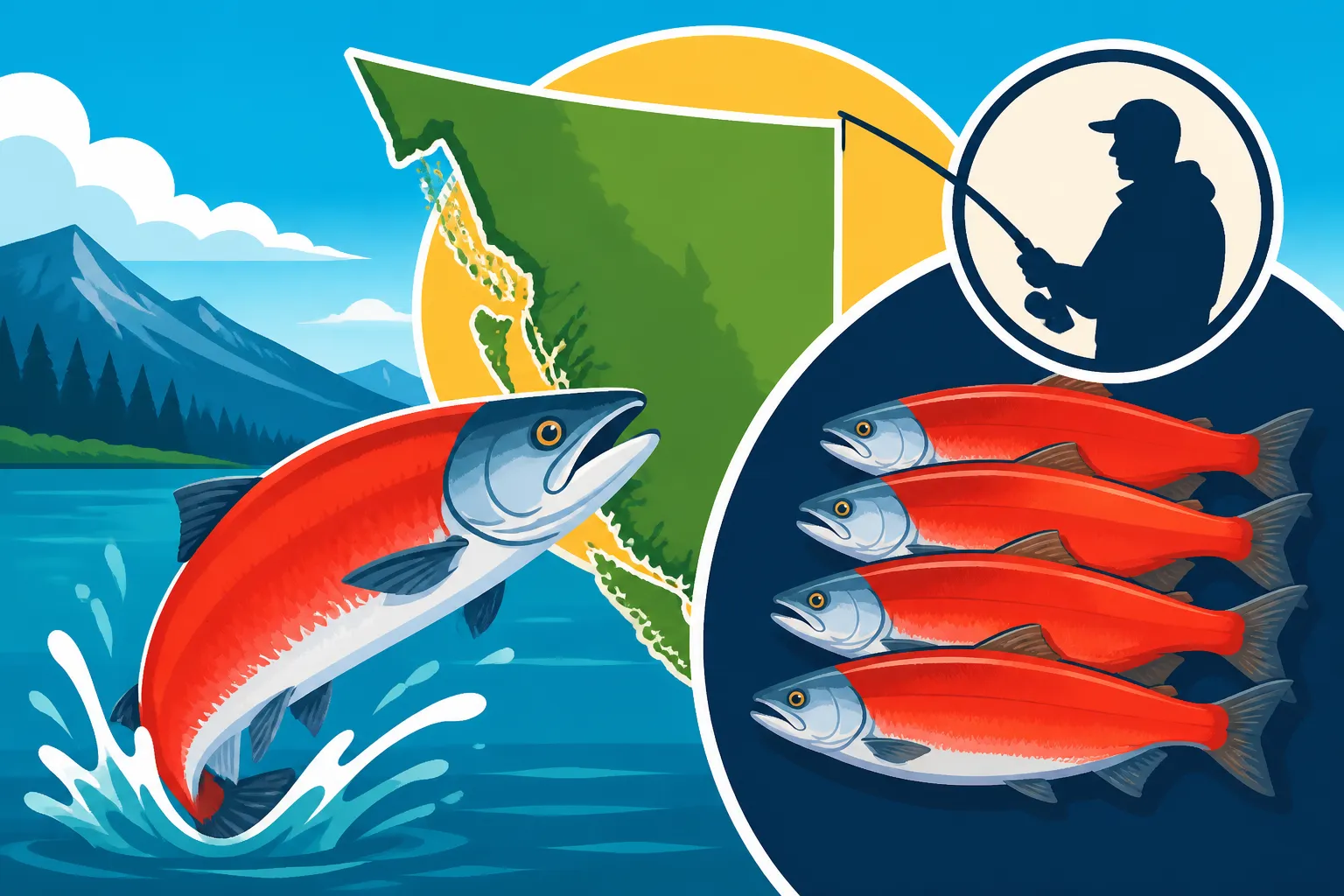
For many lakes and rivers throughout British Columbia, a general daily limit for kokanee salmon is in place. This limit dictates the maximum number of kokanee an angler can retain and possess in a single day. In numerous regions, including large swaths of the Kootenay, Thompson-Nicola, and Cariboo regions, the general daily limit is 10 kokanee per day. This number is fairly common, but it's crucial to remember that "general" doesn't mean "universal."
It’s important to understand what "daily limit" actually means. It refers to the number of fish you can keep and take home within a 24-hour period. "Possession limit" typically refers to the total number of fish you can have in your possession at any given time, whether fresh, frozen, or processed. In British Columbia, for most recreational fisheries, the daily limit and the possession limit are often the same, meaning you can only have one daily limit's worth of fish in your cooler, freezer, or vehicle. Always double-check this in the regulations. If you're planning a multi-day trip and intend to keep fish from several days, you need to be especially careful about the possession limit. Some lakes might have specific rules, but generally, you can only possess one day's limit. For example, if you fish two days and catch 10 kokanee each day, you would have to consume or dispose of the first day's catch before retaining the second day's, if the possession limit is also 10. This is a common pitfall for many anglers.
Special Regulation Waters and Area-Specific Limits
While the 10-kokanee daily limit is a good starting point, many specific lakes and river systems have their own unique regulations, often stricter, due to conservation concerns, intense fishing pressure, or efforts to promote trophy fisheries. These are known as Special Regulation Waters in BC, and they require anglers to pay extra close attention to the details in the synopsis.
For instance, some highly productive lakes might have a reduced daily limit, perhaps 4 or 6 kokanee, to spread the catch among more anglers or to protect specific year classes. Conversely, in certain situations where kokanee populations are extremely robust or overpopulated and impacting other species, there might be higher limits or even no limits in an effort to manage the population.
A prime example is Okanagan Lake. Historically, it has had fluctuating kokanee populations, leading to dynamic regulations. In some years, anglers might be allowed to keep a higher number of kokanee, while in others, limits might be significantly reduced or even catch-and-release only. These kinds of area-specific changes are usually announced through BC Fishery Notices, which are critical for any angler to consult before heading out.
Similarly, other popular kokanee lakes across the province might have unique size restrictions in addition to numerical limits. For example, some regulations might stipulate that you can only keep kokanee within a certain size range (e.g., "no kokanee under 20 cm or over 35 cm") to protect spawning adults or juvenile fish. Always look up the specific lake or water body you intend to fish in the official synopsis. This is not just a suggestion; it's a legal requirement, and ignorance of the law is no excuse for fisheries officers.
The Role of the Salmon Conservation Stamp for Kokanee
Here’s where it can get a little tricky and often causes confusion for anglers, especially those new to BC freshwater fishing: the BC Salmon Conservation Stamp Rules. Many anglers wonder, "Do I need a salmon stamp for kokanee?" The answer depends on whether you intend to keep kokanee that are over a certain length.
Generally, for recreational freshwater fishing in British Columbia, if you are retaining any species of salmon, including kokanee, that are 30 cm (approximately 11.8 inches) or greater in length, you are required to purchase and affix a Freshwater Salmon Conservation Stamp to your basic freshwater fishing license. This rule is explicitly outlined in the BC Freshwater Salmon Retention Rules.
So, if you're targeting those smaller, pan-sized kokanee that are less than 30 cm, you generally do not need the stamp. However, if you hook into a larger kokanee, perhaps a Gerrard rainbow trout-sized one from Kootenay Lake that measures 35 cm, and you wish to keep it, that stamp becomes mandatory. The cost of this stamp is generally quite reasonable, and considering the potential for encountering larger fish, it’s often a good idea to purchase one anyway if you plan on keeping any salmon species. You can usually buy the stamp online at the same time you acquire your main BC Fishing License Age Requirements.
It's a small detail that can easily be overlooked, but fisheries officers certainly don't overlook it. Not having the required stamp when retaining a qualifying fish can lead to fines, just like fishing without a license. Always consider the potential size of the kokanee in the waters you're fishing and make sure you're properly licensed and stamped if you plan to retain those larger specimens.
Practical Tips for Kokanee Anglers and Catch Retention
Fishing for kokanee is a fantastic experience, and retaining your catch for the dinner table is a rewarding part of the process. To ensure you’re doing everything by the book and maximizing your enjoyment, there are some practical tips to keep in mind, especially concerning measurement, counting, and gear.
Best Practices for Measuring and Counting Your Catch
Accurate measurement and counting are paramount to adhering to the BC kokanee daily limit. It's not enough to simply guess the length of your fish; you need to be precise.
- Carry a Reliable Measuring Device: Invest in a sturdy, waterproof measuring tape or a fish ruler that clearly shows centimeters and inches. Many tackle boxes come with integrated rulers, or you can find specific measuring boards designed for fishing. Products like the Rapala Fish Ruler or various foldable measuring tapes are readily available on platforms like Amazon, offering convenient and accurate options for anglers. Keep it easily accessible in your boat or tackle bag.
- Measure Correctly: When measuring, lay the fish flat, nose against a stop or the beginning of your ruler. Measure to the tip of the tail, with the tail compressed. This ensures you're getting the total length. It's often helpful to take a quick photo with the fish next to the ruler if you're unsure or for documentation, though the best practice is to be certain before retention.
- Keep a Running Count: It’s surprisingly easy to lose track of how many fish you’ve kept, especially on a hot bite. A simple method is to use a clicker counter, often used by golf caddies, or even just move your retained fish into a designated cooler or livewell as you keep them, counting as you go. If you're fishing with a group, make sure everyone is aware of the group's total catch if there's a boat limit or combined possession limit.
- Handle Fish with Care: If you're measuring a fish to see if it meets a size requirement or if it's a catch-and-release scenario, handle it gently. Use wet hands to avoid removing the protective slime layer, minimize its time out of water, and release it quickly. The health of the fish you release contributes to future fishing opportunities.
Avoiding Penalties and Common Mistakes
Nobody wants to face a fine or have their fishing trip cut short because of a simple misunderstanding. Penalties for exceeding limits or not having the correct stamps can be significant, so it's vital to be vigilant.
- Review Regulations Before Every Trip: This cannot be stressed enough. Regulations, especially those regarding kokanee, can change even within the same fishing season due to stock assessments, environmental conditions, or in-season closures. Always check the current year's Reading the BC Freshwater Fishing Regulations Synopsis and any updated BC Fishery Notices before you head out. These resources are usually available online through the provincial government's fishing license portal.
- Understand Your License: Ensure you have the correct type of license. Are you a resident or non-resident? Are you fishing freshwater or tidal waters? The BC Freshwater vs Tidal Waters License, Explained article is a great resource if you're confused. Double-check that all required stamps (like the Freshwater Salmon Conservation Stamp if retaining larger kokanee) are purchased and valid. Many anglers print their licenses or save them digitally on their phones for easy access.
- Don't "Hide" Your Catch: Fisheries officers are trained to spot irregularities. Don't attempt to conceal over-limits or undersized fish. It's better to immediately release a fish that doesn't meet the regulations than to risk severe penalties for concealment. Be transparent and cooperative if approached by an officer.
- Group Limits: If you’re fishing with multiple people in a single boat, ensure you understand if the limit applies per person or to the entire vessel. In BC, most daily limits are per person, meaning each licensed angler can retain their individual limit. However, possession limits can sometimes be tied to a vessel in specific circumstances, so always verify.
Gear Essentials for Kokanee Fishing
While the regulations are crucial, having the right gear can make your kokanee fishing experience more enjoyable and successful. It also helps in accurately identifying and handling your catch.
- Light Tackle: Kokanee have soft mouths, so light to ultra-light spinning rods or fly rods are ideal. A sensitive rod helps detect subtle bites, and a lighter action protects their delicate mouth during the fight. Monofilament or fluorocarbon lines in the 4-8 lb test range are common.
- Downriggers or Weighted Lines: Kokanee often suspend in deeper water, so getting your lures down to their feeding depth is key. Downriggers are excellent for precision trolling at specific depths. For those without downriggers, lead-core line, wire line, or simply using heavy inline weights with a small dodger or flasher can get your gear down.
- Kokanee-Specific Lures: Kokanee respond well to small, bright lures. Popular choices include small spoons (like Gibbs Delta Kokanee Spoons or Dick Nite spoons), tiny hoochies or squirts, and small wedding rings or spinner rigs. These are often fished behind a dodger or flasher that creates attraction and vibration. You can find a vast selection of these specialized lures and dodgers on Amazon, allowing you to stock up for various water conditions.
- Bait: Adding a small piece of corn, maggots, or scented plastic bait to your lure can significantly increase your hook-ups. Scent is a big attractor for kokanee.
- Net: A small, fine-mesh landing net is indispensable. Kokanee can be feisty, and a net minimizes stress on the fish and prevents lost fish at the boat.
- Cooler with Ice: If you plan on retaining your daily limit, a well-insulated cooler filled with ice is essential to keep your kokanee fresh and in prime condition for the table. Rapid chilling is key to preserving their quality.
For more detailed information on techniques, you might want to check out our guide on How to Catch Kokanee in BC.
Staying Informed on BC Fishing Regulations
The world of fishing regulations in British Columbia is dynamic, and staying on top of the latest rules is not just about compliance; it's about being a responsible angler and contributing to the conservation of our precious fisheries. The general daily limits and specific area regulations for kokanee can and do change, sometimes unexpectedly.
Where to Find the Latest Regulation Updates
The absolute best and most reliable source for BC fishing regulations is always the official government publication: the BC Freshwater Fishing Regulations Synopsis. This document is published annually and covers all freshwater fishing regulations for the province, broken down by region and specific water bodies.
- Online Version: The most convenient way to access the synopsis is through the British Columbia government's official fishing and hunting licensing website. You can easily download it as a PDF, making it accessible on your phone or tablet even when you're offline on the water. This digital format means you can always have the most current information at your fingertips.
- Printed Copies: While the digital version is widely used, physical copies of the synopsis are often available at fishing license vendors, tackle shops, and some provincial government offices. For many, having a printed copy that they can highlight and make notes in is invaluable.
The synopsis details everything from general rules like the BC Bag and Possession Limits by Species to very specific restrictions on certain lakes or rivers. It will clearly list the kokanee daily limit for each management region and then highlight any exceptions for individual lakes or streams. It’s also where you’ll find information on gear restrictions, bait allowances, and special closure periods. Don’t just skim it; take the time to read the sections relevant to where you plan to fish. Understanding the nuances of BC Fishing Regulations Explained will save you a lot of headaches and potential fines.
The Importance of Fishery Notices
Beyond the annual synopsis, Fishery Notices are your critical, real-time updates for changes in fishing regulations. These notices are issued by the Department of Fisheries and Oceans Canada (DFO) for tidal waters and by the Province of British Columbia for freshwater, throughout the year to announce in-season changes.
- What They Cover: Fishery notices can announce temporary closures, changes to daily limits, new bait restrictions, or even reopenings of certain areas. These changes are often implemented rapidly in response to conservation concerns, unexpectedly low or high fish returns, or environmental factors like low water levels or high water temperatures. For kokanee, these notices might specifically address a particular lake’s health, perhaps reducing limits if populations are struggling or increasing them if there's a surplus.
- How to Access Them: Fishery notices are predominantly distributed online. You can subscribe to email alerts through the DFO website or the provincial freshwater fisheries website, which is highly recommended for any active angler. They are also posted on these official government websites. Checking them before every single fishing trip is a non-negotiable step for responsible angling. Many local tackle shops also print out and post relevant fishery notices, so it's a good idea to check those boards as well.
Ignoring fishery notices is one of the most common ways anglers inadvertently break regulations. The annual synopsis provides the baseline, but the notices are the daily news; you wouldn't rely on last year's newspaper for current events, and the same applies to fishing. Staying current shows respect for the resource and ensures you’re fishing within the most up-to-date legal framework.
Disclaimer
The information provided in this guide is intended for general knowledge and informational purposes only, and does not constitute legal advice. While we strive to keep the information accurate and up-to-date, fishing regulations in British Columbia are subject to frequent changes. It is the sole responsibility of every angler to consult the official and most current British Columbia Freshwater Fishing Regulations Synopsis and any in-season Fishery Notices published by the provincial government or Fisheries and Oceans Canada (DFO) before engaging in any fishing activity. Reliance on any information provided here is at your own risk.