Best charters that target trophy chinook over 30 pounds
The dream of landing a colossal Chinook salmon, a true 'tyee' weighing over 30 pounds, is a powerful draw for many anglers coming to British Columbia. It’s more than just a fish; it’s a legend, a test of skill, patience, and often, sheer luck. But let's be real: finding a charter that genuinely specializes in these monsters, and has a proven track record, can feel like searching for a needle in a haystack amidst all the general fishing tour options out there. This guide is here to cut through the noise, helping you understand what it truly takes to target those elusive 30+ pound Chinook and how to identify the best charters for your quest.
The Allure of a 30+ Pound Chinook: Understanding the Trophy Hunt
There’s a reason seasoned anglers speak of 30-pound (or even 50-pound!) Chinook with reverence. These aren't just big fish; they're magnificent, powerful creatures that represent the pinnacle of salmon angling. The sheer strength they possess, the explosive runs, and the often-lengthy battles are what make them so coveted. But pursuing these giants requires a different mindset and approach than simply going out for a feed of smaller, more common salmon. It’s a dedicated hunt.
What Makes a Chinook a "Trophy"?
A Chinook salmon weighing 30 pounds or more is, without question, a trophy. These are mature, often older fish, packing incredible muscle and fat from years spent foraging in the ocean. When they hit your line, it’s not just a tug; it’s often an unstoppable force that demands every ounce of your angling skill and the full capability of your gear. The fight can last anywhere from minutes to well over an hour, leaving your arms aching and your heart pounding. Many anglers consider a 30-pounder the minimum for 'trophy' status, while true giants can push past 50, 60, or even 70 pounds, though those are exceedingly rare.
Beyond the weight, a trophy Chinook often displays incredible coloration, especially as they near their spawning rivers. Their massive tails, powerful shoulders, and impressive girth are all hallmarks of a fish that has thrived. Catching one is a rite of passage, a story to tell for years, and for many, the ultimate angling achievement in British Columbia's waters. It's not just about the numbers; it's about the entire experience of connecting with such a powerful natural wonder.
Prime Locations for Monster Chinook in BC
British Columbia is vast, and while Chinook can be found in many areas, certain regions are renowned for consistently producing the larger specimens. These are typically areas where baitfish are abundant, and where major river systems draw in the largest returning salmon. When you’re looking for a charter, their familiarity and access to these zones are critical.
One of the most legendary locations is the waters around Campbell River, often dubbed the "Salmon Capital of the World." The Discovery Passage and surrounding areas are famous for massive Chinook returning to the Fraser River and local rivers. Another prime area is the North Coast, particularly around Prince Rupert, Haida Gwaii, and the mouths of the Skeena and Nass Rivers. These remote, pristine waters are staging grounds for incredible numbers of large salmon. Further south, Barkley Sound and Nootka Sound on Vancouver Island's west coast also offer fantastic opportunities, with nutrient-rich waters supporting robust baitfish populations that fatten up these kings. The Fraser River itself, while primarily fished for Sturgeon, also sees massive Chinook runs, especially at its mouth and in the lower stretches, where tidal waters fishing licenses apply.
Peak Seasons for Big Kings
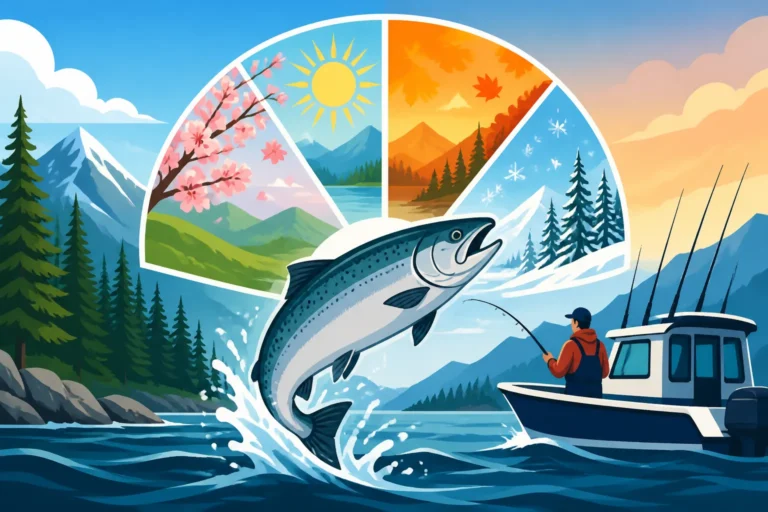
Timing is everything when it comes to trophy Chinook. While some Chinook can be caught year-round, the prime window for targeting those 30+ pound giants is generally from late spring through early fall, coinciding with their migratory runs back to their natal rivers. Each region will have its specific peak.
For areas like Campbell River, the summer months, particularly July and August, are historically prime for large Chinook as they stage before entering the river systems. The northern coast, around Prince Rupert and Haida Gwaii, can see excellent fishing starting earlier in June and extending through August, as different runs converge. On the west coast of Vancouver Island, particularly in places like Ucluelet and Tofino, the "springer" fishery in April and May can produce some truly massive Chinook that are still feeding aggressively. Later in the summer and into September, the fall runs bring in another wave of large fish. Charters specializing in trophy Chinook will typically book up far in advance for these peak windows, so planning ahead is crucial. Best Time of Year to Fish in BC can provide a broader look at BC's fishing seasons.
The Art of Targeting Trophy Chinook: What Expert Charters Offer
Successfully targeting 30+ pound Chinook is an art form, not just a matter of dropping a line. The best charters don’t just take you fishing; they guide you on a precise, calculated hunt, leveraging deep knowledge of fish behavior, local currents, and advanced techniques. This expertise is what differentiates a standard salmon charter from one specializing in trophy kings.
The Right Gear and Techniques
When you’re after a 30-pound Chinook, you can’t show up with flimsy gear. Reputable charters that target these giants will be outfitted with heavy-duty conventional rods and reels, typically spooled with robust braided line and strong monofilament or fluorocarbon leaders. Downriggers are essential for presenting baits and lures at precise depths where these large, often deep-dwelling fish are feeding. The terminal tackle will be equally heavy-duty, with strong hooks and swivels designed to withstand immense pressure.
Techniques are often tailored to specific conditions. Trolling with large natural baits like herring or anchovies, rigged with teaser heads or flashers, is incredibly effective. These baits mimic the natural forage of Chinook and present a tempting meal. Large spoons, hootchies, or plugs, often in reflective or glow patterns, are also popular and can entice strikes. The best captains understand not just what to use, but how to present it—the subtle speed adjustments, the depth changes, and the ability to "read" the sonar for bait balls and fish activity. Salmon Fishing Techniques for BC Rivers delves into some of these methods.
Captain's Knowledge and Experience
This is arguably the most critical factor. A captain specializing in trophy Chinook will have years, if not decades, of experience on specific local waters. They understand the nuances of the tides, the currents, and how they influence baitfish movement and, consequently, where the big salmon will be. They know the underwater structures—reefs, drop-offs, pinnacles—where Chinook often ambush prey.
Their experience also extends to understanding the migration patterns of different salmon runs. They’ve seen how weather changes, water temperatures, and even moon phases can impact fishing. This isn’t something you learn from a book; it’s gained through countless hours on the water. A good captain will also be excellent at communicating, explaining why they're moving to a certain spot or using a particular presentation, making the entire experience more educational and engaging. They might even teach you how to read the water yourself, which is invaluable.
Vessel and Safety Considerations
A charter focused on trophy Chinook will typically operate a robust, stable boat capable of handling various coastal conditions. These aren't small pleasure craft; they're often larger sportfishing vessels equipped with powerful engines, state-of-the-art electronics (fish finders, radar, GPS), and comfortable cabins. Given the potential for offshore travel to find the best fishing grounds, stability and safety are paramount.
Beyond the boat itself, the crew's commitment to safety is non-negotiable. They’ll have all the required safety equipment onboard—life jackets, flares, first aid, VHF radio, etc.—and be well-versed in marine safety protocols. When you’re battling a 30-pound Chinook, you want to know that your captain and boat are completely reliable. It means you can focus on the fight, not worry about the unexpected. What to Expect on a BC Fishing Charter has more details about general charter experiences.
Finding Your Dream Trophy Chinook Charter
So, you’re ready to chase that 30+ pound Chinook. How do you go about finding the right charter that aligns with your trophy ambitions? It involves careful research, asking the right questions, and setting realistic expectations. Don't just pick the first result on a search engine; delve deeper.
Researching Reputable Operators
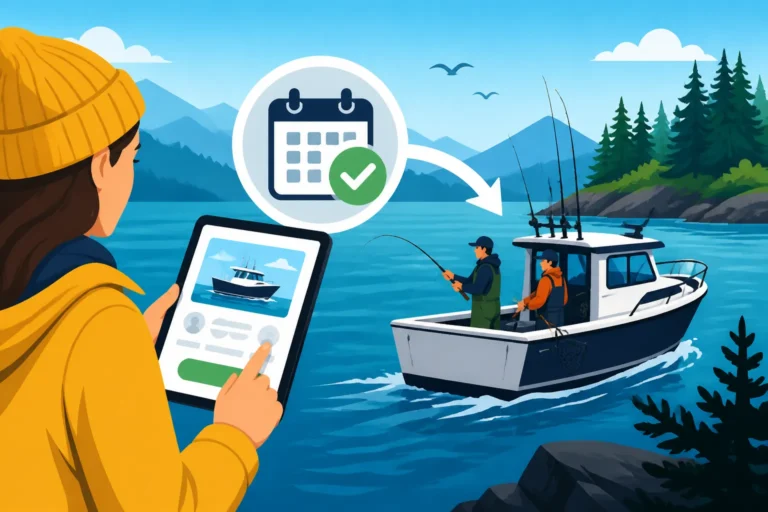
Start by identifying the prime locations mentioned earlier. Then, narrow your search to charters operating specifically in those areas. Look for operators who consistently highlight trophy catches in their photos and testimonials, not just general salmon. Online platforms like FishingBooker can be incredibly useful for this, as they often feature detailed profiles of charters, including the types of fish they target, their specific techniques, and, crucially, customer reviews. You can filter by location and even species, making it easier to pinpoint specialists.
Word-of-mouth recommendations are also golden. Talk to other anglers, visit local tackle shops, or join online fishing forums specific to BC. These communities often share invaluable insights about which captains truly excel at finding the biggest fish. Pay attention to how long an operator has been in business, their reputation, and if they are passionate about catch-and-release for larger, wild breeding stock, which is often a sign of a conservation-minded and ethical guide.
Key Questions to Ask Before Booking
Once you have a shortlist of potential charters, it’s time to start asking probing questions. Don’t be shy; this is your trip and your investment.
- "What is your average size of Chinook caught on your trips, and what's the largest you've landed this season or last?" This helps gauge their focus. If they primarily talk about limits of 10-15 pounders, they might not be the trophy specialist you're seeking.
- "Which specific areas do you typically fish for trophy Chinook, and why?" A knowledgeable captain will be able to articulate their strategy and preferred spots.
- "What type of gear do you use for targeting large Chinook?" They should be able to describe their heavy-duty rods, reels, and terminal tackle.
- "What's your philosophy on keeping vs. releasing large Chinook?" Many trophy hunters practice catch-and-release for the biggest, genetically superior fish to protect the breeding stock, especially if it's a wild, unmarked salmon.
- "How do you handle 'slow' days? What's your backup plan or approach?" This reveals their adaptability and experience.
- "What's included in the charter price (bait, tackle, fish cleaning, snacks, drinks, license help)?" Understand the full package. Remember, you will still need your own British Columbia Fishing License Guide for 2026.
- "How many people will be on the boat?" For serious trophy hunting, a smaller group often means more dedicated attention from the guide.
Here's a quick comparison of general salmon charters vs. trophy Chinook specialists:
| Feature | General Salmon Charter | Trophy Chinook Specialist Charter |
|---|---|---|
| Primary Target | Variety of salmon species, focus on limits | Primarily 30+ lb Chinook, often specific runs/locations |
| Gear | Standard salmon tackle | Heavy-duty, specialized rods, reels, and terminal tackle |
| Locations Fished | Accessible, well-known spots | Remote, specific grounds known for large fish, deep water |
| Techniques | Standard trolling, jigging, mooching | Advanced downrigging, precise bait presentation, specialized lures |
| Captain's Expertise | General knowledge of local salmon fishing | Deep, specialized knowledge of large Chinook behavior, tides, bait |
| Focus | Fun outing, getting fish for dinner | The dedicated hunt, the fight, potential for catch & release |
| Cost | Generally lower per person | Often higher due to specialized equipment, expertise, and time |
Managing Expectations and Embracing the Hunt
It’s crucial to remember that fishing, especially for trophy-sized fish, is never a guarantee. Even the best captains on the best days can’t force a fish to bite. There will be slow days. The beauty of the hunt lies in the challenge itself. A charter specializing in 30+ pound Chinook will maximize your chances significantly, but they can't promise a fish on every cast.
Embrace the entire experience: the stunning BC scenery, the camaraderie with your guide, the thrill of the chase, and the sheer power of the ocean. Learn from your captain, ask questions, and enjoy every moment on the water. Even if you don't land a 30-pounder, the knowledge gained and the memories made will be invaluable. The pursuit itself is often more rewarding than the catch. Many anglers use services like FishingBooker to browse potential charters, review their offerings, and read testimonials, helping to set more realistic expectations based on past client experiences. This way, you can go into your trip with confidence and an open mind. Remember, the journey to a BC Provincial Fish Records by Species is a long and challenging one, but immensely satisfying.
Disclaimer
This article is for general informational purposes only and does not constitute professional advice. Laws, prices and regulations vary by location and change over time. Consult a qualified professional for guidance on your specific situation.