Best Season to Book a Salmon Charter
Oh, the age-old question for every angler heading to British Columbia: "When should I even go?" It's a genuine head-scratcher, isn't it? You dream of that epic salmon battle, but the thought of picking the wrong time, missing the run, or showing up when the regulations are closed can be incredibly frustrating. This guide is here to untangle that knot for you, breaking down the best seasons to book a salmon charter in BC so you can plan your trip with confidence and maximize your chances of a truly unforgettable experience.
Understanding British Columbia's Salmon Seasons: A Dynamic Dance
British Columbia isn't just known for its stunning scenery; it's world-renowned for its salmon fishing. But here's the kicker: it's not a one-size-fits-all situation. The "best" time to book a salmon charter really depends on what species of salmon you're hoping to target, where you plan to fish along the vast coastline, and what kind of fishing experience you're chasing. Salmon runs are a dynamic dance with nature, influenced by water temperatures, food availability, and their ancient migratory instincts. These factors mean that while there are general guidelines, flexibility and checking current conditions are always key.
Why Timing is Everything for Salmon Fishing
Imagine showing up to a party after all the guests have left, or worse, before anyone has arrived. That's what fishing out of season can feel like. Salmon are migratory, returning from the ocean to their natal rivers to spawn at specific times of the year. During these migrations, they are often concentrated, actively feeding (especially in saltwater), and more accessible to anglers. Miss the window, and your chances plummet. Understanding these windows for different species – Chinook (King), Coho (Silver), Sockeye (Red), Pink (Humpy), and Chum (Dog) – is crucial. Each has its own rhythm, its own peak.
General Salmon Run Patterns in BC
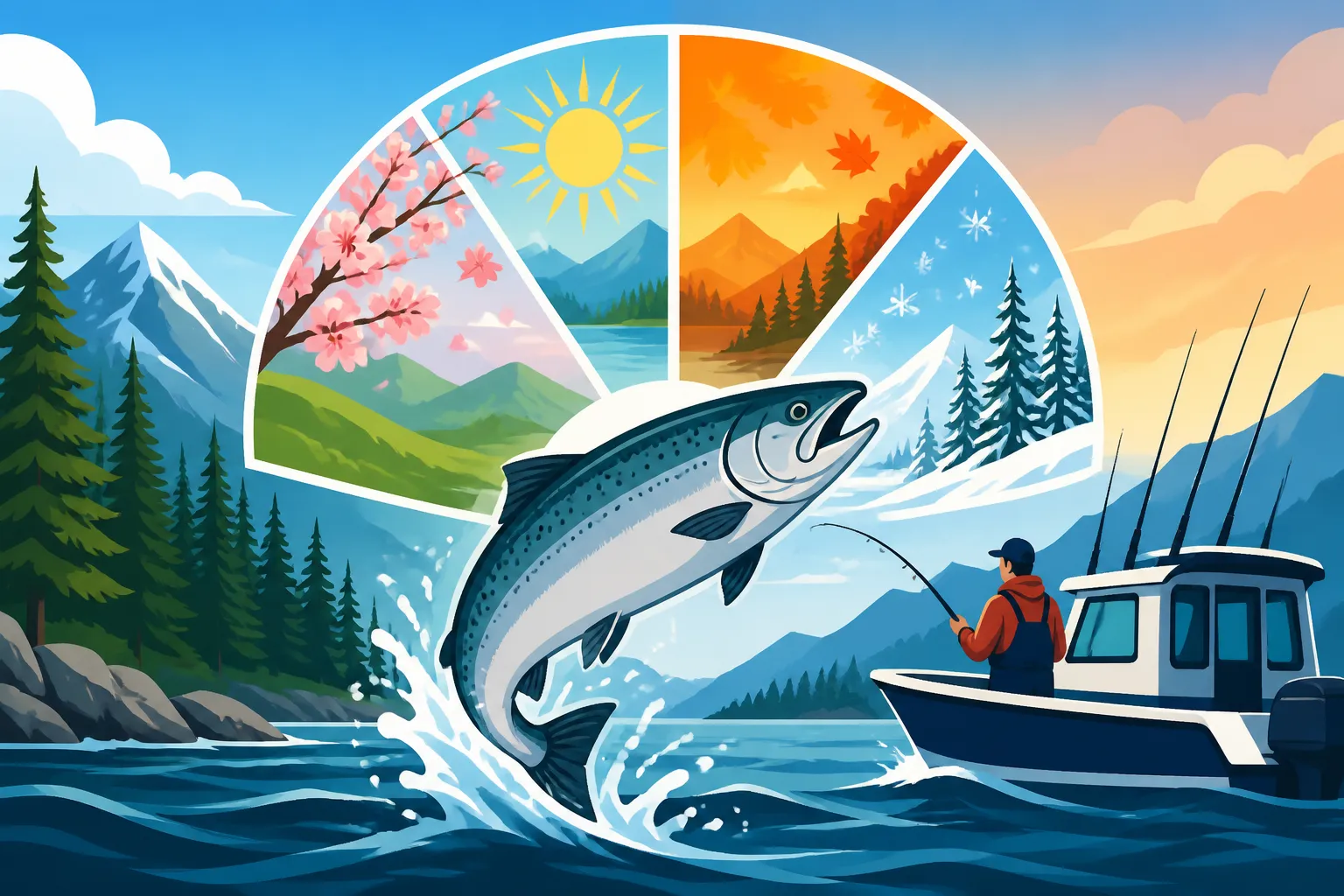
Broadly speaking, you'll find salmon in BC waters throughout much of the year, but the specific species and their abundance change dramatically. Chinook salmon, often sought after for their sheer size, have some of the longest and most complex migration patterns, appearing in coastal waters as "feeders" even in winter, with their main runs peaking in summer and fall. Coho salmon are renowned for their aggressive takes and acrobatic fights, typically showing up in numbers from summer through fall. Sockeye, Pink, and Chum usually have more condensed, often massive, runs concentrated in the late summer and fall, particularly as they approach their spawning rivers. Navigating these patterns is where a good charter comes into its own, as experienced captains know exactly where to find the fish based on the time of year. For a deeper dive into these seasonal shifts, you might want to check out BC Fishing Season Dates and Closures.
Spring Salmon Fishing: The Early Birds (March – May)
As the ice retreats and the days lengthen, British Columbia's coastal waters begin to awaken, offering exciting opportunities for those eager to kick off their salmon fishing season. Spring fishing is often characterized by crisp air, beautiful calm mornings, and fewer boats on the water. It’s a fantastic time for anglers who appreciate a more serene experience, even if the fishing can sometimes demand a bit more patience.
Chinook King Salmon in Spring
When we talk about spring salmon fishing in BC, we're primarily talking about "feeder" Chinook salmon. These aren't the fish heading directly to their spawning grounds just yet; instead, they are actively feeding in the rich coastal waters, packing on weight before their upstream journey later in the year. What makes these spring Chinooks so appealing? Often, they are robust, strong-fighting fish that are incredibly aggressive, making for some truly memorable battles. While the numbers might not be as concentrated as during the peak summer runs, the quality of the fish can be exceptional, and the experience of hooking a big, healthy feeder Chinook is unparalleled.
Charters in the spring often focus on deeper waters, particularly around baitfish concentrations. Areas like the waters off Victoria, around the Gulf Islands, and parts of the east coast of Vancouver Island are popular for these early season heavyweights. Captains will typically employ trolling techniques, often with downriggers to get their gear down to where the fish are holding, using baitfish imitations, spoons, or hootchies. The key is finding the bait, and where the bait is, the Chinooks usually aren't far behind. For those who love the hunt for a truly magnificent specimen and don't mind the cooler temperatures, spring offers a unique chance at a trophy fish before the summer rush. Chinook Salmon Fishing in BC has more details on these magnificent fish.
Other Species in Spring: Early Action
While Chinook tend to steal the spring spotlight, other species can occasionally make an appearance, depending on the exact timing and location. Sometimes, early runs of resident Coho salmon, particularly those that don't embark on long ocean migrations, can be found in certain inshore areas. These "resident" Coho are typically smaller than their ocean-migrating counterparts but still offer a spirited fight on light tackle.
It's less common to target other salmon species like Sockeye, Pink, or Chum during spring, as their main migratory pushes are still months away. However, savvy anglers and guides might find opportunities in very specific, localized fisheries. It's always a good idea to chat with your chosen charter captain about what's realistically available in the early season. They'll have the most up-to-date intel on any surprising early arrivals or local hot spots. Spring fishing, while sometimes requiring a bit more effort, rewards persistence with often magnificent fish and a tranquil ocean experience.
Summer Salmon Fishing: The Main Event (June – August)
If you're looking for action, variety, and the quintessential BC salmon fishing experience, then summer is often considered the peak season. This is when the ocean truly comes alive, and multiple species of salmon begin their annual migrations, converging on the rich feeding grounds and staging areas before their final push to the rivers.
Peak Chinook and Sockeye Runs
Summer in British Columbia is synonymous with robust Chinook salmon runs. As July rolls into August, massive schools of Chinook, often called "Tyee" when they reach trophy size, move towards river mouths and coastal estuaries. Places like Campbell River, often dubbed the "Salmon Capital of the World," become epicenters of activity as these powerful fish gather. Charters will target these migratory paths, often employing a mix of trolling and mooching techniques with herring or anchovy, trying to intercept fish that are feeding heavily before their journey upstream. The thrill of a big Chinook strike, followed by its powerful runs and headshakes, is what legends are made of. You can learn more about these magnificent fish and the best places to find them in Best Salmon Fishing Spots in BC.
Beyond Chinook, summer is also the primary window for Sockeye salmon, especially for the iconic Fraser River run. These bright red fish are known for their incredible numbers, often returning in the millions on dominant cycle years. While Sockeye fishing can be highly regulated and subject to in-season closures to ensure conservation, when the fishery opens, it provides unparalleled action. Charters targeting Sockeye typically use small lures or flies, focusing on intercepting schools as they move through coastal waters or into the lower stretches of large river systems. Keeping an eye on BC Fishery Notices and In-Season Closures, Explained is absolutely vital if you're hoping to experience a Sockeye opening.
Coho and Pink Salmon Start to Appear
As the summer progresses, particularly from mid-July through August, Coho salmon begin to show up in significant numbers. These are the acrobats of the salmon world, famous for their aerial displays and aggressive strikes. They're a favorite among many anglers for their spirited fights on lighter tackle. Coho are often found in shallower, inshore waters, making them accessible to a variety of charter types. Trolling with spoons, hoochies, or bucktail flies can be incredibly effective, especially during a strong bite. A charter during this time often means a mixed bag of salmon, providing constant excitement.
In odd-numbered years, August also ushers in the massive runs of Pink salmon. These smaller, but incredibly numerous, fish provide fantastic, non-stop action, making them an excellent choice for family charters or for anglers looking to simply hook into as many fish as possible. Pinks are often caught close to shore or in river mouths on small spoons, flies, or jigs. Their sheer abundance means even novice anglers can have a banner day.
Busy Waters and Booking Ahead
It's no secret that summer is the most popular time for visitors and anglers in BC. The weather is generally at its best, and the fishing opportunities are abundant. This popularity, however, means that the waters can get busy, and charter availability can become scarce, especially for prime dates and sought-after captains. If your heart is set on a summer salmon adventure, you absolutely need to plan and book your charter well in advance – think months, not weeks. Platforms like FishingBooker can be incredibly helpful for comparing options and securing your spot early, often allowing you to browse available dates and read reviews. Discussing what to bring on your trip and what to expect will also enhance your experience, as detailed in What to Expect on a BC Fishing Charter and What to Bring on a BC Fishing Charter.
Fall Salmon Fishing: The Silver Sides & Last Hurrah (September – November)
As the vibrant colours of autumn sweep across British Columbia's landscapes, the salmon fishing scene undergoes a beautiful, albeit sometimes more subtle, transformation. The summer crowds start to thin, the air takes on a crisp edge, and a new wave of salmon species makes their presence known. Fall fishing offers a unique blend of spectacular scenery, often aggressive fish, and a sense of tranquility that can be incredibly rewarding.
Coho Salmon Dominance
Fall, particularly September and early October, is arguably the prime time for Coho salmon. These "silver sides" are at their peak, returning to their spawning rivers and often staging in coastal estuaries and river mouths. Their aggressive nature and stunning acrobatic displays make them a perennial favourite for anglers. Coho are incredibly responsive to a variety of techniques, from bucktailing and trolling in the saltwater to twitching jigs and casting spoons in the lower river systems. The weather can be a mixed bag – sometimes sunny and mild, other times giving a hint of the winter to come – but the fishing for Coho can be red-hot. Many anglers find the blend of crisp fall air, fewer boats, and feisty Coho to be the ideal fishing scenario. Check out Best Techniques for Fall Coho Fishing for tips on how to target these beauties.
While Coho take center stage, fall also offers a final opportunity for some larger "late-run" Chinook salmon in specific areas. These fish are often the last of the season's migratory push, often larger and darker in coloration as they near their spawning grounds. They can be found in more limited numbers compared to the summer peaks, but catching one of these magnificent, powerful fish in the quiet solitude of a fall morning is an experience to cherish.
Chum Salmon Runs
As autumn deepens into October and November, particularly in even-numbered years (though they run annually), Chum salmon become a prominent target. Often overlooked by anglers in favour of their flashier cousins, Chum salmon are absolute powerhouses, offering an incredibly strong fight. They are notoriously aggressive when they enter river systems and can be targeted with large flies, jigs, or brightly coloured spoons. Many charters will focus on the lower reaches of rivers and estuaries where these powerful fish congregate. While not typically considered table fare in the same vein as Chinook or Coho, the sheer fighting prowess of a Chum salmon makes for an exhilarating experience. They provide a fantastic option for anglers seeking a memorable battle and often generous catch limits.
Less Crowded, Great Scenery
One of the undeniable perks of fall salmon fishing is the ambiance. The bustling summer crowds have largely dispersed, leaving the waters feeling more open and serene. The vibrant hues of fall foliage reflecting on the water, the crisp air, and the chance to witness wildlife preparing for winter all contribute to an incredible backdrop for your fishing adventure. It’s a season that appeals to those who prioritize a more peaceful and immersive outdoor experience alongside excellent fishing opportunities. Booking a charter in the fall often means more flexibility in scheduling and more personalized attention from your guide.
Winter Salmon Fishing: The Hardcore Angler's Season (December – February)
Winter salmon fishing in British Columbia is not for the faint of heart, but for the dedicated angler, it can be an incredibly rewarding pursuit. While the runs of spawning salmon have largely concluded, the cold months offer a unique opportunity to target actively feeding Chinook salmon, often in solitude and against a backdrop of stunning, dramatic coastal scenery. This is a season that demands resilience, proper gear, and an experienced guide, but the rewards can be truly spectacular.
Feeder Chinook Again: The Winter Hunt
Similar to the spring, winter salmon fishing focuses almost exclusively on "feeder" Chinook salmon. These are robust, ocean-bright fish that spend the colder months gorging on baitfish in the nutrient-rich coastal waters. What makes winter Chinook special? They are often exceptionally healthy, hard-fighting, and can grow to impressive sizes, as they've had a full year or more of feeding in the ocean. The challenge lies in finding them; they are not concentrated in massive migratory schools but are instead more scattered, following baitfish concentrations in deeper water.
Charters in winter will typically explore various depths and structures, often trolling slowly with downriggers to present spoons, hootchies, or natural bait (like herring) right in the strike zone. Popular winter Chinook fisheries often exist around the larger protected sounds and inlets off Vancouver Island and the mainland coast, where baitfish tend to congregate. The fishing can be slower than summer, with fewer hook-ups, but when that rod doubles over, you know you've connected with a prime specimen – a true testament to the skill of your guide and your own patience. This is truly a hunt, making success feel all the more earned.
Special Considerations: Weather, Gear, and Expertise
Winter fishing in BC requires careful preparation. The weather can be unpredictable, ranging from calm, crisp days to stormy, wet, and windy conditions. Layered, waterproof, and warm clothing is absolutely essential. Charters operating in winter are typically well-equipped with enclosed and heated cabins, providing a comfortable respite from the elements. Shorter daylight hours also mean that fishing windows are more concise, maximizing efficiency is key.
This is a time when the expertise of a local charter captain is invaluable. They understand the nuances of winter fishing, including where to find sheltered waters, how to read the weather, and where the baitfish are holding. They'll have the right gear for deep-water trolling and the knowledge to maximize your chances when opportunities arise. While salmon are the primary target, winter also offers opportunities for other species like Lingcod and various rockfish, providing potential bonus catches, though always check current regulations for these species. If you're considering a winter trip, it's a good idea to look into guides who specialize in these conditions. Best Winter Charters for Steelhead in BC offers insights into winter guiding, which shares many principles with winter salmon fishing.
Winter salmon fishing is for the intrepid angler who appreciates the solitude, the challenge, and the chance at a truly magnificent, chrome-bright Chinook. It's a quieter, more reflective time on the water, far from the summer bustle, and an experience that leaves a lasting impression.
Choosing the Right Season for Your Salmon Charter Adventure
Deciding on the "best" season really boils down to what kind of fishing experience you're hoping for. British Columbia offers something for everyone, whether you're a seasoned angler seeking a specific trophy or a family looking for a fun day out on the water. Taking a moment to align your expectations with what each season offers is the most important step in planning your trip.
Consider Your Goals
- Trophy Fish: If landing a huge Chinook is your ultimate dream, late spring and peak summer (July-August) often offer the best chances for encountering those massive Tyee-sized salmon. However, don't discount the possibility of a big feeder Chinook in winter or early spring.
- Family Fun & Action: For sheer numbers and consistent action, especially with kids or novice anglers, summer (July-August) for Pink or Sockeye salmon, or early fall (September) for Coho, is often your best bet. The more fish, the more smiles!
- Specific Species: Have your heart set on the acrobatic fight of a Coho? Aim for late summer to fall. Want to experience the sheer power of a Fraser River Sockeye run (when open)? Late July to August is your window.
- Less Crowds & Scenery: If peace, tranquility, and stunning natural beauty are high on your list, then spring and fall offer a more serene experience with fewer boats and often magnificent landscapes. Winter provides true solitude for the most dedicated anglers.
Factors to Research Before You Book
No matter what season you choose, some essential homework will greatly enhance your trip:
- Regulations: BC fishing regulations are dynamic and can change frequently, especially for salmon conservation. Always check the most current BC Fishing Regulations Explained and fishery notices right before your trip. Your charter captain will also be an invaluable source of real-time information. You’ll also need to consider your BC Tidal Waters Salmon Conservation Stamp Cost.
- Run Forecasts: While not always perfect, annual salmon run forecasts can give you an idea of expected returns for different species in the coming season.
- Weather: BC weather can be unpredictable. Pack layers, waterproof gear, and be prepared for changing conditions, particularly outside of peak summer.
- Charter Availability: As mentioned, popular seasons and reputable guides book up quickly. Planning ahead is crucial. How to Choose a BC Fishing Charter can help you select the right guide.
Booking Your Charter: Plan Ahead
Once you've narrowed down your ideal season and species, it's time to find that perfect charter. Platforms like FishingBooker are excellent resources for comparing various guides and charters across different regions of BC. You can filter by species, location, dates, and read reviews from other anglers, which really helps in making an informed decision. Don't hesitate to contact potential captains directly through these platforms to discuss current fishing conditions, what's biting, and what they recommend for your specific goals. A good guide will be happy to answer your questions and help you plan. Booking ahead, especially for summer and fall, ensures you get the dates and captain you want for your unforgettable British Columbia salmon fishing adventure.
Here's a quick reference table to help visualize the best times for different salmon species:
| Salmon Species | Best Season for Charters | Key Characteristics / What to Expect |
|---|---|---|
| Chinook (King) | Late Spring (May-June), Summer (July-Aug), Winter (Dec-Feb) | Trophy potential, powerful fights. Summer for peak runs, spring/winter for "feeders". |
| Coho (Silver) | Late Summer (Aug), Fall (Sept-Oct) | Acrobatic fighters, aggressive takes. Excellent for consistent action. |
| Sockeye (Red) | Mid-Summer (July-Aug) | Massive runs (Fraser River), highly regulated, incredible numbers. |
| Pink (Humpy) | Mid-Summer (Aug) (Odd-numbered years are dominant) | Abundant, smaller fish, great for non-stop action and families. |
| Chum (Dog) | Fall (Oct-Nov) | Extremely powerful fighters, often overlooked. Great sport fishing. |
Ultimately, there's no single "best" season to book a salmon charter in British Columbia. Each offers its own unique charm, challenges, and rewards. By considering your personal preferences and doing a little research, you can pick the perfect time to chase your salmon dreams in these incredible waters.
Disclaimer
This article is for general informational purposes only and does not constitute professional advice. Laws, prices and regulations vary by location and change over time. Consult a qualified professional for guidance on your specific situation.