Where and How to Buy a BC Fishing License
It can feel like navigating a maze when you’re just trying to figure out something as seemingly simple as getting a fishing license in British Columbia. You might be dreaming of reeling in a feisty salmon or a big Fraser River sturgeon, but the bureaucratic hurdles can be confusing and frankly, a bit intimidating. Don't worry, you're not alone in feeling a little lost! This comprehensive guide is here to cut through the confusion and walk you through exactly where and how to buy your BC fishing license, ensuring you're legal and ready for your next adventure on the water.
Understanding Your BC Fishing License Needs
Before you even think about pulling out your wallet, it’s crucial to understand what kind of fishing you’ll be doing and who you are in the eyes of the BC licensing system. This initial step can save you a lot of headaches and ensure you get the right permit for your specific angling plans. Misunderstanding these basics is a common pitfall that can lead to buying the wrong license or, worse, being caught fishing illegally.
Freshwater vs. Tidal Waters Licenses
British Columbia, with its vast and varied landscapes, offers two distinct types of fishing environments: freshwater and tidal (saltwater). It’s important to recognize that these require separate licenses, a detail that often trips up even experienced anglers visiting from other regions. A freshwater license covers you for rivers, streams, lakes, and ponds within the province, targeting species like rainbow trout, steelhead, and kokanee. On the other hand, a tidal waters license is necessary for fishing in the ocean and its estuaries, where you’ll be chasing after Pacific salmon, halibut, lingcod, and various rockfish.
Many anglers find themselves wanting to experience both the thrill of freshwater river fishing and the bounty of the Pacific coast. If your fishing plans include both, you’ll actually need to purchase both a freshwater and a tidal waters license. It’s not a single "BC fishing license" that covers everything. For instance, if you're planning a trip to Vancouver Island, you might want to try for cutthroat trout in a coastal river (freshwater) one day and then head out onto the open ocean for salmon (tidal) the next. Each activity demands its specific permit. Understanding this distinction from the outset, as detailed in our guide, BC Freshwater vs Tidal Waters License, Explained, is fundamental to being properly licensed.
Resident vs. Non-Resident Requirements
The cost and duration options for your BC fishing license will also vary significantly based on your residency status. The province distinguishes between three main categories: BC residents, non-resident Canadians (from other Canadian provinces or territories), and non-resident non-Canadians (international visitors). To be considered a BC resident, you typically need to have resided in the province for the immediately preceding six months and either be a Canadian citizen, a permanent resident, or have certain work or study permits. It's not just about owning property here; it's about established residency.
For those who don't meet the BC residency criteria, the licenses are generally more expensive, and certain long-term options might not be available. For example, a non-resident Canadian might pay a different fee than an international visitor for the same duration of license. These distinctions are in place to prioritize provincial conservation efforts and to acknowledge the different contributions residents make to the province. Our dedicated article, Resident vs Non-Resident Fishing License Costs in BC, delves deeper into the exact pricing differences you can expect based on your residency. Always ensure you accurately declare your residency status during the purchase process, as misrepresentation can lead to fines and legal complications.
Age Requirements and Exemptions
Fishing is a fantastic activity for all ages, and British Columbia makes it accessible to even the youngest anglers, with some key age-based exemptions. Generally speaking, children under the age of 16 do not need a freshwater fishing license to fish in BC. This is wonderful news for families looking to introduce their kids to the sport without the added cost and paperwork. However, there’s a crucial caveat for tidal waters: while children under 16 don't need a license per se, they often need to register for a free Tidal Waters Sport Fishing License if they plan to retain salmon. This registration still tracks their catch, which is vital for salmon conservation.
For adults, anyone 16 years of age or older requires a license to fish in either freshwater or tidal waters. There isn't a "senior discount" in the traditional sense for BC residents turning 65 that makes the license free, but the annual resident license itself is quite reasonably priced. It's always a good idea to check the most current regulations for any specific age-related rules or changes, especially if you're approaching an age boundary or if you’re fishing with a large group of mixed ages. The province aims to encourage youth participation while ensuring that data on catches, especially for vulnerable species like salmon, is accurately collected. You can find more details on these guidelines in our article, BC Youth Fishing License Exemption Under 16, to ensure everyone in your family is covered.
The Primary Online Portal for BC Fishing Licenses
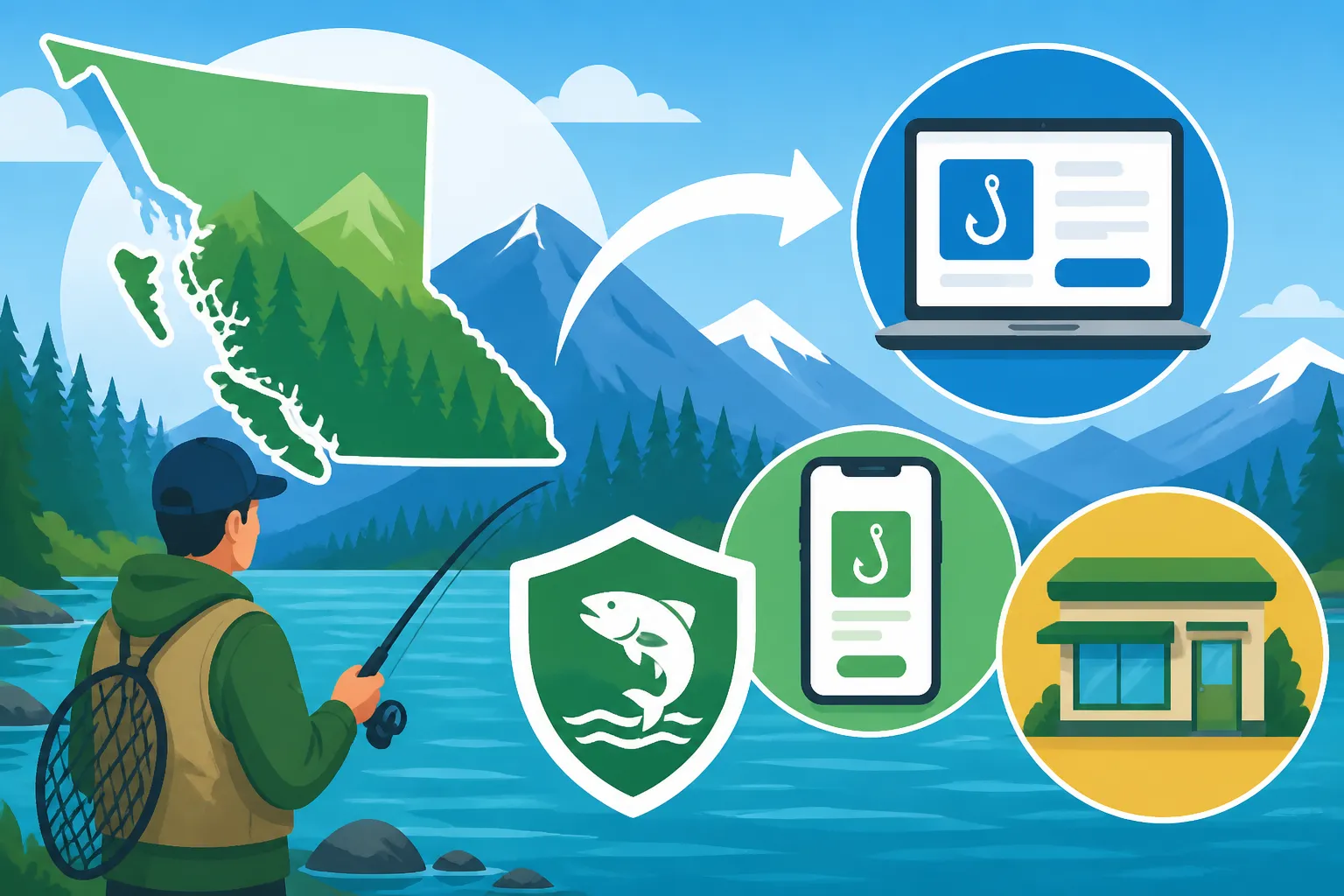
In today's digital age, the most convenient and often fastest way to secure your BC fishing license is through the official online portal. Gone are the days when you absolutely had to trek to a physical store; now, with a few clicks, you can be licensed and ready to hit the water. This method provides instant access and ensures you're getting the official and most up-to-date license.
Navigating the BC Angler & Hunter Licensing System
The main gateway for purchasing your freshwater fishing license in British Columbia is the government’s online BC Angler & Hunter Licensing System, managed by the Ministry of Forests, Lands, Natural Resource Operations and Rural Development (FLNRORD). This platform is your go-to for freshwater licenses and associated stamps. For tidal waters licenses, you'll be directed to the federal government's National Recreational Licensing System, managed by Fisheries and Oceans Canada (DFO). Both systems are designed to be user-friendly, though first-time users might need a moment to get acquainted with the layout and options.
To get started, you’ll typically need to create an account if you don't already have one. This involves providing personal information such as your name, address, date of birth, and possibly a BC Services Card number or other identification. This account acts as your personal fishing profile, where you can view your past licenses, reprint current ones, and renew permits annually. It’s a secure system designed to keep your information safe while facilitating the quick purchase of necessary permits. Take your time during the account creation process to ensure all details are accurate, as this information will be linked to your license and any future purchases.
Step-by-Step Online Purchase Process
Once your account is set up and you’ve logged into the relevant online portal, the purchase process is fairly straightforward. For freshwater, you’ll start by selecting the type of license you need – whether it’s an annual license, a short-term license (like a 1-day or 8-day option for non-residents), or a license for a specific season. After selecting your base license, the system will prompt you to add any necessary conservation stamps or surcharges. For example, if you plan to retain any species of salmon in freshwater, you'll need to purchase a BC Freshwater Salmon Retention Rules stamp. Similarly, if you are targeting steelhead, a steelhead conservation surcharge is mandatory.
The system will clearly display the total cost, including any applicable taxes. You’ll then proceed to a secure payment gateway, where you can typically use a credit card. After successful payment, you’ll receive a confirmation email, and your license will be available for immediate download and printing. It's essential to print this license and carry it with you while fishing. Many anglers also save a digital copy to their phone or a cloud service as a backup. The entire process, from login to printed license, can often be completed in less than 10-15 minutes, making it incredibly convenient for last-minute trips or for those who prefer to handle things from home.
Common Online Purchase Pitfalls
While the online licensing system is generally efficient, there are a few common pitfalls that anglers sometimes encounter. One of the most frequent issues is simply forgetting your login credentials from previous years. It's a good practice to store your username and password securely, or at least keep track of the email address associated with your account for easy password recovery. Another common error is selecting the wrong license type or forgetting to add necessary conservation stamps. Always double-check your selections before finalizing payment, especially the effective date and the species stamps. You wouldn’t want to be caught fishing for salmon without the proper BC Salmon Conservation Stamp Rules in place.
Technical glitches, though rare, can also occur. A slow internet connection, a browser compatibility issue, or a printer malfunction can turn a quick purchase into a frustrating ordeal. If you encounter persistent technical problems, most provincial and federal licensing websites provide a customer service contact number or email for assistance. It’s also wise to complete your purchase well in advance of your trip, rather than rushing it an hour before you head out. This gives you a buffer to resolve any unforeseen issues. And remember, while the convenience of a digital license on your phone is great, having a physical printed copy is often recommended, especially in remote areas where cell service might be spotty.
In-Person License Vendors: The Traditional Route
For those who prefer a more traditional approach, or perhaps lack reliable internet access, purchasing your BC fishing license in person is still a perfectly viable and often beneficial option. This method allows for immediate assistance, answers to questions, and often, a chance to get some local fishing advice at the same time.
Finding an Authorized Vendor Near You
Across British Columbia, there’s a network of authorized vendors where you can purchase your freshwater fishing license. These aren't just government offices; they include a variety of businesses that serve the outdoor community. You'll commonly find them at local tackle shops, larger sporting goods stores like Canadian Tire, gas stations in more rural areas, and some general stores that cater to tourists and outdoor enthusiasts. These locations are often strategically placed near popular fishing destinations, making it easy to pick up a license on your way to the water.
To locate an authorized vendor close to your home or your intended fishing spot, the easiest method is to visit the official BC government fishing licensing website. They usually provide a search tool or a list of vendors by region. This can be incredibly helpful when you're in an unfamiliar area. While a quick search on Amazon might yield some fishing guides or gear, it won’t get you an actual license, so stick to the official channels for that. The advantage of going in person is the face-to-face interaction; you can ask the clerk about specific local regulations or recent hot spots, information that’s invaluable for a successful outing. Many anglers enjoy this social aspect, connecting with local experts who live and breathe fishing.
What to Bring for an In-Person Purchase
When you head to an authorized vendor to purchase your fishing license, you'll need to come prepared with a few essential items to ensure a smooth transaction. First and foremost, you'll need valid identification. For BC residents, this typically means a valid BC Driver's License or a BC Services Card. Non-resident Canadians will need ID from their home province, and non-resident non-Canadians will need their passport or equivalent national identification. This is crucial for verifying your residency status, which, as we discussed earlier, impacts the type and cost of your license.
You'll also need proof of your residency if you're claiming BC resident status but your ID doesn't clearly reflect it (e.g., if you've recently moved). This could include utility bills, a rental agreement, or other official documents. Finally, be ready with your preferred payment method. Most vendors accept cash, debit, and major credit cards. It’s always a good idea to have a couple of options just in case. Having all your documentation ready will speed up the process considerably, getting you out the door and onto the water much faster.
Vendor Specifics and Experience
The experience of purchasing a license in person can vary slightly depending on the type of vendor you visit. Larger chain stores, like Canadian Tire or Wholesale Sports, typically have dedicated service desks or cashiers who handle hunting and fishing licenses. They are efficient but might offer less personalized advice. On the other hand, smaller, independently owned tackle shops, like those you might find in towns along the Fraser River or on Vancouver Island, often provide a much richer experience. The staff at these local hubs are usually avid anglers themselves, brimming with local knowledge.
These smaller shops can offer incredible insights into current fishing conditions, recommend specific lures or baits that are working well, or even suggest lesser-known spots. They might have printed copies of the BC Fishing Regulations Explained readily available, which is invaluable. For a new angler or someone unfamiliar with the area, this local intel can be priceless. It’s a chance to immerse yourself in the local fishing culture and pick up tips you won’t find online. Think of it not just as a transaction, but as a mini-consultation with a local expert. Plus, you can often pick up any last-minute gear, bait, or tackle you might need right then and there.
Understanding Essential Add-On Stamps and Surcharges
Simply buying a base fishing license often isn't enough in British Columbia, especially if you're targeting specific, highly sought-after species. The province implements a system of conservation stamps and surcharges that are mandatory for retaining certain fish. These aren't just extra fees; they are critical tools for funding vital conservation programs and managing fish populations sustainably.
Salmon Conservation Stamp Details
If you have any intention of keeping salmon, whether you're fishing in freshwater rivers or the vast tidal waters of the Pacific, you absolutely must purchase a Salmon Conservation Stamp. This stamp is an additional charge on top of your base license fee, but it's non-negotiable for retention. It applies to all five species of Pacific salmon: Chinook, Coho, Sockeye, Pink, and Chum. The funds generated from these stamps go directly towards salmon enhancement, habitat restoration, and scientific research initiatives. These programs are essential for ensuring healthy and sustainable salmon runs for future generations.
It's a common mistake for anglers, particularly those new to BC, to buy a license but forget the stamp. Imagine spending a glorious day on the water, successfully hooking a beautiful Chinook, only to realize you can't legally keep it because you don't have the necessary stamp. This stamp is easy to add during the online purchase process or when buying in person. For tidal waters, the BC Tidal Waters Salmon Conservation Stamp Cost is typically a set annual fee, regardless of how many salmon you intend to catch, and it’s valid for the entire licensing year. Always ensure you have it if salmon retention is on your agenda.
Other Species-Specific Surcharges
Beyond salmon, certain other prized species in BC's freshwater systems also require dedicated conservation surcharges. The most prominent of these is the Steelhead Conservation Surcharge Stamp. Steelhead are a unique and highly valued anadromous rainbow trout, revered by fly anglers and gear fishers alike for their strength and beauty. Due to their vulnerable populations, strict conservation measures are in place, and a surcharge is mandatory to help fund their protection and recovery efforts. If you plan on targeting steelhead, even if it's purely for catch and release, this stamp is often a requirement for retention.
Similarly, specific regulations or surcharges may apply to other species depending on the region and the current conservation status, though the steelhead and salmon stamps are the most widespread. For instance, specific rules might govern fishing for bull trout or sturgeon in certain areas, sometimes involving catch-and-release only regulations or specific gear restrictions. These surcharges and rules exist because certain fish populations are more sensitive to fishing pressure and require extra management. It's not about making fishing more expensive, but about preserving these incredible fisheries. Always consult the latest BC Fishing Regulations Explained and fishery notices to understand all necessary stamps and rules for your target species and location.
License Costs and Validity Periods
Understanding the financial investment and the duration of your fishing license is essential for planning your trips and budgeting. British Columbia offers a variety of license options to cater to different angling needs, from quick day trips to full-season commitments, with costs varying significantly based on your residency.
Annual vs. Short-Term Licenses
For those who fish frequently throughout the year, an annual fishing license is almost always the most cost-effective choice. A BC resident freshwater annual license, for example, provides coverage from April 1st of one year to March 31st of the next, allowing you to fish for a full year for a single fee. This offers maximum flexibility and value for money, especially if you plan multiple outings.
However, for casual anglers or visitors, short-term licenses are a fantastic option. These are typically available in 1-day, 3-day, 5-day, or 8-day increments, often tailored more for non-residents. For instance, if you're a tourist visiting Vancouver Island for a weekend and only plan to fish for a day or two, a BC non-resident 1-day freshwater fishing license cost or a 3-day tidal license makes far more sense than buying an expensive annual permit. These short-term options allow you to enjoy a brief fishing experience without the commitment of a full year's license. Before purchasing, consider your projected fishing frequency. If you think you might fish more than a handful of days in a year, the annual license might quickly pay for itself compared to stacking multiple short-term licenses.
Residency-Based Pricing Overview
As highlighted earlier, the cost of your BC fishing license is heavily dependent on your residency status. BC residents typically enjoy the lowest prices, reflecting their ongoing contribution to the province. Non-resident Canadians pay a higher rate, and non-resident non-Canadians face the highest fees. This tiered pricing structure ensures that funding for conservation and fisheries management is appropriately balanced across user groups.
Here’s a simplified breakdown of typical costs (note: these are illustrative and subject to change; always check the current official licensing system for exact 2026 prices):
| License Type | BC Resident (Annual) | Non-Resident Canadian (Annual) | Non-Resident Non-Canadian (Annual) |
|---|---|---|---|
| Freshwater Fishing License | ~$30 | ~$55 | ~$80 |
| Tidal Waters Fishing License | ~$23 | ~$23 | ~$100 |
| Freshwater Salmon Stamp | ~$6 | ~$6 | ~$6 |
| Tidal Salmon Stamp | ~$6 | ~$6 | ~$6 |
| Steelhead Surcharge | ~$12 | ~$12 | ~$12 |
Note: For tidal waters, specific duration options (e.g., 1-day, 5-day) are typically available for non-residents at varying prices. Youth licenses (under 16) are generally free for freshwater but may require registration and a salmon stamp for tidal retention.
This table gives you a clear picture of the significant price differences. For comprehensive details on all options, including short-term licenses for non-residents, you'll want to review the information in our article How Much Does a BC Fishing License Cost, which breaks down all the specific figures. Remember to factor in any necessary conservation stamps or surcharges, as these add to the overall cost.
License Expiration and Renewal
Most annual BC fishing licenses, both freshwater and tidal, follow a specific fiscal year for validity. Typically, annual licenses become effective on April 1st and expire on March 31st of the following year. This means that if you purchase an annual license in the middle of a licensing year, say in October, it will still expire on the upcoming March 31st, not a full year from your purchase date. It’s crucial to be aware of this expiration cycle to avoid inadvertently fishing without a valid license.
Renewing your license is generally a straightforward process, especially if you’ve purchased online before. When April 1st rolls around, or even a few weeks prior, you can log back into your BC Angler & Hunter Licensing System or National Recreational Licensing System account. The system will usually prompt you to renew and automatically fill in most of your personal details, making the process quick and easy. For in-person renewals, simply visit an authorized vendor with your identification and payment. Staying on top of your license expiration dates ensures continuous compliance and allows you to focus on the joy of fishing rather than administrative worries.
What to Do After You Buy Your License
Once you’ve successfully purchased your BC fishing license, whether online or in-person, you’re almost ready to cast your line. However, there are a few critical steps and responsibilities that come with being a licensed angler in British Columbia. These steps ensure you’re not only legal but also informed and contributing to the health of our fisheries.
Printing and Carrying Your License
Perhaps the most important post-purchase step is ensuring you have your license physically or digitally with you whenever you are engaged in fishing activities. The law requires you to produce your license upon request by a fishery officer or other enforcement personnel. While a digital copy saved on your smartphone is often accepted, having a physical, printed copy is still highly recommended, especially when fishing in remote areas where cell phone reception might be unreliable. Nothing ruins a fishing trip faster than a potential fine because your phone battery died or you couldn’t pull up your digital license.
Many anglers choose to print their license on waterproof paper or store it in a clear, waterproof wallet or lanyard, easily found at outdoor stores or on Amazon. This protects it from the elements and makes it readily accessible. You can also print multiple copies and keep one in your tackle box, one in your vehicle, and one with your gear, just in case. The key is accessibility and legibility. Ensure all the information on your license is clear and readable, proving your identity and showing all the necessary stamps for the species you intend to catch. For more detailed advice, refer to our article on Printing or Carrying a Digital Fishing License in BC.
Understanding Regulation Synopses
Your fishing license grants you the right to fish, but it doesn't automatically mean you know how to fish legally. That’s where the BC Freshwater Fishing Regulations Synopsis and the Pacific Region Tidal Waters Sport Fishing Guide come in. These comprehensive documents outline all the rules, limits, and special restrictions for fishing in BC. They detail everything from bag and possession limits for specific species, gear restrictions (like single barbless hooks for salmon), and bait prohibitions, to open and closed seasons for particular water bodies.
It is your responsibility as an angler to know and follow these regulations. Ignorance of the law is not an excuse. Both synopses are available for free online on the provincial and federal government websites, and physical copies are often available at authorized license vendors. Before heading out, always consult the most current version, as regulations can change seasonally or even in-season due to conservation concerns. Take the time to read the sections relevant to your chosen fishing location and target species. It might seem like a lot of information, but it’s critical for avoiding penalties and fishing responsibly.
Reporting Your Catch (Tidal Waters Specific)
For anglers holding a tidal waters fishing license, there’s an important additional responsibility: mandatory catch reporting for certain species, primarily salmon. This reporting is a cornerstone of fisheries management in British Columbia, providing Fisheries and Oceans Canada (DFO) with crucial data on recreational harvest levels. This data helps DFO assess fish stocks, adjust regulations, and ensure the long-term sustainability of salmon populations.
The process for reporting your catch is typically done online through the DFO's National Recreational Licensing System. You'll log into your account and submit details about the salmon you retained, including species, date, and location. Some areas might also have specific reporting requirements for other species like halibut or lingcod. While it might feel like an extra step, your compliance directly contributes to the scientific understanding and conservation of these vital fish stocks. It ensures that future generations can also experience the thrill of Salmon Fishing Techniques for BC Rivers and coastal waters. Always check your tidal fishing guide for the latest reporting requirements and make it a habit to report your catch promptly after each trip where retention occurred.
Common Questions and Troubleshooting
Even with all the right information, questions can still pop up, or unexpected situations might arise. Knowing how to handle these common scenarios can prevent undue stress and keep your fishing plans on track.
Lost or Damaged Licenses
It happens to the best of us: you're out on the water, excited for a day of fishing, only to realize your license slipped out of your pocket, got soaked beyond recognition, or simply vanished. Don't panic! If you purchased your license online through the BC Angler & Hunter Licensing System or the National Recreational Licensing System, replacing a lost or damaged license is usually quite simple. You can log back into your account from any computer with internet access and reprint your license free of charge. This is another reason why keeping your login details safe is so important.
If you purchased your license in person and don't have online access, or if you prefer to deal with someone directly, you can visit an authorized vendor. They should be able to look up your information in the system and print a replacement for you, though some vendors might charge a small fee for this service. The key is not to continue fishing without a valid, readable license. If a fishery officer asks to see your license and you can't produce it, you could face consequences, even if you did purchase one. Always ensure you have a legible copy with you to avoid any potential issues.
Understanding Fishery Notices
One of the most dynamic aspects of fishing in British Columbia is the ever-changing nature of regulations, particularly for sensitive fisheries like salmon and steelhead. Government agencies, primarily Fisheries and Oceans Canada (DFO) for tidal waters and the provincial FLNRORD for freshwater, regularly issue "Fishery Notices" to communicate in-season closures, openings, gear changes, or catch limit adjustments. These notices are published to respond to real-time conservation needs, such as unexpectedly low or high fish returns, or environmental factors like water temperature.
As a responsible angler, it is absolutely essential to check these Fishery Notices regularly, especially before heading out on a trip. A water body that was open for salmon retention last week might be closed today due to a new notice. You can usually find these notices prominently displayed on the DFO and provincial government websites. Subscribing to email alerts is also a smart way to stay informed. Relying solely on the printed synopsis, which is updated annually, might leave you unaware of critical in-season changes. Taking five minutes to How to check BC fishery notices before a trip can save you from inadvertently breaking the law and facing a penalty, or from fishing in an area that is no longer sustainable.
Avoiding Penalties for Non-Compliance
Fishing without a valid license, failing to have the correct conservation stamps, exceeding bag limits, or using illegal gear are serious offenses in British Columbia, and the penalties can be steep. Enforcement officers, whether provincial conservation officers or DFO fishery officers, have the authority to issue fines, confiscate fishing gear, and even seize your catch. The minimum fine for fishing without a license can be hundreds of dollars, and repeated offenses or more serious violations can lead to much larger fines, court appearances, and even prohibitions from fishing for a period.
Beyond the legal and financial consequences, non-compliance undermines the collective efforts to conserve BC's precious fisheries. Every regulation, every stamp, and every limit is put in place for a reason – to ensure the sustainability of fish populations for generations to come. The best way to avoid these penalties is to always purchase the correct license and stamps, carry them with you, read and understand the regulations synopsis, and check fishery notices before every trip. When in doubt, err on the side of caution or seek clarification from official sources. Being a responsible angler is not just about following rules; it's about being a steward of the environment and contributing to the health of British Columbia's incredible natural resources. Our guide on Fishing Without a License in BC: Penalties offers more detail on the repercussions of non-compliance.
Disclaimer
The information provided in this guide is for general informational purposes only and is subject to change. While we strive to keep the information up-to-date and accurate, fishing regulations and licensing requirements in British Columbia can change frequently. Always consult the official websites of the BC Ministry of Forests, Lands, Natural Resource Operations and Rural Development (FLNRORD) for freshwater regulations and Fisheries and Oceans Canada (DFO) for tidal water regulations before engaging in any fishing activities. It is the angler's responsibility to know and adhere to all current rules and regulations.