What safety equipment BC charters are required to carry
It can feel a little daunting, can't it, stepping onto a boat with someone else at the helm, especially when you're heading out into the vast, unpredictable waters of British Columbia? You're trusting your safety to their experience and, crucially, to the gear they have on board. This guide is all about giving you peace of mind, outlining exactly what safety equipment BC fishing charters are legally required to carry and what distinguishes a truly excellent, safety-conscious operation from the bare minimum.
The Foundation of Safety: Transport Canada Regulations
When you book a fishing charter in British Columbia, you're not just stepping onto a recreational boat; you're becoming a passenger on a commercial vessel. This distinction is incredibly important because it means a whole host of stringent safety regulations come into play. These aren't just suggestions; they're legal requirements enforced by Transport Canada, the federal body responsible for marine safety across the country.
Why Regulations Matter on the Water
Imagine heading out onto the Strait of Georgia or a remote northern BC inlet, miles from shore, and suddenly the weather turns, or an unforeseen issue arises. In moments like these, you want absolute confidence that your captain and vessel are prepared for anything. Transport Canada's regulations exist precisely for these scenarios. They ensure that every licensed charter operator has thought through potential hazards, equipped their vessel appropriately, and trained their crew to respond effectively.
This regulatory framework gives anglers a vital layer of protection. Without it, the marine environment, with its strong currents, shifting weather patterns, and often isolated locations, could be far more hazardous. Knowing these rules are in place allows you to relax a little more, focusing on the thrill of the catch rather than worrying about the worst-case scenario. It’s about building a foundation of trust before you even cast your first line.
Key Regulatory Frameworks for Passenger Vessels
For most BC fishing charters, especially those carrying a small number of passengers, they fall under specific categories within the Canada Shipping Act, 2001, and its associated Small Vessel Regulations. These laws dictate everything from vessel construction standards to the types and quantities of safety equipment that must be on board. The specific requirements can vary slightly depending on the size of the vessel, the number of passengers it's licensed to carry, and how far offshore it operates.
Generally, these charters are considered "passenger vessels" or "small passenger vessels," and they are subject to regular inspections by Transport Canada officials. These inspections aren't just a formality; they involve a thorough check of the vessel's structure, machinery, and all safety equipment. Think of it like a rigorous annual vehicle inspection, but for a boat where lives are literally at stake. This oversight is what truly sets professional charters apart from unregulated private boats, ensuring a consistent baseline of safety across the industry. Understanding these regulations is also key to comprehending BC Boating Laws for Anglers in a broader sense, as they cover both recreational and commercial aspects.
Essential Safety Equipment You Should See on Board
When you step aboard a reputable BC fishing charter, you’ll notice that safety isn't an afterthought. The boat will be equipped with a range of items designed to keep everyone safe, from the moment you leave the dock until you return with your catch. These are the non-negotiables, the absolute minimum standards set by Transport Canada.
Personal Flotation Devices PFDs
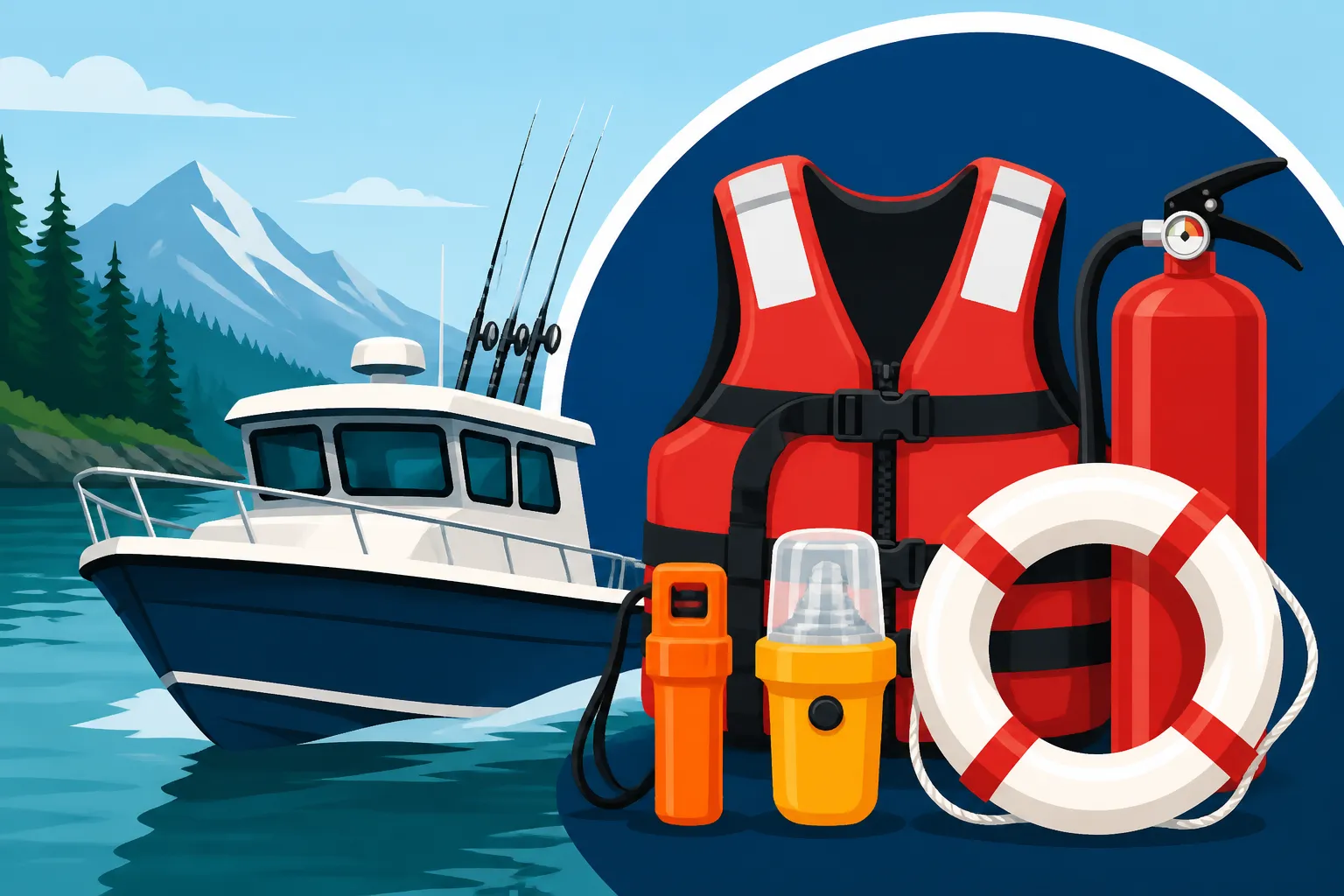
Perhaps the most critical piece of safety equipment, and often the first thing you'll be shown, are Personal Flotation Devices (PFDs) or life jackets. Transport Canada regulations are very clear: there must be enough approved PFDs on board for every person, including crew, and they must be readily accessible. This means not stashed away under a pile of gear in a locked compartment, but visible and easy to grab in an emergency.
You'll find PFDs in various sizes, from adult-sized vests to smaller ones specifically designed for children and even infants. A good charter will ensure that there are appropriate sizes for all passengers. While "life jacket" is often used interchangeably with "PFD," there's a slight technical difference: life jackets typically offer more buoyancy and are designed to turn an unconscious person face up in the water, whereas PFDs are more comfortable for continuous wear and are intended for conscious individuals in calm waters. On a fishing charter, you'll generally find PFDs as they are more practical for active wear, but they must still meet stringent Canadian safety standards. For a deeper dive into what you need to know, check out Life Jacket Requirements for BC Boaters.
Visual and Sound Signalling Devices
In the vastness of BC's coastal waters, communication can be challenging, especially in an emergency. That's why charters are required to carry various signalling devices. These include visual signals like flares (both aerial and hand-held), which are crucial for attracting attention from a distance, particularly at night or in low visibility. It's important to know that flares have expiry dates, so a well-maintained charter will have current, unexpired flares on board.
For sound signals, you should expect to see an air horn or a whistle. These are used for short-range communication, warning other vessels, or signalling distress. The combination of both visual and sound signals significantly increases the chances of being located if an emergency arises, ensuring that your charter can call for help effectively, no matter the conditions.
Navigation and Communication Gear
Modern fishing charters rely heavily on technology to navigate safely and stay connected. Every charter boat will have reliable navigation equipment, which typically includes a GPS system. This allows the captain to plot courses, track their position, and navigate accurately even in fog or darkness. Many vessels will also have depth sounders or fish finders, which, while primarily for finding fish, also serve a crucial safety role by indicating water depth and identifying underwater hazards.
For communication, a VHF (Very High Frequency) marine radio is standard. This radio is the primary means of communication with other vessels, marine emergency services (like the Canadian Coast Guard), and shore stations. It's a lifesaver in an emergency and vital for receiving weather updates and marine safety broadcasts. While many captains also carry cell phones, they are not considered a primary form of marine communication due to their limited range and potential for signal loss in remote areas. Some charters operating in truly remote regions might even carry satellite phones or other satellite communication devices for added redundancy, a testament to their commitment to safety.
Fire Fighting and Emergency Preparedness
Fires on board are rare but can be incredibly dangerous. Therefore, all BC fishing charters must carry fire extinguishers. These aren't just any extinguishers; they must be marine-approved, of the correct type (usually ABC, suitable for various kinds of fires), properly charged, and readily accessible. The captain should be able to tell you where they are located and how to use them.
Beyond fire, other emergencies require preparedness. Charters must have equipment to deal with water ingress, such as bailers or manual bilge pumps for smaller vessels, or automatic bilge pump systems for larger ones. A well-stocked first aid kit is also mandatory, and it should be regularly inspected and replenished. Furthermore, a responsible charter will have a clear emergency procedure posted or communicated, covering scenarios like man overboard, fire, or severe weather. This includes knowing where essential safety equipment is stored and understanding the captain's instructions in an emergency.
Beyond the Basics: What Great Charters Offer
While meeting Transport Canada's minimum requirements is essential, many top-tier BC fishing charters go above and beyond, investing in additional safety measures and professional training to offer an even greater level of security and peace of mind. These are the operators who truly prioritize your well-being.
Enhanced Safety Measures and Professionalism
Exceeding minimum safety standards is a hallmark of a truly professional charter operation. These charters might have additional, more sophisticated navigation electronics, such as radar, which is invaluable for detecting other vessels or hazards in dense fog or at night. They might also carry an EPIRB (Emergency Position Indicating Radio Beacon) or a PLB (Personal Locator Beacon), which are devices that, when activated, send a distress signal and location directly to satellite search and rescue services. These devices offer an unparalleled level of emergency communication, particularly in areas beyond VHF range.
You might also find higher-grade first aid kits, specialized marine medical supplies, or even a defibrillator on larger vessels. Some charters invest in additional safety equipment like immersion suits for cold water environments, or even a full life raft for extreme emergencies, far exceeding the basic PFD requirement. These extra layers of protection demonstrate a commitment to safety that goes beyond mere compliance.
The Human Element: Your Captain and Crew
No amount of equipment can replace the skill and judgment of an experienced captain and crew. On a great charter, you're not just paying for the boat and the gear; you're paying for their expertise. A professional captain will not only hold all the necessary Transport Canada licenses but will also possess extensive local knowledge of the waters, weather patterns, and potential hazards in the fishing grounds. For more on what's required, you might want to look into Licensing Requirements for BC Charter Captains.
Furthermore, the crew on these charters often undergoes additional training beyond the basic requirements. This could include advanced marine first aid, search and rescue techniques, or specialized emergency response courses. They're not just there to help you land fish; they're trained to anticipate and react to any situation that might arise. Before setting out, a good captain will always provide a comprehensive safety briefing, ensuring everyone on board understands the location of PFDs, emergency exits, and what to do in various scenarios. This proactive approach to safety is a huge differentiator.
What to Look for When Booking Your Charter
Choosing the right fishing charter involves more than just looking at the size of the boat or the price of the trip. Your safety is paramount, and there are specific things you can look for and questions you can ask to ensure you're booking with a reputable and safety-conscious operator.
Asking the Right Questions
Don't hesitate to be proactive and ask about safety measures before you book. A professional charter operator will welcome your questions and be happy to explain their safety protocols. You might ask:
- "What kind of safety equipment do you carry on board?"
- "Are your PFDs suitable for children, if I'm bringing any?"
- "What emergency procedures do you have in place?"
- "How often is your vessel inspected by Transport Canada?"
- "What are the captain's qualifications and experience in these waters?"
Looking at reviews from previous customers can also provide insights into an operator's professionalism and attention to safety. Online platforms like FishingBooker often include sections where previous clients can comment on their experience, sometimes highlighting aspects of safety and professionalism. When you're trying to figure out How to Choose a BC Fishing Charter, these details can be incredibly useful.
Pre-Trip Safety Briefings
Once you're on board, a crucial part of any trip is the pre-trip safety briefing. This isn't just a formality; it's your captain's opportunity to ensure every passenger understands the critical safety information. During this briefing, expect the captain or crew to:
- Point out the location of all PFDs and demonstrate how to wear them correctly.
- Show you where fire extinguishers are and explain their use.
- Indicate emergency exits and gathering points.
- Explain basic procedures for "man overboard" situations.
- Provide instructions on using the marine head (toilet) and any specific rules for the vessel.
- Give a weather update and explain how it might affect the trip.
A thorough safety briefing is a clear sign that your charter operator takes their responsibilities seriously. It empowers you with essential knowledge and reinforces the idea that safety is a shared priority. This aligns perfectly with what you should generally What to Expect on a BC Fishing Charter.
How FishingBooker Can Help
When you're trying to find a reputable charter, platforms like FishingBooker can be a valuable resource. These sites often provide detailed listings that include information about the vessel, the captain's credentials, and sometimes even specific safety features available. While not every piece of equipment might be listed, you can often filter for licensed operators or read reviews that speak to the professionalism and safety standards of a given charter.
Furthermore, these platforms provide a direct line of communication with charter operators, allowing you to ask those important safety questions before you commit to a booking. Reputable operators, who often list their services on FishingBooker, understand that safety is a top concern for their clients and will be transparent about their compliance and commitment to best practices. They want you to feel secure and confident when you're out on the water, whether you're targeting a trophy salmon or a massive sturgeon.
Essential vs. Enhanced Safety Equipment Checklist
To help you visualize the difference between the minimum requirements and what a truly outstanding charter might offer, here’s a quick overview:
| Category | Transport Canada Minimum Requirements | Enhanced Safety (Often Found on Top Charters) |
|---|---|---|
| Personal Flotation | Approved PFDs for all on board, readily accessible, correct sizes. | Additional spare PFDs, child/infant specific PFDs, immersion suits. |
| Signalling | Visual flares (aerial & hand-held), sound signal (horn/whistle). | EPIRB/PLB (Emergency Beacon), signal mirror, strobe lights. |
| Navigation & Communication | GPS, depth sounder, VHF marine radio. | Radar, advanced chartplotter, satellite phone, redundant GPS. |
| Fire Safety | Marine-approved fire extinguishers (correct type & quantity). | More fire extinguishers, automatic engine room fire suppression. |
| Emergency Response | Basic first aid kit, bailer/bilge pump, emergency procedures. | Advanced marine first aid kit, defibrillator, life raft. |
| Crew Training | Basic marine safety certification for captain. | Advanced first aid, search & rescue, specialized medical training. |
Disclaimer
This article is for general informational purposes only and does not constitute professional advice. Laws, prices and regulations vary by location and change over time. Consult a qualified professional for guidance on your specific situation.