Best charters for halibut around structure
It can be incredibly frustrating when you're dreaming of landing a monster halibut in British Columbia, only to find yourself on a charter that seems to just drift aimlessly in open water, hoping for a lucky bite. Targeting halibut specifically around deep-water structures requires a unique blend of knowledge, specialized gear, and local expertise. This guide will walk you through exactly what to look for in a top-tier BC fishing charter that excels at putting you on those structure-holding halibut.
The Allure and Challenge of Halibut Structure Fishing in BC
There's something uniquely rewarding about outsmarting a halibut, especially when you've pinpointed its hideout on a complex piece of underwater structure. These magnificent flatfish aren't just swimming around aimlessly; they're often tucked into specific areas, waiting to ambush their prey. Understanding this behavior is the first step, but finding a charter that truly masters it is the key.
Why Structure is Key for Halibut
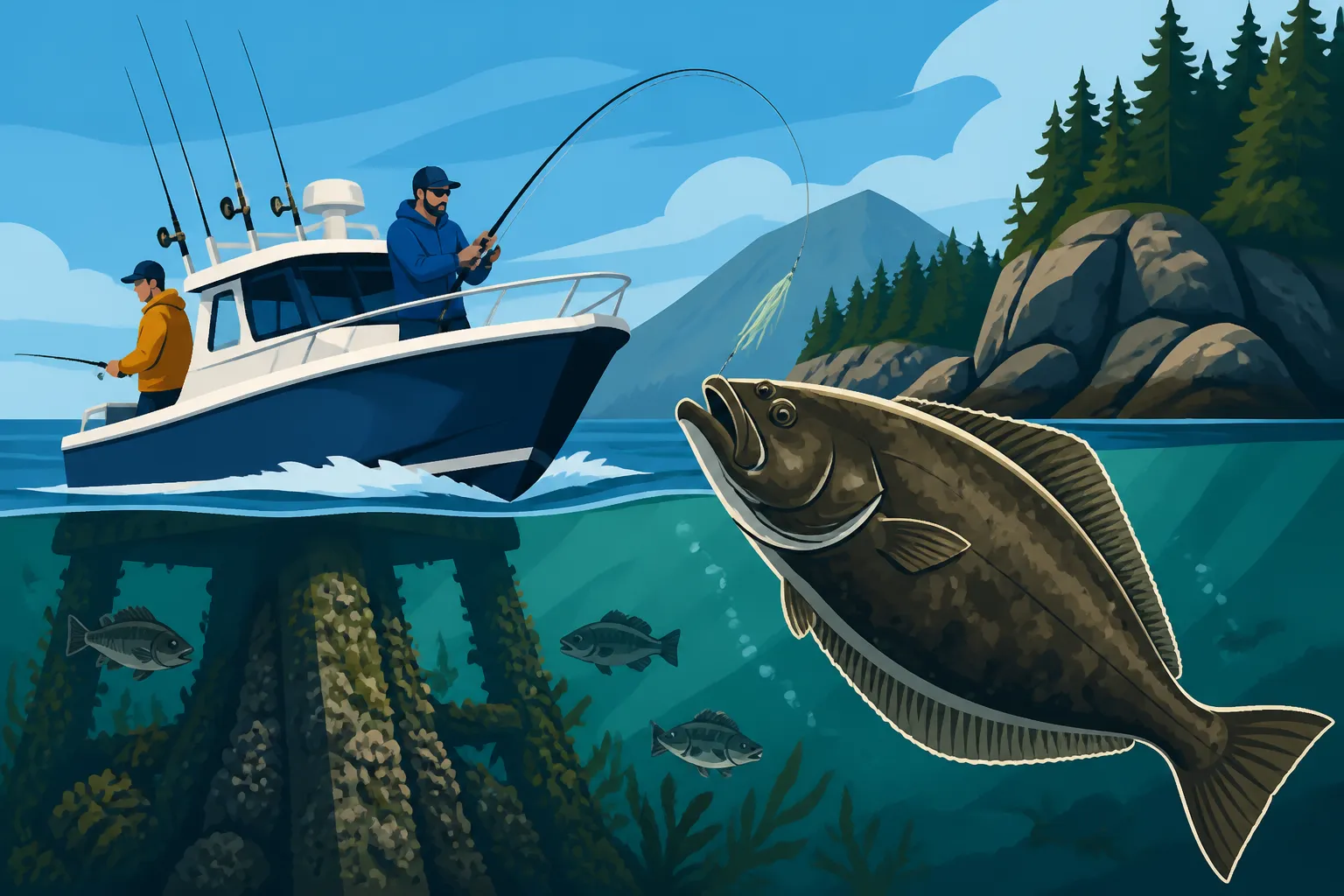
Halibut are opportunistic predators, and like many apex fish, they thrive where food is abundant and they have a strategic advantage. That's where underwater structure comes in. Think of it like this: if you were a bear, would you hunt in a wide-open field, or near a berry patch that's also a common deer trail? Halibut are no different. They gravitate towards areas like deep reefs, rockpiles, wrecks, steep drop-offs, and towering underwater pinnacles because these features create currents and eddies that concentrate baitfish like herring, cod, and various bottom-dwelling invertebrates. These structures also provide cover, allowing halibut to lie in wait, perfectly camouflaged against the seafloor, ready to pounce on an unsuspecting meal.
The complexity of these underwater landscapes provides myriad ambush points. A rocky ledge might have a dozen halibut tucked into depressions or behind boulders, each one holding its prime feeding position. A sunken boat, long since claimed by the sea, becomes a multi-level apartment complex for everything from rockfish to lingcod, and, of course, the ever-present halibut. This isn't just theory; experienced captains know these spots like the back of their hand, understanding how a specific tide or current will activate a particular section of a reef, turning it into a halibut feeding frenzy. It’s this intimate knowledge of both the fish and its habitat that separates the good charters from the truly exceptional ones.
Overcoming the Deepwater and Current Hurdles
Fishing for halibut around structure in British Columbia isn't for the faint of heart, or for the unprepared. These are often deep-water environments, sometimes hundreds of feet down, where strong tidal currents can be relentless. This presents a formidable set of challenges that only the most experienced and well-equipped charters can consistently overcome. It's frustrating to arrive at a spot, drop your line, and immediately get swept away by the current, unable to keep your bait anywhere near the bottom, let alone on the structure you're targeting.
The equipment demands are significant. You're not just casting a light lure; you're often dropping heavy weights—sometimes pounds of lead—to get your bait down and keep it there. This requires heavy-duty rods that can handle the stress, robust reels with massive line capacities, and super strong braided line that cuts through the water with minimal drag. Moreover, the vessel itself needs to be up to the task. You'll want a boat with powerful engines and a reliable GPS-enabled anchoring system, often called "spot lock," that can hold the boat precisely over a small rockpile or the edge of a trench, even in strong winds or currents. Without this capability, your captain is left to constantly correct the drift, often pulling you off the prime spot before you've had a chance to present your bait effectively. This meticulous boat positioning is absolutely critical to success when targeting structure-holding halibut.
What to Look for in a Top-Tier Halibut Structure Charter
Choosing the right charter for halibut fishing around structure in BC isn't just about finding someone with a boat and some rods. It's about finding a specialist, someone who lives and breathes this specific type of fishing. You're investing your time and money into this experience, so you want to ensure you're on a vessel with a captain and crew who understand the nuances of deep-water, structure-oriented halibut.
Expertise in Reading the Depths and Currents
This is perhaps the most crucial factor. A truly great halibut captain isn't just driving a boat; they are interpreting a complex interplay of environmental factors. They need an almost intuitive understanding of local currents, how the tides will affect the water flow over different structures, and how these conditions influence halibut behavior. Many experienced anglers will tell you that the difference between a great day and a slow one often comes down to the captain's ability to "read the water." This isn't something learned overnight; it comes from years of experience on specific fishing grounds.
Beyond intuition, modern technology plays a huge role. Look for a charter that boasts top-of-the-line sonar and fish finder technology. We're talking about high-definition, side-scanning, and 3D mapping capabilities that allow the captain to not just see the bottom, but to interpret its contours, identify specific rock formations, wrecks, and even individual fish holding tight to that structure. They should be able to explain how they use these tools to precisely position the boat and instruct you on where to drop your lines. Without this level of technological sophistication and the expertise to use it effectively, you're essentially fishing blind in a vast ocean. A charter's ability to adapt to varying weather and tide conditions, always knowing how to adjust their strategy to stay on the fish, is a hallmark of true expertise.
Specialized Gear and Vessel Capabilities
As we touched on earlier, gear matters immensely when you're battling powerful halibut in deep, current-swept waters. A charter specializing in structure fishing should have an arsenal of heavy-duty rods and reels designed for this specific challenge. We're talking about rods with a strong backbone to lift heavy weights and absorb the powerful head shakes of a big halibut, paired with reels that have incredible drag systems and the capacity for hundreds of yards of braided line. Some charters might even offer electric reels, which, while not everyone's cup of tea for the "sport" of it, can be a godsend when you're reeling up a 100-pound fish from 400 feet down, especially for those new to deep-sea fishing or who might have physical limitations.
The vessel itself is just as important as the tackle. A stable, spacious boat is essential for comfort and safety, especially when you're battling a big fish and potentially sharing the deck with other anglers. Ensure the boat has powerful and reliable engines to cover ground efficiently and, critically, a robust anchoring system or an advanced GPS trolling motor with "spot lock" technology. This allows the captain to precisely hold the boat directly over a piece of structure, ensuring everyone's lines stay in the strike zone. Don't forget to inquire about safety equipment; deep-water offshore trips require stringent safety protocols and gear, from life rafts to emergency communication devices. What to Expect on a BC Fishing Charter can give you more insights into typical charter provisions.
Proven Track Record and References
Anyone can claim to be the "best," but a charter specializing in structure halibut fishing needs to back it up. Before booking, don't hesitate to ask for references or, even better, pore over online reviews. Platforms like FishingBooker are excellent for this, as they often have reviews from past clients, sometimes even detailing their experiences with specific techniques or target species. Look for consistent mentions of successful halibut trips, particularly those that highlight the captain's ability to find fish on specific "bumps" or "ledges" rather than just open drifts.
A reputable charter should be proud to share their successes. Look for photos of impressive catches, not just from a single banner year, but consistently over time. Engage with their social media if they have it; often, you can see recent catches and get a feel for their guiding style. Remember, you're looking for evidence of expertise in structure fishing specifically. A charter might be great at trolling for salmon, but that doesn't automatically qualify them for deep-water halibut on the reefs. This due diligence ensures you're putting your trust, and your fishing dreams, into capable hands. How to Choose a BC Fishing Charter has further advice on vetting potential captains.
Premier BC Regions for Halibut Structure Specialists
British Columbia's vast coastline offers incredible halibut fishing, but certain regions and their local charters truly stand out when it comes to targeting these bottom dwellers around specific underwater structures. Each area presents its own unique landscape and fishing opportunities.
West Coast Vancouver Island: Tofino and Ucluelet
The rugged west coast of Vancouver Island, particularly around the communities of Tofino and Ucluelet, is world-renowned for its halibut fishery. Here, the continental shelf drops away dramatically, creating a labyrinth of offshore banks, deepwater canyons, and countless rocky pinnacles and reefs that act as natural halibut magnets. The constant surge of the Pacific Ocean brings nutrient-rich waters and an abundance of baitfish, making these areas incredibly productive.
Charters operating out of Tofino Halibut Fishing and Ucluelet Halibut Fishing have honed their skills over generations, navigating these challenging but rewarding waters. They specialize in running offshore to specific banks like the "Big Bank" or smaller, unnamed reefs that are absolute halibut hotspots. The captains here are intimately familiar with how the strong ocean currents interact with these underwater mountains, knowing precisely where halibut will congregate depending on the tide cycle. They'll often target these structures using heavy jigs, large baits like whole herring or octopus, or deep-water mooching techniques to present their offerings right on the bottom. Success in these waters often means not just catching halibut, but frequently encountering fish well over 50 pounds, with some true giants tipping the scales at over 100 pounds.
Northern BC: Prince Rupert and Haida Gwaii
Venturing further north, the waters around Prince Rupert and the remote archipelago of Haida Gwaii offer an even wilder, less-pressured halibut experience. These pristine waters are characterized by incredibly deep fjords, vast offshore banks, and complex underwater topography that holds colossal halibut. The sheer remoteness means that many of these structures see far less fishing pressure than areas closer to major population centers.
Charters in this region often operate as part of remote fishing lodges, offering multi-day packages that allow ample time to explore distant, productive grounds. The captains here are masters of navigating these challenging northern seas, often relying on detailed charts and deep local knowledge to find untouched reefs and drop-offs. Fishing here often means encountering truly enormous halibut, sometimes in much shallower water than you'd expect further south, due to the lack of pressure. The logistics for these trips can be more involved, often requiring float plane transfers or longer boat rides, but the reward of hooking into a barn-door halibut in such an unspoiled wilderness is an experience many anglers cherish.
Georgia Strait and Discovery Islands
While often celebrated for its salmon fishing, the waters of Georgia Strait and the Discovery Islands, located between Vancouver Island and the mainland, also offer fantastic, albeit different, opportunities for structure-oriented halibut fishing. These waters are characterized by strong tidal flows, deep trenches, and numerous rocky shoals and reefs, especially around the major passes and islands. While perhaps not known for the sheer numbers of monster halibut found on the West Coast, this region regularly produces quality fish, often in closer proximity to more accessible launch points.
Charters here often focus on specific tidal current-swept ledges and rockpiles that concentrate baitfish. The captains have a keen understanding of how the ferocious currents, particularly through channels like Seymour Narrows, influence feeding behavior. Fishing techniques can vary, from heavy jigging to using large baited rigs on the bottom, with a constant eye on the sonar to identify promising structures. Anglers can often find themselves hooking into halibut alongside a variety of other bottom fish like lingcod and various rockfish species, making for a diverse catch. For those looking for a productive halibut experience without the extensive travel to the outer coast, or wanting to combine it with other fishing opportunities, this region offers excellent choices.
Planning and Booking Your Ideal Structure Halibut Trip
Once you've zeroed in on a region and started to compile a list of potential charters, the next step is to get down to the nitty-gritty of planning and booking. This involves more than just picking a date; it means asking informed questions, understanding the best timing, and leveraging resources to make sure your trip is exactly what you envision.
Asking the Right Questions Before You Book
Don't be shy about asking specific questions to ensure the charter aligns with your goals of targeting halibut around structure. A good captain will appreciate your preparedness. Here are some critical inquiries:
- "What is your experience specifically targeting halibut on deep-water structures like reefs or wrecks?" This is paramount. You want to hear about their specialized knowledge, not just general halibut fishing.
- "What kind of sonar and GPS anchoring equipment do you use, and how do you leverage it for structure fishing?" Their answer should reflect advanced technology and a deep understanding of its use.
- "What gear do you provide for deepwater halibut? Are electric reels available if needed?" Confirm they have the heavy-duty rods, reels, and tackle required.
- "What types of bait and lures do you typically use for structure halibut?" This can give you insight into their approach.
- "How do you handle strong currents or adverse weather when targeting specific spots?" Listen for their safety protocols and adaptive strategies.
- "What are your catch-and-release practices for large halibut, and what's your policy on keeping fish?" Many charters have strict conservation practices, especially for trophy fish.
- "What are your typical deepwater halibut fishing depths and locations?" This helps set realistic expectations.
These questions help you gauge their expertise and ensure they're truly equipped for the specialized fishing you're seeking. For more general inquiries about what charters provide, check out What to Expect on a BC Fishing Charter.
Maximizing Your Chances: Best Seasons and Times
Timing is everything in fishing, and halibut are no exception. While halibut can be caught year-round in BC waters, certain seasons and tide cycles offer significantly better opportunities for targeting them on structure. Generally, the warmer months from late spring through early fall (May to September) are considered prime time. During these months, halibut are often more active and feeding aggressively, particularly as baitfish schools become more abundant.
Within these seasons, pay close attention to the tides. Halibut often feed most actively during strong tidal flows, especially around slack tide transitions. The moving water carries food past their ambush points on structure, and the brief periods of slack tide can make it easier to keep your bait directly on the bottom. Experienced captains will time their trips to hit specific structures during these productive windows. BC Fishing Seasons by Month and Best Time of Year to Fish in BC offer broader insights into seasonal fishing patterns across BC. Discuss these specifics with your chosen charter captain when booking.
Utilizing Online Platforms for Selection
Online booking platforms have revolutionized the way anglers find and book charters. Websites like FishingBooker are incredibly useful resources for finding specialized halibut charters in BC. They allow you to filter searches by location, target species, and even specific fishing techniques. You can browse detailed profiles, view photos of their boats, and most importantly, read reviews from other anglers.
When using such platforms, pay close attention to reviews that specifically mention halibut fishing around structure, deep drops, or particular reefs. Look for comments about the captain's knowledge of the fishing grounds, the quality of their gear, and their ability to put clients on fish even in challenging conditions. These platforms also make it easy to compare offerings between multiple charters, helping you find one that not only meets your criteria for expertise but also fits your budget and schedule. While direct pricing won't be given here, you can certainly get a sense of cost ranges and what's included in different packages.
Here's a quick comparison of what to prioritize when looking for a structure-oriented halibut charter:
| Feature | High Priority for Structure Halibut Charter | Lower Priority for Structure Halibut Charter |
|---|---|---|
| Captain's Expertise | Deep knowledge of local underwater topography, currents, tides, and halibut feeding patterns on structure. | General fishing experience, limited specific structure knowledge. |
| Boat & Gear | Stable, large vessel with advanced sonar/GPS spot lock, heavy-duty tackle, electric reels (optional). | Smaller boat, basic sonar, manual anchoring, light to medium tackle. |
| Location Focus | Targets specific deep reefs, wrecks, pinnacles, and drop-offs known for halibut. | Primarily open-water drifting or shallow-water fishing. |
| Reviews & References | Consistent positive feedback about successful halibut trips, emphasizing structure fishing and captain's skill. | Mixed reviews, or reviews primarily focused on other species/general fishing. |
| Communication | Open to discussing specific techniques, safety, and trip planning in detail. | Vague answers, unwilling to discuss specifics. |
Preparing for a Deepwater Halibut Adventure
So you've booked your charter! Now, it's time to prepare yourself for the trip. Deepwater halibut fishing can be physically demanding and often takes you far offshore, so a little foresight goes a long way to ensure a comfortable and productive day.
Physical and Mental Readiness
Battling a large halibut from deep water is an intense workout. If you're planning to hand-crank, be ready for some serious reeling. Even with a large conventional reel, it can take considerable effort to bring up heavy weights and a powerful fish from hundreds of feet down. Electric reels can alleviate some of this, but it’s still important to be prepared for an active day. Make sure you're well-rested.
Offshore trips, especially on the exposed West Coast, can also mean encountering choppy seas. If you're prone to seasickness, take preventative measures like medication before you board the boat, not once you start feeling unwell. Many experienced anglers will tell you that focusing on the horizon and staying on deck in the fresh air helps. Mentally, be ready for variable conditions and understand that fishing, by its nature, can have its ups and downs. Maintain a positive attitude, and enjoy the beauty of BC's coastline, even if the fish aren't biting constantly.
Essential Angler Gear and Supplies
While a good charter will provide all the necessary fishing gear, there are several personal items you should always bring to enhance your comfort and readiness. Think layered clothing; BC weather can change dramatically throughout the day, so waterproof outerwear, a warm mid-layer, and quick-drying base layers are essential.
Don't forget sun protection! Even on cloudy days, UV rays reflect off the water, so a wide-brimmed hat, polarized sunglasses, and high-SPF sunscreen are crucial. Pack plenty of water to stay hydrated, and bring snacks or a packed lunch to keep your energy up. If the charter allows you to keep your catch, consider bringing a cooler to transport your fish home; otherwise, the crew will likely handle the cleaning and bagging. Always double-check with your captain on what they recommend bringing and what's provided. You can find more comprehensive packing advice in resources like What to Bring on a BC Fishing Charter. And of course, ensure you have your British Columbia Fishing License Guide for 2026 in order!
Disclaimer
This article is for general informational purposes only and does not constitute professional advice. Laws, prices and regulations vary by location and change over time. Consult a qualified professional for guidance on your specific situation.