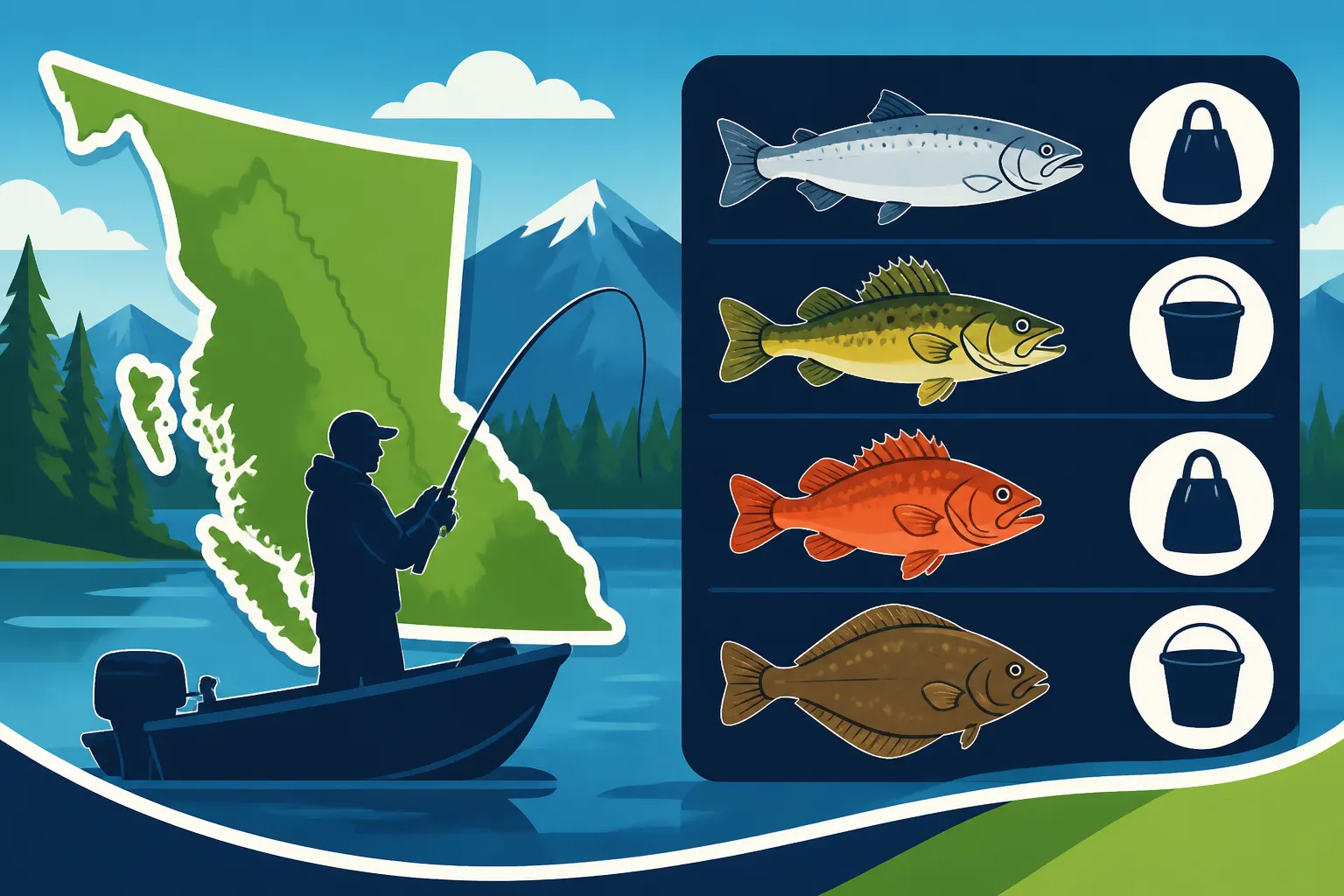
BC Bag and Possession Limits by Species
It’s a common story: you’ve got your gear ready, the boat fueled up, or your waders on, and then a wave of anxiety hits. Are you absolutely sure about the bag limits for today? British Columbia’s fishing regulations, with their species-specific, area-specific, and often time-sensitive rules, can feel like navigating a legal minefield. This comprehensive guide is here to untangle the complexities of BC bag and possession limits by species, empowering you to fish with confidence and peace of mind.
Understanding Bag and Possession Limits: The Essential Foundation
Before we dive into the specifics of each species, it's absolutely crucial to grasp the fundamental concepts of "bag limit" versus "possession limit." These aren't just technical terms; they dictate how much fish you can legally keep at any given moment, and misunderstanding them can lead to serious consequences. It's often where new anglers, and even some seasoned ones, get tripped up.
What's the Difference Between "Bag Limit" and "Possession Limit"?
Think of these two limits as two different but related protective shields for our fish stocks. The daily bag limit refers to the maximum number of a specific species that an angler can catch and keep in a single calendar day. This limit resets at midnight. So, if the daily bag limit for Rainbow Trout is two, you can only keep two of them from midnight to midnight. Once you’ve kept your two, even if you continue fishing, any additional Rainbow Trout you catch must be immediately and carefully released. This helps manage the immediate pressure on fish populations.
The possession limit, on the other hand, refers to the total number of a species you are allowed to have in your control at any time. This isn't just what's in your live well or cooler on the boat; it includes fish in your vehicle, at your campsite, in your hotel room, or even in your home freezer. The possession limit is often, but not always, double the daily bag limit, or sometimes even more. For example, if the daily bag limit is two fish, the possession limit might be four. This means that over a multi-day fishing trip, you can accumulate up to the possession limit, but you can never exceed the daily bag limit on any single day. This broader limit prevents stockpiling and ensures a more equitable distribution of the catch among all anglers over time.
Consider a hypothetical scenario: You’re on a weekend fishing trip to Kootenay Lake, and the daily bag limit for Gerrard Rainbow Trout is two, with a possession limit of four. On Saturday, you have an incredible day and keep two beautiful Gerrard Rainbows. You pack them on ice in your cooler. When you head out on Sunday, you can again keep up to two more Rainbow Trout. If you do, by the end of Sunday, you would have four fish in your possession (two from Saturday, two from Sunday), which is within your possession limit. However, if on Sunday you kept three fish, you would have exceeded your daily bag limit for Sunday, even if your total possession was still under four. It's a subtle but critical distinction.
Why These Limits Exist and How They're Determined
These limits aren't arbitrary rules designed to make your life difficult; they are the cornerstone of sustainable fisheries management in British Columbia. The primary reason for their existence is conservation. Fish populations are finite resources, and without careful management, they can be easily depleted by angling pressure, habitat loss, and environmental changes. Bag and possession limits are crucial tools to ensure that future generations can also enjoy the incredible fishing opportunities BC offers. They prevent overfishing, protect spawning stocks, and allow populations to rebound.
The determination of these limits is a complex scientific and socio-economic process involving multiple agencies. For tidal (saltwater) fisheries in BC, the federal Fisheries and Oceans Canada (DFO) is the primary authority. They conduct extensive stock assessments, monitoring the health, abundance, and migration patterns of marine species, particularly salmon, halibut, and groundfish. For freshwater fisheries, the BC Ministry of Forests (and their predecessors) is responsible for setting and enforcing regulations. They work with regional fisheries biologists to assess freshwater fish stocks, manage stocking programs, and oversee habitat protection.
Numerous factors influence these limits. Biological data, such as stock assessments, determine the current health and size of a fish population. For instance, if a specific salmon run is projected to be low, DFO will implement more restrictive limits or even complete closures to ensure enough fish make it to the spawning grounds. Spawning cycles are also critical; limits often become stricter or include non-retention periods during sensitive spawning windows to protect breeding fish. Environmental conditions, like drought or excessive heat, can also impact fish health and lead to temporary closures or reduced limits. Furthermore, First Nations' rights and access to marine and freshwater resources are a paramount consideration, and their input is integral to fisheries management. Finally, input from user groups, including recreational anglers, commercial fishermen, and conservation organizations, is often considered through public consultation processes. It's a delicate balancing act to sustain fish stocks while providing reasonable opportunities for anglers.
The Importance of Checking Fishery Notices
Here's where it gets truly critical for anglers in BC: regulations are dynamic. This isn't a static rulebook you read once a year. Especially for popular species like salmon and steelhead, limits and openings can change in-season, sometimes weekly or even daily, due to unpredictable run sizes, environmental factors, or conservation concerns. Failing to check current BC Fishery Notices and In-Season Closures, Explained before every trip, or even during a multi-day trip, is one of the quickest ways to accidentally run afoul of the law.
These notices are issued by Fisheries and Oceans Canada (for tidal waters) and various provincial authorities (for freshwater) to communicate urgent changes to fishing regulations. They might announce:
- Emergency closures: A specific river might close to salmon fishing due to critically low returns.
- Changes in bag limits: What was a two-fish limit yesterday might be reduced to one, or even zero, today.
- Gear restrictions: A river might switch to single-barbless hooks only, or bait bans might be imposed.
- Area-specific rules: Certain sections of a lake or river might have different rules than others.
- Selective fisheries: Restrictions might be placed on retaining only marked (hatchery) fish, or specific species within a mixed-stock area.
Imagine driving hours to your favorite salmon stream, only to discover upon arrival that the river was closed to retention that morning due to a DFO notice. Not only is your trip potentially ruined, but fishing without checking could lead to fines. So, make it a habit: before you leave home, consult the official DFO website for tidal waters and the BC Freshwater Fishing Regulations Synopsis for freshwater. Local tackle shops are also an excellent resource, as they often have the most up-to-date information and can interpret complex regulations for specific areas. Think of these notices as your real-time GPS for navigating the ever-changing landscape of BC fishing regulations.
Freshwater Species: Trout, Char, Kokanee & More
British Columbia's freshwater systems are incredibly diverse, supporting a wide array of species from the iconic Rainbow Trout to the elusive Burbot. However, just as diverse are the regulations governing their harvest. These rules often vary significantly between regions, specific lakes, and even different sections of the same river, reflecting the health of local stocks and unique conservation needs.
Rainbow Trout, Cutthroat, and Brown Trout Limits
When it comes to freshwater angling, trout are often the main attraction for many BC anglers. Rainbow Trout, especially the famed Kamloops strain, are widespread and highly prized. Cutthroat Trout, particularly sea-run varieties in coastal streams, and Brown Trout, which are found in some specific lakes and rivers, also draw significant interest.
Generally, for Rainbow, Cutthroat, and Brown Trout in most general regulation waters, the daily aggregate limit is 2-4 fish, with a possession limit typically being double the daily. However, this is a very broad generalization. For instance, in the vast Interior regions, where Rainbow Trout are often abundant and frequently stocked, you might find daily limits of four fish over a certain size. In contrast, sensitive coastal streams supporting wild Cutthroat populations might have a daily limit of one fish, or even be designated as BC Catch and Release Only Waters. The Kootenay region, famous for its trophy Gerrard Rainbow Trout, has extremely specific regulations that often include slot limits (keeping fish within a certain size range) to protect large spawning females, with limits often set at one or two fish per day, sometimes requiring them to be fin-clipped.
It's paramount to consult the regional tables in the BC Freshwater Fishing Regulations Synopsis for the specific Management Region (e.g., Kootenay, Okanagan, Lower Mainland, Skeena, Cariboo, Thompson-Nicola, Vancouver Island) where you plan to fish. You'll find specific lake and river regulations that supersede general regional rules. Some popular lakes might have higher limits to encourage harvest of smaller, abundant fish, while others might have stricter rules to protect native strains or recover depleted stocks.
Bull Trout and Dolly Varden Limits
The identification of Bull Trout and Dolly Varden can be a challenge for many anglers, as they are often visually similar and share overlapping habitats. Historically, they were sometimes even considered the same species. However, they are distinct, and their conservation status and therefore their regulations, can differ significantly. Understanding the nuances of Bull Trout vs Dolly Varden Identification is not just for bragging rights; it's essential for legal compliance.
Bull Trout, in particular, are considered a species of special concern in many areas and are often subject to much stricter limits than other char or trout species. In many parts of their range, such as the Kootenays, daily limits for Bull Trout might be one fish, or even zero retention in specific rivers or lakes to protect vulnerable populations. Possession limits typically mirror the daily limit or are very slightly higher (e.g., one or two fish). These lower limits are a direct response to concerns about their populations, which can be sensitive to overfishing and habitat degradation.
Dolly Varden, while also a beautiful and powerful fish, often have slightly more liberal regulations, especially in some coastal river systems. However, even for Dolly Varden, limits are generally conservative, usually one or two fish per day. The key takeaway here is: if you're targeting or encounter char, be absolutely certain of your identification. If in doubt, the safest and most responsible course of action is to release the fish unharmed. This ensures you comply with regulations and contribute to the conservation of these magnificent fish.
Kokanee Salmon Limits
Kokanee Salmon are a freshwater, landlocked form of Sockeye Salmon and are a hugely popular sport fish across British Columbia's interior lakes. They are known for their feisty fight and delicious red flesh, making them a favorite target for many anglers. Often found in large schools, they can provide fast-paced action, particularly when trolling.
Regulations for Kokanee are generally more liberal than for many other salmonids, reflecting their often-abundant populations in well-managed lakes. Daily bag limits of 4, 8, or even 10 Kokanee per day are not uncommon in many productive lakes like Okanagan Lake, Kootenay Lake, or Shuswap Lake. Possession limits typically follow, often being double the daily limit. However, like all species, these limits are not universal. Some lakes might have specific regulations, especially near spawning tributaries or during sensitive periods.
One important distinction for Kokanee is related to the salmon conservation stamp. In most cases, if you're retaining Kokanee caught in freshwater, you do not require a freshwater salmon conservation stamp, as they are considered a freshwater species rather than an anadromous (sea-run) salmon that enters freshwater to spawn. This is explicitly stated in the regulations. However, always double-check the BC Kokanee Retention Rules in the current synopsis, as nuances can exist for specific waters or if you also plan to target anadromous salmon species like Chinook or Coho that might be present in the same system. For instance, if you're fishing a lake that connects to a river with sea-run salmon, you'll need the appropriate license and stamp if you plan to target those fish.
Other Freshwater Species: Burbot, Whitefish, Bass, etc.
Beyond the charismatic trout and salmon, BC's freshwater bodies host a variety of other interesting and often delicious fish species, each with its own set of regulations.
Burbot, sometimes called freshwater cod or "Marino," are a unique, elongated fish found primarily in northern and interior BC lakes and rivers. They are particularly active in winter and are a popular target for ice fishing. Their limits are often quite generous, with daily bag limits of 4 or 8 fish common, and possession limits typically double that. This is partly due to their often healthy populations and their status as a less commonly targeted species compared to trout. If you're looking for good table fare and a unique fishing experience, learning about Burbot in Northern BC Lakes is a great starting point.
Whitefish (including Lake Whitefish and Mountain Whitefish) are another abundant species found in many larger lakes and rivers throughout BC. They are often targeted with small jigs or flies and are known for their flaky, white meat. Their regulations are generally very liberal, with daily bag limits often at 10 or even 20 fish, and possession limits similarly high. This reflects their robust populations and the relatively low angling pressure they receive compared to trout or salmon.
Bass (both Largemouth Bass and Smallmouth Bass) are non-native species introduced to some BC lakes, primarily in the Okanagan and Kootenay regions. They have established thriving populations and offer exciting sport fishing, particularly for those who enjoy topwater action. Due to their non-native status and potential impact on native species, regulations for bass are often less restrictive, and anglers are sometimes encouraged to retain them. Daily bag limits are typically generous, often 6 or 8 fish, with possession limits usually double that. These aggressive predators can be found in abundance in lakes like Osoyoos Lake. For those interested in this sport, exploring Largemouth Bass in Okanagan Lakes can offer some fantastic opportunities. Always check local regulations, as even for non-native species, there can be specific size restrictions or total catch limits.
| Species (General) | Typical Daily Bag Limit | Typical Possession Limit | Notes |
|---|---|---|---|
| Rainbow/Cutthroat Trout | 2-4 (aggregate) | 4-8 | Highly variable by region, lake, river. Check local rules carefully. |
| Bull Trout | 0-1 | 0-2 | Stricter limits, often catch & release. Correct ID crucial. |
| Kokanee Salmon | 4-10 | 8-20 | Generally generous. Freshwater salmon stamp usually not required for retention. |
| Burbot | 4-8 | 8-16 | More liberal limits, popular for ice fishing. |
| Whitefish | 10-20 | 20-40 | Very generous limits, found in many lakes/rivers. |
| Largemouth/Smallmouth Bass | 6-8 | 12-16 | Non-native, often less restrictive limits. |
| Pacific Salmon | (See Tidal section) | (See Tidal section) | Freshwater limits for anadromous salmon require a stamp and are highly dynamic. |
Note: This table provides general guidance only. Specific regulations vary greatly by management area, water body, and season. Always consult the current BC Freshwater Fishing Regulations Synopsis for precise and up-to-date limits before fishing.
Tidal Waters Salmon Limits: A Complex Picture
Fishing for Pacific Salmon in British Columbia's tidal waters is an iconic experience, but it comes with perhaps the most intricate and frequently changing set of regulations. The complexity arises from multiple factors: five different species (Chinook, Coho, Sockeye, Pink, Chum), each with unique migration patterns and conservation statuses, all sharing the same ocean and river entry points. Furthermore, these fish are managed federally by Fisheries and Oceans Canada (DFO), whose primary mandate is conservation, and whose decisions are based on highly variable annual stock assessments.
Chinook Salmon Limits
Chinook Salmon, also known as King Salmon or Springs, are the largest and most coveted of the Pacific Salmon species, renowned for their powerful fight and delicious meat. Because of their popularity and varying stock health, Chinook limits are arguably the most complex and dynamic of all salmon species.
Regulations for Chinook are highly variable by management area, time of year, and often include size restrictions and designations for "marked" versus "unmarked" fish. For instance, in many parts of the Strait of Georgia or around Vancouver Island, you might encounter daily limits of one or two Chinook salmon over a certain minimum size (e.g., 62 cm). However, these limits can change drastically based on specific run forecasts. During periods of low wild Chinook abundance, many areas will implement "non-retention" rules, meaning you must release all Chinook, or only "marked" (hatchery-origin, usually identifiable by a clipped adipose fin) Chinook can be retained. The DFO issues updates that define specific areas and periods for Chinook retention, and these can be very granular, down to specific bays or inlets.
You might also encounter non-retention periods, particularly for specific runs like the early season Fraser River Chinook. These periods are put in place to protect vulnerable spawning stocks as they migrate to their natal rivers. Certain areas, like BC Chinook Salmon Non-Retention Areas, are designated specifically to protect these sensitive populations. It's not uncommon for limits to open briefly and then close again based on in-season assessments, making diligent checking of DFO fishery notices absolutely essential. Furthermore, some areas may have specific gear restrictions (e.g., no bait, single barbless hooks) during Chinook retention periods to minimize harm to released fish.
Coho Salmon Limits
Coho Salmon, often called Silvers, are another highly sought-after sport fish, known for their acrobatic fights and strong runs, especially in late summer and fall. Their regulations, while still complex, can sometimes be a bit more consistent than Chinook, but they remain highly area-specific.
Typically, in BC's tidal waters, you might find daily limits of two Coho salmon, but this often comes with specific stipulations. Many areas implement "marked" Coho rules, meaning only hatchery-origin fish (those with a missing adipose fin) can be retained, while wild Coho must be released. This measure helps protect wild stocks while allowing for harvest of hatchery fish. The rationale is that hatchery fish are generally produced to supplement fishing opportunities and are not critical for natural spawning populations.
Like Chinook, Coho regulations are dictated by DFO and can change based on stock assessments and conservation needs. These changes are communicated through fishery notices, which might define specific open and closed times for Coho, or vary limits depending on whether you are fishing in areas like the Strait of Georgia, the West Coast of Vancouver Island, or offshore waters. The size limits for Coho are generally less strict than for Chinook, but they can still apply. For example, a minimum size might be set to ensure fish have had a chance to mature. Always consult the DFO Pacific Region website for the latest updates on Coho regulations for your intended fishing location.
Sockeye Salmon Limits
Sockeye Salmon are famous for their vibrant red flesh and incredible mass migrations up rivers like the Fraser. While their returns can be astronomical in peak years, they are also highly cyclical and vulnerable, making their retention limits among the most unpredictable and subject to sudden change.
Sockeye fisheries are almost entirely dependent on the specific run forecasts for a given year and river system. In years of strong returns, DFO might announce an opening for recreational Sockeye harvest, often with daily limits of two or four fish. However, these openings are frequently short-lived, sometimes only for a few days or weeks, and can be subject to immediate closure if conservation concerns arise. For example, the BC Fraser River Sockeye Closure Windows are a critical regulatory measure designed to protect these vital runs. If forecasts are poor, or if in-season monitoring reveals lower than expected returns, the Sockeye fishery can remain entirely closed to retention for the entire season.
The sheer numbers of Sockeye can be astonishing during a strong run, making them a very exciting target. However, this also means that the fishery needs careful management to avoid overharvest. DFO monitors Sockeye returns meticulously, often using test fisheries and sonar counts, and adjusts regulations in real-time. This dynamic nature means that anglers absolutely must check the DFO fishery notices daily if they hope to participate in a Sockeye fishery. Showing up without checking is a gamble that rarely pays off, as the windows for retention are often narrow and can close as quickly as they open.
Pink and Chum Salmon Limits
Pink Salmon, often called Humpies due to the distinct hump that males develop during spawning, and Chum Salmon, also known as Dog Salmon, are generally the most abundant of the Pacific salmon species. They typically have more generous bag and possession limits compared to Chinook, Coho, or Sockeye, especially during their peak migration years.
Pink Salmon typically return to BC waters in massive numbers on odd-numbered years (e.g., 2025, 2027), while their runs are much smaller on even years. During strong odd-year returns, daily bag limits can be as high as four or even six Pink Salmon in many tidal areas, with corresponding possession limits. These fish are relatively smaller but offer fantastic action on light tackle and are often considered good eating, especially if caught fresh from saltwater. Their abundance allows for more liberal harvest opportunities, providing a great entry point for new anglers or those looking for consistent action.
Chum Salmon also often have generous limits, with daily bag limits of two to four fish common in many areas. Chum are powerful fighters, and while their flesh is generally less prized than Chinook or Sockeye for direct consumption, they are excellent for smoking or canning. They typically run later in the fall.
Despite their general abundance and more liberal limits, it is still crucial to remember that DFO manages these stocks, and regulations can change. While less frequent than for Chinook or Sockeye, even Pink and Chum limits can be reduced or closed in specific areas if localized conservation concerns arise. Always check the DFO fishery notices for the specific management area you plan to fish, particularly if you're targeting salmon during peak runs.
Groundfish and Other Tidal Species
Beyond the allure of salmon, British Columbia's diverse coastline harbors a rich variety of groundfish and other tidal species that provide fantastic angling opportunities. However, many of these species, particularly rockfish and halibut, are highly susceptible to overfishing due to their slow growth rates, long lifespans, and specific habitat requirements. As a result, regulations for these species are often very stringent and focused on long-term sustainability.
Halibut Limits
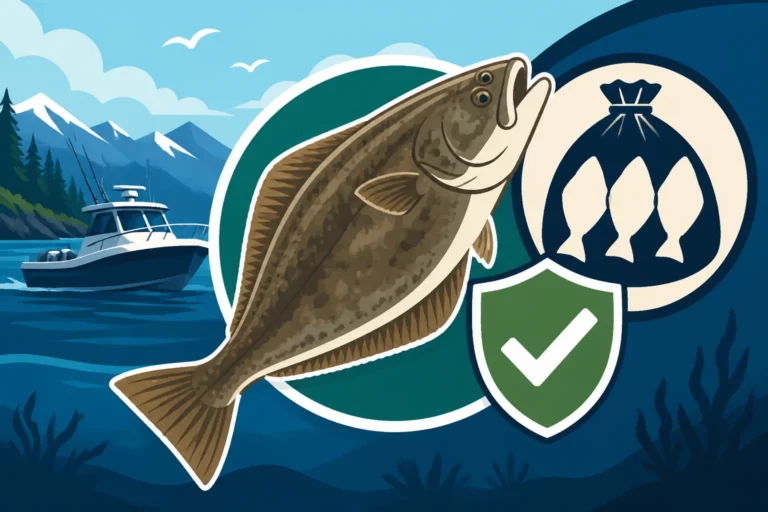
Halibut are one of the most prized bottom-dwelling fish in BC, sought after for their enormous size, powerful fight, and delicious white flesh. Fishing for halibut off the coast of Vancouver Island or in the Haida Gwaii region is a bucket-list experience for many. However, due to international agreements and conservation efforts, halibut stocks are carefully managed, leading to highly restrictive limits.
In BC tidal waters, the regulations for Halibut are typically very strict. For instance, the general daily bag limit is often one halibut per day, with a maximum possession limit of two halibut. This possession limit applies regardless of how long you are fishing or how many days you spend on the water. Furthermore, there are often slot limits, meaning you can only retain halibut within a specific size range (e.g., a minimum size of 83 cm and a maximum size of 122 cm). These slot limits are designed to protect both the small, immature fish and the large, highly reproductive breeding females, ensuring the sustainability of the population. There may also be an annual limit on how many halibut you can retain per calendar year.
These limits can also change in-season based on the total allowable catch (TAC) set by international bodies like the International Pacific Halibut Commission (IPHC) and DFO. It is absolutely essential to check the DFO website for the most current BC Halibut Bag Limit Rules before every halibut fishing trip, as specific dates for opening and closing of the halibut fishery, as well as any in-season adjustments to limits, are frequently announced. Using a DFO-issued measuring tape is crucial to ensure your catch falls within the legal slot limit.
Lingcod Limits
Lingcod are fascinating, predatory bottom dwellers known for their distinctive appearance, aggressive strikes, and superb table fare. They are found along rocky reefs and kelp beds throughout BC's coastal waters. While less regulated than halibut, Lingcod limits are still carefully managed due to their importance in the ecosystem and their vulnerability to localized depletion.
General daily bag limits for Lingcod typically allow for one or two fish per day, with a possession limit usually double the daily bag. However, these limits often come with minimum size restrictions (e.g., 65 cm) to allow fish to reach maturity and spawn at least once. It's common to find specific regulations tied to geographical areas or seasons. For instance, some areas may have closures during the Lingcod spawning season (typically winter and early spring) to protect breeding adults.
Anglers targeting Lingcod must also be acutely aware of Rockfish Conservation Areas (RCAs). These are specific marine areas, often encompassing rocky reefs, that are permanently closed to all finfish fishing, including Lingcod, to protect vulnerable rockfish species. Accidental catches of Lingcod within an RCA, even if immediately released, can be problematic. Therefore, understanding Lingcod Habits Around Structure and where these RCAs are located is vital for responsible fishing. Always consult DFO charts and notices for current RCA boundaries.
Rockfish (All Species Combined) Limits
The term "Rockfish" refers to a diverse group of over 30 distinct species found in BC's waters, including Yelloweye Rockfish, Vermilion Rockfish, Copper Rockfish, and Quillback Rockfish, among many others. These fish are characterized by their long lifespans (some species can live for over 100 years!), slow growth rates, and tendency to remain in specific rocky habitats. These biological traits make them extremely vulnerable to overfishing, as populations are very slow to recover once depleted.
Consequently, Rockfish limits are among the most restrictive in British Columbia, reflecting a strong conservation imperative. In most tidal areas, the daily aggregate bag limit for all Rockfish species combined is often one fish per day, and in many areas, zero retention is mandated. The possession limit is usually one fish as well. This means if you keep one rockfish, that's your limit for the day and what you can have in possession. In many cases, specific species like the iconic Yelloweye Rockfish (often called "Red Snapper," though not a true snapper) are under even stricter protection, with zero retention mandates in place.
The existence of numerous Rockfish Conservation Areas (RCAs) further restricts fishing opportunities for these species. Fishing within an RCA, even if you are not targeting rockfish, is prohibited for all finfish. If you accidentally catch a rockfish, especially from deep water, it's crucial to release it as quickly and gently as possible, preferably using a descending device. These devices help return the fish to depth, mitigating barotrauma (swim bladder expansion) and significantly increasing survival rates. Understanding Rockfish Species Identification Guide for BC is helpful, but ultimately, the safest approach for many anglers is to avoid targeting them, or to practice immediate and careful catch-and-release, especially given the low limits and sensitive nature of these species.
Pacific Cod, Sole, Flounder, and Others
While salmon, halibut, and rockfish often steal the spotlight, BC's tidal waters are home to a host of other delicious and accessible groundfish species, including various types of Pacific Cod (e.g., Pacific Cod, Gray Cod), Sole (e.g., Dover Sole, English Sole), and Flounder. These species are often found on sandy or muddy bottoms and can provide excellent fishing action, particularly for those targeting dinner to take home.
Regulations for these more common bottom fish are generally more liberal than for their more sensitive counterparts. For species like Pacific Cod, daily bag limits can be quite generous, often set at 5 or 10 fish per day, with possession limits typically double that. Similar liberal limits apply to most Sole and Flounder species. These fish are generally abundant and reproduce more quickly than rockfish or halibut, allowing for a more sustainable harvest.
However, even with more liberal limits, it's still essential to consult the DFO tidal regulations for your specific area. Occasionally, localized closures or reduced limits might be implemented if a particular stock is experiencing pressure. It's also critical to be able to identify your catch. While many flatfish (sole, flounder) look similar, knowing the difference can be important if there are species-specific limits. Always be mindful of gear regulations, especially for bottom fishing, and avoid fishing in designated RCAs to protect sensitive species.
Shellfish and Other Invertebrates
British Columbia's rich coastal waters offer fantastic opportunities not just for finfish, but also for a variety of delicious shellfish and other invertebrates. Crabbing, prawning, and clam digging are popular activities that provide a bounty from the sea. However, like finfish, these resources are carefully managed to ensure sustainability, with specific rules governing licenses, gear, seasons, and catch limits.
Crab Limits (Dungeness and Red Rock)
Crabbing is a beloved pastime in many coastal areas of BC, targeting two main species: the highly prized Dungeness Crab and the more abundant Red Rock Crab. Both are delicious, but their conservation status and regulations differ.
For Dungeness Crab, which are slower growing and larger, limits are quite strict. The daily bag limit is typically four Dungeness crab, and the possession limit is usually double that at eight. Crucially, there are strict size requirements: Dungeness crab must be at least 165 mm (6.5 inches) across the carapace (shell) to be retained. Furthermore, only male Dungeness crab may be retained. Females, identifiable by their wider, U-shaped abdomen flap on their underside (males have a narrower, V-shaped flap), must be immediately and gently released unharmed, regardless of size. This protects the reproductive capacity of the population.
Red Rock Crab are generally more aggressive and abundant, and thus have slightly more liberal limits. The daily bag limit is often six Red Rock crab, with a possession limit of twelve. Their minimum size limit is also smaller, typically 115 mm (4.5 inches). Like Dungeness, only male Red Rock crab can be retained.
All crab fishing requires a valid tidal waters fishing license. You'll also need to adhere to specific gear regulations, such as the type and number of traps allowed (e.g., two traps per person). Trap tags with your name and license number are mandatory. For detailed information on these requirements, including trap specifications and bait rules, consult the BC crab and prawn license requirements for anglers. Remember, checking your traps frequently and quickly releasing undersized or female crabs is essential for their survival.
Prawn Limits (Spot Prawns, etc.)
Prawns, particularly the highly sought-after Spot Prawns, represent another fantastic shellfish opportunity in BC. These large, succulent prawns are a culinary delicacy and are a major target for both commercial and recreational fisheries. Due to their value and sensitivity to overfishing, their seasons and limits are very tightly controlled.
The recreational Spot Prawn fishery typically has a very short, intense season, usually lasting only a few weeks in May or June, but this can vary annually. The daily bag limit for Spot Prawns is typically 125 prawns per day, with a possession limit often set at double the daily limit, for example, 250 prawns. It’s important to note that this limit applies to all prawn species combined, though Spot Prawns are the primary target.
Prawn fishing also requires specific gear. Anglers use weighted prawn traps (often called "pots") baited with cat food, salmon roe, or other attractants, which are then dropped to depths typically between 150-400 feet. There are strict regulations on the number of traps allowed per person (e.g., four traps), trap mesh size, and the requirement for escape rings for smaller prawns. All traps must be clearly marked with buoys displaying your name and license number. For a full breakdown of the gear and licensing details, refer to the BC prawn trap license requirements. Because the prawn season is so short and intense, it's absolutely vital to check DFO fishery notices right before you plan to go, as opening and closing dates are strictly enforced and can change with little notice.
Clams, Oysters, and Other Shellfish
British Columbia's intertidal zones are teeming with various clams, oysters, and other delectable shellfish. Digging for these treasures is a popular activity, but like all marine resources, it's subject to stringent health and conservation regulations.
Clam species such as Butter Clams, Manila Clams, Varnish Clams, and Littleneck Clams are commonly targeted. Oysters, both native Olympia Oysters and introduced Pacific Oysters, are also popular. Daily bag limits vary by species and are often expressed in quantities or by volume (e.g., 60 clams, or a certain volume in liters). For example, the daily limit for most clam species might be 60 individuals, while for Pacific Oysters, it might be 15. Possession limits usually reflect the daily limit or are double. Minimum size limits may also apply to certain species to ensure they've had a chance to reproduce.
The most critical aspect of shellfish harvesting is public health. Shellfish are filter feeders and can accumulate toxins from harmful algal blooms (e.g., red tide, paralytic shellfish poisoning or PSP). Consuming contaminated shellfish can lead to severe illness or even death. Therefore, the Canadian Shellfish Sanitation Program (CSSP) routinely monitors water quality, and large areas of the coast are often closed to shellfish harvesting due to contamination or biotoxin risks.
Before heading out to harvest any shellfish, you must check the DFO fishery notices and Environment Canada's "Canadian Shellfish Sanitation Program" (CSSP) website for current contamination and biotoxin closures. It's not enough to just check bag limits; you need to know if the area is even open for harvesting. Harvesting from a closed area is illegal and extremely dangerous. A valid tidal waters fishing license is required for all recreational shellfish harvesting. For a comprehensive guide to these rules, including species-specific limits and health advisories, see BC shellfish harvesting license rules.
Specific Regulations for Anadromous Fish
Some of British Columbia's most iconic fish species are anadromous, meaning they spend part of their lives in saltwater and return to freshwater to spawn. This category includes all five Pacific salmon species, but also the magnificent Steelhead and the ancient White Sturgeon. Due to their unique life cycles and often vulnerable populations, these species are managed with highly specific and often very restrictive regulations, prioritizing conservation above all else.
Steelhead Limits
Steelhead are the sea-run form of Rainbow Trout, renowned for their incredible strength, beauty, and elusive nature. Pursuing them in BC's pristine rivers is considered by many to be the pinnacle of freshwater angling. However, wild steelhead populations in BC, particularly in the Interior Fraser and Skeena systems, have faced significant declines, leading to very strict conservation measures.
In most BC rivers, steelhead fishing is entirely catch-and-release only. This means that if you hook a steelhead, you must immediately and carefully release it unharmed. There are virtually no open retention fisheries for wild steelhead in British Columbia, with any exceptions being extremely rare and localized. Many of the most famous steelhead rivers, such as those in the Skeena region (e.g., Bulkley, Kispiox) or the Thompson and Dean rivers, are managed under strict catch-and-release mandates. The goal is to allow every wild steelhead to return to its spawning grounds and contribute to future generations.
Anglers targeting steelhead also need a Steelhead Conservation Surcharge Stamp in addition to their basic freshwater fishing license. This stamp, a separate purchase, helps fund critical steelhead conservation, research, and enhancement programs. It's a mandatory requirement for anyone fishing for steelhead, regardless of whether you intend to keep a fish (which, as noted, is almost never allowed). Understanding BC Steelhead Season Dates is also crucial, as many rivers have specific open and closed periods to protect migrating and spawning fish. Always use single, barbless hooks when fishing for steelhead to minimize injury, and practice proper catch-and-release techniques to maximize survival.
White Sturgeon Limits
The White Sturgeon is North America's largest freshwater fish, a prehistoric giant that can live for over 100 years and reach lengths of over 15 feet. British Columbia is home to some of the most robust White Sturgeon populations, particularly in the Fraser River system, which boasts incredible trophy potential. However, due to their impressive size, extreme longevity, and historical overharvest, White Sturgeon are now heavily protected.
In the Fraser River and its tributaries, White Sturgeon fishing is strictly catch-and-release only. It is illegal to retain any White Sturgeon. This regulation is in place to ensure the survival and recovery of this incredible species. Anglers targeting sturgeon must adhere to specific handling requirements designed to minimize stress and injury to these large, sensitive fish. These include:
- Using appropriate heavy-duty gear to land fish quickly.
- Keeping the fish in the water as much as possible, especially larger individuals.
- Avoiding lifting large sturgeon out of the water by the tail.
- Using only single, barbless hooks.
- Avoiding prolonged handling or posing for photos that stress the fish.
Many guided sturgeon trips operate on the Fraser River, and reputable guides are experts in proper handling and release techniques. Even if you're fishing unguided, it's your responsibility to understand and implement these practices to ensure the long-term health of the species. The BC Fraser River Sturgeon Catch and Release Requirement is not just a rule; it's a commitment to protecting these magnificent creatures for generations to come.
Conservation Surcharge Stamps and Their Role
Beyond the basic fishing license, British Columbia requires anglers to purchase various Conservation Surcharge Stamps when targeting specific species. It's a common misconception that these stamps grant you the right to retain a fish; in fact, for species like steelhead and sturgeon, they are mandatory even if you are strictly practicing catch-and-release.
The primary purpose of these stamps is to generate dedicated funds for conservation, enhancement, and research programs for the specific species they are named after. When you purchase a stamp, you are directly contributing to the efforts to protect and restore these valuable fisheries. The most common conservation stamps include:
- Freshwater Salmon Conservation Stamp: Required for anyone wishing to retain any species of anadromous (sea-run) salmon (Chinook, Coho, Sockeye, Pink, Chum) caught in freshwater. If you're fishing for salmon in a river and intend to keep one, you need this stamp.
- Steelhead Conservation Surcharge Stamp: As discussed, this is mandatory for anyone fishing for steelhead in freshwater, regardless of whether you intend to keep one (which, again, is almost universally prohibited for wild steelhead).
- Rainbow Trout Conservation Surcharge Stamp: This stamp is required in specific regions or for certain waters when targeting Rainbow Trout, particularly for specific management objectives. Check the synopsis for applicability.
- White Sturgeon Conservation Surcharge Stamp: This stamp is mandatory for anyone fishing for White Sturgeon in freshwater, even though it's a catch-and-release only fishery.
These stamps are an integral part of BC Conservation Surcharge Stamps, Explained, and they represent an angler's direct contribution to the sustainability of the very fisheries they enjoy. They are usually purchased at the same time as your fishing license, or can be added on later if your fishing plans change. Always ensure you have the correct stamps for the species you intend to target or encounter.
General Best Practices for Compliance
Navigating the intricacies of British Columbia's fishing regulations can feel like a daunting task, but a few key best practices can help ensure you stay compliant, avoid penalties, and contribute to responsible angling. It’s not just about knowing the rules for each species, but developing habits that keep you on the right side of the law and support the health of our fisheries.
Always Carry Your License and Know Your Area
This might seem like a no-brainer, but forgetting or misplacing your fishing license is a common oversight that can ruin a day on the water and lead to a hefty fine. Whether you prefer a physical paper copy or a digital version on your smartphone, ensure you have a valid British Columbia Fishing License Guide for 2026 with you at all times while fishing. With the increasing adoption of digital licenses, knowing how to present it from your device is important. The ease of storing it on your phone or printing it out yourself means there’s really no excuse for not having it. For specific guidance on this, check out Printing or Carrying a Digital Fishing License in BC.
Beyond merely carrying your license, it's absolutely crucial to know the specific management area you are fishing in. British Columbia's regulations are highly localized. What's legal in one bay might be illegal just around the corner. What's allowed in an Interior lake might be completely different from a coastal river.
- For tidal waters: You need to understand the DFO management areas (e.g., Area 13 for Campbell River, Area 23 for Barkley Sound, etc.) as salmon and groundfish limits often vary significantly between them. Using navigation apps or charts that display these zones is highly recommended.
- For freshwater: BC is divided into numerous Management Regions, and each region has a general set of rules, which are then superseded by specific lake or river regulations. Knowing your specific region and the rules for the particular body of water you're on is non-negotiable.
This requires proactive research before you leave home. Don't rely on word-of-mouth; consult the official DFO website for tidal waters and the current BC Freshwater Fishing Regulations Synopsis for freshwater. Pay close attention to the distinctions between BC Freshwater vs Tidal Waters License, Explained, as these are two entirely different licensing systems with distinct rules. When in doubt, call your local DFO office or a provincial fisheries contact number for clarification.
How to Measure and Identify Your Catch Accurately
The ability to accurately measure and identify your catch is fundamental to complying with bag and possession limits, especially when size restrictions or species-specific rules are in place. Many species have minimum or maximum size limits (slot limits) that dictate whether a fish can be retained. Incorrect identification can lead to keeping a protected species or exceeding a limit for a specific type of fish.
- Fish Identification: This is particularly critical for salmon (distinguishing Chinook from Coho from Sockeye), trout (Rainbow vs. Cutthroat vs. Bull Trout vs. Dolly Varden), and rockfish (where different species have different levels of protection, though typically it’s an aggregate limit). Familiarize yourself with key identifying features, such as fin counts, mouth color, tail shape, and spotting patterns. Carrying a waterproof fish identification guide or having one readily accessible on your phone can be immensely helpful. Amazon offers a wide selection of regional fish identification charts and books that can be invaluable on the water.
- Measurement Techniques: Always use a reliable measuring device, such as a sturdy fish ruler or tape measure. Understand whether the regulation specifies "fork length" (from tip of nose to the fork of the tail) or "total length" (from tip of nose to the very end of the tail). Always measure the fish accurately before deciding to retain it. If it’s even slightly under or over a slot limit, it must be released. For species like crab, knowing how to properly measure the carapace width is equally important. When measuring, do so quickly and gently to minimize stress on the fish, especially if you intend to release it.
Penalties for Non-Compliance
It's vital to understand that fishing without adhering to British Columbia's regulations carries serious consequences. Fisheries officers (DFO for tidal, provincial conservation officers for freshwater) are actively patrolling and enforcing these rules. Ignorance of the law is not an excuse.
The penalties for non-compliance can range from significant fines to more severe sanctions:
- Fines: Monetary penalties can be substantial, often starting in the hundreds or even thousands of dollars for infractions like exceeding bag limits, fishing in closed areas, or fishing without the correct license/stamp. For example, Fishing Without a License in BC: Penalties can quickly run into the four figures.
- Confiscation of Gear: Officers have the authority to confiscate your fishing gear, including rods, reels, nets, and even your boat, if you are found to be in violation of regulations.
- Loss of License/Fishing Privileges: Repeat offenders or those committing serious violations can have their fishing license suspended or permanently revoked, meaning you won't be able to fish in BC for a specified period or ever again.
- Potential Jail Time: In extreme cases, particularly for commercial poaching or multiple severe infractions, offenders can face criminal charges and even jail time.
These penalties are designed to be a strong deterrent, reflecting the critical importance of protecting BC's valuable fisheries resources. The best way to avoid these unpleasant consequences is simple: educate yourself, fish responsibly, and always err on the side of caution. If you're unsure about a regulation, don't risk it; release the fish or seek clarification before making a decision.
Disclaimer
The information provided in this guide is for general informational purposes only and is not a substitute for the official British Columbia fishing regulations. Fishing regulations are dynamic and subject to frequent change. Always consult the most current official publications from Fisheries and Oceans Canada (DFO) for tidal waters and the BC Freshwater Fishing Regulations Synopsis for freshwater before engaging in any fishing activity. It is the angler's sole responsibility to understand and comply with all applicable rules and regulations.